David S. Bachrach – författare
Visar alla böcker från författaren David S. Bachrach. Handla med fri frakt och snabb leverans.
20 produkter
20 produkter
Inbunden, Engelska, 2020
2 212 kr
Skickas inom 10-15 vardagar
The essays brought together in this volume examine the conduct of war by the Angevin kings of England during the long thirteenth century (1189-1307). Drawing upon a wide range of unpublished administrative records that have been largely ignored by previous scholarship, David S. Bachrach offers new insights into the military technology of the period, including the types of artillery and missile weapons produced by the royal government. The studies in this volume also highlight the administrative sophistication of the Angevin kings in military affairs, showing how they produced and maintained huge arsenals, mobilized vast quantities of supplies for their armies in the field, and provided for the pastoral care of their men. Bachrach also challenges the knight-centric focus of much of the scholarship on this period, demonstrating that the militarization of the English population penetrated to men in the lower social and economic strata, who volunteered in large numbers for military service, and even made careers as professional soldiers. (CS1088).
Inbunden, Engelska, 2021
2 212 kr
Skickas inom 10-15 vardagar
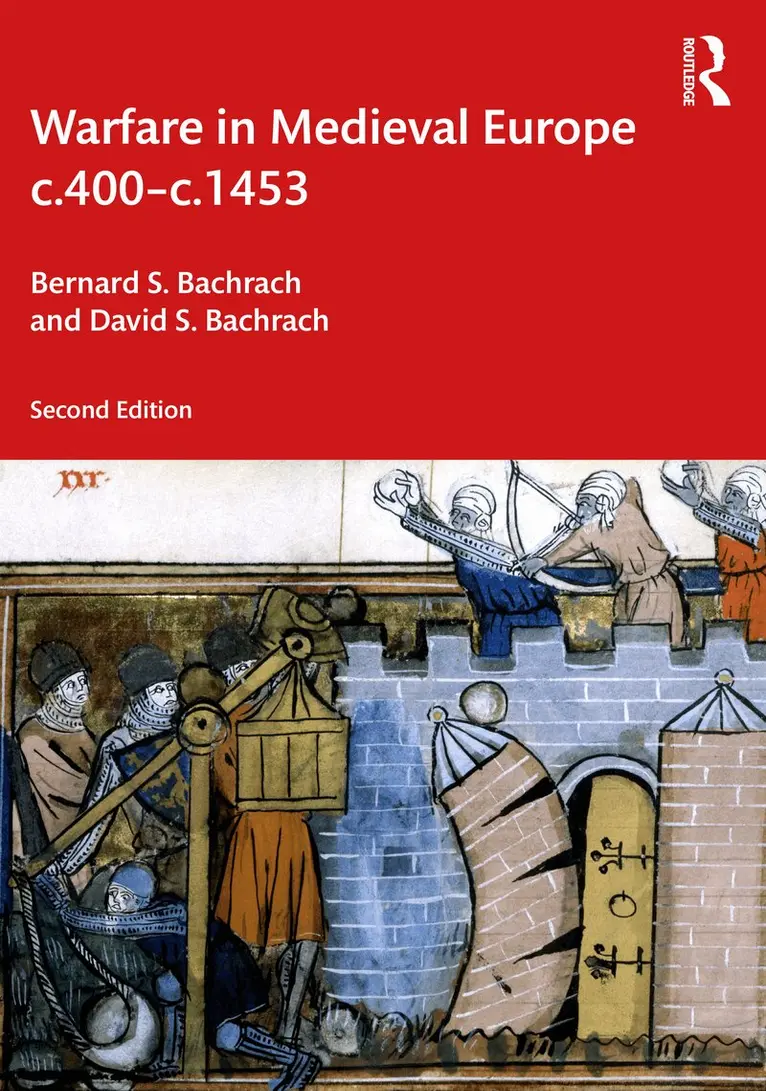
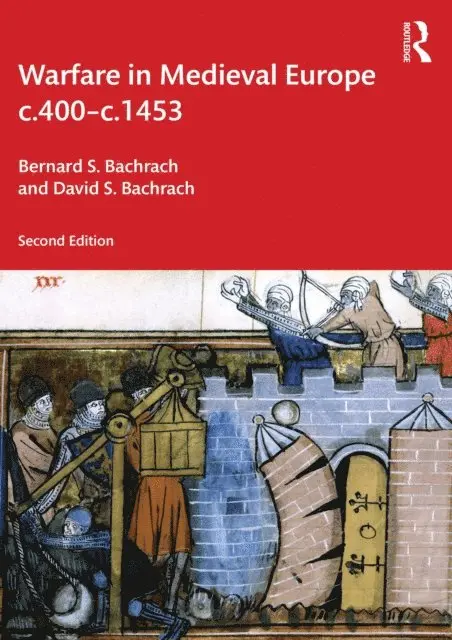
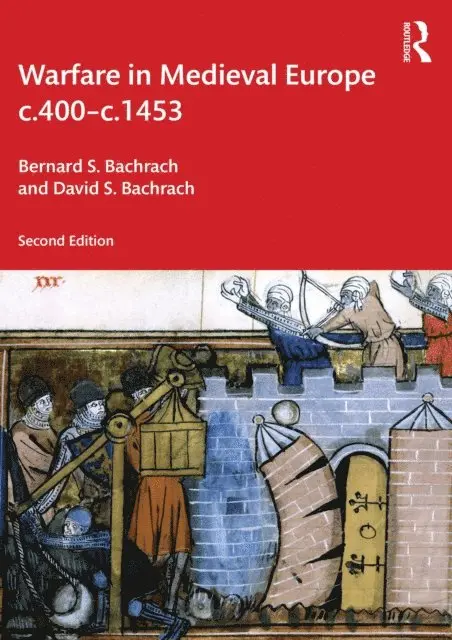
Warfare in Medieval Europe, now in its second edition, offers considerably more attention to the transition from the later Roman Empire to the early Middle Ages, the composition of the armies of the opponents of the West, and the experience of commanders and individual combatants on the battlefield.This second revised and expanded edition provides a more in-depth thematic discussion of the nature and conduct of war, with an emphasis on its overall impact on society, from the late Roman Empire to the end of the Hundred Years’ War. The authors explore the origins of the institutions, physical infrastructure, and intellectual underpinnings of warfare, with chapters on military topography, military technology, logistics, combat, and strategy. Bernard and David Bachrach have also added a new chapter, which provides two detailed campaign narratives that highlight the themes treated throughout the text. The geographical scope of the volume encompasses Latin Europe, the Slavic World, Scandinavia, and the eastern Mediterranean, with a particular focus on the conflict between Western Christianity and the Islamic Near East.Written in an accessible and engaging way, Warfare in Medieval Europe is the ideal resource for all students of the history of medieval warfare.
Häftad, Engelska, 2021
576 kr
Skickas inom 10-15 vardagar
Warfare in Medieval Europe, now in its second edition, offers considerably more attention to the transition from the later Roman Empire to the early Middle Ages, the composition of the armies of the opponents of the West, and the experience of commanders and individual combatants on the battlefield.This second revised and expanded edition provides a more in-depth thematic discussion of the nature and conduct of war, with an emphasis on its overall impact on society, from the late Roman Empire to the end of the Hundred Years’ War. The authors explore the origins of the institutions, physical infrastructure, and intellectual underpinnings of warfare, with chapters on military topography, military technology, logistics, combat, and strategy. Bernard and David Bachrach have also added a new chapter, which provides two detailed campaign narratives that highlight the themes treated throughout the text. The geographical scope of the volume encompasses Latin Europe, the Slavic World, Scandinavia, and the eastern Mediterranean, with a particular focus on the conflict between Western Christianity and the Islamic Near East.Written in an accessible and engaging way, Warfare in Medieval Europe is the ideal resource for all students of the history of medieval warfare.
Inbunden, Engelska, 2025
2 212 kr
Skickas inom 10-15 vardagar
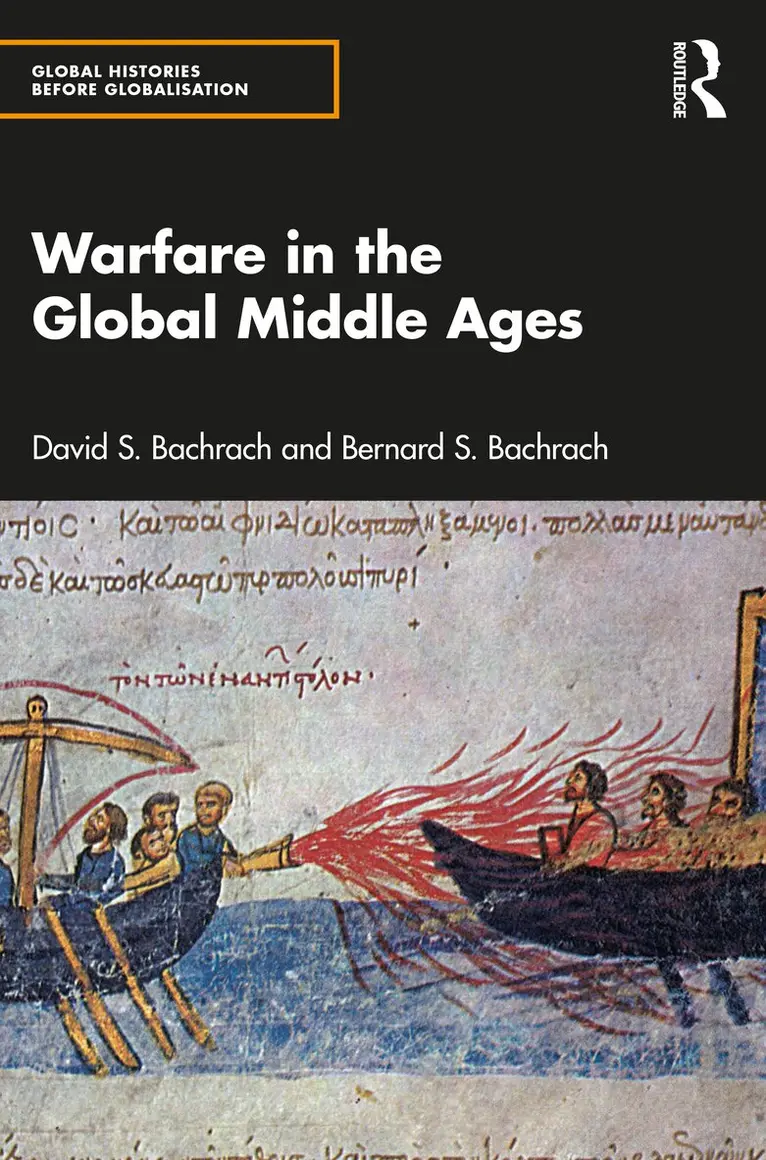
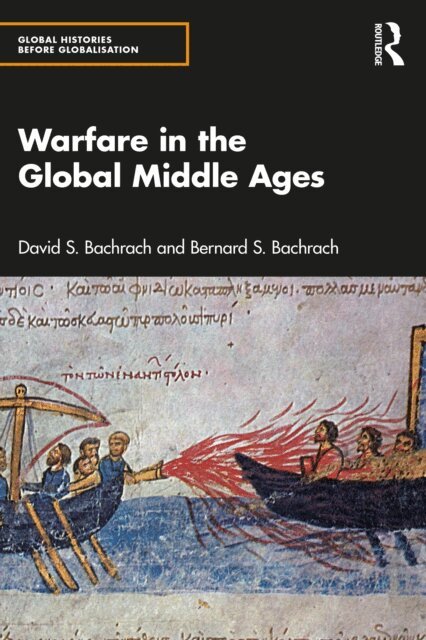
War, preparation for war, and dealing with war’s aftermath consumed the greater part of the surplus resources of societies around the globe throughout the pre-modern period. Military matters affected men, women, and children alike, as direct participants in organized violence, as the victims of conflicts, or through broad-based impositions on ostensibly civilian populations in cash, kind, and labor. Warfare in the Global Middle Ages illuminates the organization and conduct of war as well as the impact of warfare on societies in Europe, Asia, Africa, and the Americas across a long millennium spanning from the third century CE to the sixteenth century CE.The volume is organized in eight chapters, which address the current state of scholarship regarding warfare over this long period, the source materials available to scholars to investigate the myriad questions related to this broad field, and the institutions developed by societies to defend themselves and engage in wars of conquest, military technology, the logistics of war, the education and training of military leaders and individual combatants, as well as strategy, military intelligence, and diplomacy. The authors argue that an analysis of these topics illuminates broad similarities among polities across the globe, the transmission of ideas and technologies on a regional and global level, and also important differences in the ways that societies responded to similar challenges.This work is intended broadly both for specialists in the history of warfare across the globe, for an interested lay public, as well as for use in the classroom.
Häftad, Engelska, 2025
605 kr
Skickas inom 10-15 vardagar
War, preparation for war, and dealing with war’s aftermath consumed the greater part of the surplus resources of societies around the globe throughout the pre-modern period. Military matters affected men, women, and children alike, as direct participants in organized violence, as the victims of conflicts, or through broad-based impositions on ostensibly civilian populations in cash, kind, and labor. Warfare in the Global Middle Ages illuminates the organization and conduct of war as well as the impact of warfare on societies in Europe, Asia, Africa, and the Americas across a long millennium spanning from the third century CE to the sixteenth century CE.The volume is organized in eight chapters, which address the current state of scholarship regarding warfare over this long period, the source materials available to scholars to investigate the myriad questions related to this broad field, and the institutions developed by societies to defend themselves and engage in wars of conquest, military technology, the logistics of war, the education and training of military leaders and individual combatants, as well as strategy, military intelligence, and diplomacy. The authors argue that an analysis of these topics illuminates broad similarities among polities across the globe, the transmission of ideas and technologies on a regional and global level, and also important differences in the ways that societies responded to similar challenges.This work is intended broadly both for specialists in the history of warfare across the globe, for an interested lay public, as well as for use in the classroom.
Inbunden, Engelska, 2020
2 426 kr
Skickas inom 10-15 vardagar
Writing the Military History of Pre-Crusade Europe brings together fourteen articles by eminent historians David S. Bachrach and Bernard S. Bachrach. Crucial to the writing of medieval military history is a thorough understanding of the strengths and weaknesses of the available source materials. Just as important is a broad conception of the range of sources which scholars can draw upon to ask and answer questions about the organization and conduct of war. The studies collected in this volume provide insights regarding many of the most important narrative works from pre-Crusade Europe, with a particular emphasis on the ways in which they can be used to write military history, as well as the pitfalls facing historians who read these texts transparently without regard for the authors’ various parti pris and limitations. In addition to their treatment of narrative works, several of the studies in this volume highlight the importance of treating historiographical texts within the broader range of source materials that illuminate the conduct and organization of war in pre-crusade Europe, particularly material sources developed through excavations, as well as contemporary images, most prominently the Bayeux Tapestry.The book will appeal to scholars and students of medieval history, as well as those interested in military history. (CS1097).
Häftad, Engelska, 2023
605 kr
Skickas inom 10-15 vardagar
Writing the Military History of Pre-Crusade Europe brings together fourteen articles by eminent historians David S. Bachrach and Bernard S. Bachrach. Crucial to the writing of medieval military history is a thorough understanding of the strengths and weaknesses of the available source materials. Just as important is a broad conception of the range of sources which scholars can draw upon to ask and answer questions about the organization and conduct of war. The studies collected in this volume provide insights regarding many of the most important narrative works from pre-Crusade Europe, with a particular emphasis on the ways in which they can be used to write military history, as well as the pitfalls facing historians who read these texts transparently without regard for the authors’ various parti pris and limitations. In addition to their treatment of narrative works, several of the studies in this volume highlight the importance of treating historiographical texts within the broader range of source materials that illuminate the conduct and organization of war in pre-crusade Europe, particularly material sources developed through excavations, as well as contemporary images, most prominently the Bayeux Tapestry.The book will appeal to scholars and students of medieval history, as well as those interested in military history. (CS1097).
Häftad, Engelska, 2019
662 kr
Skickas inom 10-15 vardagar
First commissioned by Bishop Gerard I of Cambrai (1012-1051) in 1023 or 1024, the Gesta episcoporum Cameracensium was the work of two authors, the second of whom completed the text shortly after the death of Bishop Gerard. The three books of the Gesta shed considerable light on the policies and actions of many of the key political and religious figures in an economically and intellectually vibrant region on the frontier between the German and French kingdoms. The Deeds of the Bishops of Cambrai, translated in this volume into English for the first time, provides unique insights into the relationship between the German king and the bishops within the context of the so-called imperial church system, the rise of both secular and ecclesiastical territorial lordships, the conduct of war, the cult of the saints, monastic reform, and evolving conceptions of the proper social order of society. Including extensive commentary, apparatus of explanatory notes, maps, genealogies, this text will be of considerable value both in undergraduate and graduate courses as well as to scholars.
Del 16 - Warfare in History
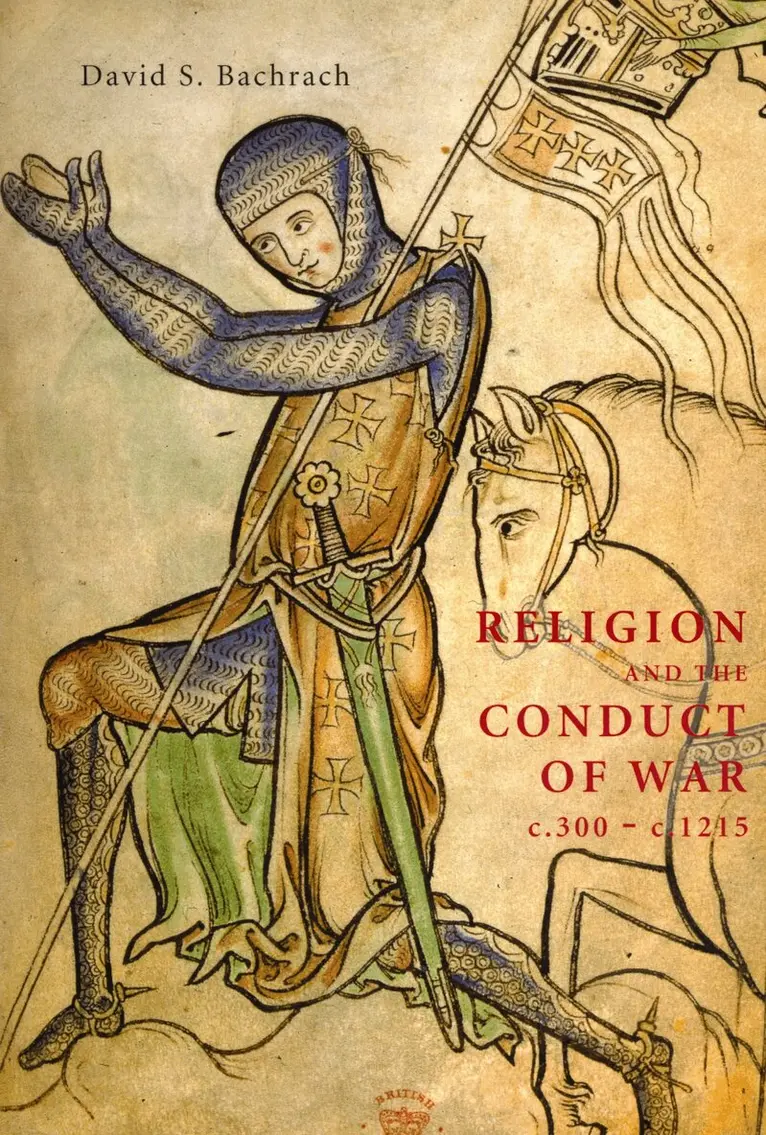
Religion and the Conduct of War c.300-c.1215
Inbunden, Engelska, 2003
1 059 kr
Skickas inom 5-8 vardagar
The first comprehensive analysis of the dynamic interpenetration of religion and war in the West from C4 to early C13.Warfare in all histories and cultures shows evidence of the driving need to sanctify the cause, from the personal devotions of individuals to the grand designs of the architects of battle. In his important study David Bachrach takes a first thorough look at warfare in western Europe and its interaction with Christianity, from the initial appearance of the pacifist sect to the medieval popes' certainty of the crusades as "holy war".Religion played a necessary and crucial role in the conduct of war during late Antiquity and the middle ages. Military discipline and morale depended in significant part on religious rites carried out by priests and soldiers in the field and by their supporters on the home front. Just as importantly, warfare in the late Roman empire and its western successor states had a profound impact on Christian religious practice and doctrine: liturgical developments - in prayer, communion, confession, penance - can be linked to the military needs of the Christian Roman world and the Christian states of medieval Europe. Even more profound was the transformation of Christianity itself from pacifism to a faith which justified and eventually glorified killing on behalf of the Church.This volume provides the first comprehensive analysis of the dynamic interpenetration of religion and war in the West during almost a thousand years, fromthe accession of Constantine the Great in the early fourth century until the eve of the Fourth Lateran Council in the early thirteenth. With its often new interpretations of a vast array of sources, Religion and the Conduct ofWar has much to say to historians and others on the nature of war and its relationship with faith. DAVID S. BACHRACH is Associate Professor of History, University of New Hampshire.
Häftad, Engelska, 2022
662 kr
Skickas inom 10-15 vardagar
The essays brought together in this volume examine the conduct of war by the Angevin kings of England during the long thirteenth century (1189-1307). Drawing upon a wide range of unpublished administrative records that have been largely ignored by previous scholarship, David S. Bachrach offers new insights into the military technology of the period, including the types of artillery and missile weapons produced by the royal government. The studies in this volume also highlight the administrative sophistication of the Angevin kings in military affairs, showing how they produced and maintained huge arsenals, mobilized vast quantities of supplies for their armies in the field, and provided for the pastoral care of their men. Bachrach also challenges the knight-centric focus of much of the scholarship on this period, demonstrating that the militarization of the English population penetrated to men in the lower social and economic strata, who volunteered in large numbers for military service, and even made careers as professional soldiers. (CS1088).
Häftad, Engelska, 2024
590 kr
Skickas inom 10-15 vardagar
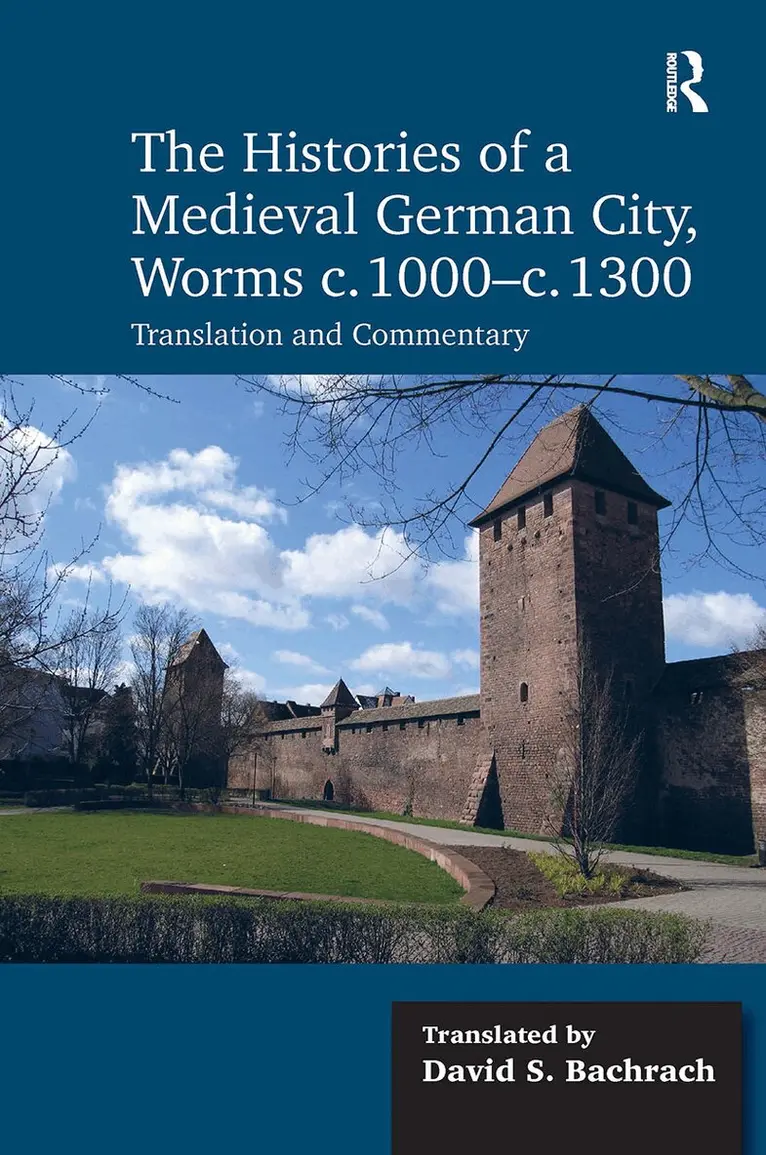
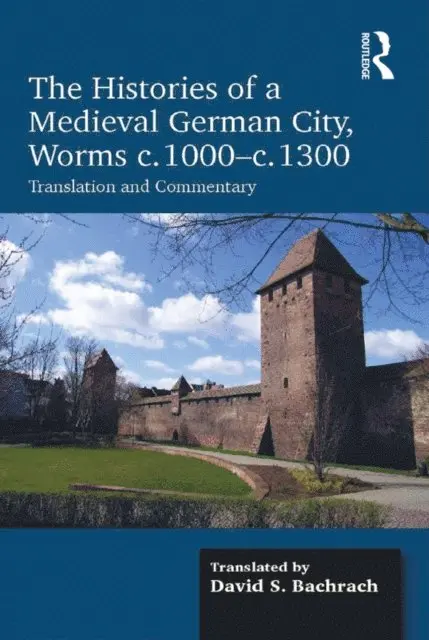
Germany was the most powerful kingdom in the medieval West from the mid-tenth to the mid-thirteenth century. However, its history remains largely unknown outside of the German-speaking regions of modern Europe. Until recently, almost all of the sources for medieval Germany were available only in the original Latin or in German translations, while most scholarly investigation has been in German. The limited English-language scholarship has focused on royal politics and the aristocracy. Even today, English-speaking students will find very little about the lower social orders, or Germany’s urban centers that came to play an increasingly important role in the social, economic, political, religious, and military life of the German kingdom after the turn of the millennium. The translation of the four texts in this volume is intended to help fill these lacunae. They focus on the city of Worms in the period c.1000 to c.1300. From them readers can follow developments in this city over a period of almost three centuries from the perspective of writers who lived there, gaining insights about the lives of both rich and poor, Christian and Jew. No other city in Germany provides a similar opportunity for comparison of changes over time. As important, Worms was an ’early adopter’ of new political, economic, institutional, and military traditions, which would later become normative for cities throughout the German kingdom. Worms was one of the first cities to develop as a center of episcopal power; it was also one of the first to develop an independent urban government, and was precocious in emerging as a de facto city-state in the mid-thirteenth century. These political developments, with their concomitant social, economic, and military consequences, would define urban life throughout the German kingdom. In sum, the history of Worms as told in the narrative sources in this volume can be understood as illuminating the broader urban history of the German kingdom at the heigh
Inbunden, Engelska, 2026
2 292 kr
Kommande
This volume presents twelve studies, written between 2007 and 2023, which examine the conduct of war in Carolingian East Francia and Ottonian Germany from the mid-ninth to the early eleventh century. Grouped thematically rather than by date of publication, the chapters focus on military recruitment and administration, intelligence gathering, the military infrastructure of frontier fortifications, campaign strategy, and the religion of war.Cumulatively these essays represent an assessment that the long-term military success of the Carolingians and Ottonians was based on an equally successful development of institutions through which rulers mobilized men and resources to undertake a vast number of military operations that were focused largely on the capture and defense of fortifications.This volume will be of great value to scholars and advanced students interested in the military affairs of pre-modern Europe. In addition, the consistent focus on matters such as source criticism, and the methodological imperative to integrate a wide range of written as well as material sources of information when pursuing questions relating to military history, make these studies essential to those scholars and students intending to pursue questions on a very wide range of matters in periods for which traditional sources of information, such as historical narratives, survive in only limited numbers.
Inbunden, Engelska, 2026
2 292 kr
Kommande
This volume offers an annotated translation and commentary on five thirteenth-century narrative accounts of the battles of Steppes (1213), Ane (1227), and Hausbergen (1262) as well as the overall political and military circumstances in which they occurred. These battles have received some scholarly attention, but the broader military organization of the German kingdom as well as the conduct of war require considerable further work. The commentary provided in this translation in both the introduction and notes will help orient readers toward these matters and explain their significance.The volume makes accessible to an English reading audience five narrative works that are very important for understanding the nature of warfare within the German Empire of the thirteenth century. The introduction brings together the most up to date scholarship regarding the origin, authorship and purpose of these texts, which is largely in German, French, and Dutch. The commentary provided in the introduction regarding military affairs and the annotations for the translation enables readers to situate these texts in their proper political and military contexts.This work will be of value both to specialists in medieval history who wish to gain a more thorough understanding of military affairs and also to teachers, who would like to provide their students with an opportunity to read narrative works from the German kingdom that offer insights to a wide range of social, political, and military phenomena. In this context, although a great many of the main narrative sources for the earlier medieval period in Germany have been translated, this is not the case for texts produced after c. 1200.
Inbunden, Engelska, 2018
2 212 kr
Skickas inom 10-15 vardagar
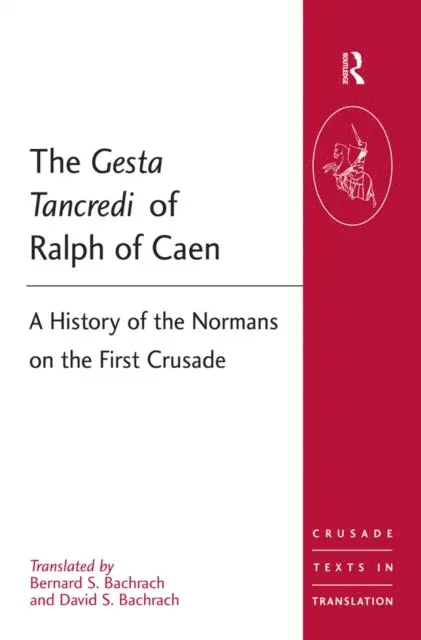
This is the first translation into English of Ralph of Caen's Gesta Tancredi. This text provides an exceptionally important narrative of the First Crusade and its immediate aftermath, covering the period 1096-1105, but is often neglected, due in no small part to the difficulties of its Latin. A native of the Norman city of Caen where he was a student of Arnulf, the future patriarch of Jerusalem, in 1107 Ralph joined Bohemond of Taranto's army as a military chaplain. After arriving in the East, Ralph took service with Bohemond's nephew Tancred, who ruled the principality of Antioch from 1108 to 1112. Although dedicated to Arnulf, the Gesta Tancredi focuses on the careers of Bohemond and, especially, of Tancred. It is one of the most important sources - indeed the most important Latin source - for the Norman campaigns in Cilicia (1097-1108), and for the early Norman rule of Antioch. The work as a whole has a striking Norman point of view and contains details found in no other source, providing a corrective to the strong northern focus of most of the other narrative sources for the First Crusade.
Häftad, Engelska, 2010
675 kr
Skickas inom 10-15 vardagar
This is the first translation into English of Ralph of Caen's Gesta Tancredi. This text provides an exceptionally important narrative of the First Crusade and its immediate aftermath, covering the period 1096-1105, but is often neglected, due in no small part to the difficulties of its Latin. A native of the Norman city of Caen where he was a student of Arnulf, the future patriarch of Jerusalem, in 1107 Ralph joined Bohemond of Taranto's army as a military chaplain. After arriving in the East, Ralph took service with Bohemond's nephew Tancred, who ruled the principality of Antioch from 1108 to 1112. Although dedicated to Arnulf, the Gesta Tancredi focuses on the careers of Bohemond and, especially, of Tancred. It is one of the most important sources - indeed the most important Latin source - for the Norman campaigns in Cilicia (1097-1108), and for the early Norman rule of Antioch. The work as a whole has a striking Norman point of view and contains details found in no other source, providing a corrective to the strong northern focus of most of the other narrative sources for the First Crusade.
Inbunden, Engelska, 2014
2 212 kr
Skickas inom 10-15 vardagar
Germany was the most powerful kingdom in the medieval West from the mid-tenth to the mid-thirteenth century. However, its history remains largely unknown outside of the German-speaking regions of modern Europe. Until recently, almost all of the sources for medieval Germany were available only in the original Latin or in German translations, while most scholarly investigation has been in German. The limited English-language scholarship has focused on royal politics and the aristocracy. Even today, English-speaking students will find very little about the lower social orders, or Germany’s urban centers that came to play an increasingly important role in the social, economic, political, religious, and military life of the German kingdom after the turn of the millennium. The translation of the four texts in this volume is intended to help fill these lacunae. They focus on the city of Worms in the period c.1000 to c.1300. From them readers can follow developments in this city over a period of almost three centuries from the perspective of writers who lived there, gaining insights about the lives of both rich and poor, Christian and Jew. No other city in Germany provides a similar opportunity for comparison of changes over time. As important, Worms was an ’early adopter’ of new political, economic, institutional, and military traditions, which would later become normative for cities throughout the German kingdom. Worms was one of the first cities to develop as a center of episcopal power; it was also one of the first to develop an independent urban government, and was precocious in emerging as a de facto city-state in the mid-thirteenth century. These political developments, with their concomitant social, economic, and military consequences, would define urban life throughout the German kingdom. In sum, the history of Worms as told in the narrative sources in this volume can be understood as illuminating the broader urban history of the German kingdom at the heigh
Inbunden, Engelska, 2017
2 212 kr
Skickas inom 10-15 vardagar
First commissioned by Bishop Gerard I of Cambrai (1012-1051) in 1023 or 1024, the Gesta episcoporum Cameracensium was the work of two authors, the second of whom completed the text shortly after the death of Bishop Gerard. The three books of the Gesta shed considerable light on the policies and actions of many of the key political and religious figures in an economically and intellectually vibrant region on the frontier between the German and French kingdoms. The Deeds of the Bishops of Cambrai, translated in this volume into English for the first time, provides unique insights into the relationship between the German king and the bishops within the context of the so-called imperial church system, the rise of both secular and ecclesiastical territorial lordships, the conduct of war, the cult of the saints, monastic reform, and evolving conceptions of the proper social order of society. Including extensive commentary, apparatus of explanatory notes, maps, genealogies, this text will be of considerable value both in undergraduate and graduate courses as well as to scholars.
Inbunden, Engelska, 2022
1 472 kr
Skickas inom 5-8 vardagar
Provocative interrogation of how the Ottonian kingdom grew and flourished, focussing on the resources required.The Ottonians were the most powerful monarchs in Europe during the tenth and early eleventh century, exercising hegemony in West Francia, Burgundy, and much of Italy in addition to ruling the German realm. Despite their enormous political and military success, however, the foundations of Ottonian royal power remain highly contested and largely misunderstood, with previous scholarship tending to have considered it as depending upon the ability of the king to shape and harness the power of the nobles. This study challenges the dominant historiographical paradigm, rebutting the notion of putative power-sharing between the king and the nobility, which simply did not exist as a legal class in the Ottonian century. Rather, it argues that the foundations of royal power under the Ottonians comprised not only their own enormous wealth, but also their unique authority and ability, through the royal bannum, the authority inherent in the office of the king, to make use of the economic resources and labour of the broad free population of the realm, as well as from the Church. In so doing, the Ottonians drew upon and further developed the administrative, institutional, and ideological inheritance of their Carolingian predecessors, in the process creating the dominant polity in tenth-century Europe.
Del 37 - Warfare in History
Warfare in Tenth-Century Germany
Inbunden, Engelska, 2012
1 218 kr
Skickas inom 5-8 vardagar
A complete survey of the military campaigns of the early Saxons, tactics, strategy, and logistics, demonstrating in particular the sophistication of the administration involved.Over the course of half a century, the first two kings of the Saxon dynasty, Henry I (919-936) and Otto I (936-973), waged war across the length and breadth of Europe. Ottonian armies campaigned from the banks of the Oder in the east to the Seine in the west, and from the shores of the Baltic Sea in the north, to the Adriatic and Mediterranean in the south. In the course of scores of military operations, accompanied by diligent diplomatic efforts, Henry and Otto recreated the empire of Charlemagne, and established themselves as the hegemonic rulers in Western Europe.This book shows how Henry I and Otto I achieved this remarkable feat, and provides a comprehensive analysis ofthe organization, training, morale, tactics, and strategy of Ottonian armies over a long half century. Drawing on a vast array of sources, including exceptionally important information developed through archaeological excavations,it demonstrates that the Ottonian kings commanded very large armies in military operations that focused primarily on the capture of fortifications, including many fortress cities of Roman origin. This long-term military success shows that Henry I and Otto I, building upon the inheritance of their Carolingian predecessors, and ultimately that of the late Roman empire, possessed an extensive and well-organized administration, and indeed, bureaucracy, whichmobilized the resources that were necessary for the successful conduct of war.David S. Bachrach is Associate Professor of History at the University of New Hampshire.
Del 37 - Warfare in History
Warfare in Tenth-Century Germany
Häftad, Engelska, 2014
351 kr
Skickas inom 5-8 vardagar
A complete survey of the military campaigns of the early Saxons, tactics, strategy, and logistics, demonstrating in particular the sophistication of the administration involved.Over the course of half a century, the first two kings of the Saxon dynasty, Henry I (919-936) and Otto I (936-973), waged war across the length and breadth of Europe. Ottonian armies campaigned from the banks of the Oder in the east to the Seine in the west, and from the shores of the Baltic Sea in the north, to the Adriatic and Mediterranean in the south. In the course of scores of military operations, accompanied by diligent diplomatic efforts, Henry and Otto recreated the empire of Charlemagne, and established themselves as the hegemonic rulers in Western Europe.This book shows how Henry I and Otto I achieved this remarkable feat, and provides a comprehensive analysis ofthe organization, training, morale, tactics, and strategy of Ottonian armies over a long half century. Drawing on a vast array of sources, including exceptionally important information developed through archaeological excavations,it demonstrates that the Ottonian kings commanded very large armies in military operations that focused primarily on the capture of fortifications, including many fortress cities of Roman origin. This long-term military success shows that Henry I and Otto I, building upon the inheritance of their Carolingian predecessors, and ultimately that of the late Roman empire, possessed an extensive and well-organized administration, and indeed, bureaucracy, whichmobilized the resources that were necessary for the successful conduct of war.David S. Bachrach is Associate Professor of History at the University of New Hampshire.