Global Law and Sustainable Development – serie
Visar alla böcker i serien Global Law and Sustainable Development. Handla med fri frakt och snabb leverans.
6 produkter
6 produkter
569 kr
Skickas inom 10-15 vardagar
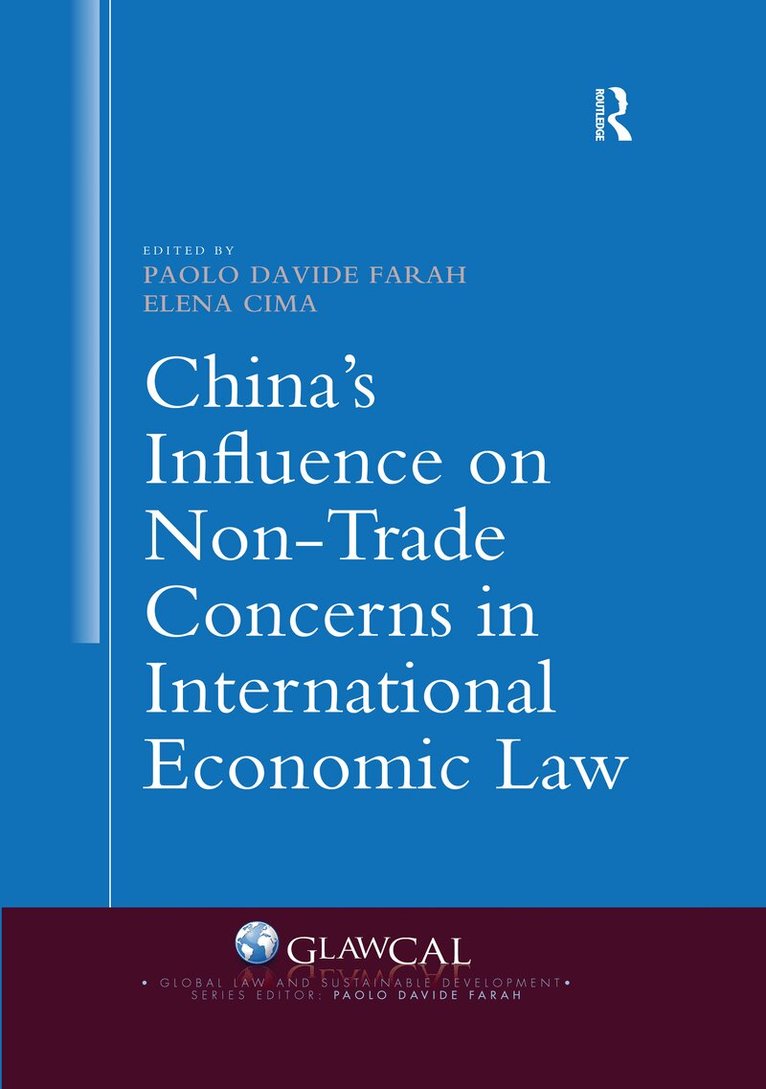
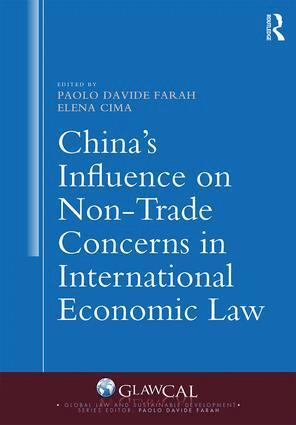
This volume examines the range of Non-Trade Concerns (NTCs) that may conflict with international economic rules and proposes ways to protect them within international law and international economic law. Globalization without local concerns can endanger relevant issues such as good governance, human rights, right to water, right to food, social, economic, cultural and environmental rights, labor rights, access to knowledge, public health, social welfare, consumer interests and animal welfare, climate change, energy, environmental protection and sustainable development, product safety, food safety and security. Focusing on China, the book shows the current trends of Chinese law and policy towards international standards. The authors argue that China can play a leading role in this context: not only has China adopted several reforms and new regulations to address NTCs; but it has started to play a very relevant role in international negotiations on NTCs such as climate change, energy, and culture, among others. While China is still considered a developing country, in particular from the NTCs’ point of view, it promises to be a key actor in international law in general and, more specifically, in international economic law in this respect. This volume assesses, taking into consideration its special context, China’s behavior internally and externally to understand its role and influence in shaping NTCs in the context of international economic law.
569 kr
Skickas inom 10-15 vardagar
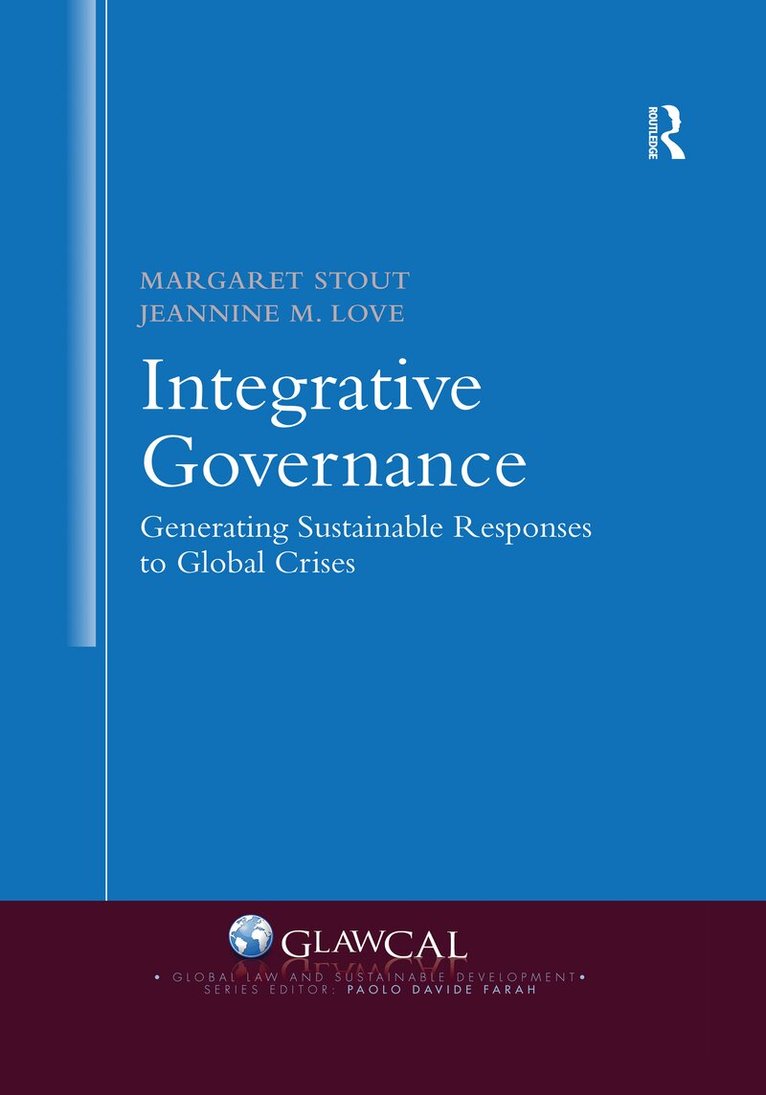
Dominant governance theories are drawn primarily from Euro-American sources, including emergent theories of network and collaborative governance. The authors contest this narrow view and seek a more globally inclusive and transdisciplinary perspective, arguing such an approach is more fruitful in addressing the wicked problems of sustainability—including social, economic, and environmental crises. This book thus offers and affirms an innovative governance approach that may hold more promise as a "universal" framework that is not colonizing in nature due to its grounding in relational process assumptions and practices. Using a comprehensive Governance Typology that encompasses ontological assumptions, psychosocial theory, epistemological concepts, belief systems, ethical concepts, political theory, economic theory, and administrative theory, the authors delve deeply into underlying philosophical commitments and carry them into practice through an approach they call Integrative Governance. The authors consider ways this approach to radical self-governance is already being implemented in the prefigurative politics of contemporary social movements, and they invite scholars and activists to: imagine governance in contexts of social, economic, and environmental interconnectedness; to use the ideal-type as an evaluative tool against which to measure practice; and to pursue paradigmatic change through collaborative praxis.
644 kr
Skickas inom 10-15 vardagar
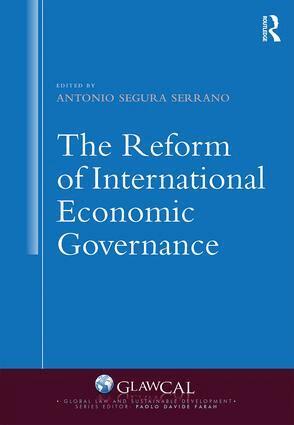
The second half of the twentieth century saw the emergence of international economic law as a major force in the international legal system. This force has been severely tested by the economic crisis of 2008. Unable to prevent the crisis, the existing legal mechanisms have struggled to react against its direst consequences. This book brings together leading experts to analyse the main causes of the crisis and the role that international economic law has played in trying to prevent it, on the one hand, and worsening it, on the other. The work highlights the reaction and examines the tools that have been created by the international legal field to implement international cooperation in an effort to help put an end to the crisis and avoid similar events in the future. The volume brings together eminent legal academics and economists to examine key issues from the perspectives of trade law, financial law, and investment law with the collective aim of reform of international economic governance.
1 944 kr
Skickas inom 10-15 vardagar
Dominant governance theories are drawn primarily from Euro-American sources, including emergent theories of network and collaborative governance. The authors contest this narrow view and seek a more globally inclusive and transdisciplinary perspective, arguing such an approach is more fruitful in addressing the wicked problems of sustainability—including social, economic, and environmental crises. This book thus offers and affirms an innovative governance approach that may hold more promise as a "universal" framework that is not colonizing in nature due to its grounding in relational process assumptions and practices. Using a comprehensive Governance Typology that encompasses ontological assumptions, psychosocial theory, epistemological concepts, belief systems, ethical concepts, political theory, economic theory, and administrative theory, the authors delve deeply into underlying philosophical commitments and carry them into practice through an approach they call Integrative Governance. The authors consider ways this approach to radical self-governance is already being implemented in the prefigurative politics of contemporary social movements, and they invite scholars and activists to: imagine governance in contexts of social, economic, and environmental interconnectedness; to use the ideal-type as an evaluative tool against which to measure practice; and to pursue paradigmatic change through collaborative praxis.
2 131 kr
Skickas inom 10-15 vardagar
This volume examines the range of Non-Trade Concerns (NTCs) that may conflict with international economic rules and proposes ways to protect them within international law and international economic law. Globalization without local concerns can endanger relevant issues such as good governance, human rights, right to water, right to food, social, economic, cultural and environmental rights, labor rights, access to knowledge, public health, social welfare, consumer interests and animal welfare, climate change, energy, environmental protection and sustainable development, product safety, food safety and security. Focusing on China, the book shows the current trends of Chinese law and policy towards international standards. The authors argue that China can play a leading role in this context: not only has China adopted several reforms and new regulations to address NTCs; but it has started to play a very relevant role in international negotiations on NTCs such as climate change, energy, and culture, among others. While China is still considered a developing country, in particular from the NTCs’ point of view, it promises to be a key actor in international law in general and, more specifically, in international economic law in this respect. This volume assesses, taking into consideration its special context, China’s behavior internally and externally to understand its role and influence in shaping NTCs in the context of international economic law.
2 006 kr
Skickas inom 10-15 vardagar
The second half of the twentieth century saw the emergence of international economic law as a major force in the international legal system. This force has been severely tested by the economic crisis of 2008. Unable to prevent the crisis, the existing legal mechanisms have struggled to react against its direst consequences. This book brings together leading experts to analyse the main causes of the crisis and the role that international economic law has played in trying to prevent it, on the one hand, and worsening it, on the other. The work highlights the reaction and examines the tools that have been created by the international legal field to implement international cooperation in an effort to help put an end to the crisis and avoid similar events in the future. The volume brings together eminent legal academics and economists to examine key issues from the perspectives of trade law, financial law, and investment law with the collective aim of reform of international economic governance.