Good News Studies - Böcker
Visar alla böcker i serien Good News Studies. Handla med fri frakt och snabb leverans.
4 produkter
4 produkter
408 kr
Skickas inom 3-6 vardagar
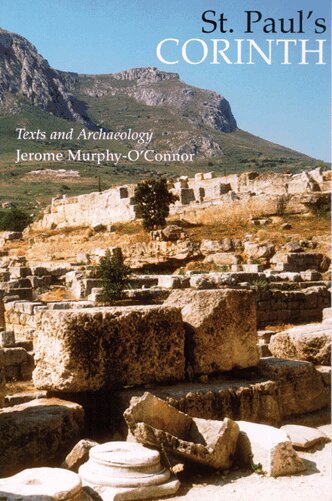
Corinth, one of the most fascinating centers of the early Christian movement, is explored through both literary and archaeological means. In St. Paul's Corinth the evidence of thirty-three Greek and Latin authors is arranged and presented chronologically from the first century B.C.E. to the second century C.E. This third revised and expanded edition includes new textual and archaeological material based on continuing research on Corinth. The text of previous editions has been thoroughly revised in the interest of greater clarity and accuracy. The edition also includes updated maps and plans of the region. St. Paul's Corinth is divided into four parts. Part 1: The Ancient Texts includes "Pausanias," "Antipater of Sidon," "Polystratus," Cicero," "Crinagoras," "Diodorus Siculus," "Strabo," "Livy," "Propertius," "Vitruvius," "Philo," "Inscription Honouring Iunia Theodora," "Petronius Arbiter," "Pliny the Elder," "Epictetus," "Flavius Josephus," "Martial," "Pseudo-Julian," "Dio Chrysostom," "Plutarch," "Juvenal," "Pliny the Younger," "Suetonius," Appian," "Florus," "Aelius Aristides," "Lucian," "Apuleius," Gellius," "Alciphron," "Dio Cassius," "Philostratus," and "Athenaeus." Part 2: Paul in Corinth includes "The Edict of Claudius," "The Proconsul Gallio," and "After the Founding Visit." Part 3: Archaeology includes "House Churches and the Eucharist," "Temple Banquets and the Body," and "The Workplace and the Apostolate." Part 4: Corinthian Bronze includes "The Passion for Possession," "The Value of Corinthian Bronze," "The Origins of Interest in Corinthian Bronze," "Corinthian Bronze in Rome," "How Was Corinthian Bronze Made?" "Recognizing an Authentic Corinthian Bronze," "Corinthian Bronze Statues and Figurines," "Utilitarian but Beautiful," "Bronze Production in Roman Corinth."
286 kr
Skickas inom 3-6 vardagar
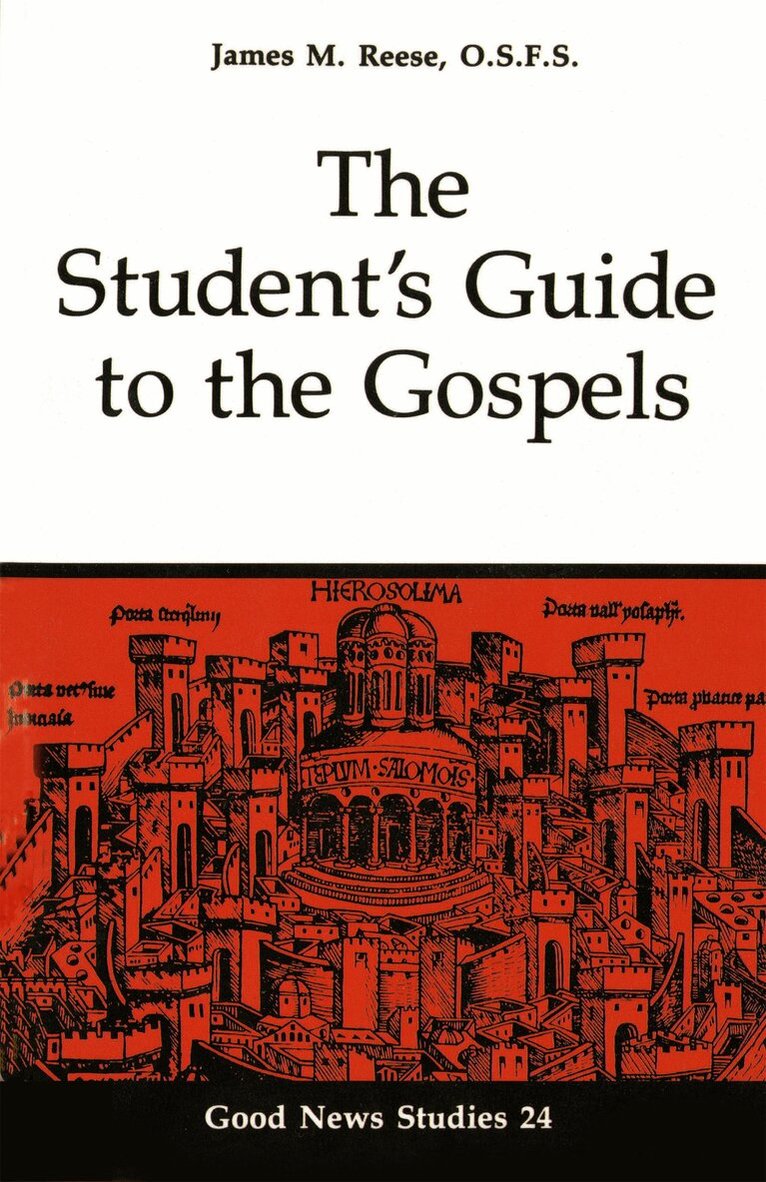
The Gospels are not only the foundation of the New Testament, they are also integral to the celebration of the Eucharist. Because the Gospels embody the whole Christian tradition, every Christian seeking to be a student of Christ should be a student of the Gospels.This work provides that opportunity for all Christians, whether in classrooms, study groups, prayer groups, or in individual study, to come to know Christ by coming to know the Gospels. The first three chapters address the literary, structural, and rhetorical principles underlying the Synoptic Gospels. The remaining chapters encourage readers to dialogue with the Gospels in three ways: 1) by explaining the structure and theology of each Synoptic Gospel, 2) by devoting attention to the four outstanding features of the Gospels parables, miracles, the passion narratives, and the resurrection accounts, and 3) by introducing the readers to the special features of John's Gospel. This flexible textbook's approach allows beginning students to encounter the Jesus of the Gospels on their own terms, to make their new knowledge personal and practical.
325 kr
Skickas inom 5-8 vardagar
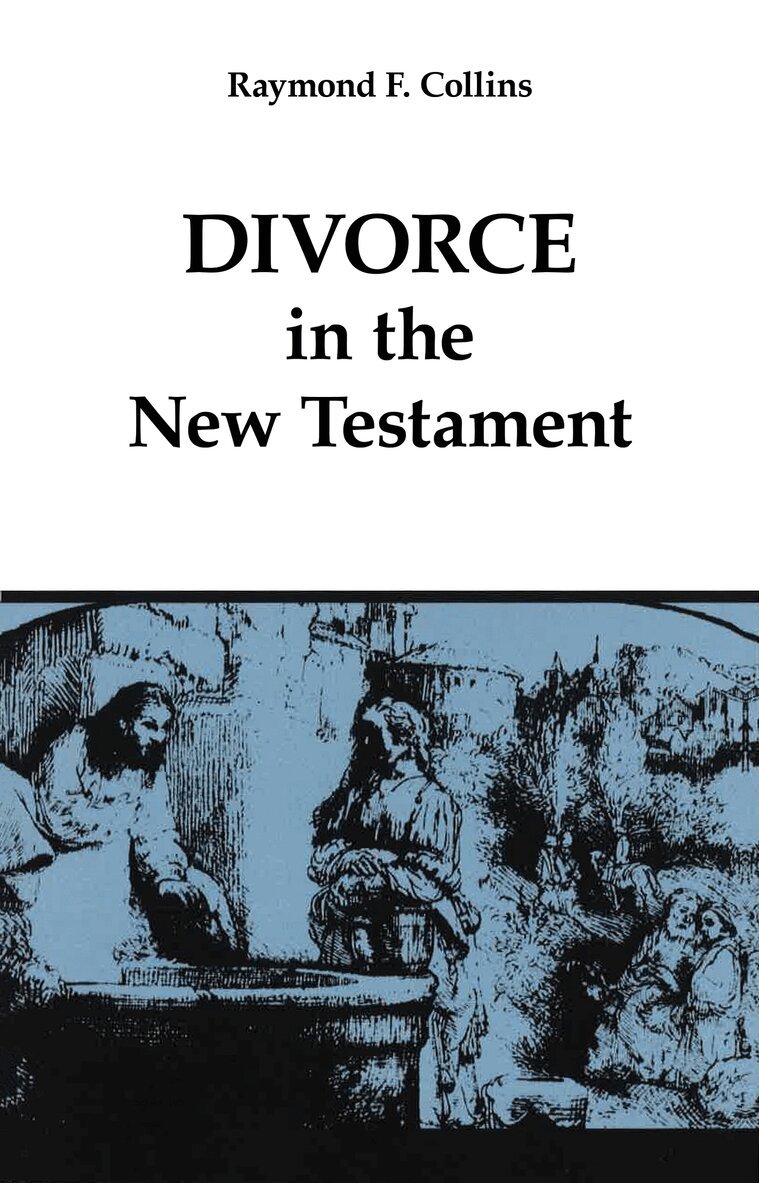
Few New Testament texts have had their meaning debated so vigorously as those in which Jesus discusses divorce: Matthew 5:32, Matthew 19:6, 9; Mark 10:9-12; Luke 16:18; and 1 Cor 7:11. From the early Church, through there formation, and into the present day, they have continued to rouse debate within the Churches and among believers.This work focuses on one aspect of that debate; namely, what Jesus has to say regarding divorce when his sayings are interpreted in their literary and historical context. To aid in this contextual understanding, the sayings are studied in the order in which they were written down in ancient times. Not every aspect of the debate therefore is addressed - nor could it be on an issue of such personal and pastoral complexity. Yet it is the challenge of biblical scholars to study the Word of God - in all its complexity - and to try to make that Word understandable. This work is offered to scholars and believers alike in the hope of adding to that understanding.
361 kr
Skickas inom 3-6 vardagar
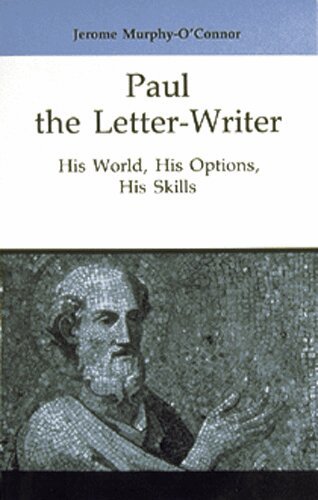
Paul's letters are intensely human documents. In the examination of such basic human questions as What did he write the letters with?" "Did he use a secretary to record them?" and "What was his personal writing style?" much real information can be gathered regarding his thought without intimidating the average reader. Scholar Jerome Murphy-O'Connor has put together such a work, one that, tapping into his knowledge of classical Greek and Latin writings, addresses the physical nature of a first-century letter as well as the actual composition, presentation, and question of authorship collaborative or other of the Pauline letters. The formal features of the letters and their organization show the extent to which Paul adapted current epistolary conventions. At the same time, they draw attention to his mood while writing and his relationship with the recipients. Father Murphy-O'Connor also investigates the question of how these letters, written to widely scattered churches, were brought together to form the Pauline canon. Jerome Murphy-O'Connor, OP (1935-2013), was a professor of New Testament at the famous École Biblique in Jerusalem since 1967. A frequent lecturer in summer sessions in the United States, he had written widely on Paul's life and theology. In addition to his 1 Corinthians and Becoming Human Together: The Pastoral Anthropology of St.Paul, The Liturgical Press has published his St. Paul's Corinth: Texts and Archaeology, which does for Corinth what this book does for the Pauline letters: reveal their character.