Greenwood Guides to American Roots Music – serie
Visar alla böcker i serien Greenwood Guides to American Roots Music. Handla med fri frakt och snabb leverans.
4 produkter
4 produkter
1 039 kr
Skickas inom 10-15 vardagar
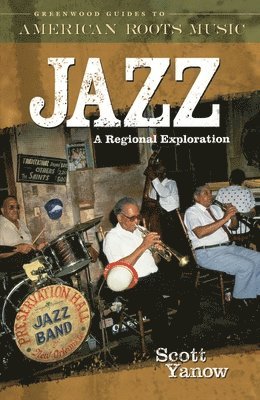
Many describe jazz asa the one true form of American music. Arising out of the syncopated rhythms of African music, Cajun songs, and Ragtime, jazz evolved in many 'scenes' throughout the country. The Young Lions jazz movement in New Orleans spread up the Mississippi in the northern Migration. Communities such as St. Louis and Sedalia became jazz centers, while Count Bassie led a revolution in Kansas City. Chicago became a center of freewheeling jazz in the 1920s with the efforts of Jelly Roll Morton, King Oliver, and Louis Armstrong, while classic jazz and swing took root in New York City in the '30s and '40s behind Duke Ellington, Cab Calloway, and Benny Goodman. And while 'boogie woogie' and 'hot jazz' grew out of the Big Apple, a generation of experimental musicians such as Chet Baker and Stan Kenton stood at the forefront of West Coast jazz. Yankow carefully traces the evolution of jazz from regional manifestations to an increasingly national language at the turn of the 20th century.Many audiophiles describe jazz as the one true form of American music. Arising out of the syncopated rhythms of African music, Cajun songs, and Ragtime, jazz evolved in many scenes throughout the country. The Young Lions jazz movement in New Orleans spread up the Mississippi in the northern Migration. Missouri communities such as St. Louis and Sedalia became jazz centers, while Count Basie led a revolution in Kansas City. Chicago became a center of freewheeling jazz in the 1920s with the efforts of Jelly Roll Morton, King Oliver, and Louis Armstrong, while classic jazz and swing took root in New York City in the '30s and '40s behind Duke Ellington, Cab Calloway, and Benny Goodman, the King of Swing. And while boogie woogie and hot jazz grew out of the Big Apple, a generation of experimental musicians such as Chet Baker and Stan Kenton stood at the forefront of West Coast jazz and the Los Angeles scene. Noted jazz writer Scott Yanow carefully traces the evolution of jazz from regional manifestations to an increasingly national language at the turn of the 20th and 21st centuries.The Greenwood Guide to American Roots Music series includes volumes on musical genres that have pervaded American culture. This series describes American musical traditions that have been associated with specific geographic regions throughout our nation. Each volume explores the different ways that a genre, such as jazz, has evolved naturally in different regions and scenes while becoming an undeniable element of American culture.
1 039 kr
Skickas inom 10-15 vardagar
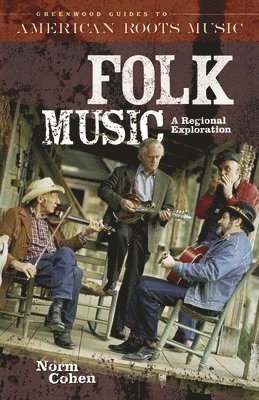
American folk music has provided a narrative thread to the fiber of the nation since its earliest days. Folk music scholar Norm Cohen presents a thorough exploration of the many ways in which folk music genres and subgenres have arisen in different regions of America. Chapters on folk song types, folk instrumentation, and the urban folk revival set further context to the discussion, and an itemized summary of noted folksong collections serves as an additional tool for both general readers and folk music scholars.American folk music has provided a narrative thread to the fiber of the nation since its earliest days. Forms ranging from New England sea chanteys to Pennsylvania Dutch worksongs helped shape life in the Northeast. Appalachian ballads evolved in the South, as did slave spirituals that served as codes for the Underground Railroad. Folk ballads on lumbering and mining grew in the Midwest and Northwest, while cowboy ballads emerged across the Great Plains and the West, and railroad songs accompanied expansion along the American frontier. Folk music scholar Norm Cohen presents a thorough exploration of the many ways in which folk music genres and subgenres have arisen in different regions of America. Chapters on folk song types, folk instrumentation, and the urban folk revival set further context to the discussion, and an itemized summary of noted folksong collections serves as an additional tool for both general readers and folk music scholars.The Greenwood Guide to American Roots Music series includes volumes on musical genres that have pervaded American culture. Each volume explores the different ways that selected genres, such as folk music, have evolved naturally in different regions and scenes thoughout the nation.
970 kr
Skickas inom 10-15 vardagar
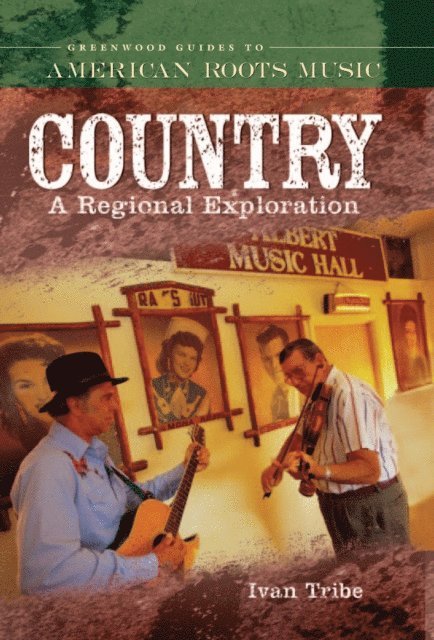
Over its eighty-year history, country music has evolved from little-known local talents to multimillion-dollar superstar musicians. In the 1920s, the first country music was broadcast from WSB radio in Atlanta and WBAP in Fort Worth, and the first records were recorded for Victor. In the 1930s, the first singing cowboys, among them Gene Autry and Roy Rogers, became film stars. After the war years, recordings boomed, and the Country Music Association was founded in 1958. Country music programs began on television with Porter Waggoner's program in 1960, followed by The Johnny Cash Show and Hee Haw. The Nashville Network channel was established in 1993, and from then on, the popular stars of country music have continued to break records, selling millions of copies of their albums. This book examines country music as it developed in regions throughout the United States, noting characteristics of its various subgenres such as bluegrass, honkytonk, and neotraditional music. It provides an indepth look at the people and events that have shaped the industry, and identifies the landmark recordings that old and new fans alike will want to add to their collections.Provides a detailed history of the following subgenres: hillbilly music, cowboy music, western swing, country rock, bluegrass, Nashville sound, and neotraditional, among others. Includes a chronology of country music and an extensive chapter of biographical sketches of all the major songwriters, musicians, and people in the industry.
970 kr
Skickas inom 10-15 vardagar
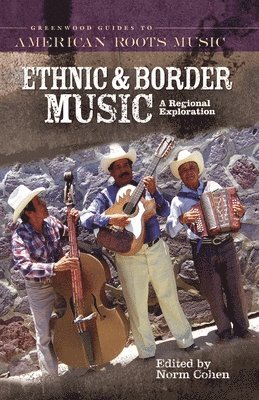
Just as American culture has been constructed by people of many ethnicities, roots music in America is multicultural in nature. Native American music resonates from Indigenous traditions of the Great Plains and the American West. Hispanic culture has spawned Border Music styles such as Conjunto and Tejano, while Cajun and Zydeco grew from cultural cross-pollination in the American South. In northern regions, Polish-American musicians popularized Polka, while Irish-American music holds a rich tradition throughout many regions in the East. This unique volume presents influential musical cultures from throughout the multicultural history of American vernacular song.Series blurb: This series presents five volumes on genres of music that have evolved in distinctly regional styles throughout the nation. With volumes authored by leading music scholars, the series traces the growth of Blues, Country, Folk, and Jazz in their many regional variations, as well as Ethnic and Border music traditions throughout America. Each volume presents an accessible analysis of the genre in its many regional forms, examining the musical elements and, when applicable, lyrical subjects as tied to specific cultures throughout the United States.Traditional music placed within regional perspectivesThe study of music shown to illustrate cultural nuancesMusical elements explained in accessible language for the lay readerGlossaries of important biographical and topical entries related to the genres