HERETICAL THOUGHT SERIES - Böcker
Visar alla böcker i serien HERETICAL THOUGHT SERIES. Handla med fri frakt och snabb leverans.
3 produkter
3 produkter
282 kr
Skickas inom 5-8 vardagar
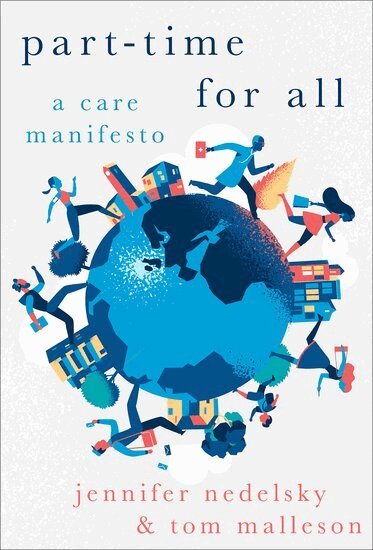
An innovative view of how everyone doing part-time work and part-time caregiving would promote flourishing families, free time, equality, and the true value of care.The way that Western countries approach work and care for others is fundamentally dysfunctional. The amount of time spent at work places unsustainable stress on families, particularly in the face of rising inequality, while those who perform care are underpaid and their labor undervalued.In Part-Time for All, Jennifer Nedelsky and Tom Malleson propose a plan to radically restructure both work and care. As such, they offer a solution to four pressing problems: the inequality of caregivers; family stress from competing demands of work and care; chronic time scarcity; and policymakers who are ignorant about the care that life requires--the care/policy divide. Nedelsky and Malleson argue that no capable adult should do paid work for more than 30 hours per week, so that they can contribute substantial amounts of time to unpaid care for family, friends, or other "communities of care." While the authors focus primarily on human-to-human care, they also include care for the earth as a vital part of this shift. All of the elements of Nedelsky and Malleson's proposal already exist piecemeal in various countries. What is needed is to integrate the key reforms and scale them up. The result is an actionable plan to motivate widespread take-up of part-time work and part-time care. Highlighting how these new norms can create synergies of institutional transformation while fostering a cultural shift in the value of care and work, this "care manifesto" identifies the deep changes that are needed and lays out a feasible path forward.
360 kr
Skickas inom 5-8 vardagar
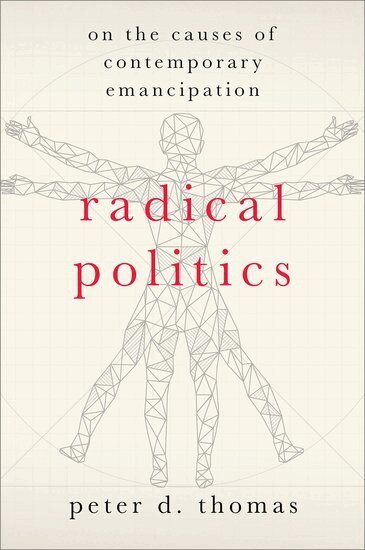
The last twenty years have witnessed a proliferation of radical social and political movements around the world, in wave after wave of struggles against intersecting forms of exploitation, domination, and subalternization. From the International Women's Strike and Occupy, to #BlackLivesMatter and direct action against the climate emergency, a series of common questions have continually re-emerged as immediate and practical challenges. How should radical political movements relate to the state? What makes emancipatory politics fundamentally different from both technocratic and populist models of "politics as usual"? Which forms of organization are most likely to deepen and extend the dynamics that led to the emergence of these movements in the first place?To investigate the goal, nature, method, and organizational forms of radical political engagement against the neoliberal consensus, Peter D. Thomas draws on the work of Antonio Gramsci, the Italian Communist Party leader and political theorist best known for his ideas about hegemony. Hegemony is a concept that, most commonly understood, describes either the way in which a political system functions from the top down, through a culture of passive consent, or a process of neutralizing cultural and political differences to form unity in a nation state. Interestingly, both the left and right have seized on this idea, but, of course, to different political ends. In Radical Politics, Thomas argues that both of these interpretations are misapprehensions of the radical potential of Gramsci's ideas. Offering a new reading of Gramsci, Thomas contends that hegemony is a process of differentiation in which political culture is always changing, and always with the goal of moving toward expanded freedom. Over the course of the book, Thomas looks at the way in which various theorists have approached the dilemma of how to engage productively in radical politics and explains why hegemony is a method of doing politics rather than an end goal. A distinctive and forceful contribution to ongoing debates about the nature and orientation of contemporary emancipatory movements, Radical Politics provides a counterintuitive interpretation of Gramsci's famous and newly relevant work.
295 kr
Skickas inom 5-8 vardagar
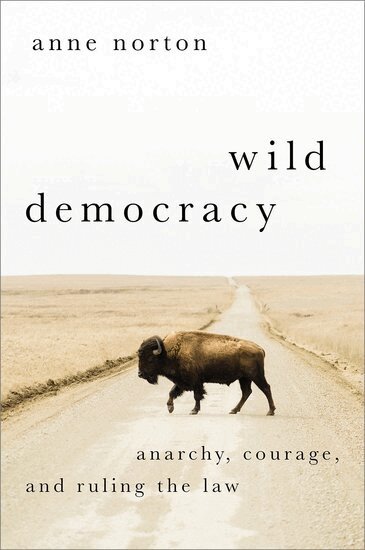
Wild Democracy calls for a more anarchic, more courageous democracy. This is an ethic for people who know the rights they hold, and who struggle to rule themselves. This is an ethic for unfinished revolutions; an ethic for those who will not be mastered. This is an ethic for those who hold fast to the rights they have by nature. This is an ethic that requires courage. Democracy is always a risky business; full of promise and danger. The promise is the freedom to rule ourselves. The danger is fear: fear of the unknown, fear of the unruly, fear of one another, fear of anarchy. Fear leads to authoritarianism. The fearful look for a strong hand, a powerful leader, a protector, a gun. Anarchy leads to courage, to self-reliance, self-discipline, self-rule, and solidarity. Anarchy is the nursery of democracy. It is not anarchy we have to fear, it is authoritarianism.We have been taught to see the people as a problem to be managed. Anne Norton sees them as a source of strength. Anarchic democracy grows wild: springing from the everyday actions of ordinary human beings. Liberalism and conservatism alike have turned away from the democratic, to institutions, rules, and regulations. Anne Norton turns to anarchic people who practice democratic ethics.