History of Information Security - Böcker
Visar alla böcker i serien History of Information Security. Handla med fri frakt och snabb leverans.
5 produkter
5 produkter
1 589 kr
Skickas inom 10-15 vardagar
This book tells the story of government-sponsored wiretapping in Britain and the United States from the rise of telephony in the 1870s until the terrorist attacks of 9/11.It pays particular attention to the 1990s, which marked one of the most dramatic turns in the history of telecommunications interception. During that time, fiber optic and satellite networks rapidly replaced the copper-based analogue telephone system that had remained virtually unchanged since the 1870s. That remarkable technological advance facilitated the rise of the networked home computer, cellular telephony, and the Internet, and users hailed the dawn of the digital information age. However, security agencies such as the FBI and MI5 were concerned. Since the emergence of telegraphy in the 1830s, security services could intercept private messages using wiretaps, and this was facilitated by some of the world's largest telecommunications monopolies such as AT&T in the US and British Telecom in the UK. Thenew, digital networks were incompatible with traditional wiretap technology. To make things more complicated for the security services, these monopolies had been privatized and broken up into smaller companies during the 1980s, and in the new deregulated landscape the agencies had to seek assistance from thousands of startup companies that were often unwilling to help. So for the first time in history, technological and institutional changes posed a threat to the security services’ wiretapping activities, and government officials in Washington and London acted quickly to protect their ability to spy, they sought to force the industry to change the very architecture of the digital telecommunications network.This book describes in detail the tense negotiations between governments, the telecommunications industry, and civil liberties groups during an unprecedented moment in history when the above security agencies were unable to wiretap. It reveals for the first time the thoughts of some of the protagonists in these crucial negotiations, and explains why their outcome may have forever altered the trajectory of our information society.
1 167 kr
Skickas inom 10-15 vardagar
This book tells the story of government-sponsored wiretapping in Britain and the United States from the rise of telephony in the 1870s until the terrorist attacks of 9/11.It pays particular attention to the 1990s, which marked one of the most dramatic turns in the history of telecommunications interception. During that time, fiber optic and satellite networks rapidly replaced the copper-based analogue telephone system that had remained virtually unchanged since the 1870s. That remarkable technological advance facilitated the rise of the networked home computer, cellular telephony, and the Internet, and users hailed the dawn of the digital information age. However, security agencies such as the FBI and MI5 were concerned. Since the emergence of telegraphy in the 1830s, security services could intercept private messages using wiretaps, and this was facilitated by some of the world's largest telecommunications monopolies such as AT&T in the US and British Telecom in the UK. Thenew, digital networks were incompatible with traditional wiretap technology. To make things more complicated for the security services, these monopolies had been privatized and broken up into smaller companies during the 1980s, and in the new deregulated landscape the agencies had to seek assistance from thousands of startup companies that were often unwilling to help. So for the first time in history, technological and institutional changes posed a threat to the security services’ wiretapping activities, and government officials in Washington and London acted quickly to protect their ability to spy, they sought to force the industry to change the very architecture of the digital telecommunications network.This book describes in detail the tense negotiations between governments, the telecommunications industry, and civil liberties groups during an unprecedented moment in history when the above security agencies were unable to wiretap. It reveals for the first time the thoughts of some of the protagonists in these crucial negotiations, and explains why their outcome may have forever altered the trajectory of our information society.
505 kr
Skickas inom 7-10 vardagar
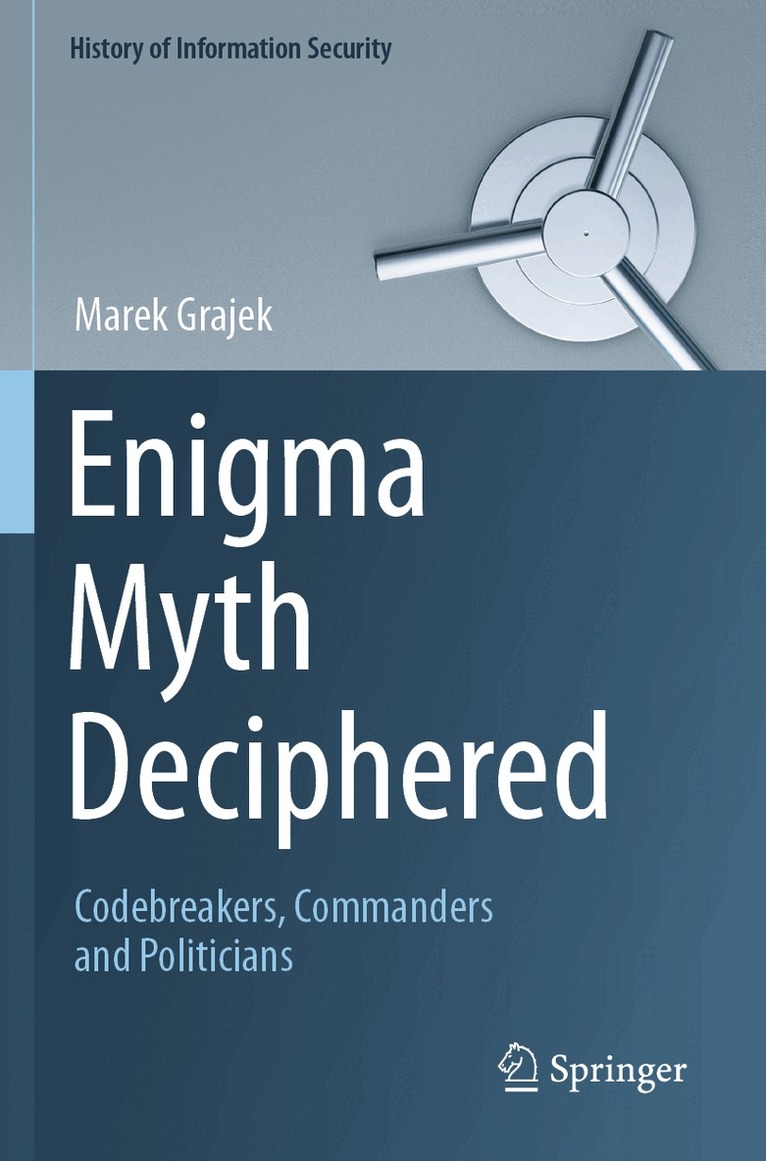
This unique new volume analyses source documents both previously known and recently declassified, generating an extremely broad and original synthesis about Enigma.The author uses his experience as a cryptologist to fill in gaps in the sources or to correct misguided interpretations, also adding the passion of a journalist, drawing a vivid picture of the characters and the story. As a Pole, he presents this story through the lens of the fate of the Polish mathematicians who were the first to break the cipher as early as 1932 and laid the foundations for the subsequent Allied success.The book’s coverage ranges from the mathematical foundations of codebreaking, through the complex fates of the people and organisations involved in the attacks on the Enigma ciphers, the impact of decrypts on the fate of the major campaigns of the Second World War, to the role that wartime cryptology and codebreakers played in the birth of digital civilisation. The Polish mathematicians’ story is presented in the full context of the struggle with the cipher, including the complex interplay between codebreakers, military commanders and politicians of the UK, US, Poland, France, and the Third Reich.By looking at events through the eyes of a cryptologist rather than solely as a historian, the reader is given a glimpse into the backstage of the cryptologic workshop; a better understanding of the scale and nature of the challenges codebreakers faced; and insights into their responses to those challenges, as well as the emotions, dilemmas, disappointments, and triumphs involved.
507 kr
Skickas inom 10-15 vardagar
This unique new volume analyses source documents both previously known and recently declassified, generating an extremely broad and original synthesis about Enigma.The author uses his experience as a cryptologist to fill in gaps in the sources or to correct misguided interpretations, also adding the passion of a journalist, drawing a vivid picture of the characters and the story. As a Pole, he presents this story through the lens of the fate of the Polish mathematicians who were the first to break the cipher as early as 1932 and laid the foundations for the subsequent Allied success.The book’s coverage ranges from the mathematical foundations of codebreaking, through the complex fates of the people and organisations involved in the attacks on the Enigma ciphers, the impact of decrypts on the fate of the major campaigns of the Second World War, to the role that wartime cryptology and codebreakers played in the birth of digital civilisation. The Polish mathematicians’ story is presented in the full context of the struggle with the cipher, including the complex interplay between codebreakers, military commanders and politicians of the UK, US, Poland, France, and the Third Reich.By looking at events through the eyes of a cryptologist rather than solely as a historian, the reader is given a glimpse into the backstage of the cryptologic workshop; a better understanding of the scale and nature of the challenges codebreakers faced; and insights into their responses to those challenges, as well as the emotions, dilemmas, disappointments, and triumphs involved.
673 kr
Kommande
The history of breaking teletype codes fills an important gap in the history of World War II, illustrating along the way the development of technology from the “Victorian Internet” to the digital civilization.The history of breaking teletype ciphers was one of the last secrets of World War II, declassified only in the 21st century. To date, there has been no summary combining the scattered threads found in the literature. This book is a synthesis of the available knowledge on the breaking of teletype ciphers—illustrating their development, theoretical foundations, technical aspects of encryption machines and devices used to attack ciphers. In addition, it explores the challenges faced by cryptologists on both sides of the conflict—as well as their responses to these challenges, which brought them to the threshold of building a modern digital civilization and enabled them to cross it shortly after the end of the conflict.Topics and features:· One of the protagonists of the story described in the book said that while Enigma prevented defeat in the first phase of the war, it was Fish that secured victory in the second. The story of breaking Fish ciphers is as fascinating as that of breaking Enigma's codes, but much less well known.· This is the first monograph on the subject, based on materials that were only declassified in the 21st century.· The author combines the skills of a historian with the knowledge of a cryptologist, allowing us to look over the shoulders of World War II cryptologists and presenting their work in the context of greater history.· The book presents the evolution of means of communication and the protection of its confidentiality from the Crimean War to the beginnings of the Cold War. The heroes of its final episodes laid the foundations of modern digital civilization.This unique volume is indispensable for readers interested in the history of cryptology. In addition, it will be fascinating for readers interested in the history of technology, particularly the roots of the digital civilization and the history of World War II.Dr. Marek Grajek is a retired consultant in the field of business applications of cryptology, as well as a historian of related developments.