History of Linguistics – Serie
Visar alla böcker i serien History of Linguistics. Handla med fri frakt och snabb leverans.
2 produkter
2 produkter
17 333 kr
Skickas inom 10-15 vardagar
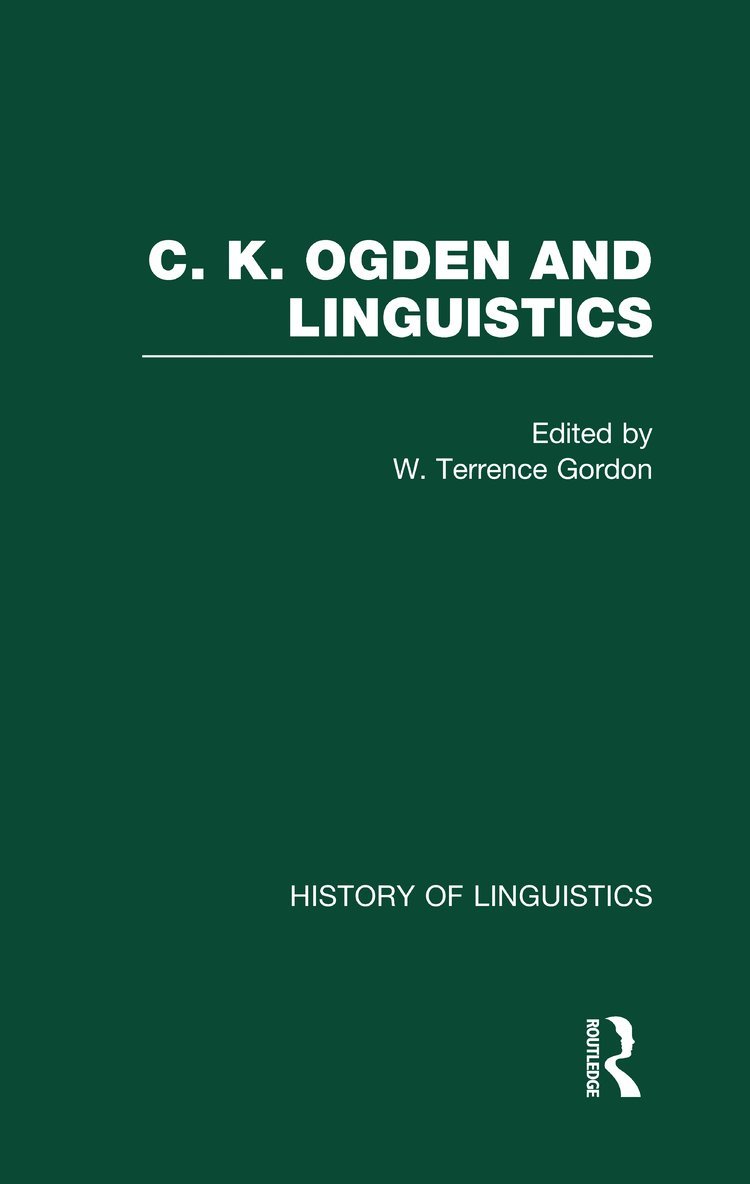
Charles Kay Ogden was best known in the world press as the founder of Basic English and remains known as the senior author (with I A Richards) of The Meaning of Meaning and the expositor of Jeremy Bentham's writings. But he also turned his boundless intellectual energy to allied fields such as psychology, lexicography, and prosody. This collection contains a new critical edition of The Meaning of Meaning. Based on the first edition of 1923, it restores the version of the important "Word Magic" chapter eliminated from all subsequent editions. It illuminates the text by collating it with earlier serial publication, the holograph manuscript predating Ogden's collaboration with Richards, subsequent publications, and Ogden's private correspondence.
23 098 kr
Tillfälligt slut
Growing interest in the history of linguistics in recent years has focused attention on the origin and development of key concepts in modern linguistic thought. German linguists played key roles in that development - so much so that by the end of the 19th century Germany had emerged as the undisputed centre of European linguistics.The history of linguistics is often thought of in terms of a progression from the speculative and normative concerns of the 18th century (linked with names like Herder and Gottsched) to the avowedly "scientific" programmes of the 19th century associated with Franz Bopp and Hermann Paul. This selection reflects this sense of progress, but is also intended to paint a more complex picture. It reprints writing on language by important philosophical figures such as Leibniz, a classic work in the history of European thought, Humboldt's Über die Verschiedenheit des menschlichen Sprachbaues [1836], as well as lesser known works such as Pott's Die Ungleichheit menschlichen Rassen hauptsächlich vom sprachwissenschaftlichen Standpunkt [1856].The introductions to each volume give the reader historical insight into changes in the thematic focus and into the evolving division of labour between linguistics and disciplines such as theology, biology and psychology.