History of Terror - Böcker
Visar alla böcker i serien History of Terror. Handla med fri frakt och snabb leverans.
6 produkter
6 produkter
152 kr
Skickas
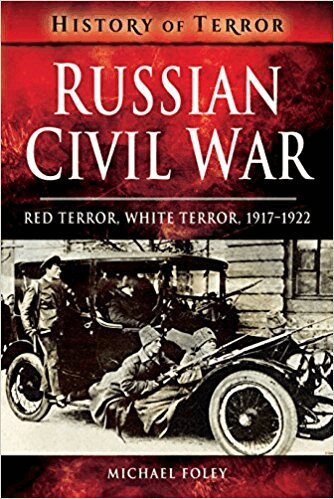
The Russian Revolution is remembered as the catalyst for the bloody conflict between the Reds and the Whites as each side tried to gain control of the country. But it was far from being so simple. The conflict did not only involve the Russians. The author contemplates whether the Russians could have capitulated to Germany and whether in fact Russia was ever in any condition to carry on the fight even before the revolution began, examining whether a collapse of the war in the east would lead to Allied defeat in the west.The effect of the revolution and the civil war went far beyond the borders of the enormous Russian Empire and far beyond the end of the Great War and the civil war, not least of all whom the millions of subject peoples and races supported: the Reds, the Whites, the Germans, or none. The conflict in Russia between 1917 and 1922 is a fascinating and complex period of history but the brutally colourful cast of characters-Tsar Nicholas II, Brusilov, Kerensky, Lenin, Trotsy, Stalin and Churchill-would make a violent impact on the world stage for a century to come.
152 kr
Skickas
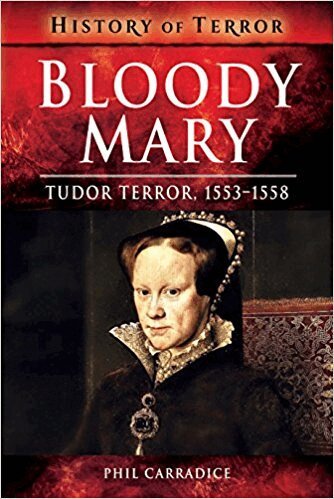
When Mary Tudor, eldest daughter of Henry VIII, succeeded to the throne of England in 1553 it was with wild rejoicing and a degree of popularity rarely seen on the accession of a British monarch. Yet at her death five years later she was almost universally reviled and hated by her people so much so that she was posthumously awarded the sobriquet Bloody Mary.Mary's revenge on the church and on a religion she hated was swift and total. Noblemen like the Duke of Northumberland, would-be queens like Lady Jane Grey, churchmen like Thomas Cranmer and bishops Latimer and Ridley, Mary's fires or the executioner's axe ended the lives of all of them.During her brief reign she restored the Catholic faith to England and had over 280 Protestant martyrs burned at the stake. For a reign that looked so promising Mary's brief period in power brought the greatest officially sanctioned religious bloodletting the country had ever seen. And at the end, the stench of the execution fires and the grey smoke that settled like a pall across the country seemed to epitomize the reactionary forces that had assumed control.
152 kr
Skickas
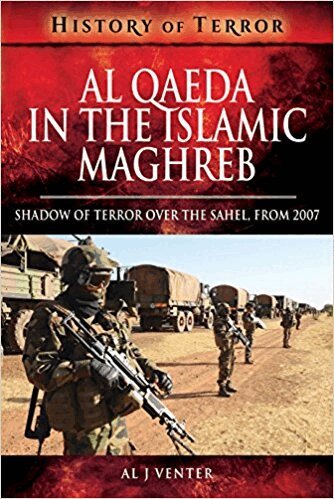
Insurgencies in Iraq, Afghanistan, Syria, Yemen and elsewhere-the majority linked to al Qaeda-are in the news on an almost daily basis. But very little surfaces about a festering insurgency that has been on the go for six years in West Africa under the acronym of AQIM, or al Qaeda in the Islamic Maghreb. This low-level series of guerrilla conflicts is widespread and sporadic, covering an area as vast as Europe. Nigeria has been drawn into the equation because its Boko Haram insurgent faction maintains close ties with AQIM and Islamic State.For now though, the focus is on Mali where several jihadist groups-despite formal peace agreements-remain active. Involved is the French army and air force as well as the United Nations Multidimensional Integrated Stabilization Mission in Mali (MINUSMA), the European Union Training Mission in Mali (EUTM) as well as the European Union Capacity Building Mission (EUCAP).The insurrection that fostered all this broke out early 2012 when President Fran�ois Hollande announced the beginning of Operation Serval. Five hours later the first squadrons of French Gazelle helicopter gunships began attacking Islamist columns. A day later French fighter jets based in Chad, almost 2,000 kilometres away, were making sorties against rebel ground targets in northern Mali.
157 kr
Skickas
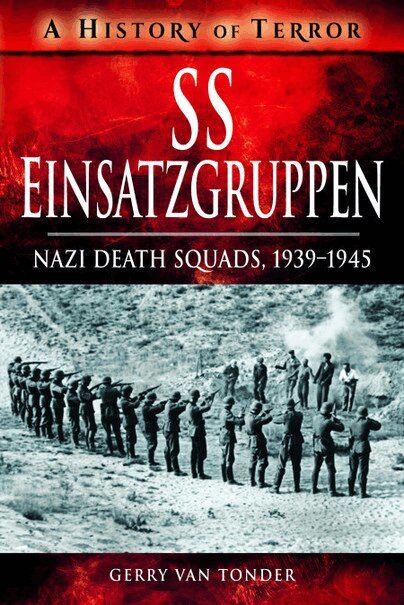
In June 1941, Adolf Hitler, whose loathing of Slavs and Jewish Bolsheviks knew no bounds, launched Operation Barbarossa, throwing 4 million troops, supported by tanks, artillery and aircraft into the Soviet Union. Operational groups of the German Security Service, SD, followed into the Baltic and the Black Sea areas. Their orders: neutralize elements hostile to Nazi domination. Combined SS and SD headquarters were set up in Riga (northern), Mogilev (middle) and Kiev (southern), each with subordinate units of the SD, the Einsatzgruppen, and lower echelons of Einsatzkommandos.Communist and Soviet NKVD (People's Commissariat for Internal Affairs) agents were targeted, and from August 1941 to March 1943, 4,000 Soviet and communist agents were arrested and executed. In addition, far greater numbers of partisans and communists were shot to ensure political and ethnic purity in the occupied territories. Einsatzgruppe A, under Adolf Eichmann, executed 29,000 people-listed as 'Jews' or 'mostly Jews'-in Latvia and Lithuania in the early stages of the operation. In the Einsatzgruppe C report for September 1941, there is a comment, '50,000 executions i?1/2foreseeni?1/2 in Kiev'. In five months in 1941, Einsatzkommando III commander, Karl Jager, reported killing 138,272 (48,252 men, 55,556 women and 34,464 children).The Einsatzgruppen were death squads-their tools the rifle, the pistol and the machine gun. It is estimated that the Einsatzgruppen executed more than 2 million people between 1941 and 1945, including 1.3 million Jews.
148 kr
Skickas
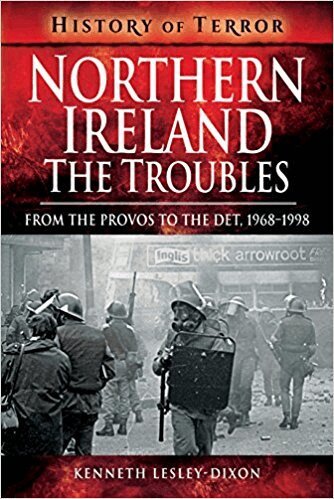
It is, of course, no secret that undercover Special Forces and intelligence agencies operated in Northern Ireland and the Republic throughout the 'troubles', from 1969 to 2001 and beyond. What is less well known is how these units were recruited, how they operated, what their mandate was and what they actually did. This is the first account to reveal much of this hitherto unpublished information, providing a truly unique record of surveillance, reconnaissance, intelligence gathering, collusion and undercover combat.An astonishing number of agencies were active to combat the IRA murder squads ('the Provos'), among others the Military Reaction Force (MRF) and the Special Reconnaissance Unit, also known as the 14 Field Security and Intelligence Company ('The Det'), as well as MI5, Special Branch, the RUC, the UDR and the Force Research Unit (FRU), later the Joint Support Group (JSG)). It deals with still contentious and challenging issues as shoot-to-kill, murder squads, the Disappeared, and collusion with loyalists. It examines the findings of the Stevens, Cassel and De Silva reports and looks at operations Loughgall, Andersonstown, Gibraltar and others.
152 kr
Skickas
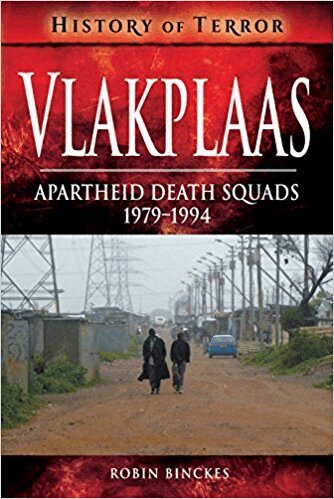
Faced with the 'total onslaught' by its enemies, in 1979, Apartheid South Africa established Vlakplaas-lit. 'shallow farm', a 100-hectare farm nestling in the hills outside Pretoria on the Hennops River-as a secret operation under the arm of C1, a counter-terrorism division of the South African Police headed by Brigadier Schoon.The first phase of Vlakplaas operations, up until 1989, was aimed at fighting the enemy: the armed wings of the liberation movements, the African National Congress's Umkhonto we Sizwe (or 'MK'), the Pan Africanist Congress's Azanian People's Liberation Army (or APLA) and the South African Communist Party. The second phase was 'fighting organized crime' in which Vlakplaas itself seamlessly adopted the mantle of organized crime in the notorious downtown area of Johannesburg's Hillbrow. The final phase, the most destructive, was as the murky 'Third Force' that destabilized the country in an orgy of violence in the run-up to its first democratic elections, in 1994.Operating within South Africa as well as beyond the country's borders, it will never been known how many victims can be attributed to the Vlakplaas agenda-with much of the execution taking place on the farm itself-but a conservative figure of 1,000 murders and assassinations has been mooted.