Hyundai Commission - Böcker
Visar alla böcker i serien Hyundai Commission. Handla med fri frakt och snabb leverans.
4 produkter
4 produkter
165 kr
Skickas inom 7-10 vardagar
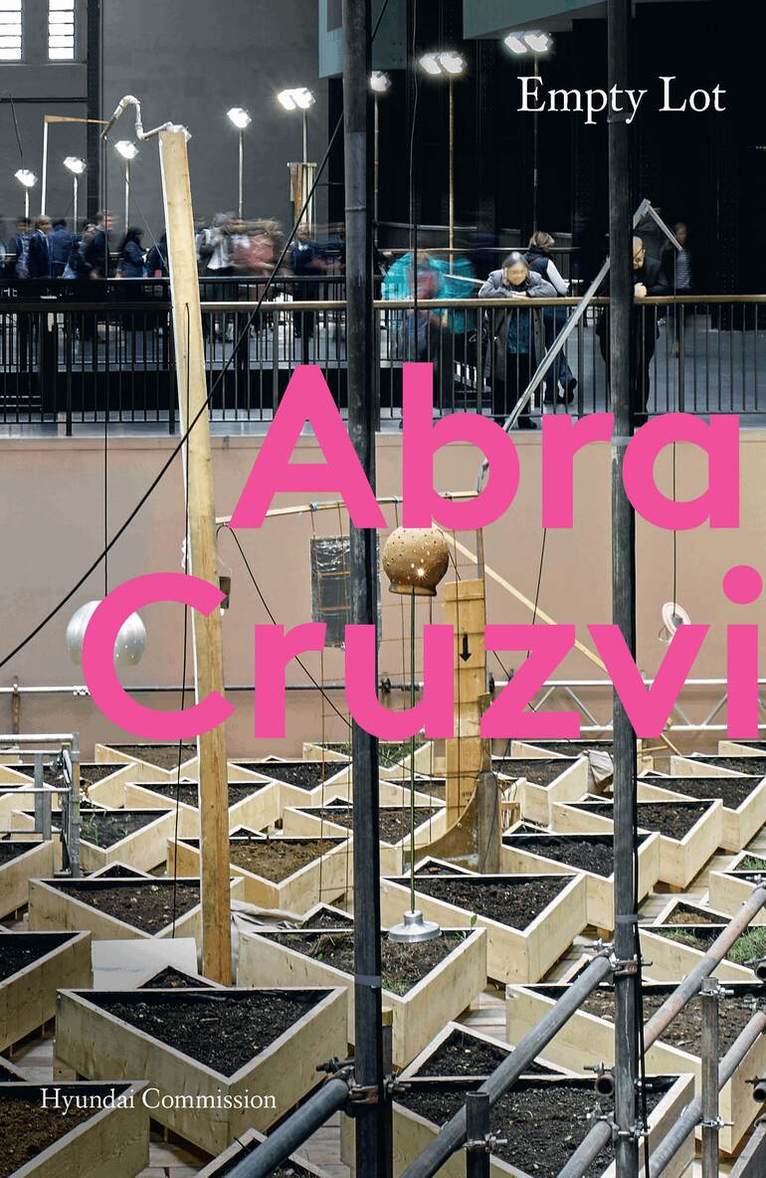
Since Tate Modern opened, the Turbine Hall has hosted some of the most memorable and acclaimed site-specific art installations of the twenty-first century, reaching an audience of millions. This book is published to accompany the inaugaral Hyundai Commission, the first in a new series of annual exhibitions that will give renowned international contemporary artists an opportunity to create new work for one of the world's most iconic museum spaces. Abraham Cruzvillegas (b.1968), one of the key figures to have emerged in Mexico among a new wave of conceptual artists, is best known for his sculptural works made from local found objects and materials. He has titled this body of work autoconstruccion or 'self-construction'. This term usually refers to the way Mexicans of his parents' generation, arriving in the capital from rural areas in the 1960s, self-built their houses in stages, improvising with whatever materials they could source. His approach to sculpture continues the principles of autoconstruccion, recycling locally found objects and improvising new ways to build, design and create. As an artist he is also concerned with how a strong community spirit and hope can be maintained in precarious economic and political conditions. These ideas have led to projects staged in Glasgow, Paris, Oxford, Gwangju, Kassel and many other places. During a residency at Cove Park in Scotland, Cruzvillegas gathered discarded materials such as wool, fencing, a rubber buoy and bits of wood to create a dynamic installation of sculptures. In Glasgow he created a modified bicycle which he pedalled through the city while playing music created in collaboration with local bands. In recent years his work has been exhibited at Haus der Kunst, Munich (2014); Walker Art Center, Minneapolis (2013); Modern Art Oxford (2011) and The New Museum, New York (2011). Created in close collaboration with the artist, the book will feature a fully illustrated survey of Cruzvillegas's life and work and an in-depth interview with curator Mark Godfrey. Exploring in fascinating detail the artistic processes involved in creating this monumental new work, it will include stunning photographs of the awe-inspiring installation to be revealed in the Turbine Hall in October 2015.
193 kr
Skickas inom 7-10 vardagar
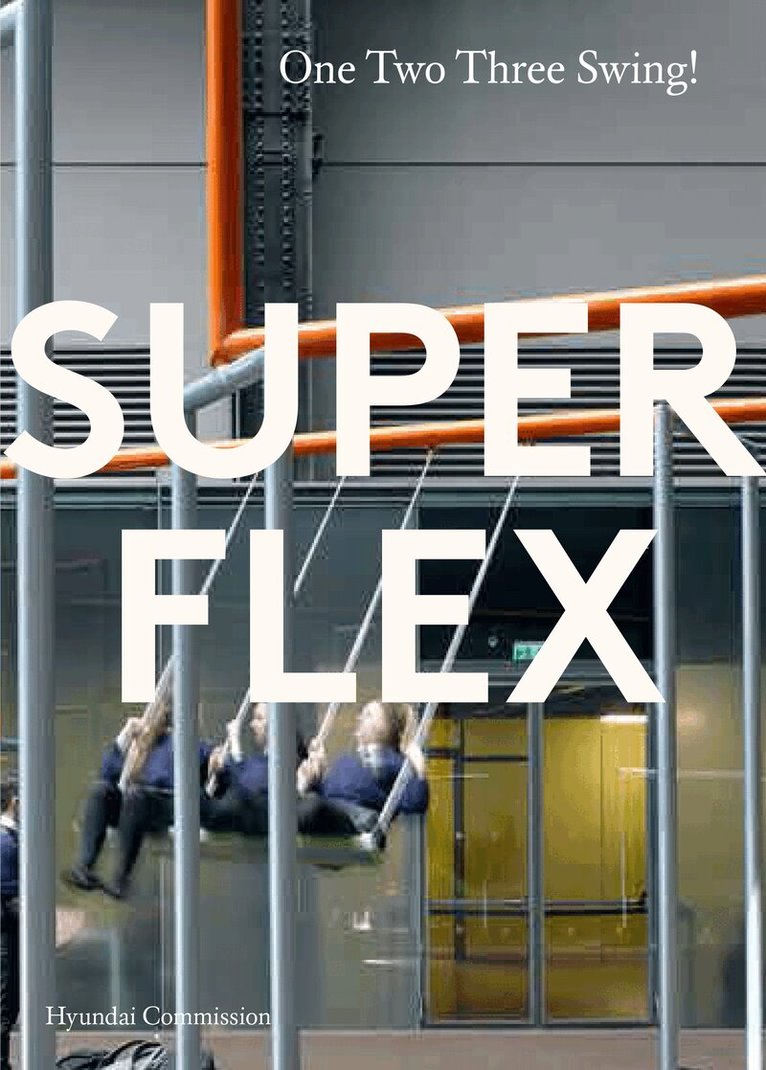
Since Tate Modern opened in 2000, the Turbine Hall has hosted some of the world's most memorable and acclaimed works of contemporary art, reaching an audience of millions. The way artists have interpreted this vast industrial space has revolutionised public perceptions of contemporary art in the twenty-first century. The annual Hyundai Commission, now in its third year, gives artists an opportunity to create new work for this unique context. In 2017 the Hyundai Commission will be undertaken by the Danish collective SUPERFLEX, known for their interests in unifying urban spaces and commenting on society with authenticity through art. Migration, alternative energy and the power of global capital are just some of the motives behind their highly engaging, visual and often humorous work. They are best known for their playfully subversive installations and films. Referring to their works as tools, the collective engage alternative models for the creation of social and economic organisation. SUPERFLEX was founded in 1993 by Danish artists Bjornstjerne Christiansen, Jakob Fenger and Rasmus Nielsen. Based in Copenhagen, they have gained international recognition for their projects and solo exhibitions around the world and are represented in several public art institutions, such as MoMA, New York; Queensland Art Gallery, Brisbane; Louisiana Museum of Modern Art, Denmark; FRAC Nord-Pas de Calais; and Coleccion Jumex, Mexico City. Created in close collaboration with SUPERFLEX, the book will feature a fully illustrated survey of their work and an in-depth conversation between the artists and curator Donald Hyslop. Exploring in fascinating detail the artistic processes involved in creating this exciting new work, it will include stunning photographs of the dramatic new installation to be revealed in the Turbine Hall in October 2017.
193 kr
Skickas inom 7-10 vardagar
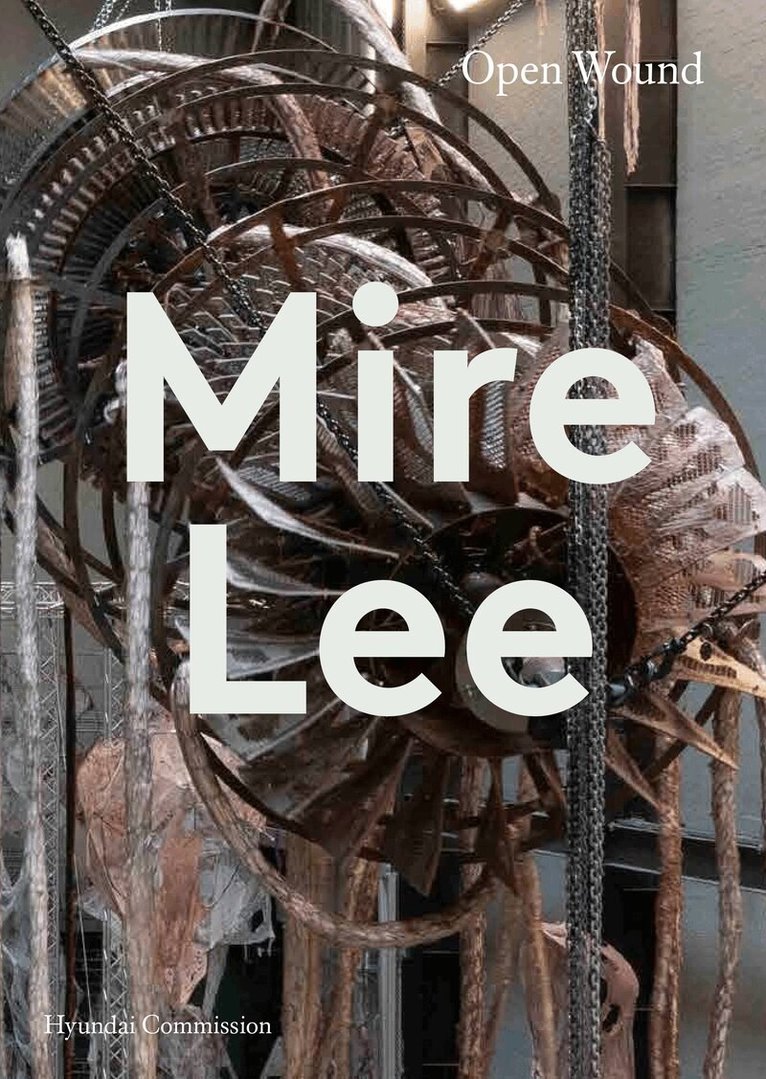
Mire Lee is known for her visceral sculptures, which use kinetic, mechanised elements to invoke the tension between soft forms and rigid systems. Open Wound, her new site-specific work, is a monumental installation that re-imagines Tate Modern as an industrial womb. Reflecting on the building’s former life as a power station, Open Wound presents the Turbine Hall as a living factory, finding human dreams and desires in sprawling mechanical systems. Lee populates the space with ‘skins’, fabric sculptures that hang from the ceiling on metal chains. A motorised turbine slowly spins, discharging a viscous liquid from flesh-like silicone tentacles into a large tray. Throughout the exhibition, the skins are moved by technicians to harden on nearby racks before being hauled into the air. Over time they accumulate, birthed from the body of the building while appearing to shed from the ceiling above. For Lee, the complex histories of industry are awe-inspiring in their violence and scale. Her work considers the physical and emotional labour of people living in times of precarity and decline, ‘witnessing a human, an individual life, getting caught in a larger system’.In this book, two inspiring new essays and a conversation between the artist and the curators cast light on the full range of Lee’s artistic influences and unique point of view. Together they serve as an introduction to one of today’s most intriguing and original contemporary artists.
207 kr
Skickas
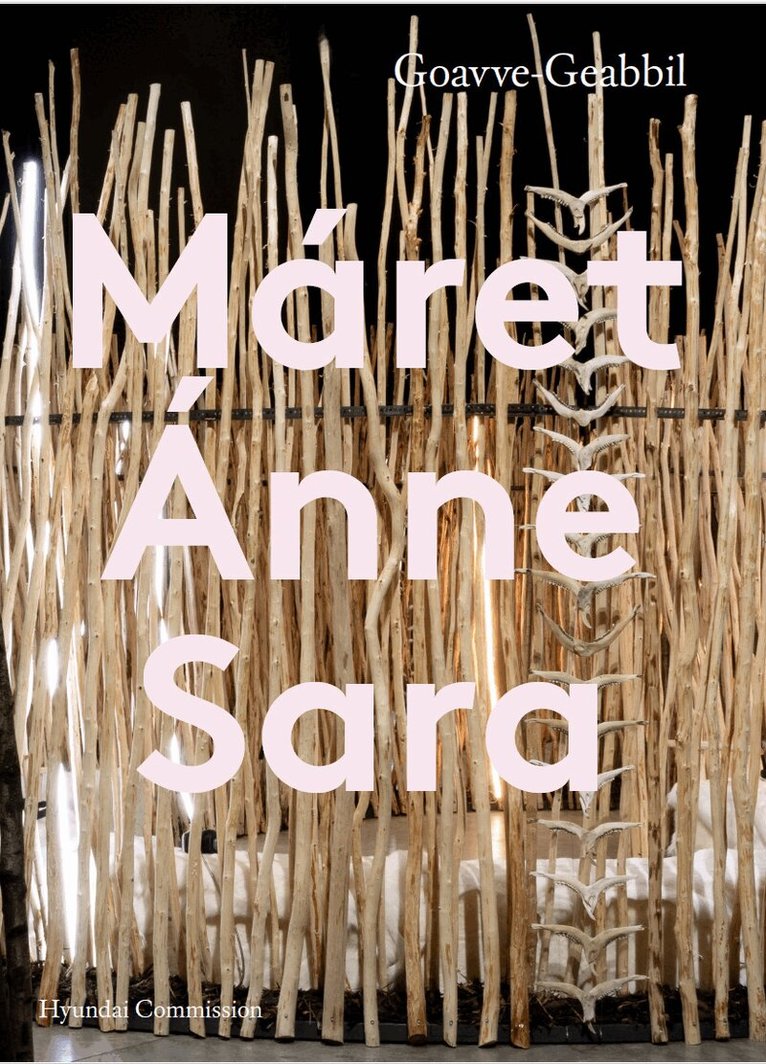
Known for her work exploring global ecological issues, Northern Sámi artist Máret Ánne Sara responds to Tate Modern’s history as a former oil and coal power station, inviting us to view energy not as a resource to be exploited, but as a sacred life-force, sustained through reciprocal relationships.Born in 1983 to a Sámi reindeer herding family in Guovdageaidnu in the Norwegian part of Sápmi, Sara's multidisciplinary practice highlights the impact of Nordic colonialism on Sámi ways of life, exploring the importance of preserving Sámi ancestral knowledge and values to protect the environment for future generations.Goavve-Geabbil honours this worldview, inviting us to embrace the power of Sámi philosophy and science. 'Goavvi' is a snow condition caused by extreme temperature fluctuations due to climate change, leading to widespread malnutrition and starvation of reindeer, while 'Geabbil' signifies the importance of adaptability and mutual support in the face of this ongoing crisis.Often using materials and methodologies derived from reindeer herding, Sara's powerful sculptures and installations which uphold the reciprocal relationship between animals, lands, waters, and humans.