Illinois Medieval Studies - Böcker
Visar alla böcker i serien Illinois Medieval Studies. Handla med fri frakt och snabb leverans.
3 produkter
3 produkter
1 155 kr
Skickas inom 7-10 vardagar
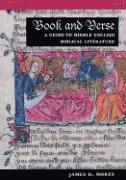
Exploding the myth that the Bible was largely unknown to medieval lay folk, Book and Verse presents the first comprehensive catalog of Middle English biblical literature: a body of work that, because of its accessibility and familiarity, was the primary biblical resource of the English Middle Ages. The medieval Bible, much like the Bible today, consists in practical terms not of a set of texts within a canon but of those stories which, because of a combination of liturgical significance and picturesque qualities, form a provisional "Bible" in the popular imagination. As James Morey explains in his introduction, although the Latin Bible was not accessible to the average English-speaker, paraphrases- systematic appropriation and refashioning of biblical texts-served as a medium through which the Bible was promulgated in the vernacular. This explains why biblical allusions, models, and large-scale appropriations of biblical narrative pervade nearly every medieval genre. Book and Verse is an indispensable guide to the variety and extent of biblical literature in England, exclusive of drama and the Wycliffite Bible that appeared between the twelfth and the fifteenth centuries. Entries provide detailed information on how much of what parts of the Bible appear in Middle English and where this biblical material can be found. Comprehensive indexing by name, keyword, and biblical verse allows a researcher to find, for example, all the occurrences of the Flood Story or of the encounter between Elijah and the Widow of Sarephta. An invaluable resource, Book and Verse provides the first easy access to the "popular Bible" assembled before and after John Wyclif's translation of the Vulgate into English.
569 kr
Skickas inom 11-20 vardagar
Medieval genres of lyric poetry have long been accepted as self-evident categories that define the literature. Medieval Lyric reveals the importance of investigating the historicity of genres themselves as a means of coming to grips with the evolution of the poems they were meant to characterize and the cultures they attempted to serve. An essential volume for medievalists and scholars of comparative literature, Medieval Lyric opens up a reconsideration of genre in medieval European lyric. Departing from a perspective that asks how medieval genres correspond with twentieth-century ideas of structure or with the evolution of poetry, this valuable collection argues that the development of genres should be considered as a historical phenomenon, embedded in a given culture and responsive to social and literary change. An array of widely respected scholars draw from French, Italian, German, Latin, Catalan, Spanish, Galician-Portuguese, Arabic, and Hebrew literature to address questions about what genre could have meant to medieval poets and poet-musicians and what distortions result when modern ideas of genre are applied to medieval lyric. Essays explore the relations of medieval lyric genres, such as love songs and satires, to their historical contexts and consider genres in relation to rhetoric and music. Contributors also challenge the concept of genre itself, clarifying what we do when we read in genres and demonstrating the hazards of applying concepts of genre to an age that did not think in those terms.
1 155 kr
Skickas inom 7-10 vardagar
In Aspects of Old English Poetic Syntax, Mary Blockley uses modern linguistics to tackle the thorny problem of how to interpret a written language that relied neither on punctuation nor on capitalization to mark clause boundaries and subordination. Distinguished by a remarkable combination of erudition and lucidity, Aspects of Old English Poetic Syntax provides new insight into the rules that govern syntactic relationships and indicates how these rules differ for prose and verse. Blockley considers the functions of four of the most common and most syntactically important words in Old English, as well as such features of clauses as verb-initial order, negative contraction, and unexpressed but understood subjects. Picking up where Bruce Mitchell's classic Old English Syntax left off, Blockley shows how such common words and structures mark the relationships between phrases and clauses.Blockley also considers how the poetic tradition compensated for the loss in written texts of the syntactic functions served by intonation and inflection. Arguing that verse relied instead on a prescriptively regulated, unambiguous syntax, she suggests principles that promise more complex and subtle interpretations of familiar texts such as Beowulf as well as a wealth of other Old English writings.