Inalienable Rights – serie
Visar alla böcker i serien Inalienable Rights. Handla med fri frakt och snabb leverans.
20 produkter
20 produkter
Häftad, Engelska, 2020
197 kr
Skickas
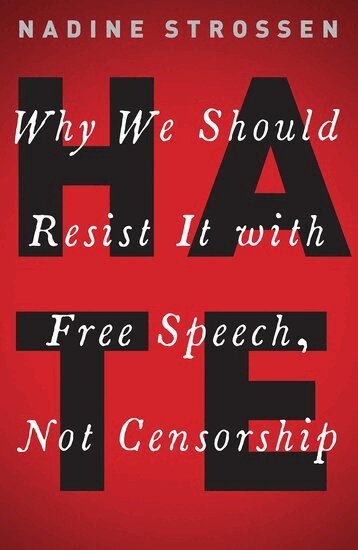
The updated paperback edition of HATE dispels misunderstandings plaguing our perennial debates about "hate speech vs. free speech," showing that the First Amendment approach promotes free speech and democracy, equality, and societal harmony. As "hate speech" has no generally accepted definition, we hear many incorrect assumptions that it is either absolutely unprotected or absolutely protected from censorship. Rather, U.S. law allows government to punish hateful or discriminatory speech in specific contexts when it directly causes imminent serious harm. Yet, government may not punish such speech solely because its message is disfavored, disturbing, or vaguely feared to possibly contribute to some future harm. "Hate speech" censorship proponents stress the potential harms such speech might further: discrimination, violence, and psychic injuries. However, there has been little analysis of whether censorship effectively counters the feared injuries. Citing evidence from many countries, this book shows that "hate speech" are at best ineffective and at worst counterproductive. Therefore, prominent social justice advocates worldwide maintain that the best way to resist hate and promote equality is not censorship, but rather, vigorous "counterspeech" and activism.
Inbunden, Engelska, 2015
282 kr
Skickas inom 5-8 vardagar
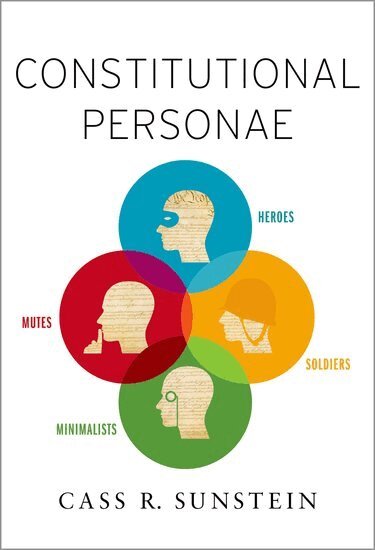
Since America's founding, the U.S. Supreme Court had issued a vast number of decisions on a staggeringly wide variety of subjects. And hundreds of judges have occupied the bench. Yet as Cass R. Sunstein, the eminent legal scholar and bestselling co-author of Nudge, points out, almost every one of the Justices fits into a very small number of types regardless of ideology: the hero, the soldier, the minimalist, and the mute. Heroes are willing to invoke the Constitution to invalidate state laws, federal legislation, and prior Court decisions. They loudly embrace first principles and are prone to flair, employing dramatic language to fundamentally reshape the law. Soldiers, on the other hand, are skeptical of judicial power, and typically defer to decisions made by the political branches. Minimalists favor small steps and only incremental change. They worry that bold reversals of long-established traditions may be counterproductive, producing a backlash that only leads to another reversal. Mutes would rather say nothing at all about the big constitutional issues, and instead tend to decide cases on narrow grounds or keep controversial cases out of the Court altogether by denying standing. As Sunstein shows, many of the most important constitutional debates are in fact contests between the four Personae. Whether the issue involves slavery, gender equality, same-sex marriage, executive power, surveillance, or freedom of speech, debates have turned on choices made among the four Personae--choices that derive as much from psychology as constitutional theory. Sunstein himself defends a form of minimalism, arguing that it is the best approach in a self-governing society of free people. More broadly, he casts a genuinely novel light on longstanding disputes over the proper way to interpret the constitution, demonstrating that behind virtually every decision and beneath all of the abstract theory lurk the four Personae. By emphasizing the centrality of character types, Sunstein forces us to rethink everything we know about how the Supreme Court works.
Inbunden, Engelska, 2016
337 kr
Skickas inom 5-8 vardagar
Since the Revolutionary War, America's military and political leaders have recognized that U.S. national security depends upon the collection of intelligence. Absent information about foreign threats, the thinking went, the country and its citizens stood in great peril. To address this, the Courts and Congress have historically given the President broad leeway to obtain foreign intelligence. But in order to find information about an individual in the United States, the executive branch had to demonstrate that the person was an agent of a foreign power. Today, that barrier no longer exists. The intelligence community now collects massive amounts of data and then looks for potential threats to the United States. As renowned national security law scholar Laura K. Donohue explains in The Future of Foreign Intelligence, the internet and new technologies such as biometric identification systems have not changed our lives in countless ways. But they have also led to a very worrying transformation. The amount and types of information that the government can obtain has radically expanded, and information that is being collected for foreign intelligence purposes is now being used for domestic criminal prosecution. Traditionally, the Courts have allowed exceptions to the Fourth Amendment rule barring illegal search and seizure on national security grounds. But the new ways in which we collect intelligence are swallowing the rule altogether. Just as alarming, the ever-weaker standards that mark foreign intelligence collection are now being used domestically-and the convergence between these realms threatens individual liberty.Donohue traces the evolution of foreign intelligence law and pairs that account with the progress of Fourth Amendment jurisprudence. She argues that the programmatic surveillance that the National Security Agency conducts amounts to a general warrant-the prevention of which was the point of introducing the Fourth Amendment. The expansion of foreign intelligence surveillance - leant momentum by significant advances in technology, the Global War on Terror, and the emphasis on securing the homeland - now threatens to consume protections essential to privacy, which is a necessary component of a healthy democracy. Donohue offers an agenda for reining in the national security state's expansive reach, primarily through Congressional statutory reform that will force the executive and judicial branches to take privacy seriously, even as it provides for the continued collection of intelligence central to U.S. national security. Both alarming and penetrating, this is essential reading for anyone interested in the future of foreign intelligence and privacy in the United States.
Inbunden, Engelska, 2020
250 kr
Skickas inom 5-8 vardagar
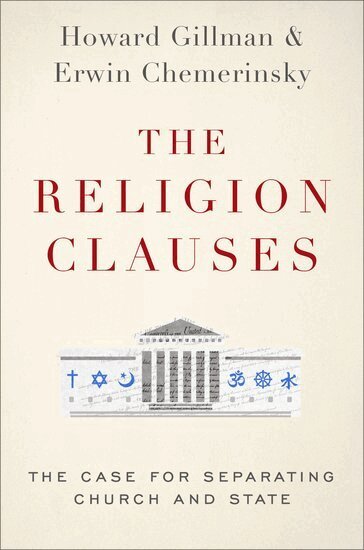
Throughout American history, views on the proper relationship between the state and religion have been deeply divided. And, with recent changes in the composition of the Supreme Court, First Amendment law concerning religion is likely to change dramatically in the years ahead. In The Religion Clauses, Erwin Chemerinsky and Howard Gillman, two of America's leading constitutional scholars, begin by explaining how freedom of religion is enshrined in the First Amendment through two provisions. They defend a robust view of both clauses and work from the premise that that the establishment clause is best understood, in the words of Thomas Jefferson, as creating a wall separating church and state. After examining all the major approaches to the meaning of the Constitution's religion clauses, they contend that the best approaches are for the government to be strictly secular and for there to be no special exemptions for religious people from neutral and general laws that others must obey. In an America that is only becoming more diverse with respect to religion, this is not only the fairest approach, but the one most in tune with what the First Amendment actually prescribes. Both a pithy primer on the meaning of the religion clauses and a broad-ranging indictment of the Court's misinterpretation of them in recent years, The Religion Clauses shows how a separationist approach is most consistent with the concerns of the founders who drafted the Constitution and with the needs of a religiously pluralistic society in the 21st century.
Inbunden, Engelska, 2018
267 kr
Skickas inom 5-8 vardagar
HATE dispels misunderstandings plaguing our perennial debates about hate speech vs. free speech, showing that the First Amendment approach promotes free speech and democracy, equality, and societal harmony. We hear too many incorrect assertions that hate speech which has no generally accepted definition is either absolutely unprotected or absolutely protected from censorship. Rather, U.S. law allows government to punish hateful or discriminatory speech in specific contexts when it directly causes imminent serious harm, but government may not punish such speech solely because its message is disfavored, disturbing, or vaguely feared to possibly contribute to some future harm. When U.S. officials formerly wielded such broad censorship power, they suppressed dissident speech, including equal rights advocacy. Likewise, current politicians have attacked Black Lives Matter protests as hate speech. Hate speech censorship proponents stress the potential harms such speech might further: discrimination, violence, and psychic injuries. However, there has been little analysis of whether censorship effectively counters the feared injuries. Citing evidence from many countries, this book shows that hate speech laws are at best ineffective and at worst counterproductive. Their inevitably vague terms invest enforcing officials with broad discretion; predictably, regular targets are minority views and speakers. Therefore, prominent social justice advocates in the U.S. and beyond maintain that the best way to resist hate and promote equality is not censorship, but rather, vigorous counterspeech and activism.
Inbunden, Engelska, 2020
324 kr
Skickas inom 3-6 vardagar
From 1953 to 1969, the Supreme Court under Chief Justice Earl Warren brought about many of the proudest achievements of American constitutional law. The Warren declared racial segregation and laws forbidding interracial marriage to be unconstitutional; it expanded the right of citizens to criticize public officials; it held school prayer unconstitutional; and it ruled that people accused of a crime must be given a lawyer even if they can't afford one. Yet, despite those and other achievements, conservative critics have fiercely accused the justices of the Warren Court of abusing their authority by supposedly imposing their own opinions on the nation.As the eminent legal scholars Geoffrey R. Stone and David A. Strauss demonstrate in Democracy and Equality, the Warren Court's approach to the Constitution was consistent with the most basic values of our Constitution and with the most fundamental responsibilities of our judiciary. Stone and Strauss describer the Warren Court's extraordinary achievements by reviewing its jurisprudence across a range of issues addressing our nation's commitment to the values of democracy and equality. In each chapter, they tell the story of a critical decision, exploring the historical and legal context of each case, the Court's reasoning, and how the justices of the Warren Court fulfilled the Court's most important responsibilities. This powerfully argued evaluation of the Warren Court's legacy, in commemoration of the 50th anniversary of the end of the Warren Court, both celebrates and defends the Warren Court's achievements against almost sixty-five years of unrelenting and unwarranted attacks by conservatives. It demonstrates not only why the Warren Court's approach to constitutional interpretation was correct and admirable, but also why the approach of the Warren Court was far superior to that of the increasingly conservative justices who have dominated the Supreme Court over the past half-century.
Inbunden, Engelska, 2021
267 kr
Skickas inom 5-8 vardagar
A detailed argument of how our government has interfered in the direction of America's media landscape that traces major transformations in media since the printing press and charts a path for reform. In The Changing Ecosystem of the News, Martha Minow takes stock of the new media landscape. She focuses on the extent to which our constitutional system is to blame for the current parlous state of affairs and on our government's responsibilities for alleviating the problem. As Minow shows, the First Amendment of the US Constitution assumes the existence and durability of a private industry. Although the First Amendment does not govern the conduct of entirely private enterprises, nothing in the Constitution forecloses government action to regulate concentrated economic power, to require disclosure of who is financing communications, or to support news initiatives where there are market failures. Moreover, the federal government has contributed financial resources, laws, and regulations to develop and shape media in the United States. Thus, Minow argues that the transformation of media from printing presses to the internet was shaped by deliberate government policies that influenced the direction of private enterprise. In short, the government has crafted the direction and contours of America's media ecosystem.Building upon this basic argument, Minow outlines an array of reforms, including a new fairness doctrine, regulating digital platforms as public utilities, using antitrust authority to regulate the media, policing fraud, and more robust funding of public media. As she stresses, such reforms are not merely plausible ideas; they are the kinds of initiatives needed if the First Amendment guarantee of freedom of the press continues to hold meaning in the twenty-first century.
Inbunden, Engelska, 2010
224 kr
Skickas inom 5-8 vardagar
Lee Bollinger is one of our foremost experts on the First Amendment--both an erudite scholar and elegant advocate. In this sweeping account, he explores the troubled history of a free press in America and looks toward the challenges ahead. The first amendment guaranteed freedom of the press in seemingly clear terms. However, over the course of American history, Bollinger notes, the idea of press freedom has evolved, in response to social, political, technological, and legal changes. It was not until the twentieth century that freedom of the press came to be understood as guaranteeing an "uninhibited, robust and wide-open" public discourse. But even during the twentieth century, government continually tried to erect barriers: the sedition laws of World War One, the use of libel law, the Pentagon Papers case, and efforts to limit press access to information. Bollinger utilizes this history to explore the meaning of freedom of the press in our globalized, internet-dominated era. As he shows, we have now entered uncharted territory. What does press freedom mean when our news outlets can instantaneously disseminate information throughout the world? When foreign media have immediate access to the American market? Bollinger stresses that even though the law will surely evolve in the coming years, we must maintain our commitment to a press that is "uninhibited, robust, and wide-open," not only in America but everywhere. Given the new ability of foreign media to reach the United States via the Internet and vice versa, it is in America's national interest for press freedoms to expand overseas. While protecting the freedom of the press at home remains a crucial task, the next challenge is to help create a global public forum suitable for an increasingly interconnected world. Part of Oxford's landmark Inalienable Rights series, this book will set the agenda for how we think about the press in the twenty-first century.
Inbunden, Engelska, 2023
217 kr
Skickas
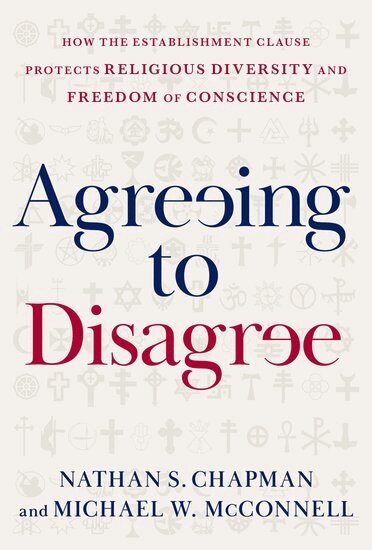
In one of the most thorough accounts of the Establishment Clause of the First Amendment, Nathan S. Chapman and Michael W. McConnell provide an insightful overview of the legal history and meaning of the clause, as well as its value for promoting equal religious freedom and diversity in contemporary America.The Establishment Clause of the First Amendment, "Congress shall make no law respecting an establishment of religion", may be the most contentious and misunderstood provision of the entire U.S. Constitution. It lies at the heart of America's culture wars. But what, exactly, is an "establishment of religion"? And what is a law "respecting" it?Many commentators reduce the clause to "the separation of church and state." This implies that church and state are at odds, that the public sphere must be secular, and that the Establishment Clause is in tension with the Free Exercise of Religion Clause. All of these implications misconstrue the Establishment Clause's original purpose and enduring value for a religiously pluralistic society. The clause facilitates religious diversity and guarantees equality of religious freedom by prohibiting the government from coercing or inducing citizens to change their religious beliefs and practices.In Agreeing to Disagree, Nathan S. Chapman and Michael W. McConnell detail the theological, political, and philosophical underpinnings of the Establishment Clause, state disestablishment, and the disestablishment norms applied to the states by the Fourteenth Amendment. Americans in the early Republic were intimately acquainted with the laws used in England, the colonies, and early states to enforce religious uniformity. The Establishment Clause was understood to prohibit the government from incentivizing such uniformity. Chapman and McConnell show how the U.S. Supreme Court has largely implemented these purposes in cases addressing prayer in school, state funding of religious schools, religious symbols on public property, and limits on religious accommodations. In one of the most thorough accounts of the Establishment Clause, Chapman and McConnell argue that the clause is best understood as a constitutional commitment for Americans to agree to disagree about matters of faith.
Inbunden, Engelska, 2010
279 kr
Skickas inom 3-6 vardagar
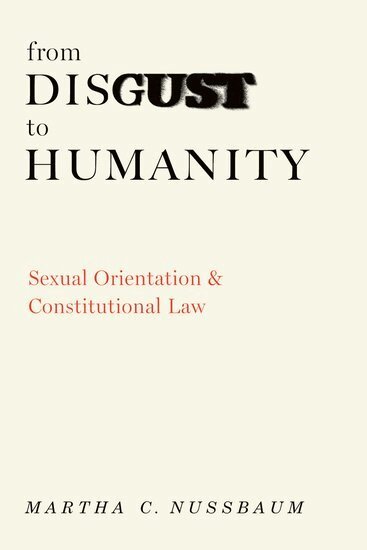
A distinguished professor of law and philosophy at the University of Chicago, a prolific writer and award-winning thinker, Martha Nussbaum stands as one of our foremost authorities on law, justice, freedom, morality, and emotion. In From Disgust to Humanity, Nussbaum aims her considerable intellectual firepower at the bulwark of opposition to gay equality: the politics of disgust. Nussbaum argues that disgust has long been among the fundamental motivations of those who are fighting for legal discrimination against lesbian and gay citizens. When confronted with same-sex acts and relationships, she writes, they experience "a deep aversion akin to that inspired by bodily wastes, slimy insects, and spoiled food--and then cite that very reaction to justify a range of legal restrictions, from sodomy laws to bans on same-sex marriage." Leon Kass, former head of President Bush's President's Council on Bioethics, even argues that this repugnance has an inherent "wisdom," steering us away from destructive choices. Nussbaum believes that the politics of disgust must be confronted directly, for it contradicts the basic principle of the equality of all citizens under the law."It says that the mere fact that you happen to make me want to vomit is reason enough for me to treat you as a social pariah, denying you some of your most basic entitlements as a citizen." In its place she offers a "politics of humanity," based not merely on respect, but something akin to love, an uplifting imaginative engagement with others, an active effort to see the world from their perspectives, as fellow human beings. Combining rigorous analysis of the leading constitutional cases with philosophical reflection about underlying concepts of privacy, respect, discrimination, and liberty, Nussbaum discusses issues ranging from non-discrimination and same-sex marriage to "public sex." Recent landmark decisions suggest that the views of state and federal courts are shifting toward a humanity-centered vision, and Nussbaum's powerful arguments will undoubtedly advance that cause. Incisive, rigorous, and deeply humane, From Disgust to Humanity is a stunning contribution to Oxford's distinguished Inalienable Rights series.
Inbunden, Engelska, 2010
279 kr
Skickas inom 3-6 vardagar
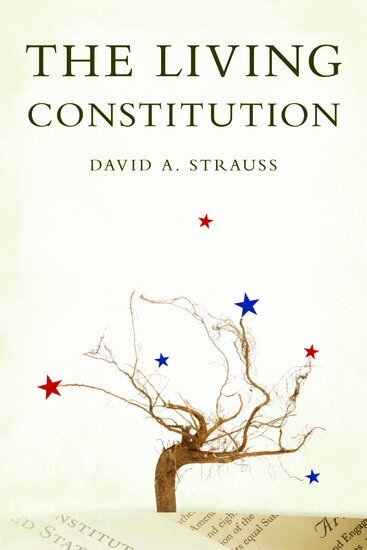
Supreme Court Justice Antonin Scalia once remarked that the theory of an evolving, "living" Constitution effectively "rendered the Constitution useless." He wanted a "dead Constitution," he joked, arguing it must be interpreted as the framers originally understood it. In The Living Constitution, leading constitutional scholar David Strauss forcefully argues against the claims of Scalia, Clarence Thomas, Robert Bork, and other "originalists," explaining in clear, jargon-free English how the Constitution can sensibly evolve, without falling into the anything-goes flexibility caricatured by opponents. The living Constitution is not an out-of-touch liberal theory, Strauss further shows, but a mainstream tradition of American jurisprudence--a common-law approach to the Constitution, rooted in the written document but also based on precedent. Each generation has contributed precedents that guide and confine judicial rulings, yet allow us to meet the demands of today, not force us to follow the commands of the long-dead Founders. Strauss explores how judicial decisions adapted the Constitution's text (and contradicted original intent) to produce some of our most profound accomplishments: the end of racial segregation, the expansion of women's rights, and the freedom of speech. By contrast, originalism suffers from fatal flaws: the impossibility of truly divining original intent, the difficulty of adapting eighteenth-century understandings to the modern world, and the pointlessness of chaining ourselves to decisions made centuries ago. David Strauss is one of our leading authorities on Constitutional law--one with practical knowledge as well, having served as Assistant Solicitor General of the United States and argued eighteen cases before the United States Supreme Court. Now he offers a profound new understanding of how the Constitution can remain vital to life in the twenty-first century.
Inbunden, Engelska, 2012
361 kr
Skickas inom 5-8 vardagar
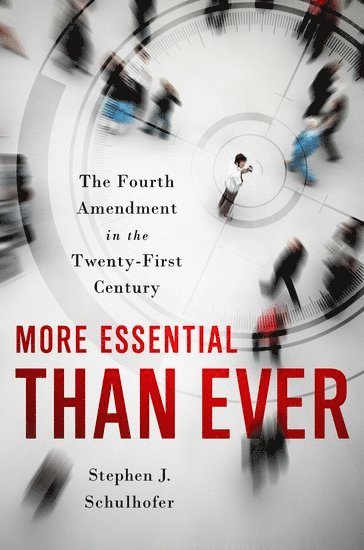
When the states ratified the Bill of Rights in the eighteenth century, the Fourth Amendment seemed straightforward. It requires that government respect the right of citizens to be "secure in their persons, houses, papers, and effects, against unreasonable searches and seizures." Of course, "papers and effects" are now digital and thus more vulnerable to government spying. But the biggest threat may be our own weakening resolve to preserve our privacy. In this potent new volume in Oxford's Inalienable Rights series, legal expert Stephen J. Schulhofer argues that the Fourth Amendment remains, as the title says, more essential than ever. From data-mining to airport body scans, drug testing and aggressive police patrolling on the streets, privacy is under assault as never before--and we're simply getting used to it. But the trend is threatening the pillars of democracy itself, Schulhofer maintains. "Government surveillance may not worry the average citizen who reads best-selling books, practices a widely accepted religion, and adheres to middle-of-the-road political views," he writes. But surveillance weighs on minorities, dissenters, and unorthodox thinkers, "chilling their freedom to read what they choose, to say what they think, and to associate with others who are like-minded." All of us are affected, he adds. "When unrestricted search and surveillance powers chill speech and religion, inhibit gossip and dampen creativity, they undermine politics and impoverish social life for everyone." Schulhofer offers a rich account of the history and nuances of Fourth Amendment protections, as he examines such issues as street stops, racial profiling, electronic surveillance, data aggregation, and the demands of national security. The Fourth Amendment, he reminds us, explicitly authorizes invasions of privacy--but it requires justification and accountability, requirements that reconcile public safety with liberty. Combining a detailed knowledge of specific cases with a deep grasp of Constitutional law, More Essential than Ever offers a sophisticated and thoughtful perspective on this important debate.
Inbunden, Engelska, 2021
209 kr
Skickas
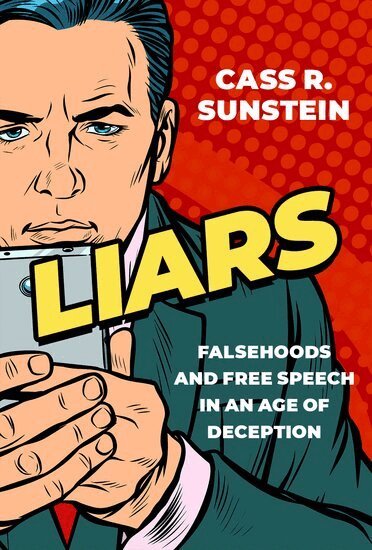
A powerful analysis of why lies and falsehoods spread so rapidly now, and how we can reform our laws and policies regarding speech to alleviate the problem.Lying has been with us from time immemorial. Yet today is different-and in many respects worse. All over the world, people are circulating damaging lies, and these falsehoods are amplified as never before through powerful social media platforms that reach billions. Liars are saying that COVID-19 is a hoax. They are claiming that vaccines cause autism. They are lying about public officials and about people who aspire to high office. They are lying about their friends and neighbors. They are trying to sell products on the basis of untruths. Unfriendly governments, including Russia, are circulating lies in order to destabilize other nations, including the United Kingdom and the United States. In the face of those problems, the renowned legal scholar Cass Sunstein probes the fundamental question of how we can deter lies while also protecting freedom of speech.To be sure, we cannot eliminate lying, nor should we try to do so. Sunstein shows why free societies must generally allow falsehoods and lies, which cannot and should not be excised from democratic debate. A main reason is that we cannot trust governments to make unbiased judgments about what counts as "fake news." However, governments should have the power to regulate specific kinds of falsehoods: those that genuinely endanger health, safety, and the capacity of the public to govern itself. Sunstein also suggests that private institutions, such as Facebook and Twitter, have a great deal of room to stop the spread of falsehoods, and they should be exercising their authority far more than they are now doing. As Sunstein contends, we are allowing far too many lies, including those that both threaten public health and undermine the foundations of democracy itself.
Inbunden, Engelska, 2022
344 kr
Skickas inom 5-8 vardagar
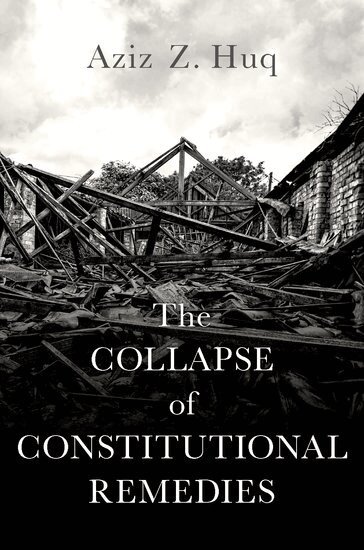
An exploration of how and why the Constitution's plan for independent courts has failed to protect individuals' constitutional rights, while advancing regressive and reactionary barriers to progressive regulation. Just recently, the Supreme Court rejected an argument by plaintiffs that police officers should no longer be protected by the doctrine of "qualified immunity" when they shoot or brutalize an innocent civilian. "Qualified immunity" is but one of several judicial inventions that shields state violence and thwarts the vindication of our rights. But aren't courts supposed to be protectors of individual rights? As Aziz Huq shows in The Collapse of Constitutional Remedies, history reveals a much more tangled relationship between the Constitution's system of independent courts and the protection of constitutional rights. While doctrines such as "qualified immunity" may seem abstract, their real-world harms are anything but. A highway patrol officer stops a person's car in violation of the Fourth Amendment, violently yanked the person out and threw him to the ground, causing brain damage. A municipal agency fires a person for testifying in a legal proceeding involving her boss's family-and then laughed in her face when she demanded her job back. In all these cases, state defendants walked away with the most minor of penalties (if any at all). Ultimately, we may have rights when challenging the state, but no remedies. In fact, federal courts have long been fickle and unreliable guardians of individual rights. To be sure, through the mid-twentieth century, the courts positioned themselves as the ultimate protector of citizens suffering the state's infringement of their rights. But they have more recently abandoned, and even aggressively repudiated, a role as the protector of individual rights in the face of abuses by the state. Ironically, this collapse highlights the position that the Framers took when setting up federal courts in the first place.A powerful historical account of the how the expansion of the immunity principle generated yawning gap between rights and remedies in contemporary America, The Collapse of Constitutional Remedies will reshape our understanding of why it has become so difficult to effectively challenge crimes committed by the state.
Inbunden, Engelska, 2024
244 kr
Skickas inom 5-8 vardagar
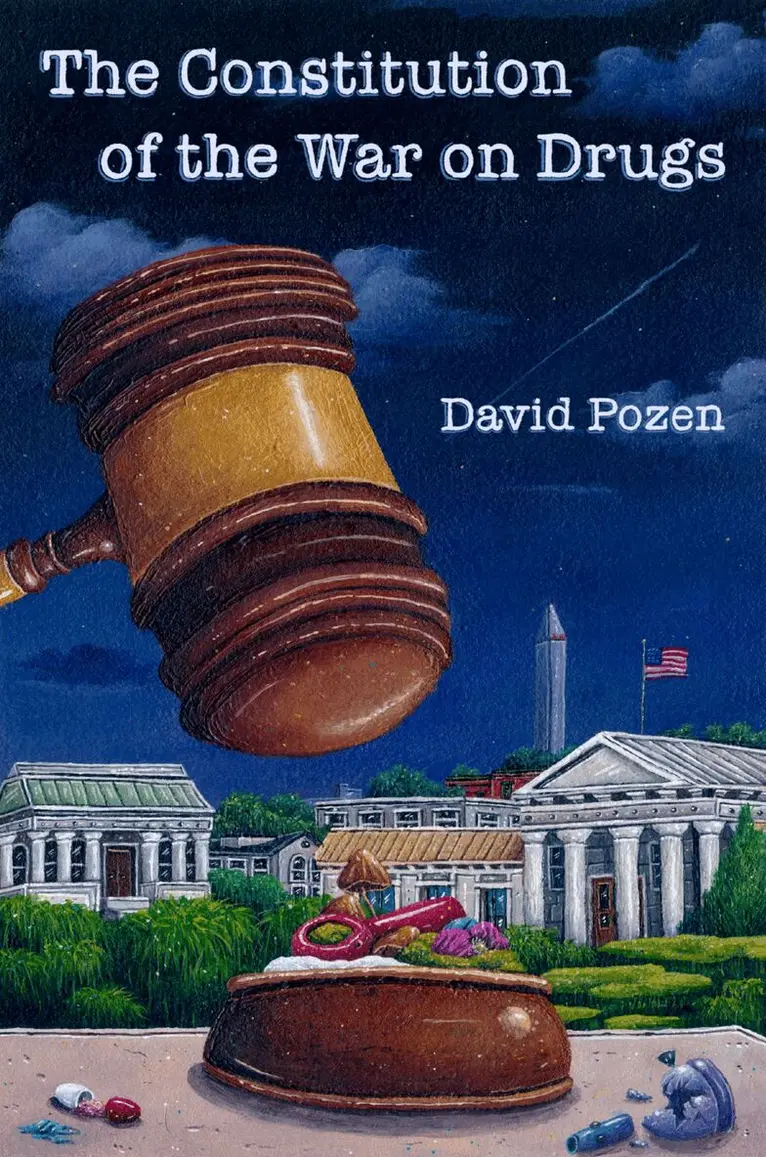
This is an open access title available under the terms of a CC BY-NC-ND 4.0 International license. It is free to read at Oxford Academic and offered as a free PDF download from OUP and selected open access locations.An authoritative and first-of-its-kind critical constitutional history of the war on drugs that shows how drug prohibition was shaped by constitutional law, and how constitutional law was shaped by drug prohibition.The U.S. government's decades-long "war on drugs" is increasingly recognized as a moral travesty as well as a policy failure. The criminalization of substances such as marijuana and magic mushrooms offends core tenets of liberalism, from the right to self-rule to protection of privacy to freedom of religion. It contributes to mass incarceration and racial subordination. And it costs billions of dollars per year--all without advancing public health. Yet, in hundreds upon hundreds of cases, courts have allowed the war to proceed virtually unchecked. How could a set of policies so draconian, destructive, and discriminatory escape constitutional curtailment?In The Constitution of the War on Drugs, David Pozen provides an authoritative, critical constitutional history of the drug war, casting new light on both drug prohibition and U.S. constitutional development. Throughout the 1960s and 1970s, advocates argued that criminal drug bans violate the Constitution's guarantees of due process, equal protection, federalism, free speech, free exercise of religion, and humane punishment. Many scholars and jurists agreed. Pozen demonstrates the plausibility of a constitutional path not taken, one that would have led to a more compassionate approach to drug control.Rather than restrain the drug war, the Constitution helped to legitimate and entrench it. Pozen shows how a profoundly illiberal and paternalistic policy regime was assimilated into, and came to shape, an ostensibly liberal and pluralistic constitutional order. Placing the U.S. jurisprudence in comparative context, The Constitution of the War on Drugs offers a comprehensive review of drug-rights decisions along with a roadmap to constitutional reform options available today.
Inbunden, Engelska, 2024
244 kr
Skickas inom 5-8 vardagar
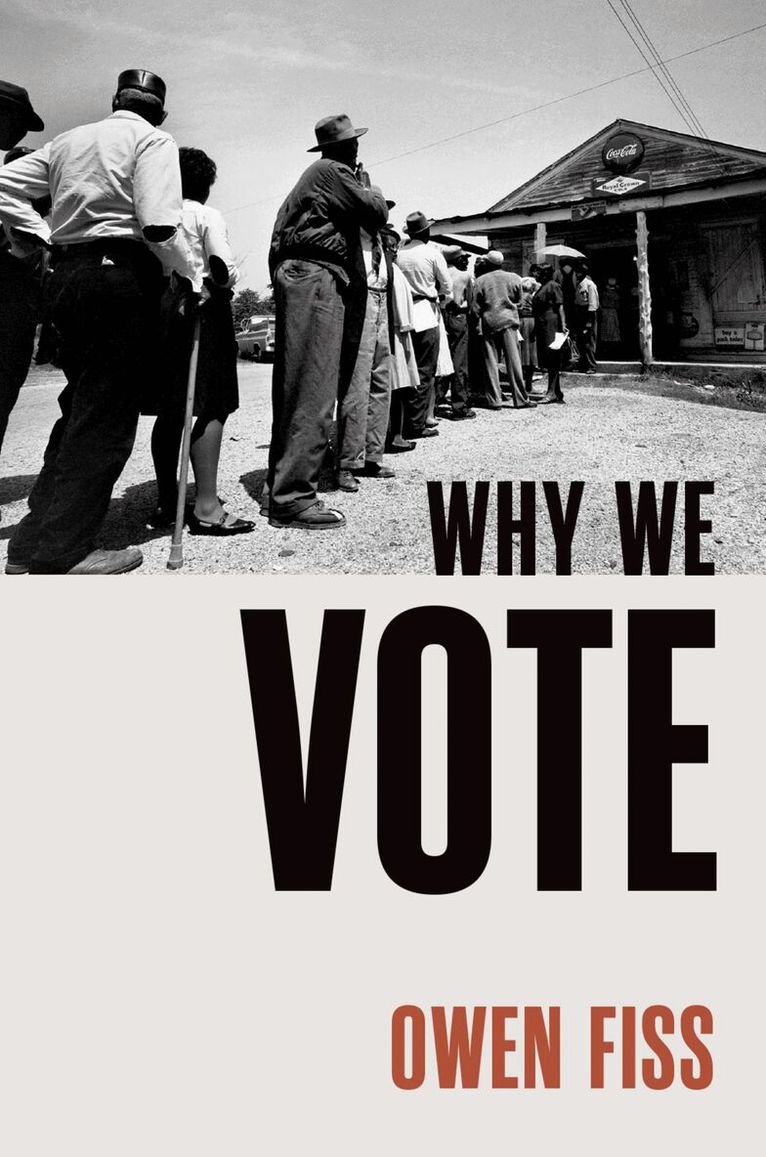
In Why We Vote, renowned legal scholar Owen Fiss offers a bold and daring reconstruction of judicial doctrine that gives expression to the democratic aspirations of the US Constitution. Fiss argues that embedded within the Constitution is a commitment to democracy, and that over the course of the twentieth century, the Supreme Court brought to fruition the principle that allows those who are ruled to choose their rulers. Each chapter focuses on Supreme Court cases that enlarged the freedom that democracy generates. Fiss points to rulings that allowed citizens to vote, facilitated the exercise of their right to vote, ensured the equality of votes, and provided feasible access to the ballot for independent candidates and new political parties. He celebrates these decisions and at the same time insists upon shifting the ground upon which these decisions rest--from equal protection of the laws to the recognition of a federal constitutional right to vote. Given the threat of democratic backsliding in a nation that has the world's oldest democratic constitution, Fiss's analysis and message are more important than ever.
Inbunden, Engelska, 2014
344 kr
Skickas inom 7-10 vardagar
In International Human Rights, acclaimed legal scholar Eric Posner seeks to explain a paradox: the language of human rights is now the dominant mode of international moral criticism of governments, and yet the evidence suggests that most countries flagrantly violate the human rights treaties that they solemnly ratify. The prevailing consensus, he notes, is that governments should promote the well-being of citizens in their countries, and that in extreme cases, foreign countries should intervene and replace governments that fail to comply with this duty. The problem, he contends, is countries disagree on how they can achieve those goals. This weakness is on full display in existing human rights treaties, and the result is a general failure. Because countries have not been able to agree about 'well-being,' they ended up negotiating treaties that are vague and (by design) unenforceable. In addition, countries have ensured that international organizations possess weak enforcement powers. Moreover, when enforcement does occur, it is invariably partial and scattershot. In whack-a-mole style, target countries can compensate for addressing some violations by reducing their compliance with other norms that are not the focus of enforcement. Posner closes by arguing that foreign aid provides a better model for pressuring governments to improve their treatment of citizens. Under the foreign aid regime, western countries look at overall indicators of well-being in other countries--such as per capita GDP--and offer aid based on whether it is likely to help people escape poverty. Governments that make progress in reducing poverty should be deemed in compliance with their human rights obligations, and we should not waste time trying to enforce more specific rights like freedom of the press or the right to privacy.In addition to offering a powerful and provocative thesis, this is a concise introduction to international human rights law. Posner describes the major treaties and the major international organizations; the evidence regarding the effect of human rights treaties on the behavior of governments; and recent international controversies over human rights such as the United States' use of torture, China's persecution of political dissidents, and the debate over the alleged right against defamation of religion.
Inbunden, Engelska, 2010
240 kr
Skickas inom 5-8 vardagar
Chief Justice John Marshall argued that a constitution "requires that only its great outlines should be marked [and] its important objects designated." Ours is "intended to endure for ages to come, and consequently, to be adapted to the various crises of human affairs." In recent years, Marshall's great truths have been supplanted by originalism and strict construction. Such legal thinkers as Supreme Court Justice Antonin Scalia argue that the Constitution must be construed as it was in the eighteenth century--that judges must adhere to the original understandings of the founding law. In Keeping Faith with the Constitution, three legal authorities make the case for Marshall's vision. They describe their approach as "constitutional fidelity"--not to the indecipherable intent of the framers, but to the principles of the Constitution. The original understanding of the text is one source of interpretation, but not the only one; to preserve the meaning and authority of the document, to keep it vital, it must be shaped by evolving precedent, historical experience, practical consequence, and societal change. The authors range across the history of constitutional interpretation to show how this approach has been the source of our greatest advances, from Brown v. Board of Education to the New Deal, from the Miranda decision to the expansion of women's rights. They delve into the complexities of voting rights, the malapportionment of legislative districts, speech freedoms, civil liberties and the War on Terror, and the evolution of checks and balances. The Constitution's framers could never have imagined DNA, global warming, or even women's equality. Yet these and many more realities shape our lives and outlook. Our Constitution will remain vital into our changing future, the authors write, if judges remain true to this rich tradition of adaptation and fidelity.
Inbunden, Engelska, 2012
401 kr
Skickas inom 5-8 vardagar
American constitutional law has undergone a transformation. Issues once left to the people have increasingly become the province of the courts. Subjects as diverse as abortion rights and firearms regulations, health care reform and counterterrorism efforts, not to mention a millennial presidential election, are more and more the domain of judges. What sparked this development? In this engaging volume, Judge J. Harvie Wilkinson argues that America's most brilliant legal minds have launched a set of cosmic constitutional theories that, for all their value, are undermining self-governance. Thinkers as diverse as Justices William Brennan and Antonin Scalia, Professor John Hart Ely, Judges Robert Bork and Richard Posner, have all produced seminal interpretations of our Founding document, but ones that promise to imbue courts with unprecedented powers. While crediting the theorists for the sparkling quality of their thoughts, Judge Wilkinson argues they will slowly erode the role of representative institutions in America and leave our children bereft of democratic liberty. The loser in all the theoretical fireworks is the old and honorable tradition of judicial restraint. The judicial modesty once practiced by Learned Hand, John Harlan, and Oliver Wendell Holmes has given way to competing schools of liberal and conservative activism seeking sanctuary in Living Constitutionalism, Originalism, Process Theory, or the supposedly anti-theoretical creed of Pragmatism. Each of these seemingly disparate theories promises their followers an intellectually respectable route to congenial political outcomes from the bench. Judge Wilkinson calls for a plainer, simpler, self-disciplined commitment to judicial restraint and democratic governance, a course that alas may be impossible so long as the cosmic constitutionalists so dominate contemporary legal thought.
Inbunden, Engelska, 2013
461 kr
Skickas inom 7-10 vardagar
What would the Framers of the Constitution make of multinational corporations? Nuclear weapons? Gay marriage? They led a preindustrial country, much of it dependent on slave labor, huddled on the Atlantic seaboard. The Founders saw society as essentially hierarchical, led naturally by landed gentry like themselves. Yet we still obey their commands, two centuries and one civil war later. According to Louis Michael Seidman, it's time to stop. In On Constitutional Disobedience, Seidman argues that, in order to bring our basic law up to date, it needs benign neglect. This is a highly controversial assertion. The doctrine of "original intent" may be found on the far right, but the entire political spectrum--left and right--shares a deep reverence for the Constitution. And yet, Seidman reminds us, disobedience is the original intent of the Constitution. The Philadelphia convention had gathered to amend the Articles of Confederation, not toss them out and start afresh. The "living Constitution" school tries to bridge the gap between the framers and ourselves by reinterpreting the text in light of modern society's demands. But this attempt is doomed, Seidman argues. One might stretch "due process of law" to protect an act of same-sex sodomy, yet a loyal-but-contemporary reading cannot erase the fact that the Constitution allows a candidate who lost the popular election to be seated as president. And that is only one of the gross violations of popular will enshrined in the document. Seidman systematically addresses and refutes the arguments in favor of Constitutional fealty, proposing instead that it be treated as inspiration, not a set of commands. The Constitution is, at its best, a piece of poetry to liberty and self-government. If we treat it as such, the author argues, we will make better progress in achieving both.