Aziz Z. Huq - Böcker
Visar alla böcker från författaren Aziz Z. Huq. Handla med fri frakt och snabb leverans.
10 produkter
10 produkter
349 kr
Skickas inom 5-8 vardagar
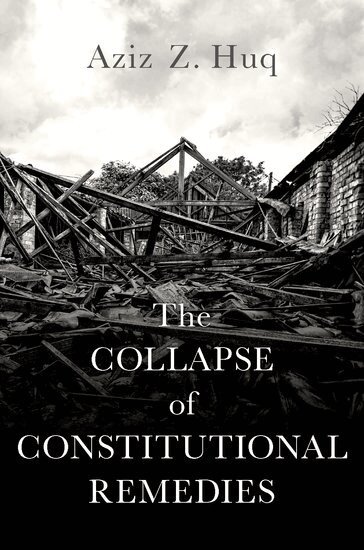
An exploration of how and why the Constitution's plan for independent courts has failed to protect individuals' constitutional rights, while advancing regressive and reactionary barriers to progressive regulation. Just recently, the Supreme Court rejected an argument by plaintiffs that police officers should no longer be protected by the doctrine of "qualified immunity" when they shoot or brutalize an innocent civilian. "Qualified immunity" is but one of several judicial inventions that shields state violence and thwarts the vindication of our rights. But aren't courts supposed to be protectors of individual rights? As Aziz Huq shows in The Collapse of Constitutional Remedies, history reveals a much more tangled relationship between the Constitution's system of independent courts and the protection of constitutional rights. While doctrines such as "qualified immunity" may seem abstract, their real-world harms are anything but. A highway patrol officer stops a person's car in violation of the Fourth Amendment, violently yanked the person out and threw him to the ground, causing brain damage. A municipal agency fires a person for testifying in a legal proceeding involving her boss's family-and then laughed in her face when she demanded her job back. In all these cases, state defendants walked away with the most minor of penalties (if any at all). Ultimately, we may have rights when challenging the state, but no remedies. In fact, federal courts have long been fickle and unreliable guardians of individual rights. To be sure, through the mid-twentieth century, the courts positioned themselves as the ultimate protector of citizens suffering the state's infringement of their rights. But they have more recently abandoned, and even aggressively repudiated, a role as the protector of individual rights in the face of abuses by the state. Ironically, this collapse highlights the position that the Framers took when setting up federal courts in the first place.A powerful historical account of the how the expansion of the immunity principle generated yawning gap between rights and remedies in contemporary America, The Collapse of Constitutional Remedies will reshape our understanding of why it has become so difficult to effectively challenge crimes committed by the state.
99 kr
Skickas inom 5-8 vardagar
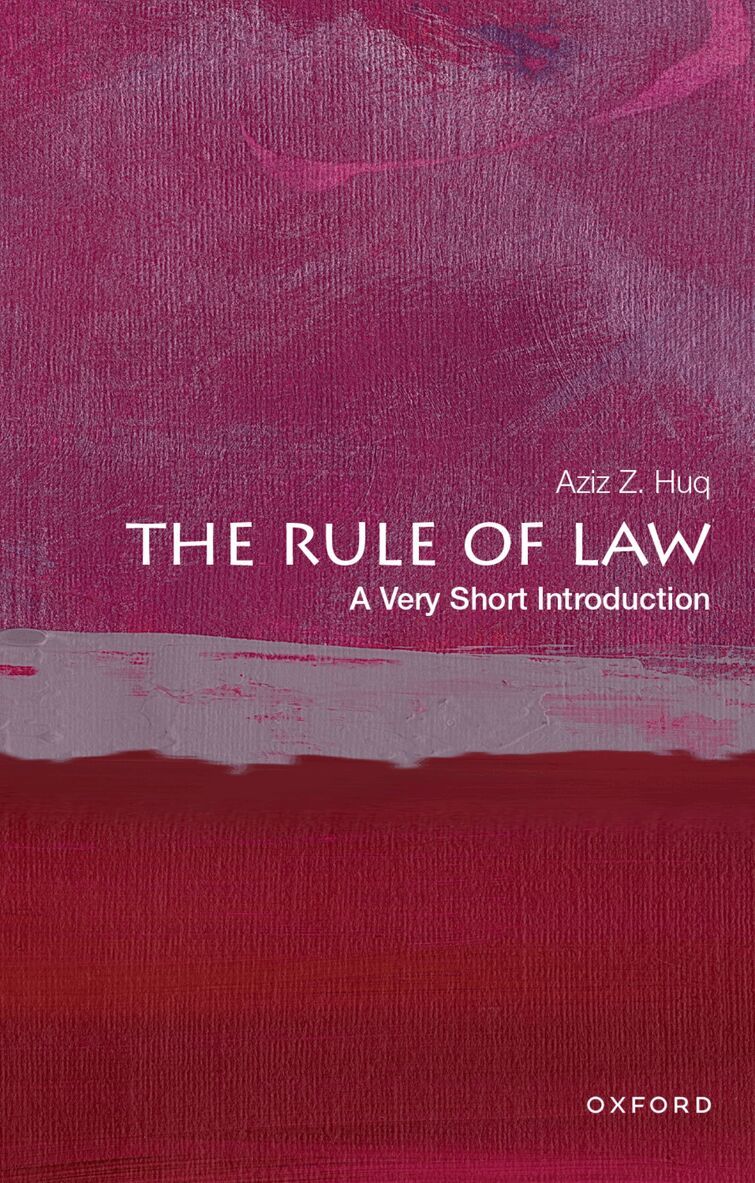
Politicians, judges, and citizens commonly use the phrase "rule of law" to describe some good that flows from a legal system. But what precisely is that good? Even in Aristotle's time, there was no agreement on either its nature, and on whether it counted as an unqualified good. Even now, a core rule-of-law aspiration is that law can constrain how power is flexed. But how or when? Disagreement persists as to whether the rule of law is a matter of how law is used or why it is deployed. In consequence, the World Bank, the leaders of Singapore's one-party state, and the Communist Party in China can all offer their own spins on the concept.By charting these disagreements and showing the overlap and the conflicts between different understandings of the concept, Aziz Z. Huq shows how the rule of law can still be used as an important tool for framing and evaluating the goals and functions of a legal system. He traces the idea's historical origins from ancient Greece to the constitutional theorist Albert Venn Dicey to the economist and political philosopher Friedrich Hayek. And he explores how that value is coming under pressure from terrorist threats, macroeconomic crisis, pandemics, autocratic populism, and climate change.
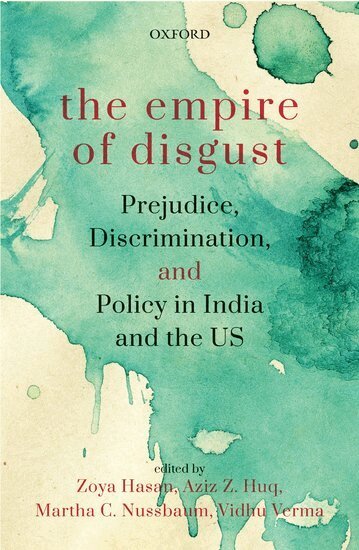
The Empire of Disgust
Prejudice, Discrimination, and Policy in India and the US
Inbunden, Engelska, 2018
555 kr
Skickas inom 5-8 vardagar
All known societies exclude and stigmatize one or more minority groups. Frequently, these exclusions are underwritten with a rhetoric of disgust. People of certain groups, it is alleged, are filthy, hyper-animal, or not fit to share such facilities as drinking water, food, and public swimming pools with the 'clean' and 'fully human' majority. But exclusions vary in their scope and also in the specific disgust-ideologies underlying them. In this volume, interdisciplinary scholars from India and the United States present a detailed comparative study of the varieties of prejudice and stigma that pervade contemporary social and political life. These include prejudice along the axes of caste, race, gender identity, age, sexual orientation, disability, ethnicity, religion, and economic class. In examining these forms of stigma and their intersections, the authors present theoretically pluralistic and empirically sensitive accounts that both explain group-based stigma and suggest ways forward. These forward-looking remedies, including group resistance to subordination as well as institutional and legal change, point the way towards a public culture that is informed by our diverse histories of discrimination and therefore equipped to eliminate stigma in all of its multifaceted forms.
151 kr
Skickas inom 7-10 vardagar
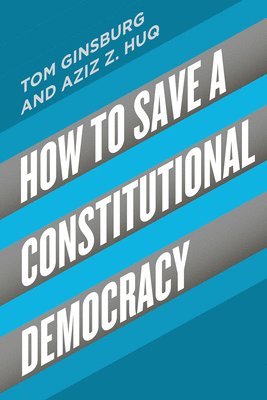
Democracies are in danger. Around the world, a rising wave of populist leaders threatens to erode the core structures of democratic self-rule. In the United States, the tenure of Donald Trump has seemed decisive turning point for many. What kind of president intimidates jurors, calls the news media the "enemy of the American people," and seeks foreign assistance investigating domestic political rivals? Whatever one thinks of President Trump, many think the Constitution will safeguard us from lasting damage. But is that assumption justified? How to Save a Constitutional Democracy mounts an urgent argument that we can no longer afford to be complacent. Drawing on a rich array of other countries' experiences with democratic backsliding, Tom Ginsburg and Aziz Z. Huq show how constitutional rules can both hinder and hasten the decline of democratic institutions. The checks and balances of the federal government, a robust civil society and media, and individual rights--such as those enshrined in the First Amendment--often fail as bulwarks against democratic decline. The sobering reality for the United States, Ginsburg and Huq contend, is that the Constitution's design makes democratic erosion more, not less, likely. Its structural rigidity has had unforeseen consequence--leaving the presidency weakly regulated and empowering the Supreme Court conjure up doctrines that ultimately facilitate rather than inhibit rights violations. Even the bright spots in the Constitution--the First Amendment, for example--may have perverse consequences in the hands of a deft communicator who can degrade the public sphere by wielding hateful language banned in many other democracies. We--and the rest of the world--can do better. The authors conclude by laying out practical steps for how laws and constitutional design can play a more positive role in managing the risk of democratic decline.
259 kr
Kommande
Updated to take stock of recent developments, Tom Ginsburg and Aziz Z. Huq’s prescient and insightful book shows how constitutional rules both hinder and hasten democratic decline.Around the world, autocratic leaders threaten the core structures of democratic self-rule. But democratic constitutions are not fail-proof safeguards. By looking at how such leaders exploit legal mechanisms to advance their aims, we can see how democratic constitutions can sometimes abet—and even accelerate—democratic decline. In this new edition of How to Save a Constitutional Democracy, constitutional law experts Tom Ginsburg and Aziz Z. Huq offer a powerful analysis of today’s challenges while arguing that the time has come for meaningful, actionable change.This new edition takes up the torch of its predecessor, canvasing developments in the United States and other countries that have transpired since 2018. Drawing lessons from countries around the world and reflecting on the prospects for American democracy, the authors show how constitutional design can, in fact, either undermine or support democratic institutions. The sobering reality for the United States is that the Constitution’s design makes democratic erosion eminently feasible. But Ginsburg and Huq do not stop there. They suggest practical ways that law and constitutional design can better manage these mounting threats, analyzing constitutional and legal questions that are consequential yet poorly understood, all while cautioning against an overreliance on technocratic fixes.Even more urgent and salient in its new edition, How to Save a Constitutional Democracy reflects on why autocrats tend to pose even greater danger the second time they come to power and asks how we can begin to repair a democracy that has failed.
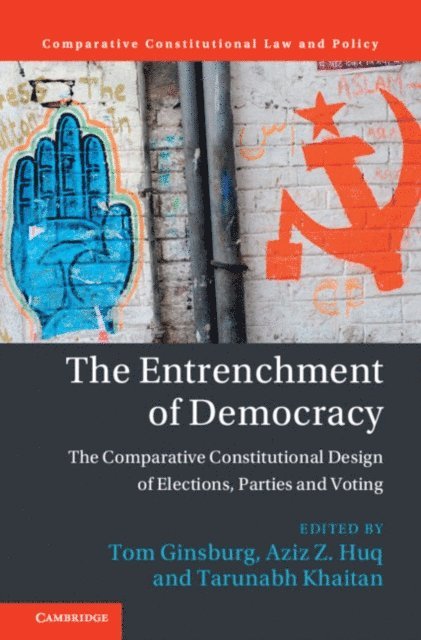
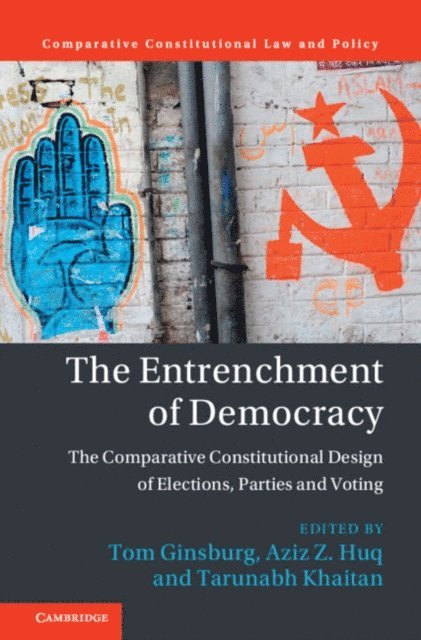
Entrenchment of Democracy
The Comparative Constitutional Design of Elections, Parties and Voting
Inbunden, Engelska, 2024
1 218 kr
Skickas inom 7-10 vardagar
This volume of essays brings together a group of leading political scientists, legal scholars, and political theorists to describe and analyze the body of constitutional law and practice within and upon democratic institutions, in particular examining how constitutional law shapes electoral democracy. Constitutional law and practice on this question are complex and varied. This volume therefore takes a thematic and regional approach: it selects a range of key theoretical questions related to democratic constitutional design and offers a series of chapters featuring a diverse range of voices, as well as a blend of theory, qualitative studies, and quantitative methods. Readers will gain a multifaceted understanding of a phenomenon of growing importance. The volume will also be useful to students of comparative constitutionalism, who will gain a rich array of empirical evidence to stimulate further work. This title is also available as Open Access on Cambridge Core.
2 510 kr
Skickas inom 10-15 vardagar
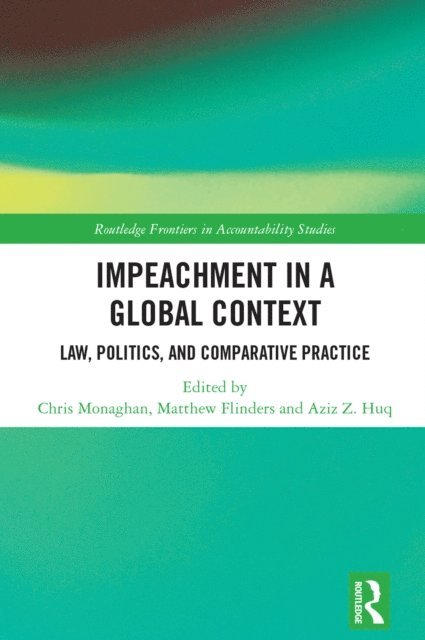
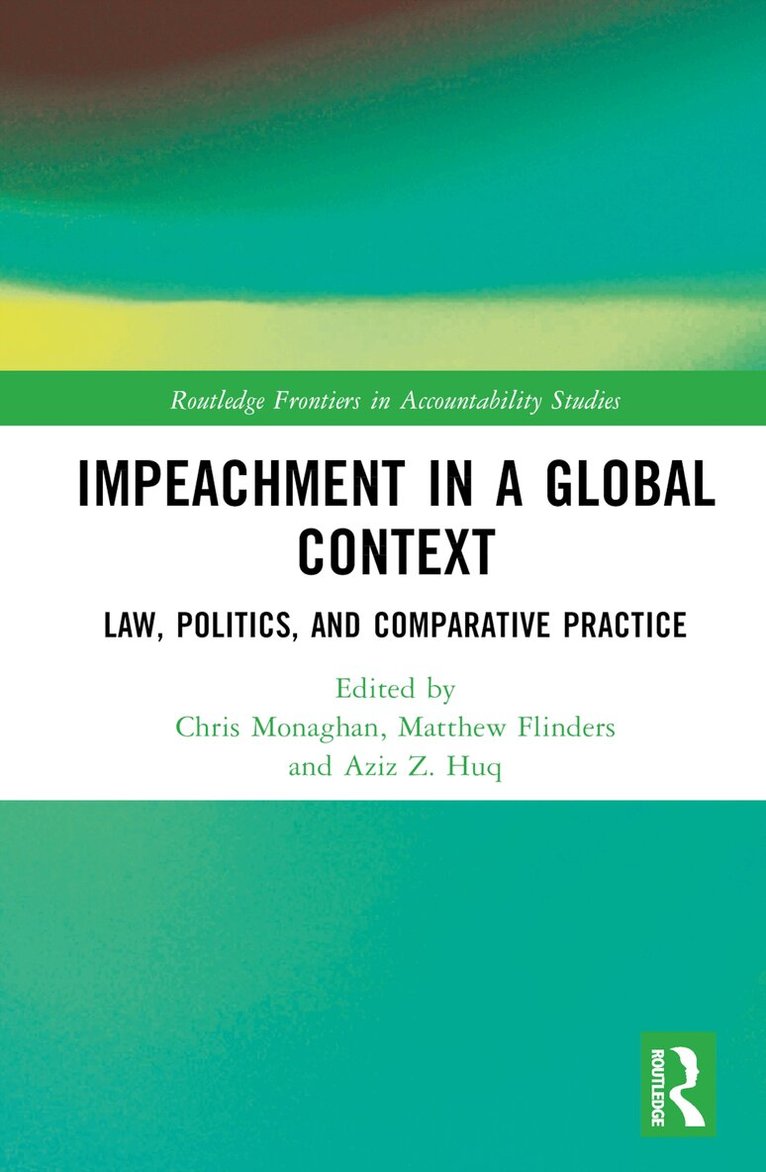
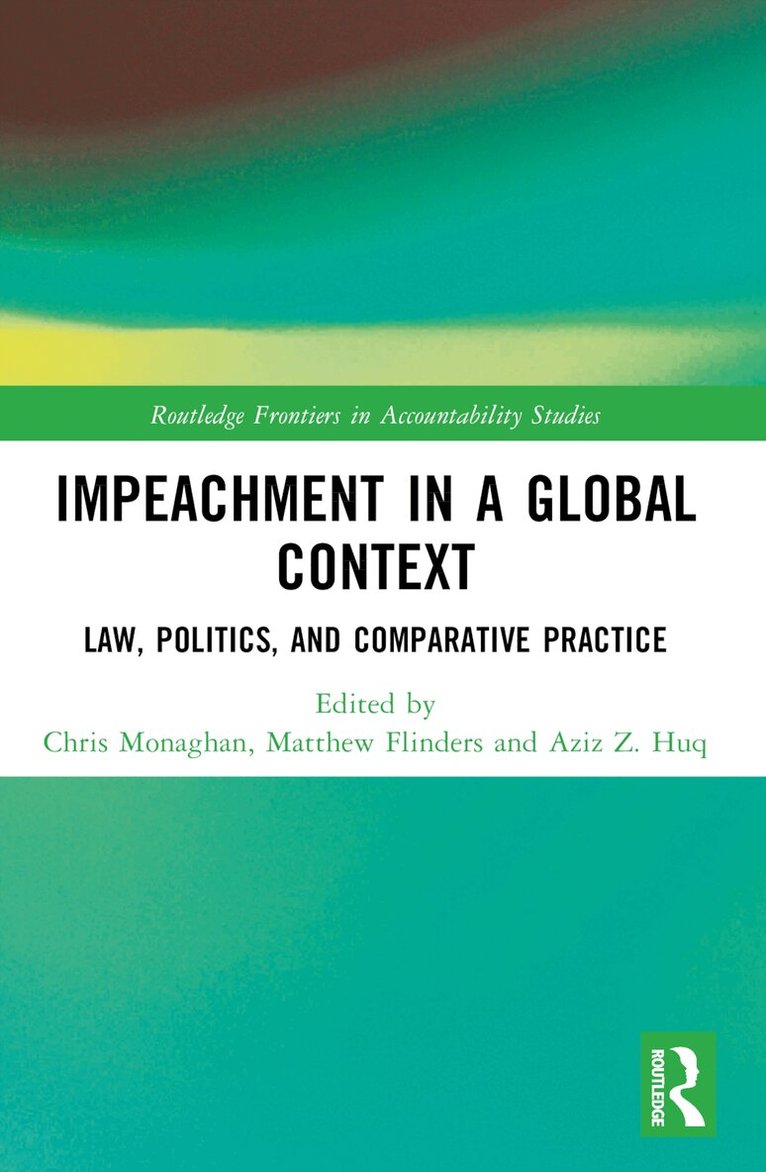
This volume considers the use of impeachment within a global context. The book brings together leading scholars and experts to give an insight into significant periods in the development of impeachment and its modern comparative use. Divided into five parts, the opening chapter introduces the topic and underlines its significance in terms of understanding the relationship and inter-dependence among politics, governance and the law. It also offers a novel conceptual framework that facilitates the global mapping of impeachment processes. Part I presents a thematic approach that explores the topic of impeachment through the lenses of democracy, human rights and the rule of law. With these themes in mind, Part II focuses on those parts of the world where impeachment is generally recognised as a core constitutional process including the United States, South Korea, Brazil and other countries in South America. Part III continues with the process of constitutional mapping by moving to a focus on those countries where impeachment is arguably an important but largely secondary or peripheral process. This includes chapters on Denmark, Iceland, Sri Lanka and the Philippines and flows through into Part IV’s focus on areas of the world where impeachment matters and may even be increasing in terms of visibility but, for a number of reasons, arguably exists within a satellite status in terms of constitutional processes and safeguards. The fifth and final section steps back in an attempt to assess impeachment processes from a broad comparative perspective. The collection presents the definitive text on impeachment for students and scholars with an interest in comparative public law, politics and constitutional studies.
647 kr
Skickas inom 10-15 vardagar
This volume considers the use of impeachment within a global context. The book brings together leading scholars and experts to give an insight into significant periods in the development of impeachment and its modern comparative use. Divided into five parts, the opening chapter introduces the topic and underlines its significance in terms of understanding the relationship and inter-dependence among politics, governance and the law. It also offers a novel conceptual framework that facilitates the global mapping of impeachment processes. Part I presents a thematic approach that explores the topic of impeachment through the lenses of democracy, human rights and the rule of law. With these themes in mind, Part II focuses on those parts of the world where impeachment is generally recognised as a core constitutional process including the United States, South Korea, Brazil and other countries in South America. Part III continues with the process of constitutional mapping by moving to a focus on those countries where impeachment is arguably an important but largely secondary or peripheral process. This includes chapters on Denmark, Iceland, Sri Lanka and the Philippines and flows through into Part IV’s focus on areas of the world where impeachment matters and may even be increasing in terms of visibility but, for a number of reasons, arguably exists within a satellite status in terms of constitutional processes and safeguards. The fifth and final section steps back in an attempt to assess impeachment processes from a broad comparative perspective. The collection presents the definitive text on impeachment for students and scholars with an interest in comparative public law, politics and constitutional studies.
1 206 kr
Skickas inom 7-10 vardagar
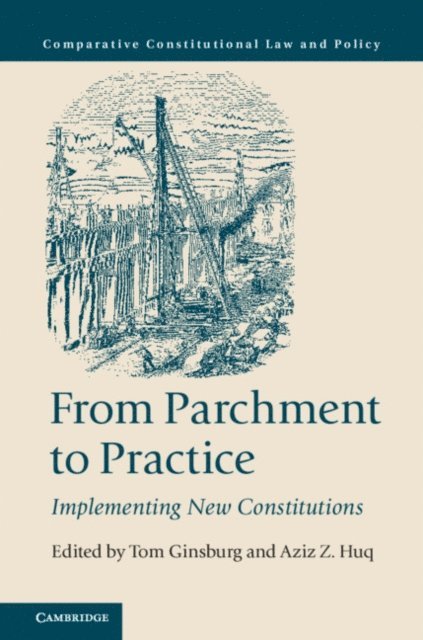
From Parchment to Practice explores the set of problems that arise when a new constitution has been adopted. All new constitutions must manage a balance or tension between two forces: aspirations for social and political transformation on the one hand and demands for preservation of old interests and institutions on the other. The period following the initial adoption of a new constitution, is the conceptual, temporal, and institutional bridge between the past and future. It is the moment when the transformative and the preservative forces in constitutional design can come into the sharpest conflict. Through a series of case studies, this volume analyzes the variable nature of these type of conflicts - and the diverse means through which they are mediated, whether successfully or not.
377 kr
Skickas inom 7-10 vardagar
From Parchment to Practice explores the set of problems that arise when a new constitution has been adopted. All new constitutions must manage a balance or tension between two forces: aspirations for social and political transformation on the one hand and demands for preservation of old interests and institutions on the other. The period following the initial adoption of a new constitution, is the conceptual, temporal, and institutional bridge between the past and future. It is the moment when the transformative and the preservative forces in constitutional design can come into the sharpest conflict. Through a series of case studies, this volume analyzes the variable nature of these type of conflicts - and the diverse means through which they are mediated, whether successfully or not.