Martha Minow - Böcker
Visar alla böcker från författaren Martha Minow. Handla med fri frakt och snabb leverans.
15 produkter
15 produkter
Saving the News
Why the Constitution Calls for Government Action to Preserve Freedom of Speech
Inbunden, Engelska, 2021
271 kr
Skickas inom 5-8 vardagar
A detailed argument of how our government has interfered in the direction of America's media landscape that traces major transformations in media since the printing press and charts a path for reform. In The Changing Ecosystem of the News, Martha Minow takes stock of the new media landscape. She focuses on the extent to which our constitutional system is to blame for the current parlous state of affairs and on our government's responsibilities for alleviating the problem. As Minow shows, the First Amendment of the US Constitution assumes the existence and durability of a private industry. Although the First Amendment does not govern the conduct of entirely private enterprises, nothing in the Constitution forecloses government action to regulate concentrated economic power, to require disclosure of who is financing communications, or to support news initiatives where there are market failures. Moreover, the federal government has contributed financial resources, laws, and regulations to develop and shape media in the United States. Thus, Minow argues that the transformation of media from printing presses to the internet was shaped by deliberate government policies that influenced the direction of private enterprise. In short, the government has crafted the direction and contours of America's media ecosystem.Building upon this basic argument, Minow outlines an array of reforms, including a new fairness doctrine, regulating digital platforms as public utilities, using antitrust authority to regulate the media, policing fraud, and more robust funding of public media. As she stresses, such reforms are not merely plausible ideas; they are the kinds of initiatives needed if the First Amendment guarantee of freedom of the press continues to hold meaning in the twenty-first century.
470 kr
Skickas inom 5-8 vardagar
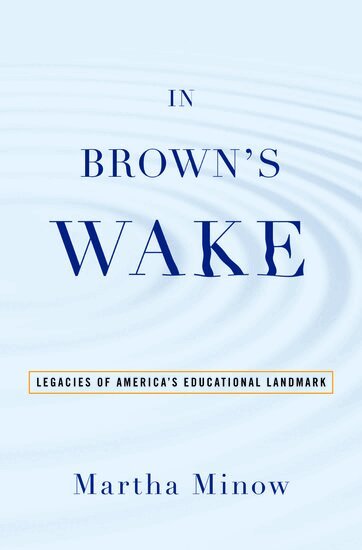
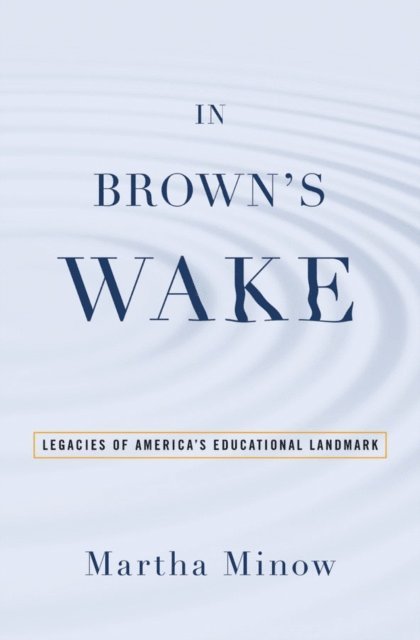
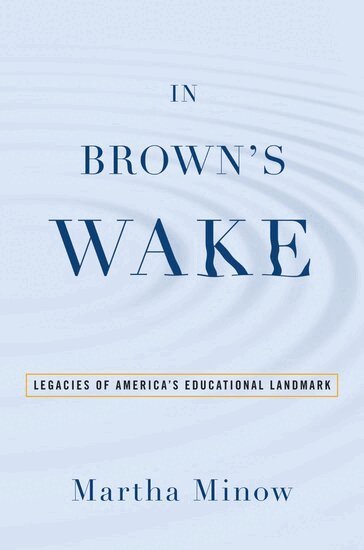
What is the legacy of Brown vs. Board of Education? Well known for establishing racial equality as a central commitment of American schools, the case also inspired social movements pursuing equality in education for students across all lines of difference, including language, gender, disability, immigration status, socio-economic status, religion, and sexual orientation. Yet, more than a half-century following Brown, schools, parents and policy makers still debate whether the ruling requires all-inclusive classrooms, and today American schools appear to be more segregated than ever. School choice, once a strategy for avoiding racial integration, has emerged as a method for racial mixing in some school systems, even as magnet and pilot schools, charter schools, and vouchers for private schools enable new forms of self-separation by language, gender, disability, and ethnicity. In In Brown's Wake, Martha Minow examines the way that Brown continues to reverberate over a wide-spectrum of equality issues in public and school choice programs. She argues that the terms placed on such initiatives carry serious consequences for both the character of American education and civil society itself. Though the original promise of Brown remains more symbolic than effective, Minow demonstrates the power of its vision in the struggles for equal education regardless of students' social identity, in the United States and internationally. Further, she urges renewed commitment to the project of social integration even while identifying the complex routes necessary to achieve it. A concise introduction to Brown and its aftermath, In Brown's Wake explores surprising and widespread effects of one of the most important Supreme Court decisions of the century with elegance and economy.
327 kr
Skickas inom 5-8 vardagar
What is the legacy of Brown vs. Board of Education? While it is well known for establishing racial equality as a central commitment of American schools, the case also inspired social movements for equality in education across all lines of difference, including language, gender, disability, immigration status, socio-economic status, religion, and sexual orientation. Yet more than a half century after Brown, American schools are more racially separated than before, and educators, parents and policy makers still debate whether the ruling requires all-inclusive classrooms in terms of race, gender, disability, and other differences. In Brown's Wake examines the reverberations of Brown in American schools, including efforts to promote equal opportunities for all kinds of students. School choice, once a strategy for avoiding Brown, has emerged as a tool to promote integration and opportunities, even as charter schools and private school voucher programs enable new forms of self-separation by language, gender, disability, and ethnicity. Martha Minow, Dean of Harvard Law School, argues that the criteria placed on such initiatives carry serious consequences for both the character of American education and civil society itself. Although the original promise of Brown remains more symbolic than effective, Minow demonstrates the power of its vision in the struggles for equal education regardless of students' social identity, not only in the United States but also in many countries around the world. Further, she urges renewed commitment to the project of social integration even while acknowledging the complex obstacles that must be overcome. An elegant and concise overview of Brown and its aftermath, In Brown's Wake explores the broad-ranging and often surprising impact of one of the century's most important Supreme Court decisions.
230 kr
Skickas inom 7-10 vardagar
A towering and beloved figure in legal scholarship, Martha Minow explores the complicated intersection between law, justice and forgiveness, asking whether law should encourage individuals to forgive and when the courts, public officials and specific laws should forgive. Examining these questions through sometimes troubling cases with compassion and acumen, Minow acknowledges that there are grounds for both individuals and societies to withhold forgiveness but argues that there are also many places where letting go of justified grievances can make law more just, not less. This type of lawful forgiveness might also nudge individuals and societies towards the respect and generosity that comes with apology and restitution. Forgiveness does not change the past but it does enlarge the future.
150 kr
Skickas inom 7-10 vardagar
A towering and beloved figure in legal scholarship, Martha Minow explores the complicated intersection between law, justice and forgiveness. She asks if law should encourage individuals to forgive. And when the courts, public officials, and specific laws should forgive. With empathy and acumen, Minow acknowledges that there are certainly grounds for both individuals and societies to withhold forgiveness but argues that there are also many places where letting go of justified grievances can make law more just, not less. Forgiveness does not change the past but it does enlarge the future.
488 kr
Skickas inom 7-10 vardagar
The establishment of the International Criminal Court (ICC) gave rise to the first permanent Office of the Prosecutor (OTP), with independent powers of investigation and prosecution. Elected in 2003 for a nine-year term as the ICC’s first Prosecutor, Luis Moreno Ocampo established policies and practices for when and how to investigate, when to pursue prosecution, and how to obtain the cooperation of sovereign nations. He laid a foundation for the OTP’s involvement with the United Nations Security Council, state parties, nongovernmental organizations, victims, the accused, witnesses, and the media. This volume of essays presents the first sustained examination of this unique office and offers a rare look into international justice. The contributors, ranging from legal scholars to practitioners of international law, explore the spectrum of options available to the OTP, the particular choices Moreno Ocampo made, and issues ripe for consideration as his successor, Fatou B. Bensouda, assumes her duties. The beginning of Bensouda’s term thus offers the perfect opportunity to examine the first Prosecutor’s singular efforts to strengthen international justice, in all its facets.
528 kr
Skickas inom 7-10 vardagar
"Bob Cover was and remains the dominant voice of his generation among legal scholars. These essays, each one magnificent in itself, are, when taken together, even more important. The wisdom they impart is forever." --Guido Calabresi, Dean and Sterling Professor of Law, Yale University "Robert Cover drew his sources for the authority of law--for its violence, but also for its paideic potential--from the structuring stories that spark our communal imaginations. Literally until the day of his untimely death, his irreplaceably restless spirit was binding itself with the pages of the Midrash, of The Brothers Karamazov, of Billy Budd, Sailor. It is for us now to work also with these--Bob Cover's stories."--Richard Weisberg, Benjamin N. Cardozo Law School, Yeshiva University "The writings of Robert Cover were usually provocative, sometimes exasperating, but always relevant. In his last years, he concentrated on Jewish sources as well as mystical and Messianic thought. This collection of his articles is a thesaurus of some of his finest writings."--Robert F. Drinan, S.J., Georgetown University Law Center The late Robert Cover was Professor of Law, Yale Law School. Martha Minow is Professor of Law, Harvard Law School. Michael Ryan is Professor of English, Northeastern University. Austin Sarat is William Nelson Cromwell Professor of Jurisprudence and Political Science and Chair of the Program in Law, Jurisprudence, and Social Thought, Amherst College.
332 kr
Skickas inom 7-10 vardagar
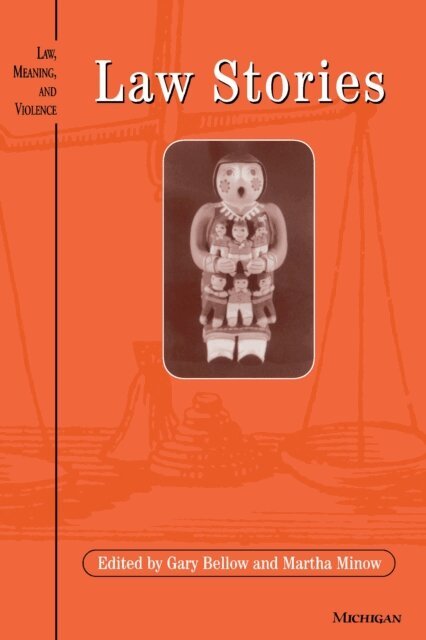
"War stories" is the phrase used by academic lawyers to disparage the ways practicing lawyers talk about their experiences. Gary Bellow and Martha Minow in Law Stories have gathered a group of stories that explore the actual experiences of clients and lawyers in concrete legal contexts.The essays in Law Stories are all first-person accounts of law problems and the way they were handled, written by lawyers involved in the problems. They offer the voice and insight of the self-reflective practitioner. As such they provide us with a dimension missing from many third-person accounts of cases, a layer of emotion and perspective on legal institutions experienced by people caught or working within them.Focusing on cases arising in public interest practices, the stories deal with problems arising from child custody, parental rights in a Head Start program, the consequences of large corporate bankruptcy for the corporation's retirees, juvenile crime, unemployment benefits, the rights of a victim of crime, the rights of welfare recipients, and the rights of small shareholders. These stories raise a variety of questions, including the nature and extent of the lawyer's role, the way the system listens to certain kinds of stories told in certain ways and refuses to hear other stories, how participation in the legal system affects the identity of those who are involved in it and how the popular image of law and legal processes differs from the reality depicted in these cases. This book will appeal to both practitioners and teachers of law as well as social scientists interested in studying the role and place of law in the system.The contributors include Anthony Alfieri, Gary Bellow, Lenora M. Lapidus, Alice and Staughton Lynd, Martha Minow, Nell Minow, Charles Ogletree, Abbe Smith, Lynne Weaver, and Lucie E. White."[Law Stories will] enlighten not only law students but the general and professional public who will find these accounts as compelling as any work of popular fiction. Unhappily, these accounts of law's inadequacy as a vehicle for social justice are not fictions. . . ." --Law and Politics Book ReviewGary Bellow and Martha Minow are Professors of Law, Harvard Law School.
685 kr
Skickas inom 10-15 vardagar
The dramatic growth of government over the course of the twentieth century since the New Deal prompts concern among libertarians and conservatives and also among those who worry about government’s costs, efficiency, and quality of service. These concerns, combined with rising confidence in private markets, motivate the widespread shift of federal and state government work to private organizations. This shift typically alters only who performs the work, not who pays or is ultimately responsible for it. “Government by contract” now includes military intelligence, environmental monitoring, prison management, and interrogation of terrorism suspects. Outsourcing government work raises questions of accountability. What role should costs, quality, and democratic oversight play in contracting out government work? What tools do citizens and consumers need to evaluate the effectiveness of government contracts? How can the work be structured for optimal performance as well as compliance with public values?Government by Contract explains the phenomenon and scope of government outsourcing and sets an agenda for future research attentive to workforce capacities as well as legal, economic, and political concerns.
346 kr
Skickas inom 7-10 vardagar
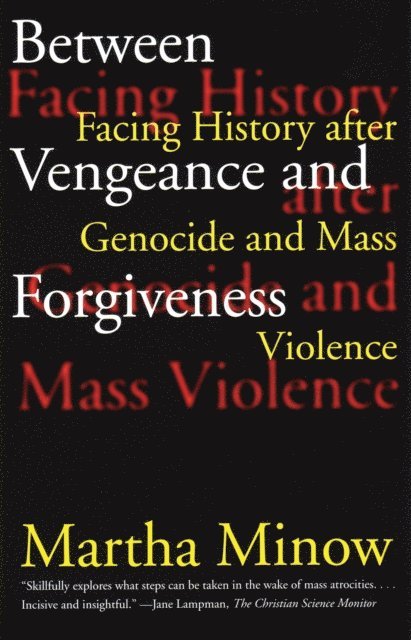
Violence so often begets violence. Victims respond with revenge only to inspire seemingly endless cycles of retaliation. Conflicts between nations, between ethnic groups, between strangers, and between family members differ in so many ways and yet often share this dynamic. In this powerful and timely book Martha Minow and others ask: What explains these cycles and what can break them? What lessons can we draw from one form of violence that might be relevant to other forms? Can legal responses to violence provide accountability but avoid escalating vengeance? If so, what kinds of legal institutions and practices can make a difference? What kinds risk failure? Breaking the Cycles of Hatred represents a unique blend of political and legal theory, one that focuses on the double-edged role of memory in fueling cycles of hatred and maintaining justice and personal integrity. Its centerpiece comprises three penetrating essays by Minow. She argues that innovative legal institutions and practices, such as truth commissions and civil damage actions against groups that sponsor hate, often work better than more conventional criminal proceedings and sanctions.Minow also calls for more sustained attention to the underlying dynamics of violence, the connections between intergroup and intrafamily violence, and the wide range of possible responses to violence beyond criminalization. A vibrant set of freestanding responses from experts in political theory, psychology, history, and law examines past and potential avenues for breaking cycles of violence and for deepening our capacity to avoid becoming what we hate. The topics include hate crimes and hate-crimes legislation, child sexual abuse and the statute of limitations, and the American kidnapping and internment of Japanese Latin Americans during World War II. Commissioned by Nancy Rosenblum, the essays are by Ross E. Cheit, Marc Galanter, Fredrick C. Harris, Judith Lewis Herman, Carey Jaros, Frederick M. Lawrence, Austin Sarat, Ayelet Shachar, Eric K. Yamamoto, and Iris Marion Young.
620 kr
Skickas inom 10-15 vardagar
Should a court order medical treatment for a severely disabled newborn in the face of the parents' refusal to authorize it? How does the law apply to a neighborhood that objects to a group home for developmentally disabled people? Does equality mean treating everyone the same, even if such treatment affects some people adversely? Does a state requirement of employee maternity leave serve or violate the commitment to gender equality?Martha Minow takes a hard look at the way our legal system functions in dealing with people on the basis of race, gender, age, ethnicity, religion, and disability. Minow confronts a variety of dilemmas of difference resulting from contradictory legal strategies—strategies that attempt to correct inequalities by sometimes recognizing and sometimes ignoring differences. Exploring the historical sources of ideas about difference, she offers challenging alternative ways of conceiving of traits that legal and social institutions have come to regard as "different." She argues, in effect, for a constructed jurisprudence based on the ability to recognize and work with perceptible forms of difference.Minow is passionately interested in the people—"different" people—whose lives are regularly (mis)shaped and (mis)directed by the legal system's ways of handling them. Drawing on literary and feminist theories and the insights of anthropology and social history, she identifies the unstated assumptions that tend to regenerate discrimination through the very reforms that are supposed to eliminate it. Education for handicapped children, conflicts between job and family responsibilities, bilingual education, Native American land claims—these are among the concrete problems she discusses from a fresh angle of vision.Minow firmly rejects the prevailing conception of the self that she believes underlies legal doctrine—a self seen as either separate and autonomous, or else disabled and incompetent in some way. In contrast, she regards the self as being realized through connection, capable of shaping an identity only in relationship to other people. She shifts the focus for problem solving from the "different" person to the relationships that construct that difference, and she proposes an analysis that can turn "difference" from a basis of stigma and a rationale for unequal treatment into a point of human connection. "The meanings of many differences can change when people locate and revise their relationships to difference," she asserts. "The student in a wheelchair becomes less different when the building designed without him in mind is altered to permit his access." Her book evaluates contemporary legal theories and reformulates legal rights for women, children, persons with disabilities, and others historically identified as different.Here is a powerful voice for change, speaking to issues that permeate our daily lives and form a central part of the work of law. By illuminating the many ways in which people differ from one another, this book shows how lawyers, political theorist, teachers, parents, students—every one of us—can make all the difference,
399 kr
Skickas inom 10-15 vardagar
Should a court order medical treatment for a severely disabled newborn in the face of the parents' refusal to authorize it? How does the law apply to a neighborhood that objects to a group home for developmentally disabled people? Does equality mean treating everyone the same, even if such treatment affects some people adversely? Does a state requirement of employee maternity leave serve or violate the commitment to gender equality?Martha Minow takes a hard look at the way our legal system functions in dealing with people on the basis of race, gender, age, ethnicity, religion, and disability. Minow confronts a variety of dilemmas of difference resulting from contradictory legal strategies—strategies that attempt to correct inequalities by sometimes recognizing and sometimes ignoring differences. Exploring the historical sources of ideas about difference, she offers challenging alternative ways of conceiving of traits that legal and social institutions have come to regard as "different." She argues, in effect, for a constructed jurisprudence based on the ability to recognize and work with perceptible forms of difference.Minow is passionately interested in the people—"different" people—whose lives are regularly (mis)shaped and (mis)directed by the legal system's ways of handling them. Drawing on literary and feminist theories and the insights of anthropology and social history, she identifies the unstated assumptions that tend to regenerate discrimination through the very reforms that are supposed to eliminate it. Education for handicapped children, conflicts between job and family responsibilities, bilingual education, Native American land claims—these are among the concrete problems she discusses from a fresh angle of vision.Minow firmly rejects the prevailing conception of the self that she believes underlies legal doctrine—a self seen as either separate and autonomous, or else disabled and incompetent in some way. In contrast, she regards the self as being realized through connection, capable of shaping an identity only in relationship to other people. She shifts the focus for problem solving from the "different" person to the relationships that construct that difference, and she proposes an analysis that can turn "difference" from a basis of stigma and a rationale for unequal treatment into a point of human connection. "The meanings of many differences can change when people locate and revise their relationships to difference," she asserts. "The student in a wheelchair becomes less different when the building designed without him in mind is altered to permit his access." Her book evaluates contemporary legal theories and reformulates legal rights for women, children, persons with disabilities, and others historically identified as different.Here is a powerful voice for change, speaking to issues that permeate our daily lives and form a central part of the work of law. By illuminating the many ways in which people differ from one another, this book shows how lawyers, political theorist, teachers, parents, students—every one of us—can make all the difference,
1 061 kr
Skickas inom 10-15 vardagar
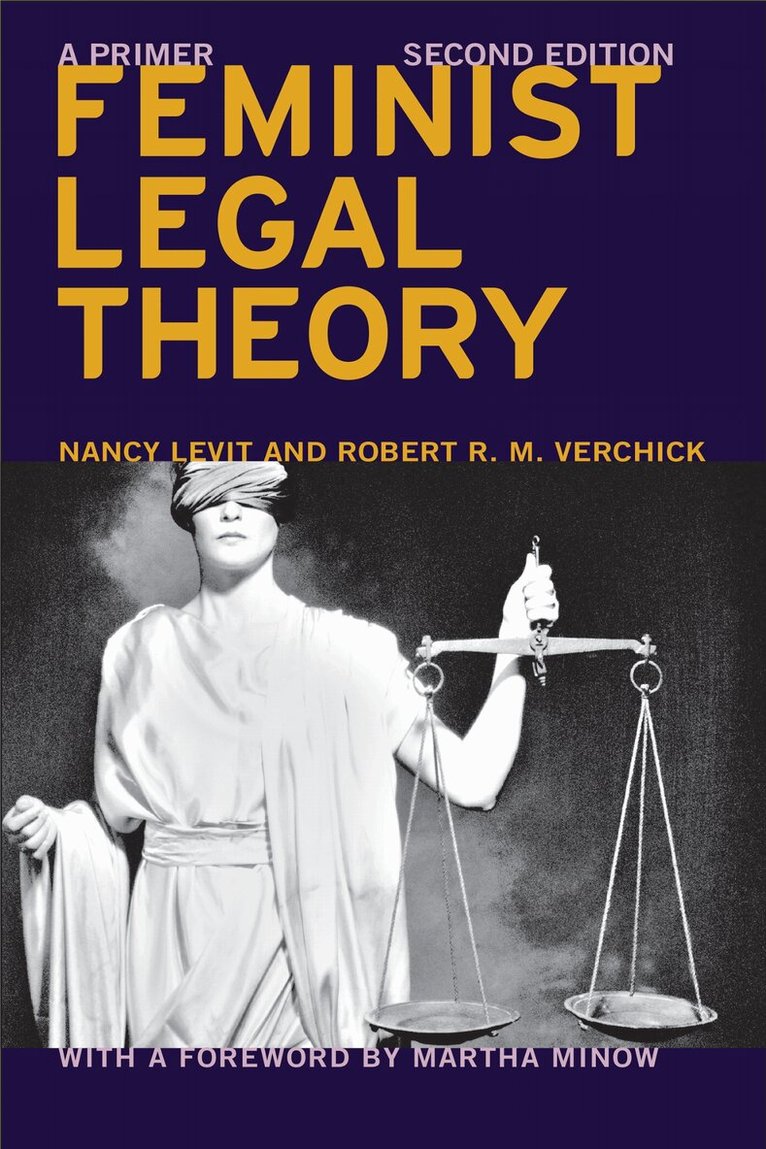
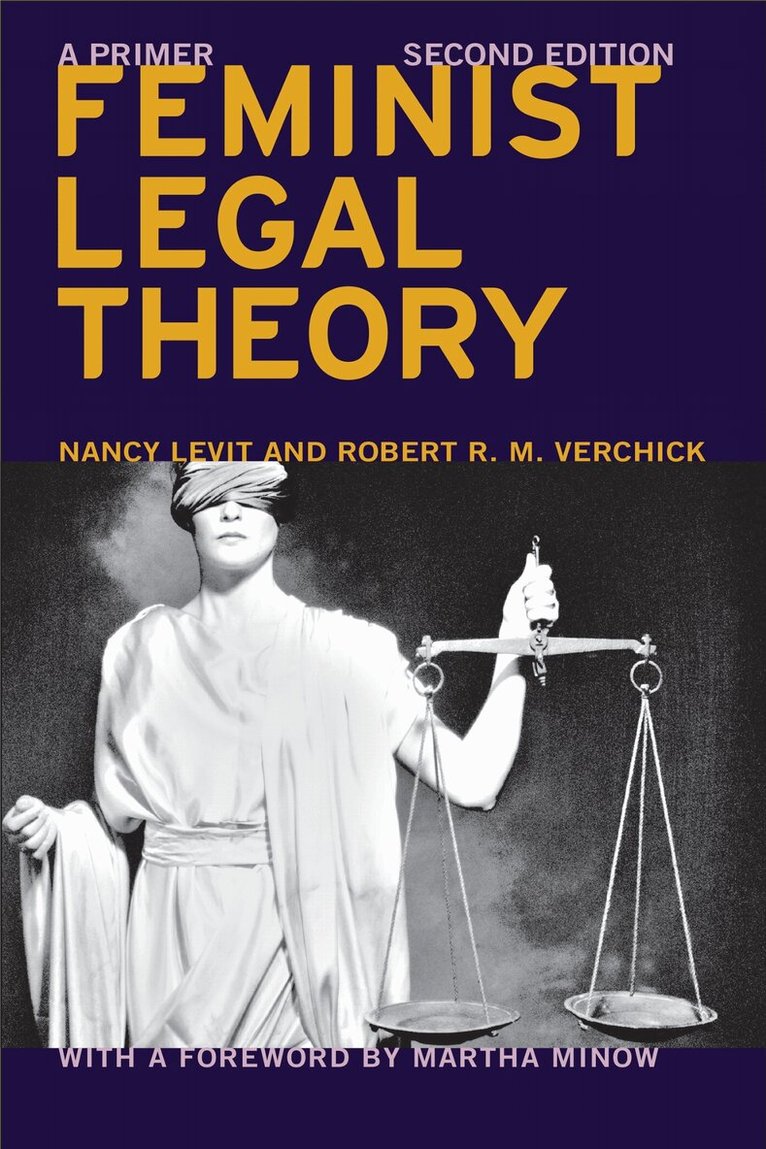
Feminist legal theory is one of the most dynamic fields in the law, and it affects issues ranging from child custody to sexual harassment. Since its initial publication in 2006, Feminist Legal Theory: A Primer has received rave reviews. Now, in the completely updated second edition of this outstanding primer, Nancy Levit and Robert R.M. Verchick introduce the diverse strands of feminist legal theory and discuss an array of substantive legal topics, pulling in recent court decisions, new laws, and important shifts in culture and technology. The book centers on feminist legal theories, including equal treatment theory, cultural feminism, dominance theory, critical race feminism, lesbian feminism, postmodern feminism, and ecofeminism. Readers will find new material on women in politics, gender and globalization, and the promise and danger of expanding social media. Updated statistics and empirical analysis appear throughout. The authors, prominent experts in the field, also address feminist legal methods, such as consciousness-raising and storytelling. The primer offers an accessible and pragmatic approach to feminist legal theory. It demonstrates the ways feminist legal theory operates in real-life contexts, including domestic violence, reproductive rights, workplace discrimination, education, sports, pornography, and global issues of gender. The authors highlight a sweeping range of cutting-edge topics at the intersection of law and gender, such as single-sex schools, abortion, same-sex marriage, rape on college campuses, and international trafficking in women and girls. At its core, Feminist Legal Theory shows the importance of the roles of law and feminist legal theory in shaping contemporary gender issues.
359 kr
Skickas
Feminist legal theory is one of the most dynamic fields in the law, and it affects issues ranging from child custody to sexual harassment. Since its initial publication in 2006, Feminist Legal Theory: A Primer has received rave reviews. Now, in the completely updated second edition of this outstanding primer, Nancy Levit and Robert R.M. Verchick introduce the diverse strands of feminist legal theory and discuss an array of substantive legal topics, pulling in recent court decisions, new laws, and important shifts in culture and technology. The book centers on feminist legal theories, including equal treatment theory, cultural feminism, dominance theory, critical race feminism, lesbian feminism, postmodern feminism, and ecofeminism. Readers will find new material on women in politics, gender and globalization, and the promise and danger of expanding social media. Updated statistics and empirical analysis appear throughout. The authors, prominent experts in the field, also address feminist legal methods, such as consciousness-raising and storytelling. The primer offers an accessible and pragmatic approach to feminist legal theory. It demonstrates the ways feminist legal theory operates in real-life contexts, including domestic violence, reproductive rights, workplace discrimination, education, sports, pornography, and global issues of gender. The authors highlight a sweeping range of cutting-edge topics at the intersection of law and gender, such as single-sex schools, abortion, same-sex marriage, rape on college campuses, and international trafficking in women and girls. At its core, Feminist Legal Theory shows the importance of the roles of law and feminist legal theory in shaping contemporary gender issues.
166 kr
Skickas inom 5-8 vardagar
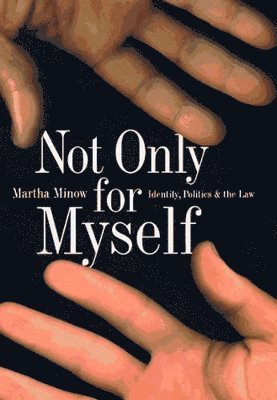
In Not Only for Myself , Harvard Law professor and leading critical legal scholar Martha Minow uses well-known incidents, such as the furor over the casting of Miss Saigon and the confirmation hearings of Supreme Court Justice Clarence Thomas, to explain the legal issues bearing on such incendiary questions as affirmative action, segregation, racial redistricting, and "identity politics."