Nancy Levit - Böcker
Visar alla böcker från författaren Nancy Levit. Handla med fri frakt och snabb leverans.
10 produkter
10 produkter
261 kr
Skickas inom 3-6 vardagar
Despite the handsome incomes they often command, lawyers are far from the happiest of professionals. Seven in ten attorneys in one poll said they would choose other careers if they had to do it over again and, in another poll, fewer than half said they would encourage young people to become lawyers. Indeed, no poll has ever put the law in the top tier of satisfying professions. The economic uncertainty of recent years has only made law students and lawyers think harder than ever before about what they can hope to get out of careers in law.This book not only sheds light on why so many lawyers find so little to like about their jobs, but also explores what they can do about the problem. Drawing on recent psychological research on happiness, Nancy Levit and Douglas Linder highlight various factors that contribute to professional stress and frustration--from pressure to increase the number of billable hours to discontents that occur when the job's demands fail to mesh with a lawyer's personal values or aspirations. They offer an array of coping tools, both large and small, that will help attorneys find more balance in their lives; they also suggest ways that law firms can be more flexible to accommodate their employees' needs, thus boosting morale and, in the process, producing higher-quality work. The authors also show how law students can better define their goals to ensure a satisfying career.Having interviewed more than two hundred lawyers across the country, Levit and Linder enliven their account with engrossing--and sometimes surprising--career stories from both happy and unhappy lawyers. From these stories they develop sensible solutions for lawyers and the legal profession as a whole. Attorneys and law students with doubts or questions about their career choices will find a wealth of reassurance and good advice in this book.
300 kr
Skickas inom 3-6 vardagar
Every lawyer wants to be a good lawyer. They want to do right by their clients, contribute to the professional community, become good colleagues, interact effectively with people of all persuasions, and choose the right cases. All of these skills and behaviors are important, but they spring from hard-to-identify foundational qualities necessary for good lawyering. After focusing for three years on getting high grades and sharpening analytical skills, far too many lawyers leave law school without a real sense of what it takes to be a good lawyer.In The Good Lawyer, a follow up to their book The Happy Lawyer, law professors Douglas O. Linder and Nancy Levit combine evidence from the latest social science research with numerous engaging accounts of able attorneys at work to explain just what makes a good lawyer. They organize the book around the qualities they see as crucial: courage, empathy, integrity, realism, a strong sense of justice, clarity of purpose, and an ability to transcend emotionalism. But as the authors point out, each one must be apportioned in the right measure, and achieving the right balance is difficult. Lawyers need to know when to empathize and also when to detach; courage without an appreciation of consequences becomes recklessness. And what do you do in tricky situations, where the urge to deceive is high? How can you maintain focus through a mind-taxing (or mind-numbing) project? Every lawyer faces these problems at some point -- they're inherent in the nature of the work-but if properly recognized and approached, they can be overcome. It's not easy being good -- quality is less something one grasps and hangs onto than a goal that requires constant striving and attention -- but this engaging guide will serve as a handbook for any lawyer trying not only to figure out how to respond to difficult situations, but how to become a better -- meaning both more competent and more virtuous -- lawyer.
1 056 kr
Skickas inom 10-15 vardagar
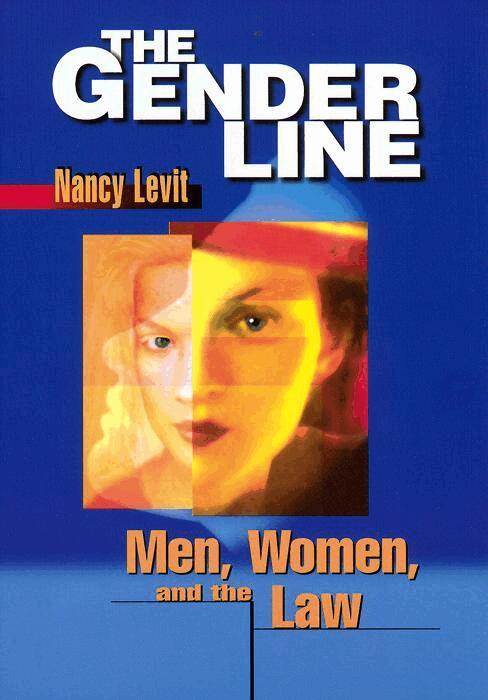
Despite tremendous advances in civil rights, we live in a world where the sexes remain sharply segregated from birth to death: in names, clothing, social groupings, and possessions; in occupations, civic association, and domestic roles. Gender separatism, so pervasive as to be almost invisible, permeates the fabric of our daily social routines. Preferring a notion of gender that is fluid and contextual, and denying that separatism is inevitable, Nancy Levit dismantles the myths of gender essentialism Drawing on a wealth of interdisciplinary data regarding the biological and cultural origins of sex differences, Levit provides a fresh perspective on gendered behaviors and argues the need for careful cultivation of new relations between the sexes.With its focus particularly on men, The Gender Line offers an insightful overview of the construction of gender and the damaging effects of its stereotypes. Levit analyzes the ways in which law legitimizes the social segregation of the sexes through legal decisions regarding custody, employment, education, sexual harassment, and criminal law. In so doing, she illustrates the ways in which men's and women's oppressions are intertwined and how law molds the very definition of masculinity.Applying feminist methodology to the doctrine of feminism itself, Levit artfully demonstrates that gender separatism infects even our contemporary views of feminism. Levit asks questions that have been too long been unspoken--those that lie at the core of the feminist project, yet threaten its very foundations. Revealing masculinity as both a privileged and a victimized condition, she calls for a step forward, past the bounds of contemporary feminism and its conflicts, toward a more egalitarian and inclusive feminism. This brand of feminism would reshape traditional masculinity, invite men into feminist dialogue, and claim men as political allies.
464 kr
Skickas inom 7-10 vardagar
Despite tremendous advances in civil rights, we live in a world where the sexes remain sharply segregated from birth to death: in names, clothing, social groupings, and possessions; in occupations, civic association, and domestic roles. Gender separatism, so pervasive as to be almost invisible, permeates the fabric of our daily social routines. Preferring a notion of gender that is fluid and contextual, and denying that separatism is inevitable, Nancy Levit dismantles the myths of gender essentialism Drawing on a wealth of interdisciplinary data regarding the biological and cultural origins of sex differences, Levit provides a fresh perspective on gendered behaviors and argues the need for careful cultivation of new relations between the sexes.With its focus particularly on men, The Gender Line offers an insightful overview of the construction of gender and the damaging effects of its stereotypes. Levit analyzes the ways in which law legitimizes the social segregation of the sexes through legal decisions regarding custody, employment, education, sexual harassment, and criminal law. In so doing, she illustrates the ways in which men's and women's oppressions are intertwined and how law molds the very definition of masculinity.Applying feminist methodology to the doctrine of feminism itself, Levit artfully demonstrates that gender separatism infects even our contemporary views of feminism. Levit asks questions that have been too long been unspoken--those that lie at the core of the feminist project, yet threaten its very foundations. Revealing masculinity as both a privileged and a victimized condition, she calls for a step forward, past the bounds of contemporary feminism and its conflicts, toward a more egalitarian and inclusive feminism. This brand of feminism would reshape traditional masculinity, invite men into feminist dialogue, and claim men as political allies.
833 kr
Skickas inom 7-10 vardagar
An updated edition of the praised primer for feminist legal theory and how it shapes contemporary gender issuesAt long last, the complex field of feminist legal theory is presented in accessible, teachable form by two of its experts, Nancy Levit and Robert R. M. Verchick. In this outstanding primer, the authors introduce the diverse strands of feminist legal theory and the array of substantive legal issues relevant to women's and gender studies. The book centers on feminist legal theories—including equal treatment theory, cultural feminism, dominance theory, critical race feminism, lesbian feminism, postmodern feminism, and ecofeminism. The authors also address feminist legal methods, such as consciousness raising and storytelling.The primer demonstrates the ways feminist legal theory operates in real-life contexts, including domestic violence, reproductive rights, workplace discrimination, education, sports, pornography, and global issues of gender. Levit and Verchick highlight a sweeping range of cutting edge topics at the intersection of law and gender, such as single sex schools, women in the military, abortion, same sex marriage, date rape, and the international trafficking in women and girls.At its core, Feminist Legal Theory shows the importance of the role of law and feminist legal theory in shaping contemporary gender issues.
262 kr
Skickas inom 7-10 vardagar
An updated edition of the praised primer for feminist legal theory and how it shapes contemporary gender issuesAt long last, the complex field of feminist legal theory is presented in accessible, teachable form by two of its experts, Nancy Levit and Robert R. M. Verchick. In this outstanding primer, the authors introduce the diverse strands of feminist legal theory and the array of substantive legal issues relevant to women's and gender studies. The book centers on feminist legal theories—including equal treatment theory, cultural feminism, dominance theory, critical race feminism, lesbian feminism, postmodern feminism, and ecofeminism. The authors also address feminist legal methods, such as consciousness raising and storytelling.The primer demonstrates the ways feminist legal theory operates in real-life contexts, including domestic violence, reproductive rights, workplace discrimination, education, sports, pornography, and global issues of gender. Levit and Verchick highlight a sweeping range of cutting edge topics at the intersection of law and gender, such as single sex schools, women in the military, abortion, same sex marriage, date rape, and the international trafficking in women and girls.At its core, Feminist Legal Theory shows the importance of the role of law and feminist legal theory in shaping contemporary gender issues.
1 066 kr
Skickas inom 10-15 vardagar
Feminist legal theory is one of the most dynamic fields in the law, and it affects issues ranging from child custody to sexual harassment. Since its initial publication in 2006, Feminist Legal Theory: A Primer has received rave reviews. Now, in the completely updated second edition of this outstanding primer, Nancy Levit and Robert R.M. Verchick introduce the diverse strands of feminist legal theory and discuss an array of substantive legal topics, pulling in recent court decisions, new laws, and important shifts in culture and technology. The book centers on feminist legal theories, including equal treatment theory, cultural feminism, dominance theory, critical race feminism, lesbian feminism, postmodern feminism, and ecofeminism. Readers will find new material on women in politics, gender and globalization, and the promise and danger of expanding social media. Updated statistics and empirical analysis appear throughout. The authors, prominent experts in the field, also address feminist legal methods, such as consciousness-raising and storytelling. The primer offers an accessible and pragmatic approach to feminist legal theory. It demonstrates the ways feminist legal theory operates in real-life contexts, including domestic violence, reproductive rights, workplace discrimination, education, sports, pornography, and global issues of gender. The authors highlight a sweeping range of cutting-edge topics at the intersection of law and gender, such as single-sex schools, abortion, same-sex marriage, rape on college campuses, and international trafficking in women and girls. At its core, Feminist Legal Theory shows the importance of the roles of law and feminist legal theory in shaping contemporary gender issues.
359 kr
Skickas
Feminist legal theory is one of the most dynamic fields in the law, and it affects issues ranging from child custody to sexual harassment. Since its initial publication in 2006, Feminist Legal Theory: A Primer has received rave reviews. Now, in the completely updated second edition of this outstanding primer, Nancy Levit and Robert R.M. Verchick introduce the diverse strands of feminist legal theory and discuss an array of substantive legal topics, pulling in recent court decisions, new laws, and important shifts in culture and technology. The book centers on feminist legal theories, including equal treatment theory, cultural feminism, dominance theory, critical race feminism, lesbian feminism, postmodern feminism, and ecofeminism. Readers will find new material on women in politics, gender and globalization, and the promise and danger of expanding social media. Updated statistics and empirical analysis appear throughout. The authors, prominent experts in the field, also address feminist legal methods, such as consciousness-raising and storytelling. The primer offers an accessible and pragmatic approach to feminist legal theory. It demonstrates the ways feminist legal theory operates in real-life contexts, including domestic violence, reproductive rights, workplace discrimination, education, sports, pornography, and global issues of gender. The authors highlight a sweeping range of cutting-edge topics at the intersection of law and gender, such as single-sex schools, abortion, same-sex marriage, rape on college campuses, and international trafficking in women and girls. At its core, Feminist Legal Theory shows the importance of the roles of law and feminist legal theory in shaping contemporary gender issues.
214 kr
Skickas
A stirring, comprehensive look at the state of women in the workforce—why women’s progress has stalled, how our economy fosters unproductive competition, and how we can fix the system that holds women back.In an era of supposed great equality, women are still falling behind in the workplace. Even with more women in the workforce than in decades past, wage gaps continue to increase. It is the most educated women who have fallen the furthest behind. Blue-collar women hold the most insecure and badly paid jobs in our economy. And even as we celebrate high-profile representation—women on the board of Fortune 500 companies and our first female vice president—women have limited recourse when they experience harassment and discrimination.Fair Shake: Women and the Fight to Build a Just Economy explains that the system that governs our economy—a winner-take-all economy—is the root cause of these myriad problems. The WTA economy self-selects for aggressive, cutthroat business tactics, which creates a feedback loop that sidelines women. The authors, three legal scholars, call this feedback loop “the triple bind”: if women don’t compete on the same terms as men, they lose; if women do compete on the same terms as men, they’re punished more harshly for their sharp elbows or actual misdeeds; and when women see that they can’t win on the same terms as men, they take themselves out of the game (if they haven’t been pushed out already). With odds like these stacked against them, it’s no wonder women feel like, no matter how hard they work, they can’t get ahead.Fair Shake is not a “fix the woman” book; it’s a “fix the system” book. It not only diagnoses the problem of what's wrong with the modern economy, but shows how, with awareness and collective action, we can build a truly just economy for all.
117 kr
Skickas
A stirring, comprehensive look at the state of women in the workforce—why women’s progress has stalled, how our economy fosters unproductive competition, and how we can fix the system that holds women back.In an era of supposed equality, women are falling behind in the workplace faster than before, a trend exacerbated by Covid-19. Even with more women in the workforce than in decades past, wage gaps continue to increase. It is the most educated women who have fallen the furthest from behind. Blue-collar women hold the most insecure and badly paid jobs in our economy. And even as we celebrate high-profile representation—women on the board of Fortune 500 companies and our first female vice president—women have limited recourse when they experience harassment and discrimination. Fair Shake: Women and the Fight to Build a Just Economy explains that the system that governs our economy—a winner-take-all economy—is the root cause of these myriad problems. The WTA self-selects aggressive, cutthroat business tactics, which creates a feedback loop that sidelines women. The authors, three legal scholars, call this feedback loop “the triple bind”: if women don’t compete on the same terms as men, they lose; if women do compete on the same terms as men, they’re punished more harshly for their sharp elbows or actual misdeeds; and when women see that they can’t win on the same terms as men, they take themselves out of the game (as if they haven’t been pushed out already). With odds like these stacked against them, it’s no wonder women feel like, no matter how hard they work, they can’t get ahead. Drawing on rich storytelling often found in legal documents, Fair Shake makes a compelling case for why existing laws fail to protect women. It not only diagnoses the problem of what’s wrong with the modern economy, but shows how, with awareness and collective action, we can build a truly just economy for all.