Indians and Southern History – serie
Visar alla böcker i serien Indians and Southern History. Handla med fri frakt och snabb leverans.
4 produkter
4 produkter
Aggression and Sufferings
Settler Violence, Native Resistance, and the Coalescence of the Old South
Inbunden, Engelska, 2023
1 211 kr
Skickas inom 5-8 vardagar
A bold reconceptualization of how settler expansion and narratives of victimhood, honor, and revenge drove the conquest and erasure of the Native South and fed the emergence of a distinct white southern identityIn 1823, Tennessee historian John Haywood encapsulated a foundational sentiment among the white citizenry of Tennessee when he wrote of a “long continued course of aggression and sufferings” between whites and Native Americans. According to F. Evan Nooe, “aggression” and “sufferings” are broad categories that can be used to represent the framework of factors contributing to the coalescence of the white South.Traditionally, the concept of coalescence is an anthropological model used to examine the transformation of Indigenous communities in the Eastern Woodlands from chieftaincies to Native tribes, confederacies, and nations in response to colonialism. Applying this concept to white southerners, Nooe argues that through the experiences and selective memory of settlers in the antebellum South, white southerners incorporated their aggression against and suffering at the hands of the Indigenous peoples of the Southeast in the coalescence of a regional identity built upon the violent dispossession of the Native South. This, in turn, formed a precursor to Confederate identity and its later iterations in the long nineteenth century.Geographically, Aggression and Sufferings prioritizes events in South Carolina, Florida, Tennessee, Georgia, and Alabama. Nooe considers how divergent systems of violence and justice between Native Americans and white settlers (such as blood revenge and concepts of honor) functioned in the region and examines the involved societies’ conflicting standards on how to equitably resolve interpersonal violence. Finally, Nooe explores how white southerners constructed, propagated, and perpetuated harrowing tales of colonizers as both victims and heroes in the violent expulsion of the region’s Native peoples from their homelands. This constructed sense of regional history and identity continued to flower into the antebellum period, during western expansion, and well through the twentieth century.
Aggression and Sufferings
Settler Violence, Native Resistance, and the Coalescence of the Old South
Häftad, Engelska, 2023
377 kr
Skickas inom 5-8 vardagar
A bold reconceptualization of how settler expansion and narratives of victimhood, honor, and revenge drove the conquest and erasure of the Native South and fed the emergence of a distinct white southern identityIn 1823, Tennessee historian John Haywood encapsulated a foundational sentiment among the white citizenry of Tennessee when he wrote of a “long continued course of aggression and sufferings” between whites and Native Americans. According to F. Evan Nooe, “aggression” and “sufferings” are broad categories that can be used to represent the framework of factors contributing to the coalescence of the white South.Traditionally, the concept of coalescence is an anthropological model used to examine the transformation of Indigenous communities in the Eastern Woodlands from chieftaincies to Native tribes, confederacies, and nations in response to colonialism. Applying this concept to white southerners, Nooe argues that through the experiences and selective memory of settlers in the antebellum South, white southerners incorporated their aggression against and suffering at the hands of the Indigenous peoples of the Southeast in the coalescence of a regional identity built upon the violent dispossession of the Native South. This, in turn, formed a precursor to Confederate identity and its later iterations in the long nineteenth century.Geographically, Aggression and Sufferings prioritizes events in South Carolina, Florida, Tennessee, Georgia, and Alabama. Nooe considers how divergent systems of violence and justice between Native Americans and white settlers (such as blood revenge and concepts of honor) functioned in the region and examines the involved societies’ conflicting standards on how to equitably resolve interpersonal violence. Finally, Nooe explores how white southerners constructed, propagated, and perpetuated harrowing tales of colonizers as both victims and heroes in the violent expulsion of the region’s Native peoples from their homelands. This constructed sense of regional history and identity continued to flower into the antebellum period, during western expansion, and well through the twentieth century.
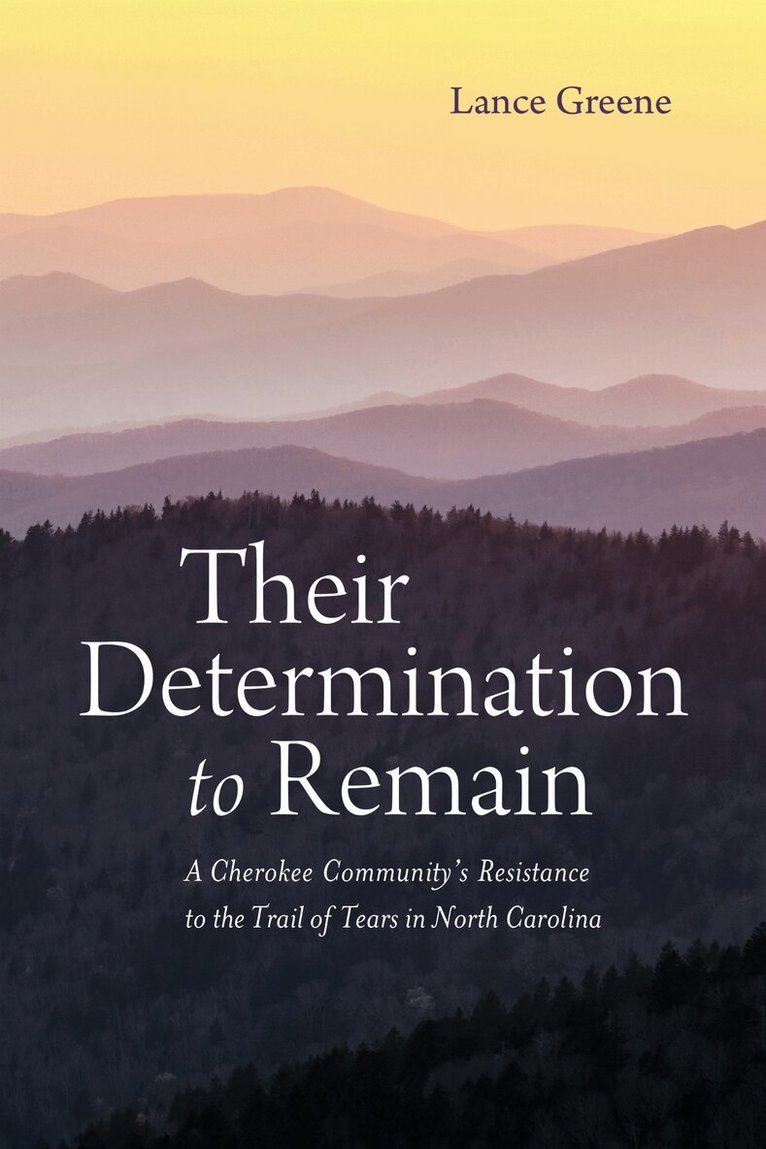
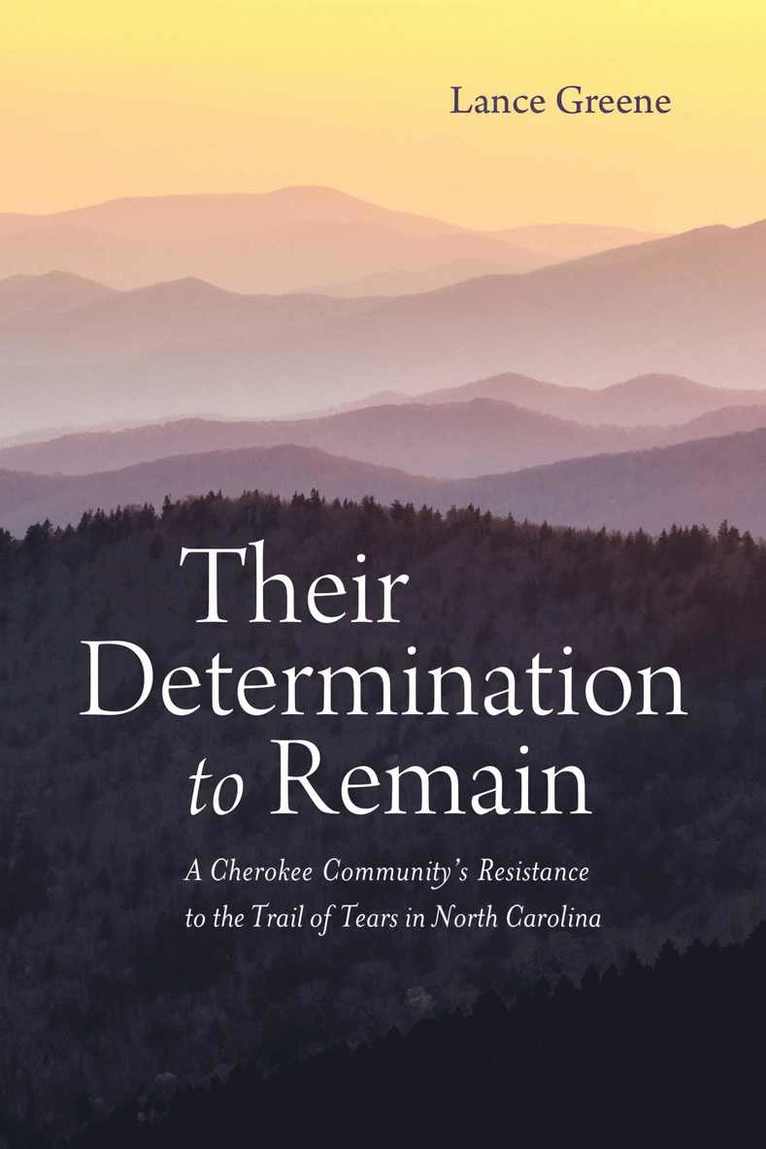
Their Determination to Remain
A Cherokee Community's Resistance to the Trail of Tears in North Carolina
Häftad, Engelska, 2023
322 kr
Skickas inom 5-8 vardagar
The remarkable story of a North Carolina Cherokee community who avoided forced removal on the Trail of Tears.During the 1838 forced Cherokee removal by the US government, a number of close-knit Cherokee communities in the Southern Appalachian Mountains refused to relinquish their homelands, towns, and way of life. Using a variety of tactics, hundreds of Cherokees avoided the encroaching US Army and remained in the region.In his book Their Determination to Remain: A Cherokee Community’s Resistance to the Trail of Tears in North Carolina, Lance Greene explores the lives of wealthy plantation owners Betty and John Welch who lived on the southwestern edge of the Cherokee Nation. John was Cherokee and Betty was White. Although few Cherokees in the region participated in slavery, the Welches held nine African Americans in bondage.During removal, the Welches assisted roughly 100 Cherokees hiding in the steep mountains. Afterward, they provided land for these Cherokees to rebuild a new community, Welch’s Town. Betty became a wealthy and powerful plantation mistress because her husband could no longer own land. Members of Welch’s Town experienced a transitional period in which they had no formal tribal government or clear citizenship yet felt secure enough to reestablish a townhouse, stickball fields, and dance grounds.Greene’s innovative study uses an interdisciplinary approach, incorporating historical narrative and archaeological data, to examine how and why the Welches and members of Welch’s Town avoided expulsion and reestablished their ways of life in the midst of a growing White population who resented a continued Cherokee presence. The Welch strategy included Betty’s leadership in demonstrating outwardly their participation in modern Western lifestyles, including enslavement, as John maintained a hidden space—within the boundaries of their land—for the continuation of traditional Cherokee cultural practices. Their Determination to Remain explores the complexities of race and gender in this region of the antebellum South and the real impacts of racism on the community.
377 kr
Skickas inom 5-8 vardagar
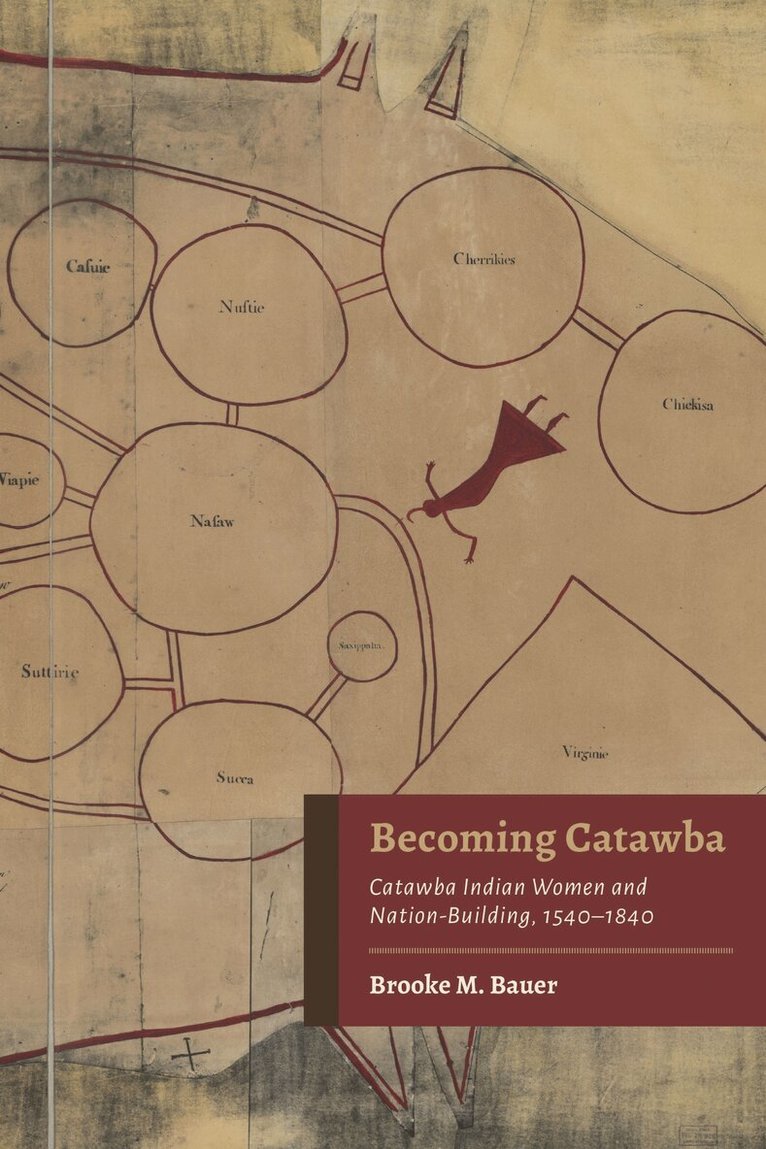
The story of Catawba women who experienced sweeping changes to their world but held onto traditional customs to create and preserve a Catawba identity and build a nationWinner of the Anne B. & James B. McMillan Prize in Southern HistoryWinner of the 2023 Erminie Wheeler-Voegelin Book Award WinnerWinner of the 2022 Berkshire Conference of Women Historians Book AwardWinner of the 2022 George C. Rogers, Jr. Award from the South Carolina Historical SocietyBrooke M. Bauer’s Becoming Catawba: Catawba Indian Women and Nation-Building, 1540–1840 is the first book-length study of the role Catawba women played in creating and preserving a cohesive tribal identity over three centuries of colonization and cultural turmoil. Bauer, a citizen of the Catawba Indian Nation of South Carolina, weaves ethnohistorical methodologies, family history, cultural context, and the Catawba language together to generate an internal perspective on the Catawbas’ history and heritage in the area now known as the Carolina Piedmont.This unique and important study examines the lives and legacies of women who executed complex decision-making and diplomacy to navigate shifting frameworks of kinship, land ownership, and cultural production in dealings with colonial encroachments, white settlers, and Euro-American legal systems and governments from the mid-sixteenth century to the early nineteenth century. Personified in the figure of Sally New River, a Catawba cultural leader to whom 500 remaining acres of occupied tribal lands were deeded on behalf of the community in 1796 and which she managed until her death in 1821, Bauer reveals how women worked to ensure the survival of the Catawba people and their Catawba identity, an effort that resulted in a unified nation.Bauer’s approach is primarily ethnohistorical, although it draws on a number of interdisciplinary strategies. In particular, Bauer uses “upstreaming,” a critical strategy that moves toward the period under study by using present-day community members’ connections to historical knowledge—for example, family histories and oral traditions—to interpret primary-source data. Additionally, Bauer employs archaeological data and material culture as a means of performing feminist recuperation, filling the gaps and silences left by the records, newspapers, and historical accounts as primarily written by and for white men. Ultimately, Becoming Catawba effects a welcome intervention at the intersections of Native, women’s, and Southern history, expanding the diversity and modes of experience in the fraught, multifaceted cultural environment of the early American South.