Industry-University Cooperative Chemistry Program Symposia - Böcker
Visar alla böcker i serien Industry-University Cooperative Chemistry Program Symposia. Handla med fri frakt och snabb leverans.
8 produkter
8 produkter
1 589 kr
Skickas inom 10-15 vardagar
This book contains a series of papers and abstracts from the 7th Industry-University Cooperative Chemistry Program symposium held in the spring of 1989 at Texas A&M University. The symposium was larger than previous IUCCP symposia since it also celebrated the 25 years that had elapsed since the initial discovery by F. A. Cotton and his co-workers of the existence of metal-metal quadruple bonds. Cotton's discovery demonstrated that multiple bonding in inorganic systems is not governed by the same constraints observed in organic chemistry regarding s and p orbital involvement. The d orbitals are involved in the multiple bonding description. The quadruple bond involves considerable d orbital overlap between adjacent metal centers. Part I of this series of papers focuses upon the impact of this discovery and describes further contributions to the development of the field. Multiple metal-metal bonding now is known to permeate broad areas of transition metal chemistry. The understanding of metal-metal bonding that developed as a result of the discovery of multiple metal-metal bonding awakened a new chemistry involving metal clusters. Clusters were defined by Cotton to be species containing metal-metal bonding. Clusters in catalysis therefore seemed a logical grouping of papers in this symposium. Clusters play an every increasing role in the control of chemical reactions. Part II of this book describes some of the interesting new developments in this field. In Part III the papers examine the role clusters play in describing and understanding solid state materials.
1 589 kr
Skickas inom 10-15 vardagar
The Industry-University Cooperative Chemistry Program has sponsored seven previous international symposia covering a wide variety of topics of interest to industrial and academic chemists. The eighth IUCCP symposium, held March 19-22, 1990, at Texas A&M University, represents a deviation from the former symposia, in that it is the first of a two-symposium series dedicated to the rapidly moving new field of industrial biochemistry that has beco~e known as biotechnology. Biotechnology is really not a new discipline, but rather is a term coined to describe the new and exciting commercial applications of biochemistry. The development of the field of biotechnology is a direct result of recombinant DNA technology, which began in earnest about 15 years ago. Today, we can routinely do experiments that were inconceivable in the early 1970's. Only comparatively simple technology available even in small laboratories is required to synthesize a gene and from it, to produce vast amounts of biological materials of enormous commercial value. These technical developments and others have stimulated increased activities in the field of enzyme biotechnology, using enzymes to catalyze "unnatural" reactions to produce complex molecules with stereochemical precision. It is true today, we can readily produce DNA fragments that will encode any amino acid sequence that we might desire, but at this point, our foundation of basic knowledge falls short. The dream of "designer enzymes" is still a fantasy, but the current wave of research activity and exciting new developments suggest that in the future the dream may become a reality.
2 117 kr
Skickas inom 10-15 vardagar
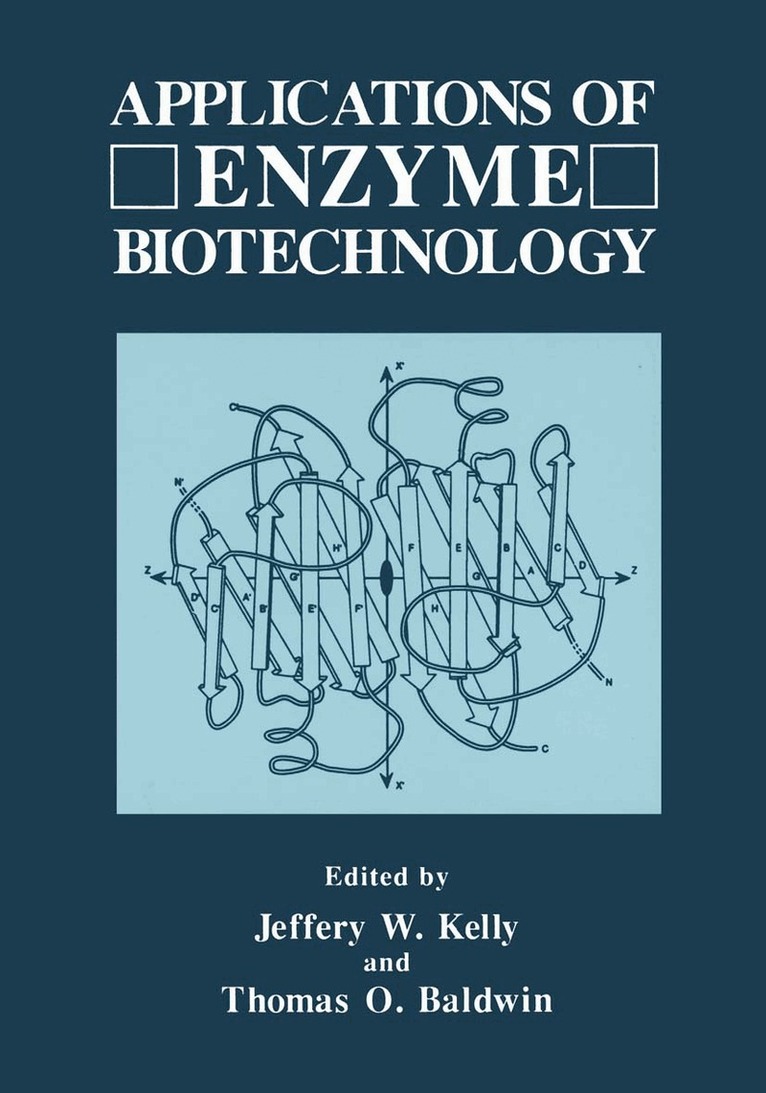
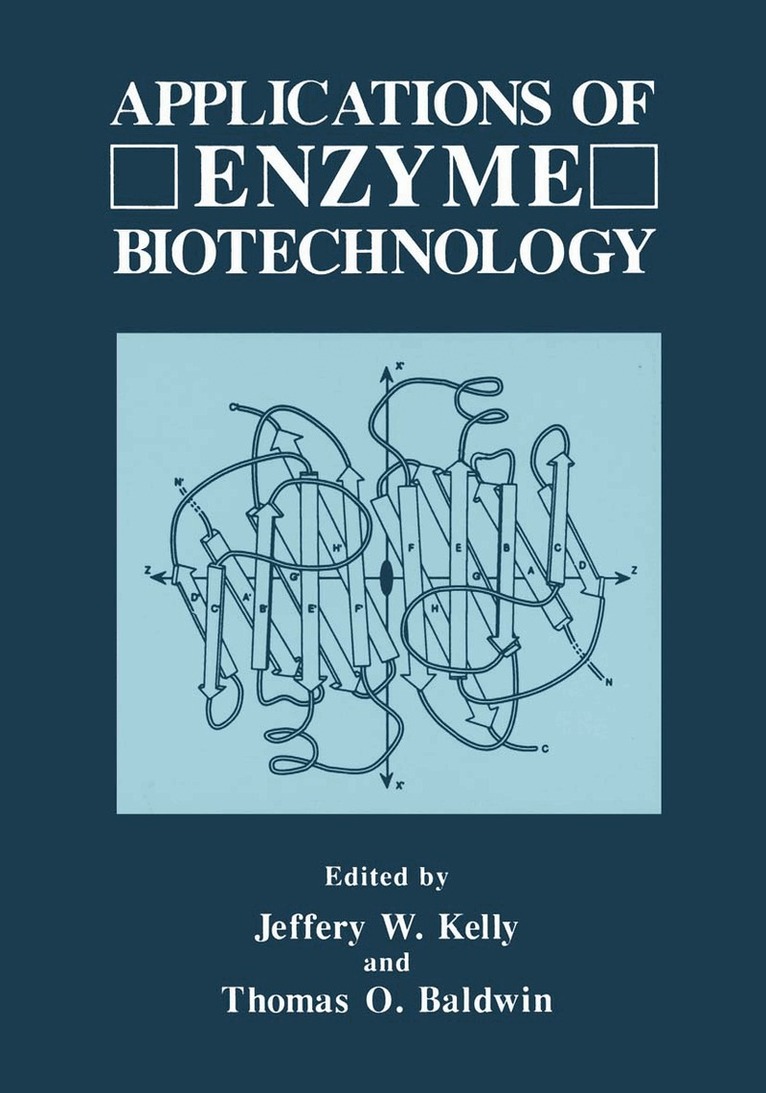
The Industry-University Cooperative Chemistry Program (IUCCP) has sponsored eight previous international symposia covering a range of topics of interest to industrial and academic chemists. The ninth IUCCP Symposium, held March 18-21, 1991 at Texas A&M University was the second in a two part series focusing on Biotechnology. The title for this Symposium "Applications of Enzyme Biotechnology" was by design a rather all encompassing title, similar in some respects to the discipline. Biotechnology refers to the application of biochemistry for the development of a commercial product. Persons employed in or interested in biotechnology may be chemists, molecular biologists, biophysicists, or physicians. The breadth of biotech research projects requires close collaboration between scientists of a variety of backgrounds, prejudices, and interests. Biotechnology is a comparatively new discipline closely tied to new developments in the fields of chemistry, biochemistry, molecular biology and medicine. The primary function of Texas A&M University is to educate students who will be appropriately trained to carry out the mission of biotechnology. The IUCCP Symposium serves as an important forum for fostering closer ties between academia and industry and exchanging ideas so important to this evolving area.
Industrial Environmental Chemistry
Waste Minimization in Industrial Processes and Remediation of Hazardous Waste
Inbunden, Engelska, 1992
1 589 kr
Skickas inom 10-15 vardagar
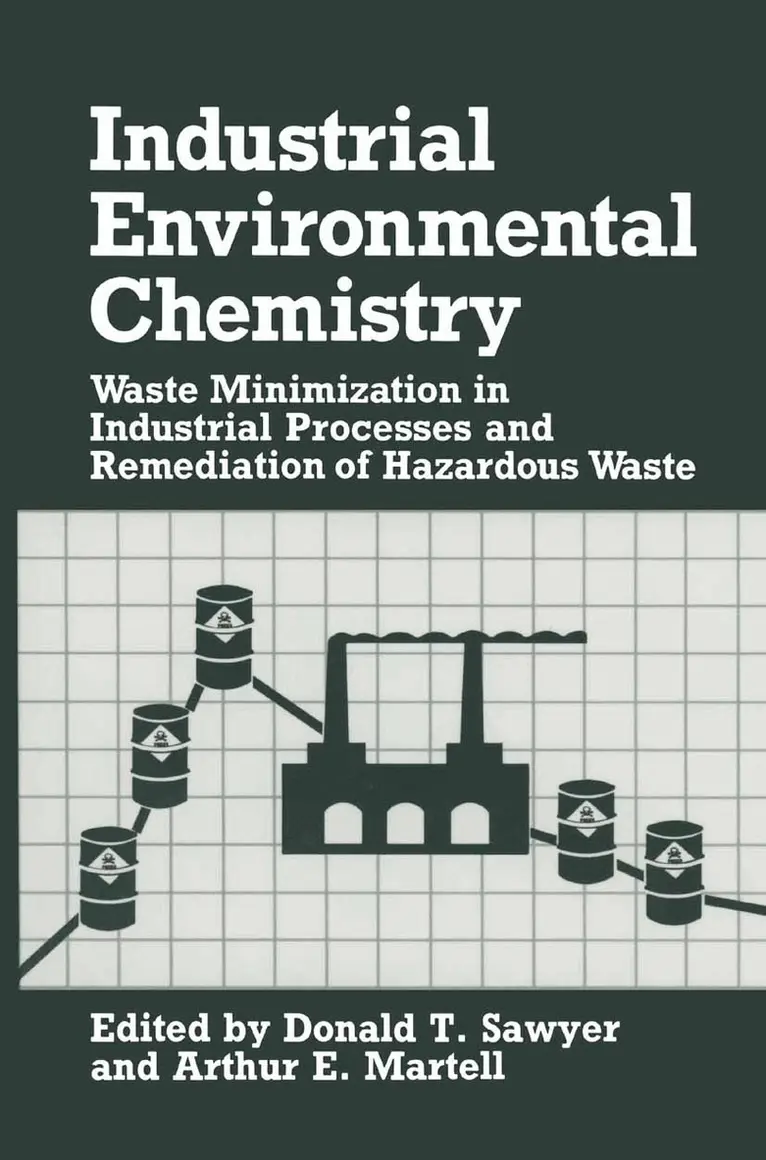
This monograph consists of manuscripts submitted by invited speakers who participated in the symposium "Industrial Environmental Chemistry: Waste Minimization in Industrial Processes and Remediation of Hazardous Waste," held March 24-26, 1992, at Texas A&M University. This meeting was the tenth annual international symposium sponsored by the Texas A&M Industry-University Cooperative Chemistry Program (IUCCP). The program was developed by an academic-industrial steering committee consisting of the co-chairmen, Professors Donald T. Sawyer and Arthur E. Martell of the Texas A&M University Chemistry Department, and members appointed by the sponsoring companies: Bernie A. Allen, Jr., Dow Chemical USA; Kirk W. Brown, Texas A&M University; Abraham Clearfield, Texas A&M University; Greg Leyes, Monsanto Company; Jay Warner, Hoechst-Celanese Corporation; Paul M. Zakriski, BF Goodrich Company; and Emile A. Schweikert, Texas A&M University (IUCCP Coordinator). The subject of this conference reflects the interest that has developed in academic institutions and industry for technological solutions to environmental contamination by industrial wastes. Progress is most likely with strategies that minimize waste production from industrial processes. Clearly the key to the protection and preservation of the environment will be through R&D that optimizes chemical processes to minimize or eliminate waste streams. Eleven of the papers are directed to waste minimization. An additional ten papers discuss chemical and biological remediation strategies for hazardous wastes that contaminate soils, sludges, and water.
2 117 kr
Skickas inom 10-15 vardagar
The Industry-University Cooperative Chemistry Program (IUCCP) has sponsored eight previous international symposia covering a range of topics of interest to industrial and academic chemists. The ninth IUCCP Symposium, held March 18-21, 1991 at Texas A&M University was the second in a two part series focusing on Biotechnology. The title for this Symposium "Applications of Enzyme Biotechnology" was by design a rather all encompassing title, similar in some respects to the discipline. Biotechnology refers to the application of biochemistry for the development of a commercial product. Persons employed in or interested in biotechnology may be chemists, molecular biologists, biophysicists, or physicians. The breadth of biotech research projects requires close collaboration between scientists of a variety of backgrounds, prejudices, and interests. Biotechnology is a comparatively new discipline closely tied to new developments in the fields of chemistry, biochemistry, molecular biology and medicine. The primary function of Texas A&M University is to educate students who will be appropriately trained to carry out the mission of biotechnology. The IUCCP Symposium serves as an important forum for fostering closer ties between academia and industry and exchanging ideas so important to this evolving area.
1 589 kr
Skickas inom 10-15 vardagar
The Industry-University Cooperative Chemistry Program has sponsored seven previous international symposia covering a wide variety of topics of interest to industrial and academic chemists. The eighth IUCCP symposium, held March 19-22, 1990, at Texas A&M University, represents a deviation from the former symposia, in that it is the first of a two-symposium series dedicated to the rapidly moving new field of industrial biochemistry that has beco~e known as biotechnology. Biotechnology is really not a new discipline, but rather is a term coined to describe the new and exciting commercial applications of biochemistry. The development of the field of biotechnology is a direct result of recombinant DNA technology, which began in earnest about 15 years ago. Today, we can routinely do experiments that were inconceivable in the early 1970's. Only comparatively simple technology available even in small laboratories is required to synthesize a gene and from it, to produce vast amounts of biological materials of enormous commercial value. These technical developments and others have stimulated increased activities in the field of enzyme biotechnology, using enzymes to catalyze "unnatural" reactions to produce complex molecules with stereochemical precision. It is true today, we can readily produce DNA fragments that will encode any amino acid sequence that we might desire, but at this point, our foundation of basic knowledge falls short. The dream of "designer enzymes" is still a fantasy, but the current wave of research activity and exciting new developments suggest that in the future the dream may become a reality.
Industrial Environmental Chemistry
Waste Minimization in Industrial Processes and Remediation of Hazardous Waste
Häftad, Engelska, 2013
1 589 kr
Skickas inom 10-15 vardagar
This monograph consists of manuscripts submitted by invited speakers who participated in the symposium "Industrial Environmental Chemistry: Waste Minimization in Industrial Processes and Remediation of Hazardous Waste," held March 24-26, 1992, at Texas A&M University. This meeting was the tenth annual international symposium sponsored by the Texas A&M Industry-University Cooperative Chemistry Program (IUCCP). The program was developed by an academic-industrial steering committee consisting of the co-chairmen, Professors Donald T. Sawyer and Arthur E. Martell of the Texas A&M University Chemistry Department, and members appointed by the sponsoring companies: Bernie A. Allen, Jr., Dow Chemical USA; Kirk W. Brown, Texas A&M University; Abraham Clearfield, Texas A&M University; Greg Leyes, Monsanto Company; Jay Warner, Hoechst-Celanese Corporation; Paul M. Zakriski, BF Goodrich Company; and Emile A. Schweikert, Texas A&M University (IUCCP Coordinator). The subject of this conference reflects the interest that has developed in academic institutions and industry for technological solutions to environmental contamination by industrial wastes. Progress is most likely with strategies that minimize waste production from industrial processes. Clearly the key to the protection and preservation of the environment will be through R&D that optimizes chemical processes to minimize or eliminate waste streams. Eleven of the papers are directed to waste minimization. An additional ten papers discuss chemical and biological remediation strategies for hazardous wastes that contaminate soils, sludges, and water.
1 589 kr
Skickas inom 10-15 vardagar
This book contains a series of papers and abstracts from the 7th Industry-University Cooperative Chemistry Program symposium held in the spring of 1989 at Texas A&M University. The symposium was larger than previous IUCCP symposia since it also celebrated the 25 years that had elapsed since the initial discovery by F. A. Cotton and his co-workers of the existence of metal-metal quadruple bonds. Cotton's discovery demonstrated that multiple bonding in inorganic systems is not governed by the same constraints observed in organic chemistry regarding s and p orbital involvement. The d orbitals are involved in the multiple bonding description. The quadruple bond involves considerable d orbital overlap between adjacent metal centers. Part I of this series of papers focuses upon the impact of this discovery and describes further contributions to the development of the field. Multiple metal-metal bonding now is known to permeate broad areas of transition metal chemistry. The understanding of metal-metal bonding that developed as a result of the discovery of multiple metal-metal bonding awakened a new chemistry involving metal clusters. Clusters were defined by Cotton to be species containing metal-metal bonding. Clusters in catalysis therefore seemed a logical grouping of papers in this symposium. Clusters play an every increasing role in the control of chemical reactions. Part II of this book describes some of the interesting new developments in this field. In Part III the papers examine the role clusters play in describing and understanding solid state materials.