International Communications – serie
Visar alla böcker i serien International Communications. Handla med fri frakt och snabb leverans.
5 produkter
5 produkter
1 682 kr
Skickas
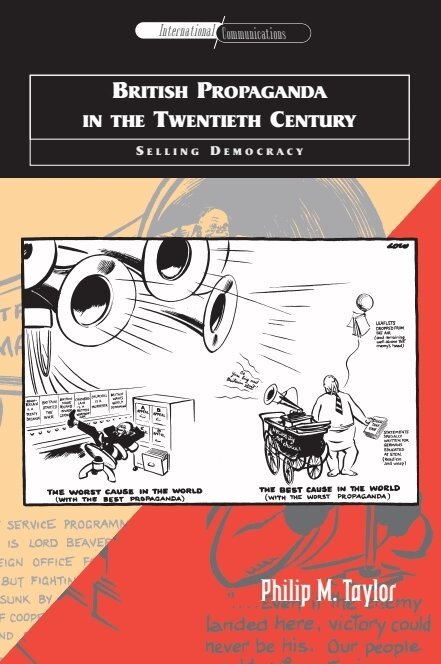
This book examines the evolution of British propaganda practice during the course of the twentieth century. Written by an internationally-renowned expert in the area, this book covers the period from the First World War to the present day, including discussions of recent developments in information warfare. It includes analysis of film, radio, television and the press, and places the British experience within the wider international context. Drawing together elements of the author's previously published work, the book demonstrates how Britain has established a model for democratic propaganda world-wide.This is the first volume in the new International Communications series, edited by Philip M Taylor.
1 433 kr
Skickas inom 7-10 vardagar
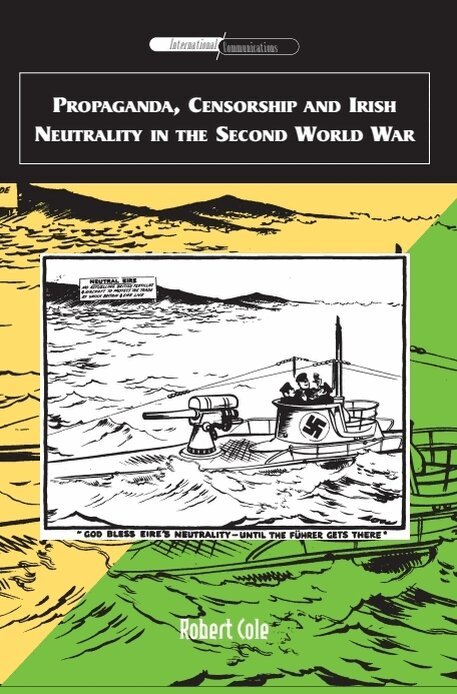
Allied propaganda and Eire censorship were a vital part of the conflict over Irish neutrality in the Second World War. Based upon original research in archives in Ireland, Great Britain, the United States and Canada, this study opens a new page in the history of wartime propaganda and censorship. It examines the channels of propaganda , including the press and other print media, broadcasting and film, employed in Eire and the agencies which operated them, and the structure and operations of the Eire censorship bureau which sought to repress them . It also looks at the role played by Irish-Americans in the conflict, some of whom supported, while others opposed, Irish neutrality. Which side could win this “war of words”? Could British and American propaganda overcome Eire neutrality, or would Eire censorship guarantee that it could not? In this detailed and wide-ranging examination of the “war of words” over Eire neutrality, the author addresses such subjects as public opinion, government policies, propaganda planning, objectives, content and channels of dissemination, and the purpose and tactics of censorship.
1 391 kr
Skickas inom 7-10 vardagar
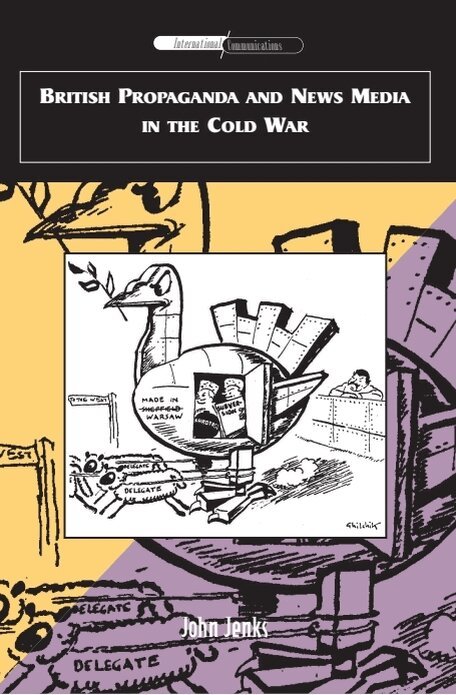
This is a study of the British state’s generation, suppression and manipulation of news to further foreign policy goals during the early Cold War. Bribing editors, blackballing “unreliable” journalists, creating instant media experts through provision of carefully edited “inside information”, and exploiting the global media system to plant propaganda – disguised as news – around the world: these were all methods used by the British to try to convince the international public of Soviet deceit and criminality and thus gain support for anti-Soviet policies at home and abroad. Britain’s shaky international position heightened the importance of propaganda. The Soviets and Americans were investing heavily in propaganda to win the “hearts and minds” of the world and substitute for increasingly unthinkable nuclear war. The British exploited and enhanced their media power and propaganda expertise to keep up with the superpowers and preserve their own global influence at a time when British economic, political and military power was sharply declining. This activity directly influenced domestic media relations, as officials used British media to launder foreign-bound propaganda and to create the desired images of British “public opinion” for foreign audiences.By the early 1950s censorship waned but covert propaganda had become addictive. The endless tension of the Cold War normalized what had previously been abnormal state involvement in the media, and led it to use similar tools against Egyptian nationalists, Irish republicans and British leftists. Much more recently, official manipulation of news about Iraq indicates that a behind-the-scenes examination of state propaganda’s earlier days is highly relevant. John Jenks draws heavily on recently declassified archival material for this book, especially files of the Foreign Office’s anti-Communist Information Research Department (IRD) propaganda agency, and the papers of key media organisations, journalists, politici
1 433 kr
Skickas inom 7-10 vardagar
This book examines the important issue of British propaganda to France during the Second World War and aims to show the value of the propaganda campaign to the British war effort. British Propaganda to France is a unique contribution to the field, not only in its examination of one of the least well-studied areas of British activity during the Second World War but also in the breadth of its approach. It surveys the organisation, operation and nature of the British propaganda effort towards the French people, including both white propaganda (BBC broadcasts and leaflets dropped by the RAF) and black propaganda (secret broadcasting stations, documents purporting to come from the Germans in France or distributed in France using clandestine methods, and rumours). Finally it examines the contemporary British understanding of the French and German reception of and reaction to this propaganda material, to show whether the campaign was an effective and well-directed use of resources.Almost all examinations of British foreign propaganda during the Second World War have focused on propaganda directed towards Germany. British propaganda to France, which in terms of quantity of output was actually the most important area of British propaganda, has never been examined in depth until now. This book adds a further chapter to our knowledge of propaganda in the Second World War, especially in the conduct of psychological warfare. It also touches on better-known areas such as RAF Bomber Command and its Operational Training Units, which handled aerial dissemination of British white propaganda leaflets over France, and the Special Operations Executive in France, which worked closely with the Political Warfare Executive in delivering much black propaganda.
1 433 kr
Skickas inom 7-10 vardagar
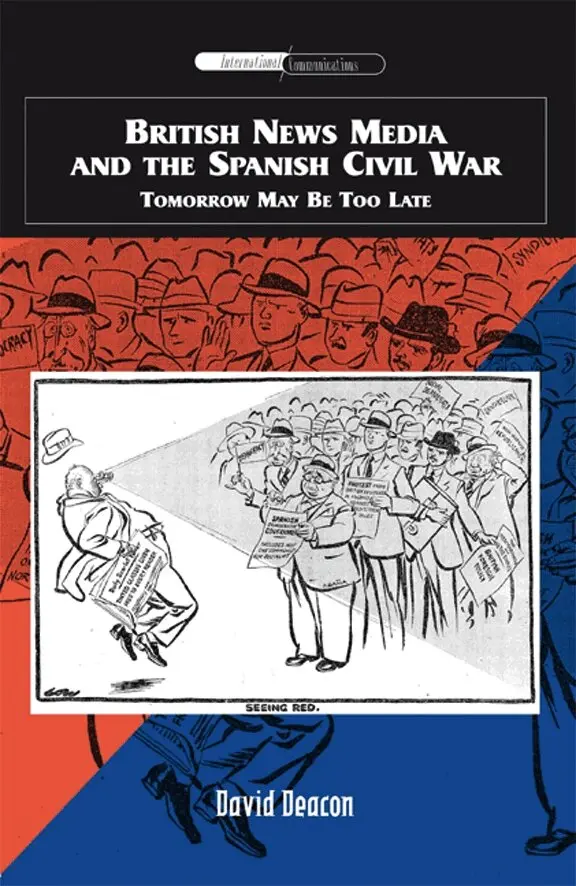
The Spanish Civil War (1936-1939) was reported by some of the most eminent journalists of the twentieth century and was the subject of reportage that still endures in public memory. However, these represent just a small fraction of the total news coverage of the war, raising the possibility that they provide a partial, even atypical, view of the international media’s engagement with, and performance in, the conflict. This book provides the most extensive and detailed analysis of the reporting of the conflict ever undertaken, examining the personalities, routines, pressures and structures that shaped news coverage of the war in Britain as it unfolded. The book combines a comprehensive overview of the existing literature on the role of the news media in the conflict, with a vast amount of new evidence, gleaned from the author’s detailed investigations in a range of official and media archives. Highlights include:*Analysis of the strategies used by Republican and Nationalist forces to control and manage international press opinion*Examination of journalists’ personal experiences in Spain, and how these affected their political opinions and professional values*Scrutiny of the pressures exerted by the British government on news correspondents, editors and proprietors as it sought to convince domestic and international opinion of the validity of its policy of international non-intervention in the war*A systematic analysis of actual news coverage of the conflict, examining the extent to which media evaluations and interpretations of the conflict altered as events unfolded. Written in a highly accessible manner, this book will appeal to a wide readership, including students and academics working in the fields of politics, history and cultural, communication and media studies, as well as any other readers interested in the history and legacy of the Spanish Civil War.