International Crisis Behavior – serie
Visar alla böcker i serien International Crisis Behavior. Handla med fri frakt och snabb leverans.
4 produkter
4 produkter
333 kr
Skickas inom 7-10 vardagar
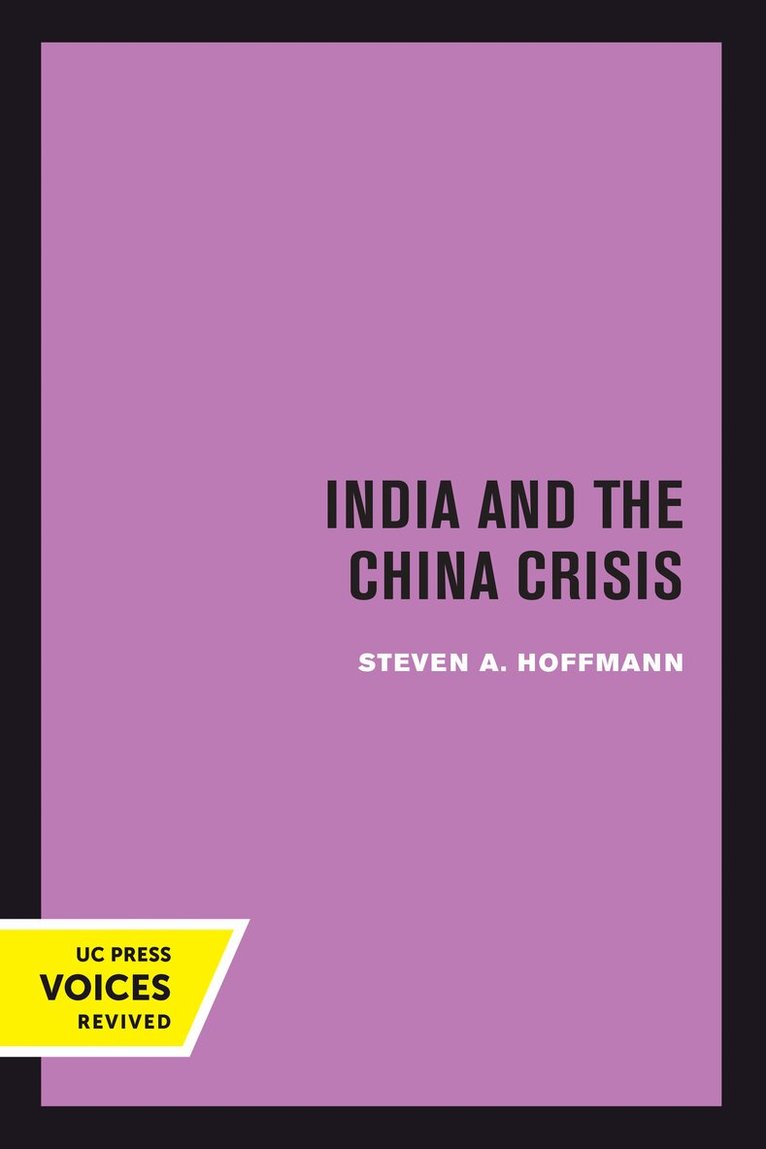
The earliest accounts of the Sino-Indian boundary dispute cast India as the victim of Chinese betrayal and expansionism, but a more favorable image of China vis-a-vis India has appeared since the 1970s. Since then, China has been portrayed as the victim of India's self-righteous intransigence, with the 1962 India-China war occurring because China was provoked into practicing a justifiable form of realpolitik. These two seemingly irreconcilable academic schools of thought still exist. In this case study of India's decision-making between the years of 1959 and 1963, the critical first years of its border conflict with China, Steven A. Hoffmann takes an important step in reconciling the conflicting views of the crisis and of the ascribed reasons for the war that ensued in 1962. Drawing on interviews with Indian officials, military officers, and political leaders and on memoirs and other sources gathered during concentrated research in India, England, and North America between 1983 and 1986, the author provides previously unknown material on the perceptions and realities of Indian decision making. A model for international crisis behavior, as proposed by Michael Brecher, is used to help establish a balanced treatment of information and offer insights into such questions as why India and China both failed to understand one another's frontier psychologies and strategies, and why the Nehru government did not succeed in managing the conflict. This richly detailed and carefully researched approach is invaluable in this time when India and China are once again exploring ways to establish a solid relationship.This title is part of UC Press's Voices Revived program, which commemorates University of California Press’s mission to seek out and cultivate the brightest minds and give them voice, reach, and impact. Drawing on a backlist dating to 1893, Voices Revived makes high-quality, peer-reviewed scholarship accessible once again using print-on-demand technology. This title was originally published in 1990.
Del 2 - International Crisis Behavior
United States and the Berlin Blockade 1948-1949
A Study in Crisis Decision-Making
Häftad, Engelska, 2022
402 kr
Skickas inom 7-10 vardagar
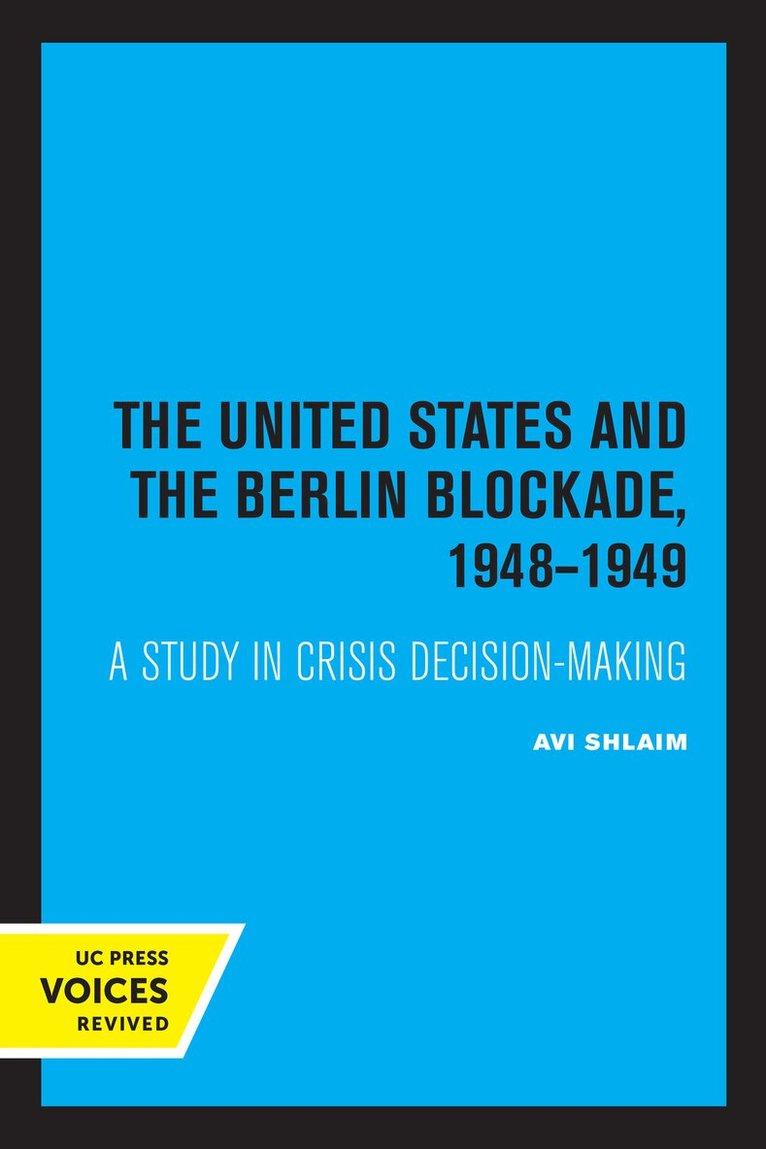
The United States and the Berlin Blockade, 1948–1949: A Study in Crisis Decision-Making by Avi Shlaim offers a penetrating analysis of one of the most dangerous confrontations of the early Cold War. When Stalin moved to blockade Berlin, Western leaders faced a sudden test of will, values, and resolve under the pressure of time and the threat of armed conflict. Drawing on extensive archival research, Shlaim reconstructs the flow of decisions taken in Washington as policymakers weighed options ranging from negotiation to military force, ultimately settling on the unprecedented airlift that became a defining episode of the postwar order. In doing so, he not only illuminates a turning point in East–West relations but also probes the psychological strains of crisis leadership itself.Part of the International Crisis Behavior series, the book employs a common research design to examine decisional units, perceptions of threat, and the narrowing of choices under extreme stress. Shlaim demonstrates how American leaders understood Soviet intentions, how they defined the stakes of Western security, and how they sought to balance risk with credibility in the eyes of allies and adversaries alike. The narrative offers both the drama of unfolding crisis and a systematic inquiry into how statesmen process information, consult, and decide when events threaten to spiral into war. Combining the craft of the historian with the analytical tools of social science, The United States and the Berlin Blockade remains an essential case study in Cold War history and in the broader study of crisis decision-making—revealing how even under acute pressure, leaders can sometimes marshal clarity, restraint, and imagination in the defense of international order.This title is part of UC Press's Voices Revived program, which commemorates University of California Press’s mission to seek out and cultivate the brightest minds and give them voice, reach, and impact. Drawing on a backlist dating to 1893, Voices Revived makes high-quality, peer-reviewed scholarship accessible once again using print-on-demand technology. This title was originally published in 1983.
Del 2 - International Crisis Behavior
United States and the Berlin Blockade 1948-1949
A Study in Crisis Decision-Making
Inbunden, Engelska, 2022
1 469 kr
Skickas inom 3-6 vardagar
The United States and the Berlin Blockade, 1948–1949: A Study in Crisis Decision-Making by Avi Shlaim offers a penetrating analysis of one of the most dangerous confrontations of the early Cold War. When Stalin moved to blockade Berlin, Western leaders faced a sudden test of will, values, and resolve under the pressure of time and the threat of armed conflict. Drawing on extensive archival research, Shlaim reconstructs the flow of decisions taken in Washington as policymakers weighed options ranging from negotiation to military force, ultimately settling on the unprecedented airlift that became a defining episode of the postwar order. In doing so, he not only illuminates a turning point in East–West relations but also probes the psychological strains of crisis leadership itself.Part of the International Crisis Behavior series, the book employs a common research design to examine decisional units, perceptions of threat, and the narrowing of choices under extreme stress. Shlaim demonstrates how American leaders understood Soviet intentions, how they defined the stakes of Western security, and how they sought to balance risk with credibility in the eyes of allies and adversaries alike. The narrative offers both the drama of unfolding crisis and a systematic inquiry into how statesmen process information, consult, and decide when events threaten to spiral into war. Combining the craft of the historian with the analytical tools of social science, The United States and the Berlin Blockade remains an essential case study in Cold War history and in the broader study of crisis decision-making—revealing how even under acute pressure, leaders can sometimes marshal clarity, restraint, and imagination in the defense of international order.This title is part of UC Press's Voices Revived program, which commemorates University of California Press’s mission to seek out and cultivate the brightest minds and give them voice, reach, and impact. Drawing on a backlist dating to 1893, Voices Revived makes high-quality, peer-reviewed scholarship accessible once again using print-on-demand technology. This title was originally published in 1983.
1 513 kr
Skickas inom 3-6 vardagar
The earliest accounts of the Sino-Indian boundary dispute cast India as the victim of Chinese betrayal and expansionism, but a more favorable image of China vis-a-vis India has appeared since the 1970s. Since then, China has been portrayed as the victim of India's self-righteous intransigence, with the 1962 India-China war occurring because China was provoked into practicing a justifiable form of realpolitik. These two seemingly irreconcilable academic schools of thought still exist. In this case study of India's decision-making between the years of 1959 and 1963, the critical first years of its border conflict with China, Steven A. Hoffmann takes an important step in reconciling the conflicting views of the crisis and of the ascribed reasons for the war that ensued in 1962. Drawing on interviews with Indian officials, military officers, and political leaders and on memoirs and other sources gathered during concentrated research in India, England, and North America between 1983 and 1986, the author provides previously unknown material on the perceptions and realities of Indian decision making. A model for international crisis behavior, as proposed by Michael Brecher, is used to help establish a balanced treatment of information and offer insights into such questions as why India and China both failed to understand one another's frontier psychologies and strategies, and why the Nehru government did not succeed in managing the conflict. This richly detailed and carefully researched approach is invaluable in this time when India and China are once again exploring ways to establish a solid relationship.This title is part of UC Press's Voices Revived program, which commemorates University of California Press’s mission to seek out and cultivate the brightest minds and give them voice, reach, and impact. Drawing on a backlist dating to 1893, Voices Revived makes high-quality, peer-reviewed scholarship accessible once again using print-on-demand technology. This title was originally published in 1990.