International Handbooks on Economic Integration - Böcker
Visar alla böcker i serien International Handbooks on Economic Integration. Handla med fri frakt och snabb leverans.
6 produkter
6 produkter
1 094 kr
Skickas inom 10-15 vardagar
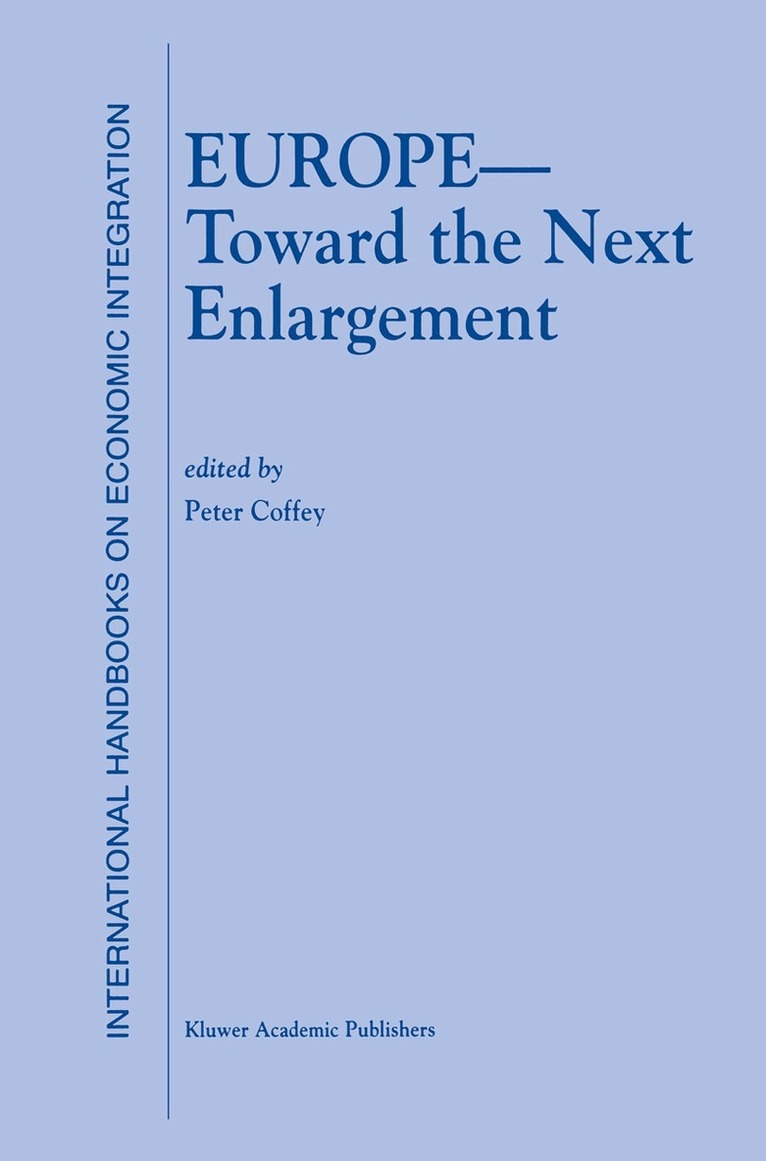
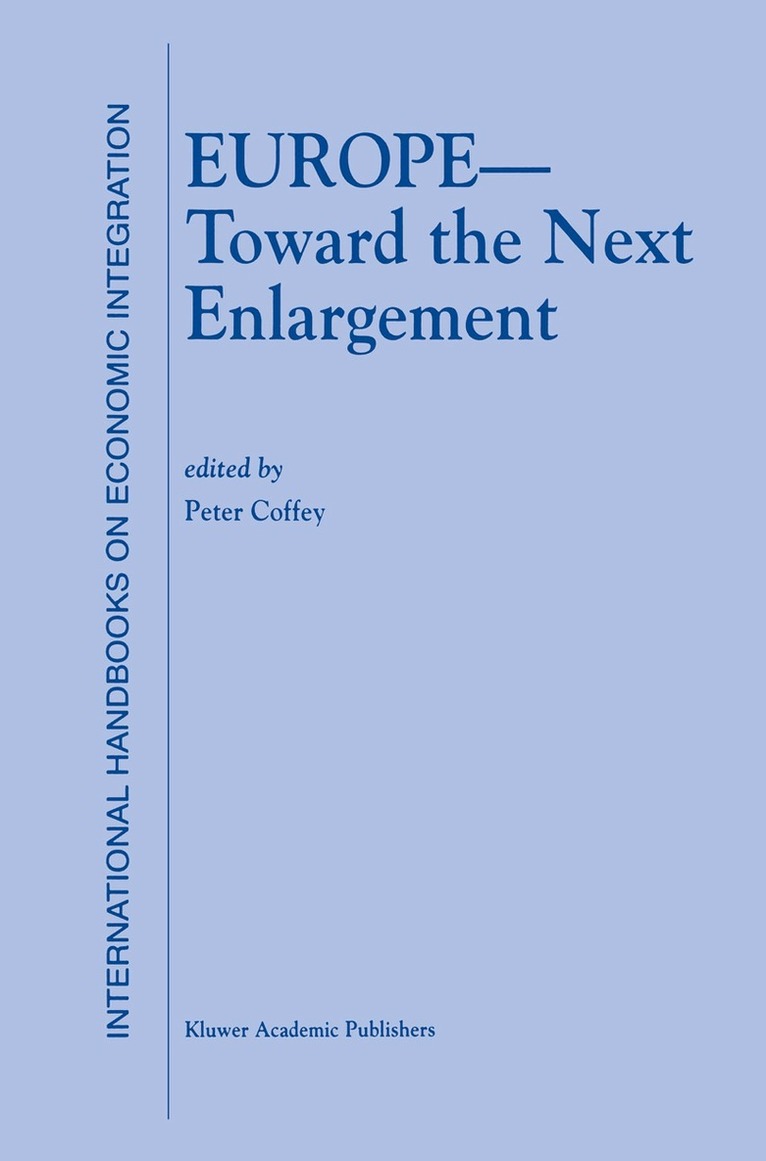
by Peter Coffey THE BACKGROUND Once again, Europe finds itselfata majorcrossroads. In January, 1999, the Euro, the European currency, was launched. This major undertaking does reaffinn the EuropeanUnion'scommon international monetarypersonality whilst further deepening the integration process in Western Europe. The launch of the Euro has gone hand-in-hand with an intensification of the negotiating process between the European Union (EU) and a number of countries of Central and Eastern Europe and Cyprus which are seeking membershipofthe EU. These countriesare divided into two groups, i. e. the so-called "frontrunners" (Cyprus, the Czech Republic, Estonia, Hungary, Poland and Slovenia), and the "others" (Bulgaria, Latvia, Lithuania, Malta and Romania). The accession negotiations with the first group have pro- ceeded rather swiftly. Now, the second group ofcountries wishes to move into the first one. PRINCIPLES AND CRITERIA FOR MEMBERSHIP Basicallyspeaking,countries fulfilling the following criteria may apply for membershipofthe EU: 1. they mustbe (geographically speaking) Europeancountries, XIV Europe - Toward the Next Enlargement 2. theymust have a multi-party parliamentary democracy, 3.they must have a market-type economy, and, 4. they must respect human rights. These are obviously very basic criteria, thus at the Copenhagen Summitof 1993, they were further refined with an eye to the future enlargement - eastwards - of the EU. In some ways, this listofcriteria obscures someofthe real basic problems which future Member States face in the process of the negotiations for membership. Basically, these countries must accept the three fundamental treaties, i. e. , the Rome, Maastricht and AmsterdamTreaties.
2 180 kr
Skickas inom 10-15 vardagar
Latin America's experience with regional economic integration has been only slightly shorter than that of Europe. In fact, the first attempt at integration started as early as 1960, with the creation of LAFTA - the Latin American Free Trade Area (subsequently replaced by LAIA - the Latin American Integration Association). LAFTA, composed of 11 countries, sought, unsuccessfully, to create a free trade area in 12 years. In 1969, the Andean pact, which sought, also unsuccessfully, to create a sub-regional free trade area, was set up. Recently the Presidents of Argentina, Brazil, Paraguay and Uruguay signed the Treaty of Asuncion aimed at creating a common market as from 1st January, 1995. This common market, MERCOSUR, will be completed by 2006. In comparison with the earlier and unsuccessful attempts at integration, and despite challenges and problems, both internal and external, MERCOSUR is working, and trade between the member States is increasing. Furthermore, as with the case of the European Union (EU), serious attempts (notably between Argentina and Brazil) are being made to co-ordinate economic and monetary policies.The most important evidence of these moves is the introduction of hard currencies, the reduction in the size of the public sector and the privatization of State assets. These are clearly exciting times for Latin American integration. In this book, the first in a series of books on International Economic Integration, the authors examine the experience of MERCOSUR in the Latin American integration progress. After an analysis of the history of the moves towards integration in South America, the case of each Member State and the Associate Country is examined and perspectives for the future are assessed.
2 180 kr
Skickas inom 10-15 vardagar
Latin America's experience with regional economic integration has been only slightly shorter than that of Europe. In fact, the first attempt at integration started as early as 1960, with the creation of LAFTA - the Latin American Free Trade Area (subsequently replaced by LAIA - the Latin American Integration Association). LAFTA, composed of 11 countries, sought, unsuccessfully, to create a free trade area in 12 years. In 1969, the Andean pact, which sought, also unsuccessfully, to create a sub-regional free trade area, was set up. Recently the Presidents of Argentina, Brazil, Paraguay and Uruguay signed the Treaty of Asuncion aimed at creating a common market as from 1st January, 1995. This common market, MERCOSUR, will be completed by 2006. In comparison with the earlier and unsuccessful attempts at integration, and despite challenges and problems, both internal and external, MERCOSUR is working, and trade between the member States is increasing. Furthermore, as with the case of the European Union (EU), serious attempts (notably between Argentina and Brazil) are being made to co-ordinate economic and monetary policies.The most important evidence of these moves is the introduction of hard currencies, the reduction in the size of the public sector and the privatization of State assets. These are clearly exciting times for Latin American integration. In this book, the first in a series of books on international economic integration, the authors examine the experience of MERCOSUR in the Latin American integration progress. After an analysis of the history of the moves towards integration in South America, the case of each Member State and the Associate Country is examined and perspectives for the future are assessed.
977 kr
Skickas inom 10-15 vardagar
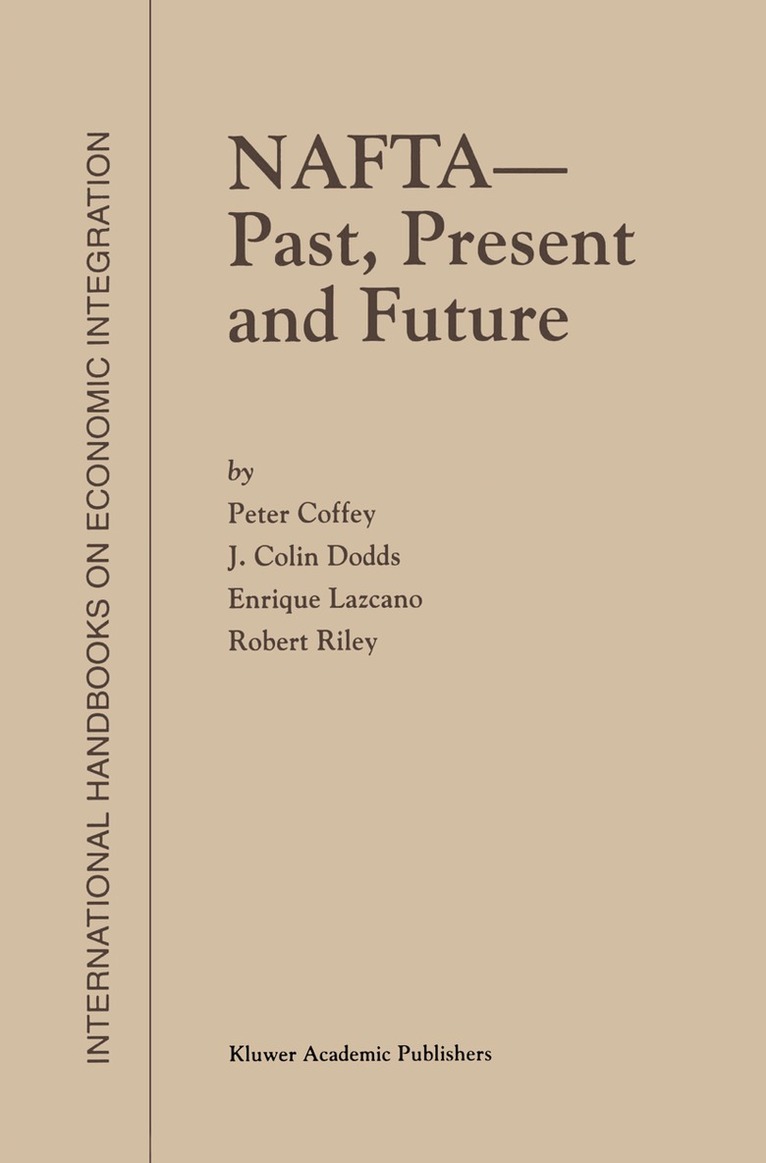
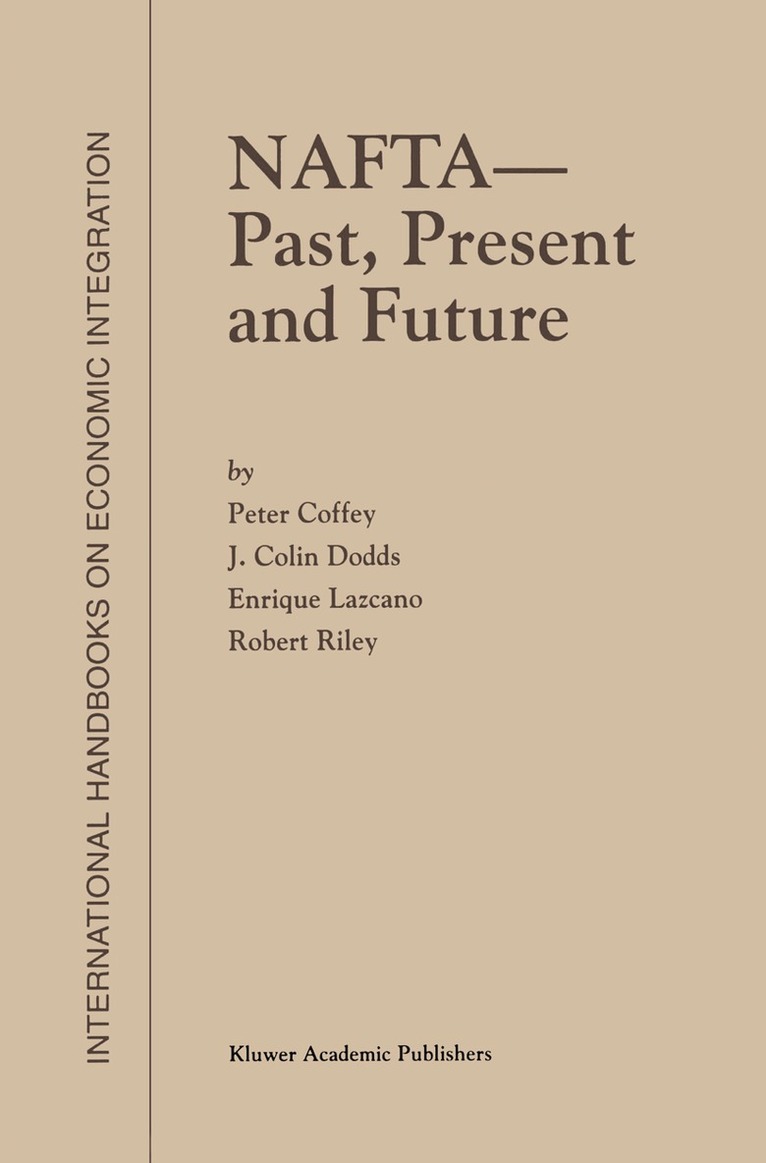
NAFTA has been described by one expert as being a partial customs union. It is, in any case, a special kind of free trade area because it consists of two highly developed economies and one large third world economy. In ths book, the contributors examine the specific interests of the three member countries, Canada, Mexico and the United States in the creation of NAFTA. They also assess the influence of this trade area on their economics. Looking to the future, doubts are expressed about the feasibility of using NAFTA (a hope expressed by the USA) as a stepping stone in the creation of a Free Trade Area of the Americas. Instead, the contributors see the consolidation of MERCOSUR in Latin America and the creation of a new Trans-Atlantic Market - as proposed by Sir Leon Brittan - as more likely developments.
1 062 kr
Skickas inom 10-15 vardagar
by Peter Coffey THE BACKGROUND Once again, Europe finds itselfata majorcrossroads. In January, 1999, the Euro, the European currency, was launched. This major undertaking does reaffinn the EuropeanUnion'scommon international monetarypersonality whilst further deepening the integration process in Western Europe. The launch of the Euro has gone hand-in-hand with an intensification of the negotiating process between the European Union (EU) and a number of countries of Central and Eastern Europe and Cyprus which are seeking membershipofthe EU. These countriesare divided into two groups, i. e. the so-called "frontrunners" (Cyprus, the Czech Republic, Estonia, Hungary, Poland and Slovenia), and the "others" (Bulgaria, Latvia, Lithuania, Malta and Romania). The accession negotiations with the first group have pro- ceeded rather swiftly. Now, the second group ofcountries wishes to move into the first one. PRINCIPLES AND CRITERIA FOR MEMBERSHIP Basicallyspeaking,countries fulfilling the following criteria may apply for membershipofthe EU: 1. they mustbe (geographically speaking) Europeancountries, XIV Europe - Toward the Next Enlargement 2. theymust have a multi-party parliamentary democracy, 3.they must have a market-type economy, and, 4. they must respect human rights. These are obviously very basic criteria, thus at the Copenhagen Summitof 1993, they were further refined with an eye to the future enlargement - eastwards - of the EU. In some ways, this listofcriteria obscures someofthe real basic problems which future Member States face in the process of the negotiations for membership. Basically, these countries must accept the three fundamental treaties, i. e. , the Rome, Maastricht and AmsterdamTreaties.
1 094 kr
Skickas inom 10-15 vardagar
NAFTA has been described by one expert as being a partial customs union. It is, in any case, a special kind of free trade area because it consists of two highly developed economies and one large third world economy. In this book, the contributors examine the specific interests of the three member countries, Canada, Mexico, and the United States in the creation of NAFTA. They also assess the influence of this trade area on their economics. Looking to the future, doubts are expressed about the feasibility of using NAFTA (a hope expressed by the USA) as a stepping stone in the creation of a Free Trade Area of the Americas. Instead, the contributors see the consolidation of MERCOSUR in Latin America and the creation of a new Trans-Atlantic Market - as proposed by Sir Leon Brittan - as more likely developments.