
Anthem Modern and Contemporary Art of the Arab World, Iran and Turkey – serie
Visar alla böcker i serien Anthem Modern and Contemporary Art of the Arab World, Iran and Turkey. Handla med fri frakt och snabb leverans.
3 produkter
3 produkter
361 kr
Skickas inom 5-8 vardagar
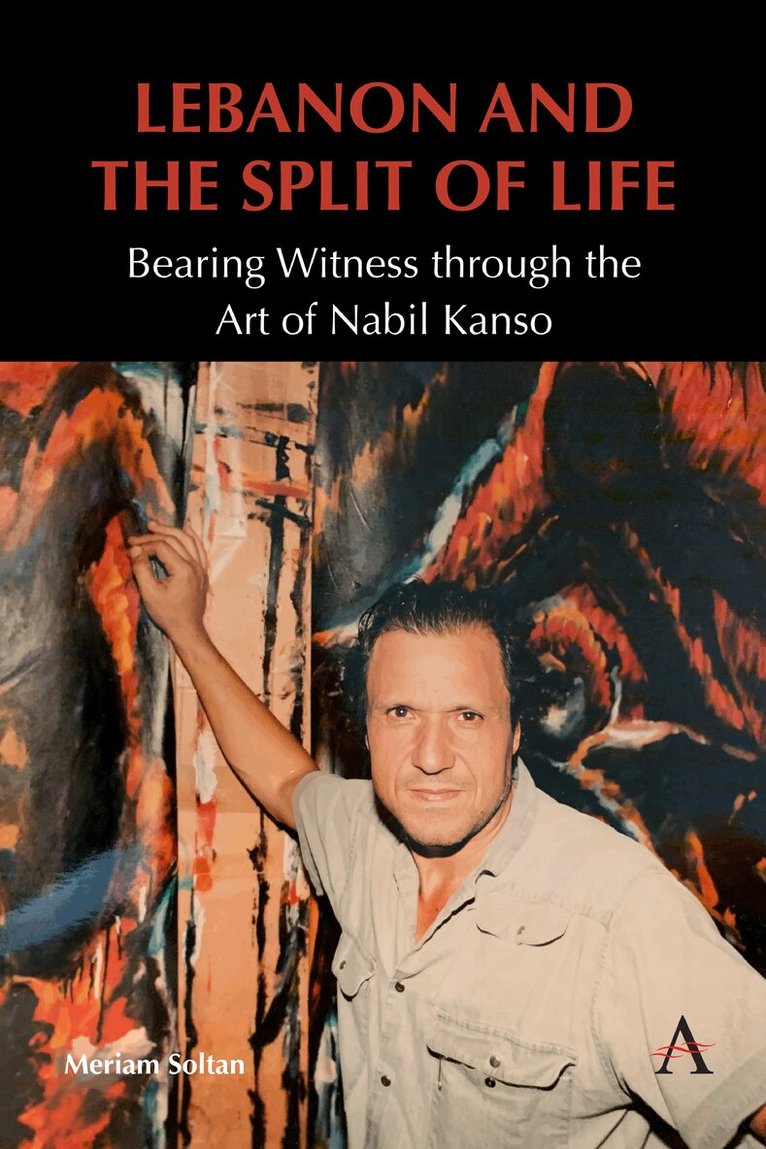
This scholarly biography traces the life and art of Lebanese-American neo-expressionist, Nabil Kanso (1940–2019). It explores key moments across the artist’s transnational career by foregrounding his longest-running, internationally toured exhibition, the Journey of Art for Peace (1985–1993). More specifically, it traces the historical trajectory of his 10 × 28 mural-scale painting, Lebanon, from the circumstances of its production at the height of the Lebanese Civil War in 1983, through its short-lived exhibition history with the Split of Life series in the few years that followed. The book scaffolds an understanding of the artist as an activist and works toward offering distinctly spatial readings of his painterly practice, of which the act of bearing witness is highlighted as permeating the entirety of his oeuvre. It concludes with a contemporary recontextualization of Lebanon in the country’s current social, political, and cultural climate, and emphasizes the artist’s work as essential to the theorization of larger traditions of political and protest art.The first of its kind and the result of a research fellowship wherein the author was invited to be the first to work through the artist’s unpublished archive, this book lays the groundwork for scholarship on the art of Nabil Kanso—an essential yet hitherto unstudied pioneer of the neo-expressionist art movement of the 1960s. It draws extensively on primary source material, including personal notes, diaries, sketchbooks, correspondences, paintings, watercolors, photographs, recorded interviews, and the like. To best animate that source material within the context of this publication, each chapter is prefaced with short narrative anecdotes inspired by the artist’s personal notes to better ground the subsequent research and scholarship in the artist’s own terms and experiences.Born in Beirut, Kanso, like many of his generation, would seek sought refuge abroad from political instability in his home country. It is through this intrinsic proximity to, yet physical distance from, the cycles of violence and corruption in Lebanon that Kanso would go on to create his grandest greatest mural-scale series. This book, more than anything, explores the artist’s oeuvre as an attempt to bear witness and offer testimony to those moments, an inclination that would see the artist grapple with some of the most ferocious crimes against humanity committed throughout his lifetime. As such, this book pairs close readings of Kanso’s art and personal practice with both historical and contemporary context meant to animate the relevance of his vast yet never-before-seen artistic archive.
Del 1 - Anthem Modern and Contemporary Art of the Arab World, Iran and Turkey
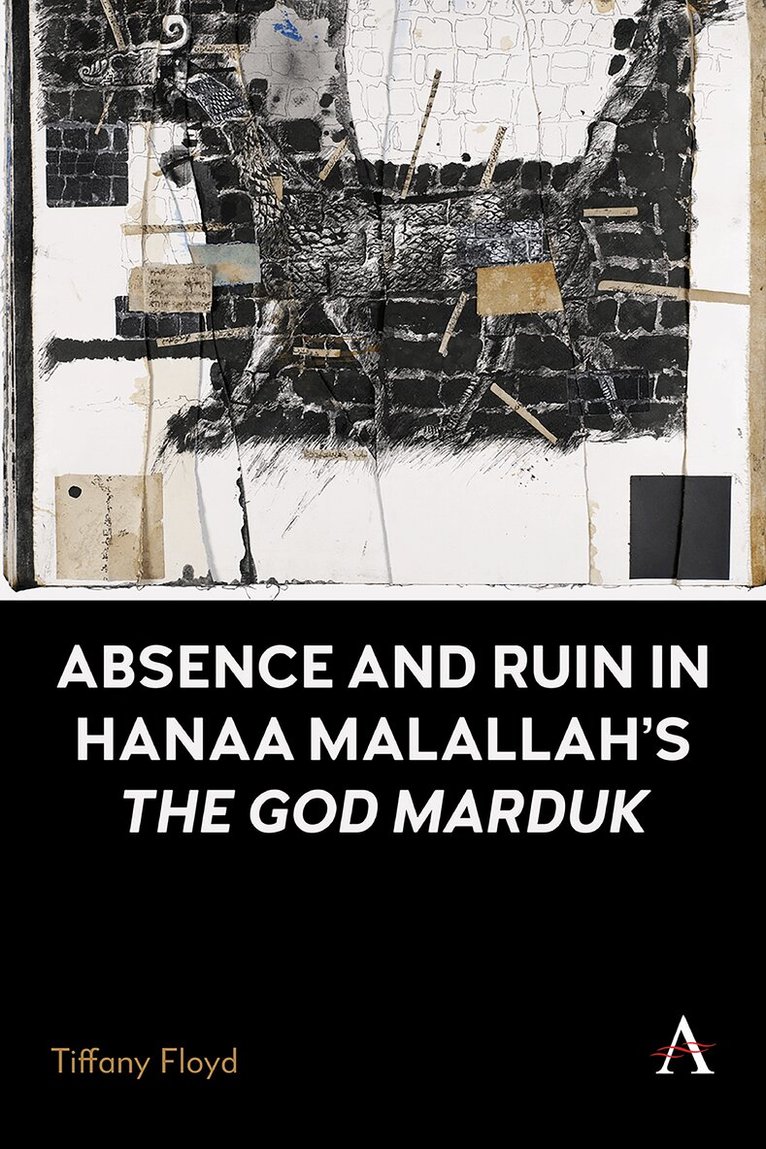
Absence and Ruin In Hanaa Malallah's 'The God Marduk'
Häftad, Engelska, 2027
440 kr
Kommande
This book is an object biography that provides an analysis of a single artwork by contemporary Iraqi artist Hanaa Malallah to consider how modern Iraqi art was fundamentally altered as a result of the sanctions and wars of the late twentieth century and early twenty-first leading to a transition from the modern into the contemporary – a shift that has yet to be satisfactorily theorized. This study contextualizes Malallah’s art book The God Marduk(2008) within the artistic trajectories of the artist’s education and career in Iraq during the 1980s and 1990s. It will, furthermore, investigate Malallah’s use of the ancient past as a conduit for aesthetic and emotive expression offering an in-depth analysis through the methodology of phenomenology. The book concludes with a reflection on Iraqi art in the post-2003 period.
Del 1 - Anthem Modern and Contemporary Art of the Arab World, Iran and Turkey
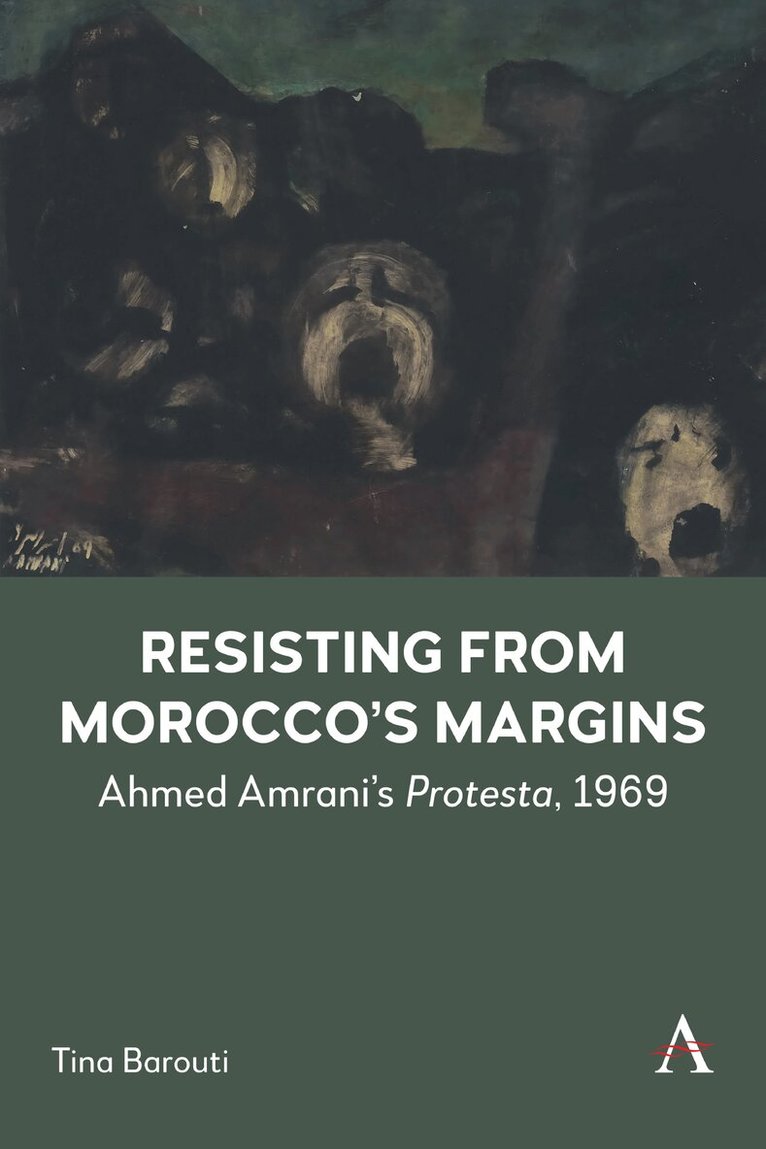
Resisting from Morocco's Margins
Ahmed Amrani's Protesta, 1969
Häftad, Engelska, 2027
440 kr
Kommande
After completing his studies in Spain’s La Real Academia de Bellas Artes de San Fernando (San Fernando Royal Academy of Fine Arts), the artist Ahmed Amrani (b. 1942) returned to a newly independent Morocco, where he spent a demanding period creating murals and posters for the Rif Revolts of 1958. After Morocco’s independence in 1956, local citizens of the Rif, a region in the northeast of Morocco, resisted the central government’s policies, leading to a brutal clash between civilians and the royal army. Although invigorated and hopeful following independence, Amrani was negatively affected by the uprisings, which led to the newly autonomous Moroccan government to brutally punish those involved. Amrani used his artistic practice to express his anxiety over the oppressive national politics of the time. None of the murals or posters exist and no photo documentation remains of these ephemeral political gestures. Resisting from the Margins: Ahmed Amrani’s Protesta (1969) explores the only artwork from this period that remains: a politically charged oil-on-paper painting from 1969 titled Protesta that depicts an impassioned mass of protestors chanting and raising their fists in the air.Amrani’s artistic production during this time, including the painting Protesta, has a ‘strong goyesque expressivity’, referring to the late-18th- and early 19th-century Spanish painter and printmaker Francisco Goya (1746–1828). In 1961, Amrani moved to Madrid to continue his formal fine arts training at La Real Academia de Bellas Artes de San Fernando (San Fernando Royal Academy of Fine Arts), where he would remain until completing his degree in 1965. According to Amrani and art historian Clara Miret Nicolazzi, he frequented numerous galleries and museums in Spain such as the Museo Nacional del Prado and the Museo Nacional Centro de Arte Reina Sofía. He discovered new tendencies and trends in fine arts and was particularly attracted to Goya, who would become a major influence on his practice throughout the 1960s. Amrani was struck by Goya’s stylistic liberty and ability to illustrate his relationship with the historical moment in which he lived. With Protesta, Amrani accomplished the same: he solidified himself as one of the most politically active artists from Tetouan’s art school during the modern period of the 1950s and 1960s and formally diverged from his peers with his use of expressive brushstrokes and a combination of figurative and abstracted imagery.Composed of an introductory chapter, three body chapters and a concluding chapter, Resisting from the Margins is a project that comprehensively explores the socio-political context in which Protesta was made, specifically, the Rif Revolts of the late 1950s. In addition to exploring this political moment, this title will demonstrate how social, political and cultural marginalisation affected the arts community and the artistic pedagogy of Tetouan’s art school, today known as L’Institut National des Beaux Arts (The National Institute of Fine Arts, INBA). Amrani’s Protesta provides an avenue for exploring this understudied moment in Morocco’s post-independence history. This project will also discuss the present-day reception of the artwork, which was exhibited for the first time in 2021 at the Reina Sofía as part of the exhibition Moroccan Trilogy: 1950–2020. The title’s author was the curatorial assistant for the exhibition and selected the artwork on behalf of the show’s curators. Out of over seventy artworks, Protesta was one of only a handful of artworks exhibited by a Tetouani artist. Visitors found the work incredibly impactful and relevant to the contemporary Hirak Rif Movement (2016–), a recent uprising in the Rif that traces its roots to the original Rif Revolts. The painting, once an avenue for Amrani to express his frustration with the Moroccan state, today serves as a poignant reminder of the resilience of and resistance by the Rif’s civilians against oppression.