Islam and Catholic Theology - Böcker
Visar alla böcker i serien Islam and Catholic Theology. Handla med fri frakt och snabb leverans.
2 produkter
2 produkter
365 kr
Skickas inom 10-15 vardagar
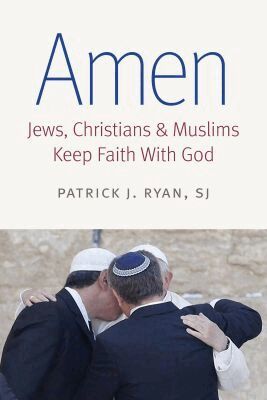
In Hebrew and Arabic, the words Amen and Amin?the most frequent conclusions of prayers?derive from cognate consonantal roots. The Greek and other versions of the Hebrew Bible continue to use the word Amen; the New Testament follows suit. The basic meaning of Amen or Amin in all three scriptures is the same, a passionate address to God: 'I entrust myself to You; I put my faith in You, I keep faith with You.' It is the cry of a person struggling to grasp and be grasped by God. Amen: Jews, Christians, and Muslims Keep Faith with God examines faith as it is understood by Jews, Christians and Muslims; it does not aim to be a work of systematic theology or a lengthy explication of the contents of different faith traditions. It offers Jews, Christians and Muslims several approaches to faith as a category of human experience open to God: a faithful God who reaches out to grasp the faithful human being at the same time that the faithful human being reaches out to grasp a faithful God. This two-sided faith, divine and human, lies at the center of each faith tradition. The book examines faith as one might examine a gem, gazing at different facets in turn. In this process, Patrick Ryan, a Jesuit who has lived for decades in Africa as well as in the United States, shares the personal reflections of one who has tried to live a life of faith not only in the company of fellow Christians but also in the company of Jews and Muslims, friends for many years. The work as a whole, and each chapter within it, begins and ends with reflections shared with an anonymous but real person who has struggled with faith for all that time and who continues the struggle with faith even today.
792 kr
Skickas inom 7-10 vardagar
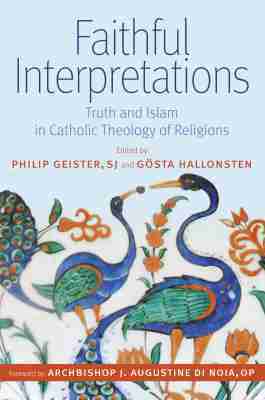
”Theology of Religions” is among the most burning issues within Christian theology today. The challenge to study and discuss different ways of handling conflicting truth claims and religious narratives between religions is taken up by a growing number of theologians across denominational boundaries. This is a common and ecumenical effort undertaken by Christian theologians all over the world. And yet, the impact of specific ecclesiastical or theological traditions on different concepts of theology of religions should not be underestimated. As well known, the Second Vatican council with its pivotal decree Nostra Aetate (On the relation to other religions) not only set the agenda for Catholic theology, but even influenced the wider discussion on the topic. The papers of this volume were all given at a conference in Uppsala, Sweden in October 2017. The structure of Faithful Interpretations follows closely the way the conference was conducted.A general introduction to the development and present status of ”Theology of Religions” by Marianne Moyaert opens the book. Archbishop J Augustine Di Noia of the Vatican Congregation for the Doctrine of Faith then treats the recent developments in the teaching of the Magisterium regarding theology of religions. Anna Bonta Moreland adresses the issue of Muhammad and Christian Prophecy. Diego R Sarrió Cucarella focuses on early Christian theological views of Islam and concludes that Islam has been from the begining a ”disturbing” factor in the Christian view of salvation history. Wilhelmus G B M Valkenberg discusses the impact of Nostra Aetate on the Church’s relation to Muslims, using especially the precedent of Nicolaus of Cues as regards a constructive approach to Islam. Klaus von Stosch adresses a sensitive issue in Muslim-Christian relations and illustrates the advantages of the comparative theology approach for the theology of religions.Complementing this perspective, Peter Jonkers offers a hermeneutical perspective on truth claims, and reflects on ”the religious Other” with references to Jacques Derrida among others. Reinhold Bernhardt argues in favour of a biblically grounded “relational-existential” theory of truth, which would be most helpful with regard to other religions. To conclude, the prominent Catholic specialist on Theology of Religions, Gavin D’Costa, widened the perspective by addressing the relation to Judaism from the point of view of the covenant and the promises of the land. Altogether, the papers of this volume give a clear impression of the status of Roman Catholic Theology of Religions.