SUNY series, Issues in the Study of Religion – serie
Visar alla böcker i serien SUNY series, Issues in the Study of Religion. Handla med fri frakt och snabb leverans.
8 produkter
8 produkter
566 kr
Skickas inom 3-6 vardagar
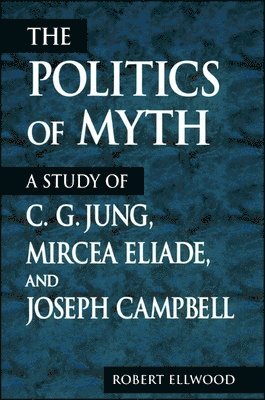
Examines the political views implicit in the mythological theories of three of the most widely read popularizers of myth in the twentieth century, C. G. Jung, Mircea Eliade, and Joseph Campbell.The Politics of Myth examines the political views implicit in the mythological theories of three of the most widely read popularizers of myth in the twentieth century, C. G. Jung, Mircea Eliade, and Joseph Campbell. All three had intellectual roots in the anti-modern pessimism and romanticism that also helped give rise to European fascism, and all three have been accused of fascist and anti-Semitic sentiments. At the same time, they themselves tended toward individualistic views of the power of myth, believing that the world of ancient myth contained resources that could be of immense help to people baffled by the ambiguities and superficiality of modern life.Robert Ellwood details the life and thought of each mythologist and the intellectual and spiritual worlds within which they worked. He reviews the damaging charges that have been made about their politics, taking them seriously while endeavoring to put them in the context of the individual's entire career and lifetime contribution. Above all, he seeks to extract from their published work the view of the political world that seems most congruent with it.
402 kr
Tillfälligt slut
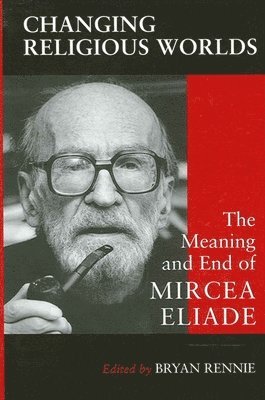
Assesses Mircea Eliade's contribution to the contemporary understanding of religion and the academic study of religion.Changing Religious Worlds measures the nature and significance of Mircea Eliade's contribution to the understanding and academic study of religion in North America today. It includes the perspectives of the continent's leading experts on Eliade and his thought, both critical and supportive. It also includes previously unpublished fiction and journal entries from Eliade himself. The book ponders whether it is time to leave Eliade behind or whether we can yet learn from either his insights or his errors, and whether the changing world has left Eliade behind or whether it is finally catching up with him. Particular consideration is given to whether Eliade makes any lasting contribution to our ability to deal with the changing face of religion and the ability to "change over" into the religious world of the other and to see through the eyes of the other.Contributors include Douglas Allen, Wendell Charles Beane, David Cave, Roger Corless, Norman Girardot, Alan Larsen, Russell McCutcheon, Tim Murphy, Carl Olson, William Paden, Rachela Permenter, Mac Linscott Ricketts, and Robert Segal.
1 456 kr
Skickas inom 3-6 vardagar
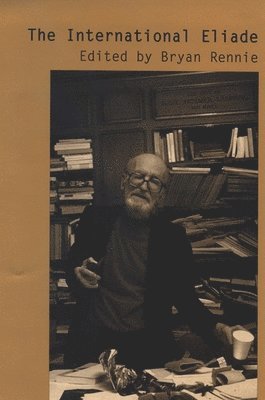
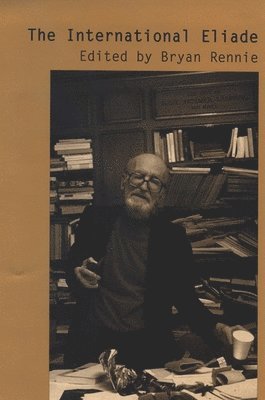
A unique consideration of the work of Mircea Eliade highlighting scholarship from outside the Anglophone world.2008 CHOICE Outstanding Academic Title The International Eliade brings together contributors from beyond the Anglo-American milieu to consider the work of Mircea Eliade. Significant new insights and information concerning Eliade, his past, and potential applications of his thought are provided by scholars from Romania, Belgium, Italy, Germany, Norway, France, Argentina, India, Korea, Japan, and Québec, Canada. Intended as a balanced consideration of Eliade's significance, the collection recognizes the restrictions and shortcomings of his work, and gives the English-language reader access to research in Eliade studies being done in a global arena.
372 kr
Skickas inom 7-10 vardagar
A unique consideration of the work of Mircea Eliade highlighting scholarship from outside the Anglophone world.2008 CHOICE Outstanding Academic Title The International Eliade brings together contributors from beyond the Anglo-American milieu to consider the work of Mircea Eliade. Significant new insights and information concerning Eliade, his past, and potential applications of his thought are provided by scholars from Romania, Belgium, Italy, Germany, Norway, France, Argentina, India, Korea, Japan, and Québec, Canada. Intended as a balanced consideration of Eliade's significance, the collection recognizes the restrictions and shortcomings of his work, and gives the English-language reader access to research in Eliade studies being done in a global arena.
406 kr
Tillfälligt slut
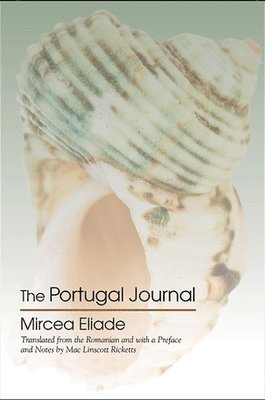
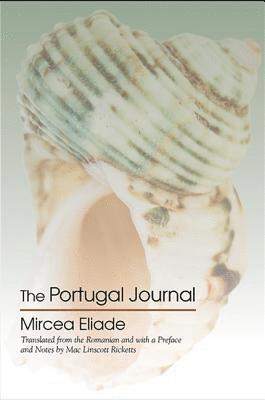
The diary of Mircea Eliade, the seminal thinker on religion, during the period he served as a diplomat in Portugal.Detailing a fascinating, hitherto unknown period in the life of one of the twentieth century's preeminent intellectuals, The Portugal Journal was written by Mircea Eliade from 1941–1945, when he served as a diplomat in Lisbon. Eliade's work as a theorist of religion has been the chief influence on how religion is understood and studied in contemporary times and he is also increasingly well known as a writer of fiction and drama. Long awaited by readers, The Portugal Journal is the only one of Eliade's journals to be published in its entirety, unedited by its author. Here, Eliade writes frankly, at times about things that he could never bring himself to make public, including his relationship with the Iron Guard, his problems with hypersexuality, his religious beliefs and actions, his admiration for René Guénon, and his sufferings and terrible grief both before and after his wife's death."With WWII as the historical context, this journal is fascinating to read because Eliade invites the reader into the interior of his troubled mind. The journal is replete with existential pathos, anxiety, loss, fear, danger, suffering, sorrow, and happy moments. Readers will be rewarded with some surprises, without political apologies for being on the wrong side during the war." - Carl Olson, author of The Theology and Philosophy of Eliade: A Search for the CentreMac Linscott Ricketts is Professor Emeritus of Religion at Louisburg College. He is the translator of a number of Mircea Eliade's works, including Journal I, 1945–1955, Journal IV, 1979–1985, and Autobiography I and II.
1 122 kr
Tillfälligt slut
The diary of Mircea Eliade, the seminal thinker on religion, during the period he served as a diplomat in Portugal.Detailing a fascinating, hitherto unknown period in the life of one of the twentieth century's preeminent intellectuals, The Portugal Journal was written by Mircea Eliade from 1941–1945, when he served as a diplomat in Lisbon. Eliade's work as a theorist of religion has been the chief influence on how religion is understood and studied in contemporary times and he is also increasingly well known as a writer of fiction and drama. Long awaited by readers, The Portugal Journal is the only one of Eliade's journals to be published in its entirety, unedited by its author. Here, Eliade writes frankly, at times about things that he could never bring himself to make public, including his relationship with the Iron Guard, his problems with hypersexuality, his religious beliefs and actions, his admiration for René Guénon, and his sufferings and terrible grief both before and after his wife's death."With WWII as the historical context, this journal is fascinating to read because Eliade invites the reader into the interior of his troubled mind. The journal is replete with existential pathos, anxiety, loss, fear, danger, suffering, sorrow, and happy moments. Readers will be rewarded with some surprises, without political apologies for being on the wrong side during the war." - Carl Olson, author of The Theology and Philosophy of Eliade: A Search for the CentreMac Linscott Ricketts is Professor Emeritus of Religion at Louisburg College. He is the translator of a number of Mircea Eliade's works, including Journal I, 1945–1955, Journal IV, 1979–1985, and Autobiography I and II.
1 057 kr
Tillfälligt slut
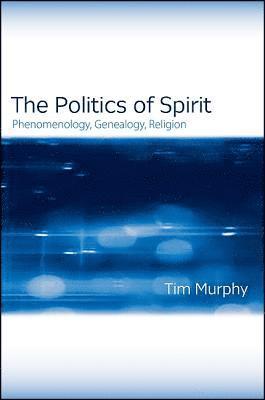
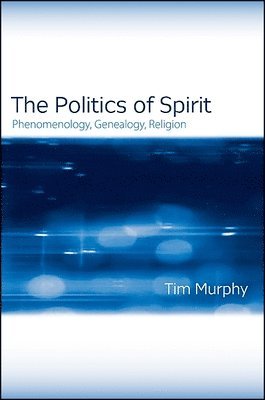
A critical look at the development of the phenomenological approach to the study of religion, revealing its evaluative and metaphysical concepts.A penetrating critique of the dominant approach to the study of religion, The Politics of Spirit explores the historical and philosophical scaffolding of the phenomenology of religion. Although this approach purports to give a value-free, neutral description of religious data, it actually imposes a set of metaphysical and evaluative concepts on that data. A very harmful ethnocentrism has resulted, which plagues the academic study of religion to this day. Analysis of the history, core texts, and discursive structure of phenomenology of religion reveals how this ethnocentrism is embedded within its assumptions. Of particular interest is the revelation of the extent to which Hegel's ideas-over those of Husserl-contributed to the tenets that became standard in the study of religion.Tim Murphy argues that the poststructuralist concept of genealogy, as derived from Nietzsche, can both describe religion better than the phenomenological approach and avoid the political pitfalls of ethnocentrism by replacing its core categories with the categories of difference, contingency, and otherness. Ultimately, Murphy argues that postmodern genealogy should replace phenomenology as the paradigm for understanding both religion and the study of religion.
416 kr
Tillfälligt slut
A critical look at the development of the phenomenological approach to the study of religion, revealing its evaluative and metaphysical concepts.A penetrating critique of the dominant approach to the study of religion, The Politics of Spirit explores the historical and philosophical scaffolding of the phenomenology of religion. Although this approach purports to give a value-free, neutral description of religious data, it actually imposes a set of metaphysical and evaluative concepts on that data. A very harmful ethnocentrism has resulted, which plagues the academic study of religion to this day. Analysis of the history, core texts, and discursive structure of phenomenology of religion reveals how this ethnocentrism is embedded within its assumptions. Of particular interest is the revelation of the extent to which Hegel's ideas-over those of Husserl-contributed to the tenets that became standard in the study of religion.Tim Murphy argues that the poststructuralist concept of genealogy, as derived from Nietzsche, can both describe religion better than the phenomenological approach and avoid the political pitfalls of ethnocentrism by replacing its core categories with the categories of difference, contingency, and otherness. Ultimately, Murphy argues that postmodern genealogy should replace phenomenology as the paradigm for understanding both religion and the study of religion.