Journalism and Democracy - Böcker
Visar alla böcker i serien Journalism and Democracy. Handla med fri frakt och snabb leverans.
5 produkter
5 produkter
982 kr
Skickas inom 7-10 vardagar
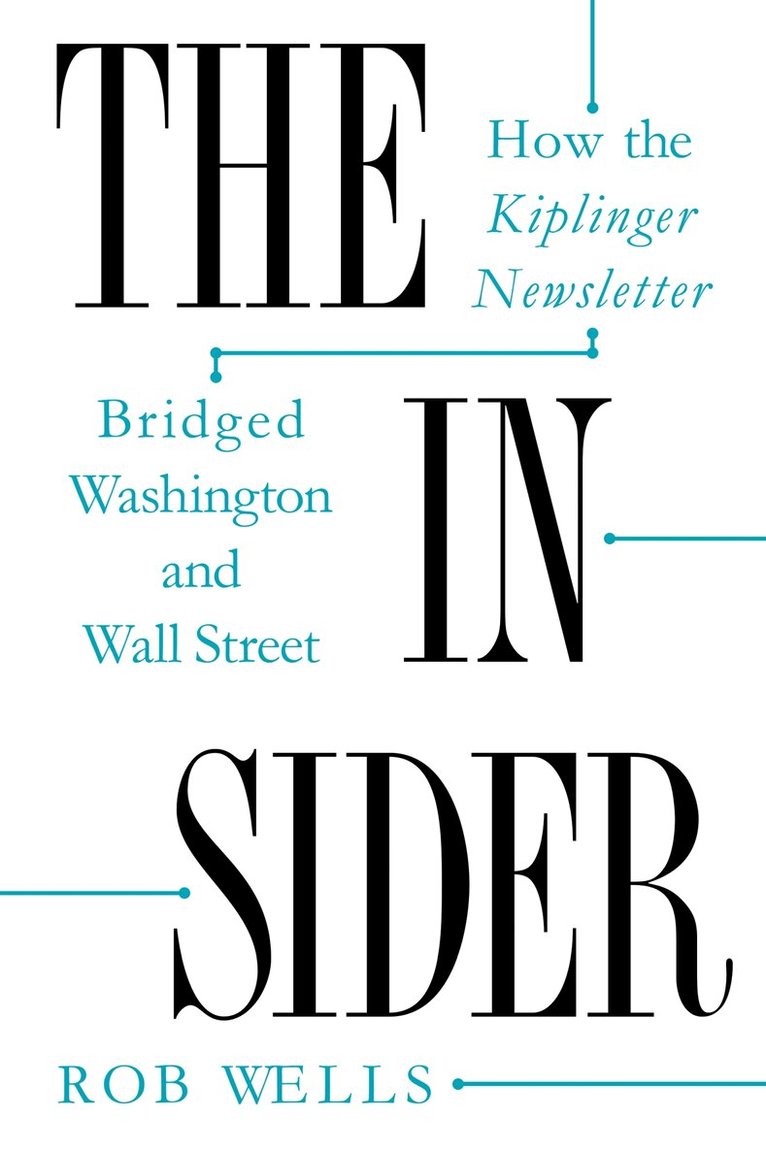
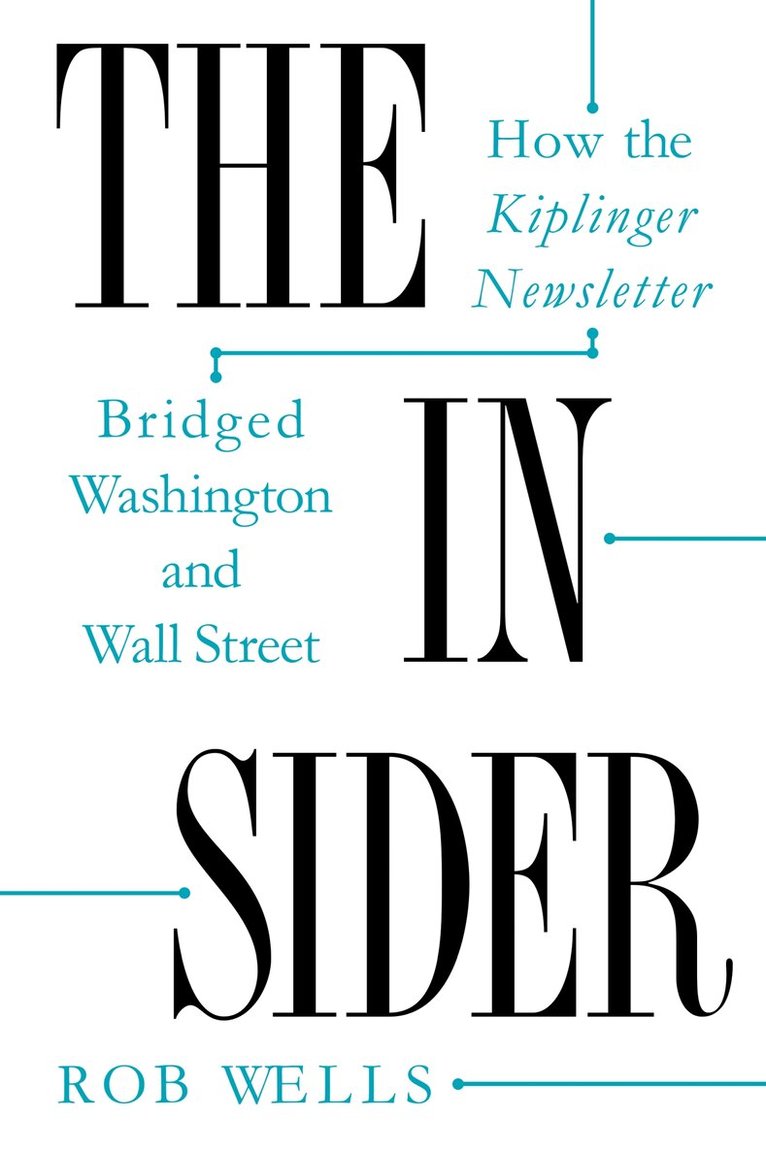
When Willard M. Kiplinger launched the groundbreaking The Kiplinger Washington Letter in 1923, he left the sidelines of traditional journalism to strike out on his own. With a specialized knowledge of finance and close connections to top Washington officials, Kiplinger was uniquely positioned to tell deeper truths about the intersections between government and business. With careful reporting and insider access, he delivered perceptive analysis and forecasts of business, economic, and politics news to busy business executives, and the newsletter's readership grew exponentially over the coming decades.More than just a pioneering business journalist, Kiplinger emerged as a quiet but powerful link between the worlds of Presidents Hoover and Roosevelt, and used his Letter to play a little-known but influential role in the New Deal. Part journalism history, part biography, and part democratic chronicle, The Insider offers a well-written and deeply researched portrayal of how Kiplinger not only developed a widely read newsletter that launched a business publishing empire but also how he forged a new role for the journalist as political actor.
335 kr
Kommande
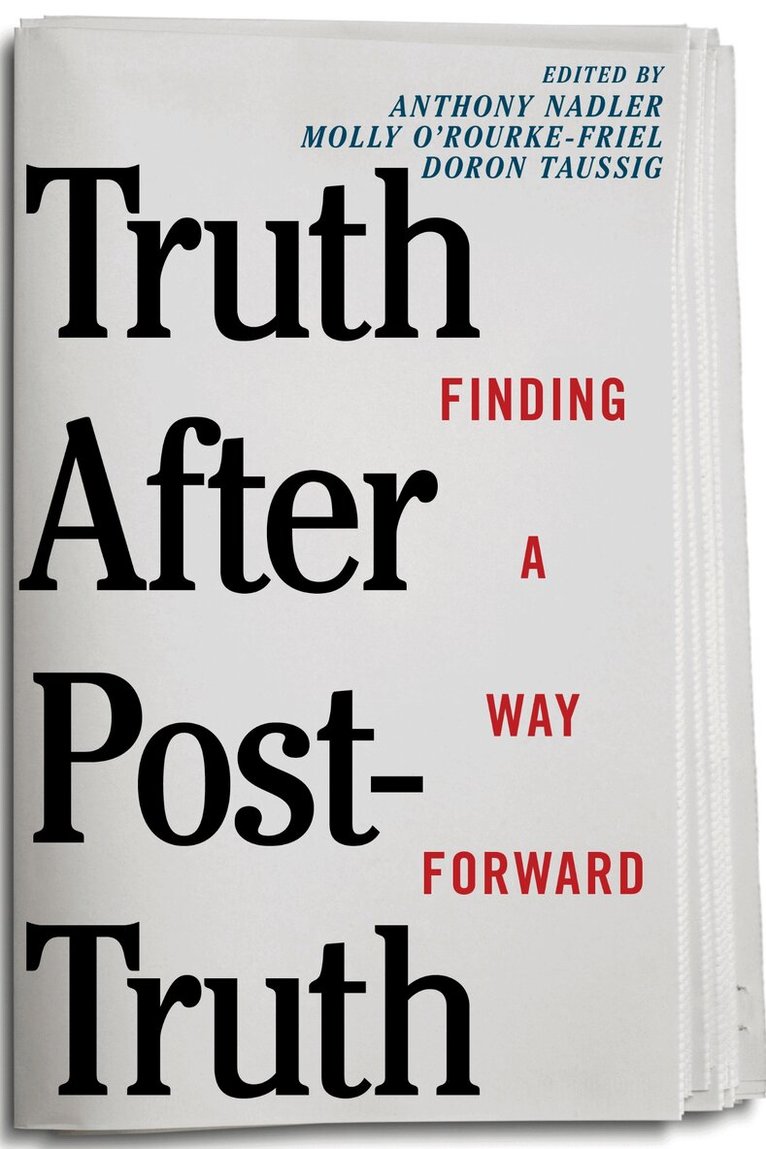
Examining truth, expertise, and authority in the contemporary United StatesIn an era defined by accusations of "fake news," declining institutional trust, and deepening political polarization, Truth After Post-Truth reframes the debate about knowledge and democracy in the United States. Rather than treating the so-called post-truth crisis as a failure of public reasoning or the product of bad-faith actors and digital misinformation, this interdisciplinary volume argues that the problem runs deeper and that solutions require renewed democratic deliberation about how public knowledge itself should be produced, evaluated, and shared.Contributors move beyond familiar diagnoses that blame either misinformed citizens or manipulative media systems. Instead, they interrogate the intellectual and political norms that underwrite claims about truth, expertise, and authority. This book challenges the assumption that restoring democracy depends on returning the public to a fixed set of knowledge practices and calls instead for open debate about which norms and institutions best serve a pluralistic society. Organized around three urgent questions—what relationship a healthy democracy should have to experts, whether a shared and cross-partisan news sphere is necessary or achievable, and whether media reform or media literacy is the more pressing priority—the essays are rigorous, provocative, and often in productive tension with one another. Together, they model the kind of critical engagement needed to rebuild a more resilient democratic information environment.Timely and forward-looking, Truth After Post-Truth will be essential reading for readers concerned with the future of democratic public life, as well as for scholars and students of media, politics, and communication.Contributors include the volume editors as well as Mark Andrejevic, Matt Carlson, Vivek Chibber, Belinha de Abreu, John Nerone, Whitney Phillips, Sue Robinson, Michael Schudson, Nik Usher, Andrea Wenzel, and Alex Worsnip.
920 kr
Kommande
Examining truth, expertise, and authority in the contemporary United StatesIn an era defined by accusations of "fake news," declining institutional trust, and deepening political polarization, Truth After Post-Truth reframes the debate about knowledge and democracy in the United States. Rather than treating the so-called post-truth crisis as a failure of public reasoning or the product of bad-faith actors and digital misinformation, this interdisciplinary volume argues that the problem runs deeper and that solutions require renewed democratic deliberation about how public knowledge itself should be produced, evaluated, and shared.Contributors move beyond familiar diagnoses that blame either misinformed citizens or manipulative media systems. Instead, they interrogate the intellectual and political norms that underwrite claims about truth, expertise, and authority. This book challenges the assumption that restoring democracy depends on returning the public to a fixed set of knowledge practices and calls instead for open debate about which norms and institutions best serve a pluralistic society. Organized around three urgent questions—what relationship a healthy democracy should have to experts, whether a shared and cross-partisan news sphere is necessary or achievable, and whether media reform or media literacy is the more pressing priority—the essays are rigorous, provocative, and often in productive tension with one another. Together, they model the kind of critical engagement needed to rebuild a more resilient democratic information environment.Timely and forward-looking, Truth After Post-Truth will be essential reading for readers concerned with the future of democratic public life, as well as for scholars and students of media, politics, and communication.Contributors include the volume editors as well as Mark Andrejevic, Matt Carlson, Vivek Chibber, Belinha de Abreu, John Nerone, Whitney Phillips, Sue Robinson, Michael Schudson, Nik Usher, Andrea Wenzel, and Alex Worsnip.
305 kr
Kommande
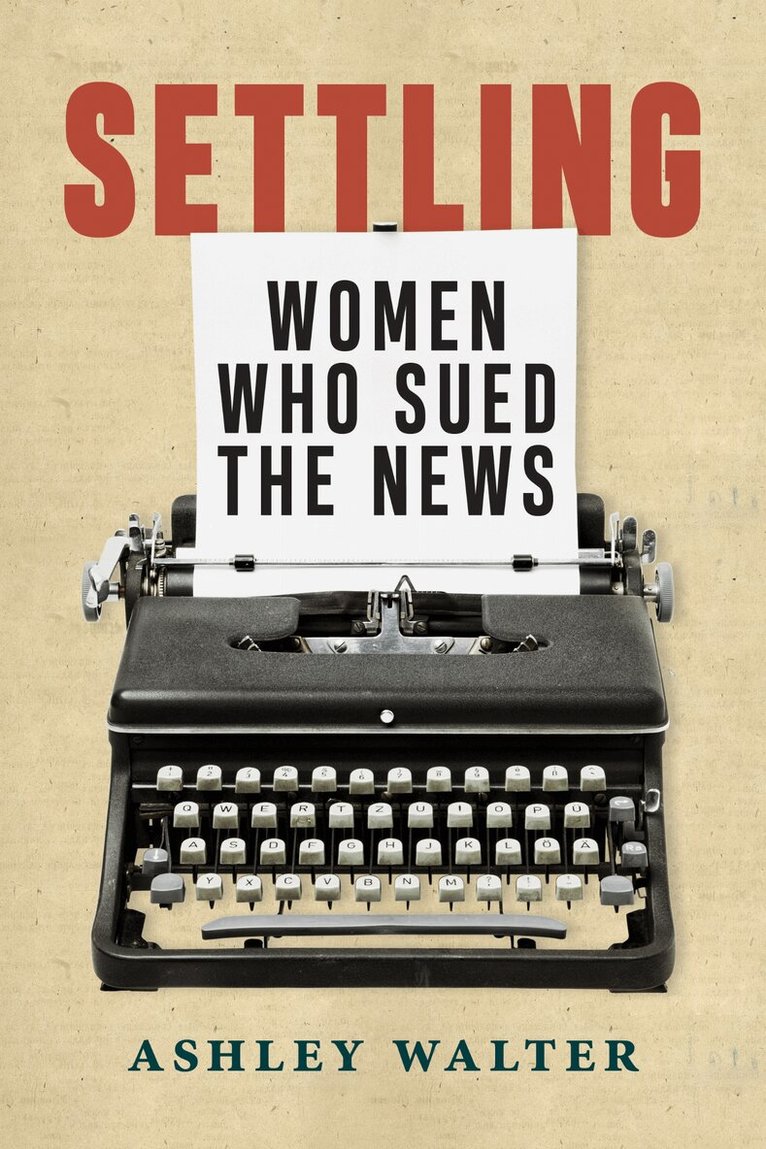
A history of courage and collective action inside the most powerful newsrooms in AmericaIn 1971, Susan Smith, a young researcher at Reader's Digest, dared to imagine herself as an editor. Her ambition was swiftly dismissed by a hiring manager who told her, "Single girls just don't do well in this job." Crushed—and then furious—Smith sought out Harriet Rabb, the attorney who had successfully sued Newsweek for sex discrimination just a year earlier. Their meeting helped spark a class-action lawsuit that ultimately united two thousand women at the magazine and became part of a broader revolt inside American newsrooms. Smith's experience was far from unique. For much of American history, journalism has been rigidly segregated by gender, with women confined to research, clerical work, or the "women's pages," while men dominated reporting, editing, and leadership. That system began to crack in the 1970s, as the 1964 Civil Rights Act and the women's liberation movement emboldened newswomen to challenge daily discrimination. Yet this development has remained largely hidden, buried by editors reluctant to document inequities within their own institutions. Settling recovers this lost story.Tracing class-action sex discrimination lawsuits at some of the most powerful news organizations in the United States—including The Washington Post, the Associated Press, The New York Times, and Time—Ashley Walter draws on oral histories and long-forgotten documents to reconstruct legal battles at eight major outlets. She argues that meaningful change came not from institutional goodwill but from the courage of women who organized, testified, and risked their careers to demand equality. Their victories reshaped journalism itself. As women assumed reporting and editorial roles, they broadened the scope of who counted as newsworthy, covering women as workers, political leaders, and authoritative sources. With this new illumination of women's full participation in public life, newswomen shifted social norms and helped build women's power across American society. By recovering these accounts, Settling reveals how newsroom struggles for gender equality transformed both journalism and the nation, offering urgent lessons for our present moment.
1 110 kr
Kommande
A history of courage and collective action inside the most powerful newsrooms in AmericaIn 1971, Susan Smith, a young researcher at Reader's Digest, dared to imagine herself as an editor. Her ambition was swiftly dismissed by a hiring manager who told her, "Single girls just don't do well in this job." Crushed—and then furious—Smith sought out Harriet Rabb, the attorney who had successfully sued Newsweek for sex discrimination just a year earlier. Their meeting helped spark a class-action lawsuit that ultimately united two thousand women at the magazine and became part of a broader revolt inside American newsrooms. Smith's experience was far from unique. For much of American history, journalism has been rigidly segregated by gender, with women confined to research, clerical work, or the "women's pages," while men dominated reporting, editing, and leadership. That system began to crack in the 1970s, as the 1964 Civil Rights Act and the women's liberation movement emboldened newswomen to challenge daily discrimination. Yet this development has remained largely hidden, buried by editors reluctant to document inequities within their own institutions. Settling recovers this lost story.Tracing class-action sex discrimination lawsuits at some of the most powerful news organizations in the United States—including The Washington Post, the Associated Press, The New York Times, and Time—Ashley Walter draws on oral histories and long-forgotten documents to reconstruct legal battles at eight major outlets. She argues that meaningful change came not from institutional goodwill but from the courage of women who organized, testified, and risked their careers to demand equality. Their victories reshaped journalism itself. As women assumed reporting and editorial roles, they broadened the scope of who counted as newsworthy, covering women as workers, political leaders, and authoritative sources. With this new illumination of women's full participation in public life, newswomen shifted social norms and helped build women's power across American society. By recovering these accounts, Settling reveals how newsroom struggles for gender equality transformed both journalism and the nation, offering urgent lessons for our present moment.