Ashley Walter - Böcker
Visar alla böcker från författaren Ashley Walter. Handla med fri frakt och snabb leverans.
3 produkter
3 produkter
447 kr
Skickas inom 10-15 vardagar
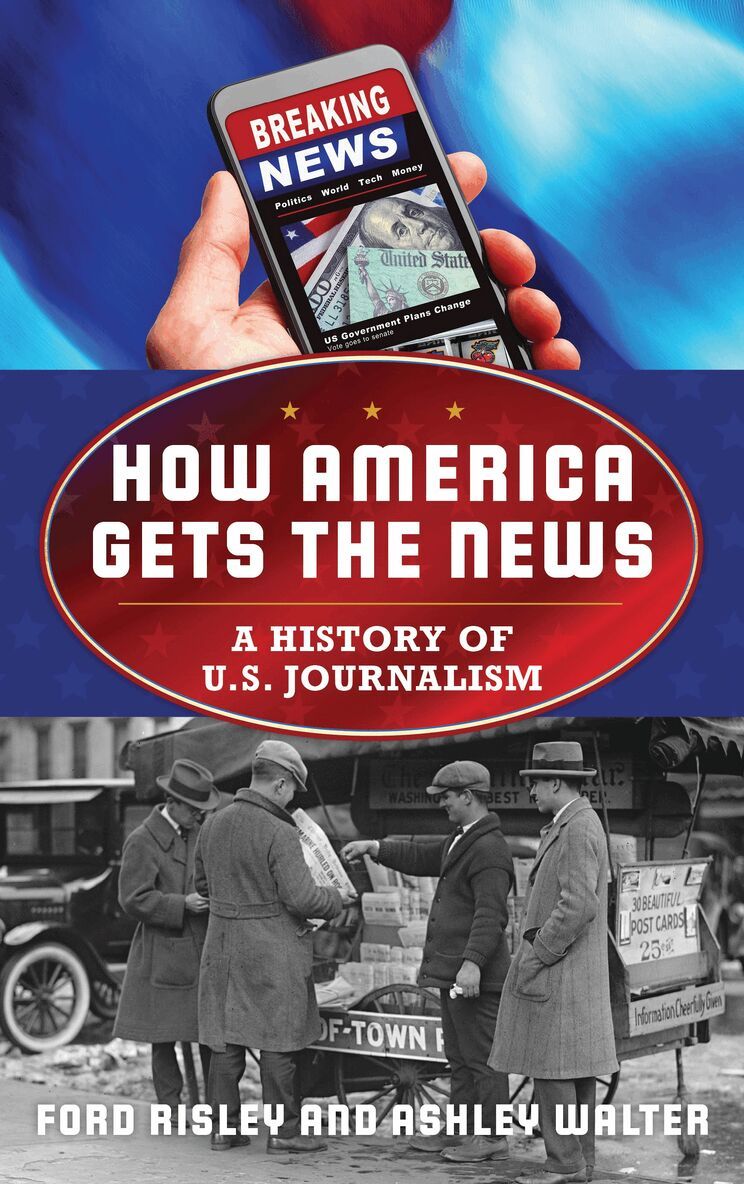
This concise history of American journalism—including newspapers, magazines, radio, television, and digital—introduces readers to the news media from the first colonial newspapers to today’s news conglomerates and the rise of the digital media. Authors Ford Risley and Ashley Walter examine historical trends, including advocacy journalism, yellow journalism, investigative journalism, tabloid journalism, and digital journalism. They discuss significant individuals, from Benjamin Franklin and Joseph Pulitzer to Ida Wells and Nellie Bly, and they examine noteworthy news organizations, from the New York Times and Life to CBS and Fox News. They also discuss the role of new technologies, developing professional standards, and the impact of corporate business practices.At a time when many doubt the trustworthiness of the media, How America Gets the News provides a fascinating historical perspective that will be of interest to all consumers of news.
305 kr
Kommande
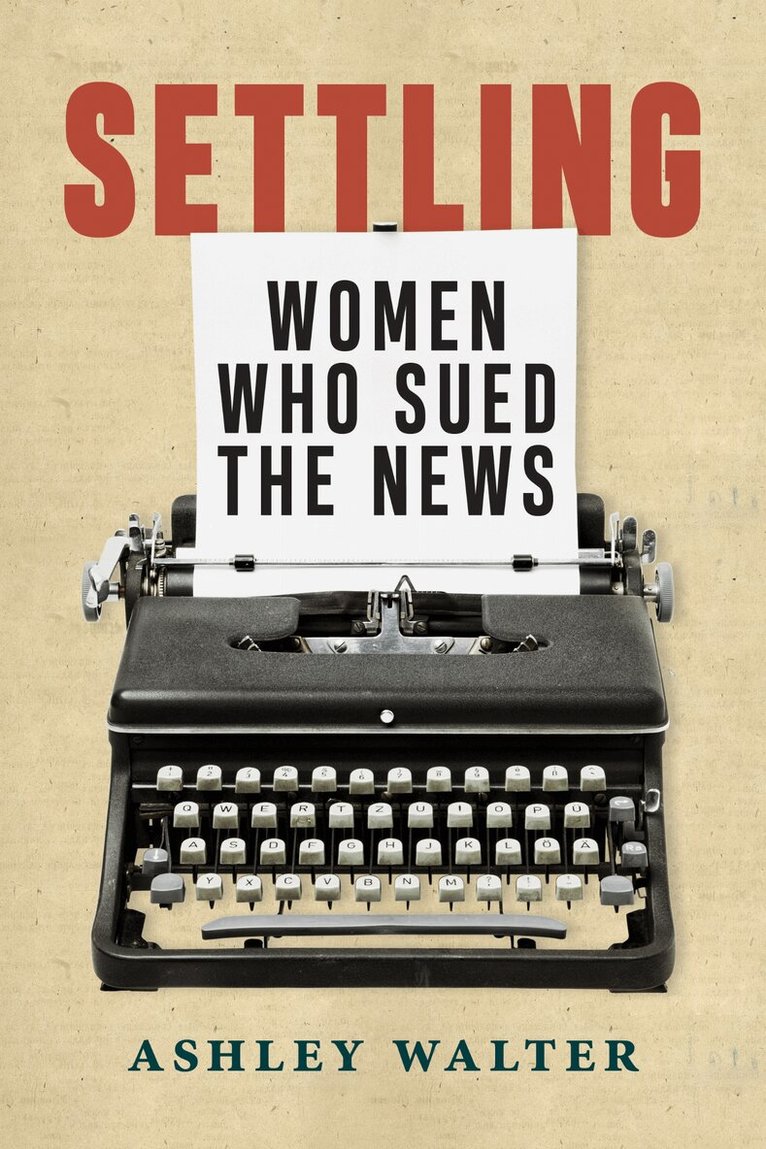
A history of courage and collective action inside the most powerful newsrooms in AmericaIn 1971, Susan Smith, a young researcher at Reader's Digest, dared to imagine herself as an editor. Her ambition was swiftly dismissed by a hiring manager who told her, "Single girls just don't do well in this job." Crushed—and then furious—Smith sought out Harriet Rabb, the attorney who had successfully sued Newsweek for sex discrimination just a year earlier. Their meeting helped spark a class-action lawsuit that ultimately united two thousand women at the magazine and became part of a broader revolt inside American newsrooms. Smith's experience was far from unique. For much of American history, journalism has been rigidly segregated by gender, with women confined to research, clerical work, or the "women's pages," while men dominated reporting, editing, and leadership. That system began to crack in the 1970s, as the 1964 Civil Rights Act and the women's liberation movement emboldened newswomen to challenge daily discrimination. Yet this development has remained largely hidden, buried by editors reluctant to document inequities within their own institutions. Settling recovers this lost story.Tracing class-action sex discrimination lawsuits at some of the most powerful news organizations in the United States—including The Washington Post, the Associated Press, The New York Times, and Time—Ashley Walter draws on oral histories and long-forgotten documents to reconstruct legal battles at eight major outlets. She argues that meaningful change came not from institutional goodwill but from the courage of women who organized, testified, and risked their careers to demand equality. Their victories reshaped journalism itself. As women assumed reporting and editorial roles, they broadened the scope of who counted as newsworthy, covering women as workers, political leaders, and authoritative sources. With this new illumination of women's full participation in public life, newswomen shifted social norms and helped build women's power across American society. By recovering these accounts, Settling reveals how newsroom struggles for gender equality transformed both journalism and the nation, offering urgent lessons for our present moment.
1 110 kr
Kommande
A history of courage and collective action inside the most powerful newsrooms in AmericaIn 1971, Susan Smith, a young researcher at Reader's Digest, dared to imagine herself as an editor. Her ambition was swiftly dismissed by a hiring manager who told her, "Single girls just don't do well in this job." Crushed—and then furious—Smith sought out Harriet Rabb, the attorney who had successfully sued Newsweek for sex discrimination just a year earlier. Their meeting helped spark a class-action lawsuit that ultimately united two thousand women at the magazine and became part of a broader revolt inside American newsrooms. Smith's experience was far from unique. For much of American history, journalism has been rigidly segregated by gender, with women confined to research, clerical work, or the "women's pages," while men dominated reporting, editing, and leadership. That system began to crack in the 1970s, as the 1964 Civil Rights Act and the women's liberation movement emboldened newswomen to challenge daily discrimination. Yet this development has remained largely hidden, buried by editors reluctant to document inequities within their own institutions. Settling recovers this lost story.Tracing class-action sex discrimination lawsuits at some of the most powerful news organizations in the United States—including The Washington Post, the Associated Press, The New York Times, and Time—Ashley Walter draws on oral histories and long-forgotten documents to reconstruct legal battles at eight major outlets. She argues that meaningful change came not from institutional goodwill but from the courage of women who organized, testified, and risked their careers to demand equality. Their victories reshaped journalism itself. As women assumed reporting and editorial roles, they broadened the scope of who counted as newsworthy, covering women as workers, political leaders, and authoritative sources. With this new illumination of women's full participation in public life, newswomen shifted social norms and helped build women's power across American society. By recovering these accounts, Settling reveals how newsroom struggles for gender equality transformed both journalism and the nation, offering urgent lessons for our present moment.