Labor in Crisis - Böcker
Visar alla böcker i serien Labor in Crisis. Handla med fri frakt och snabb leverans.
12 produkter
12 produkter
372 kr
Skickas inom 7-10 vardagar
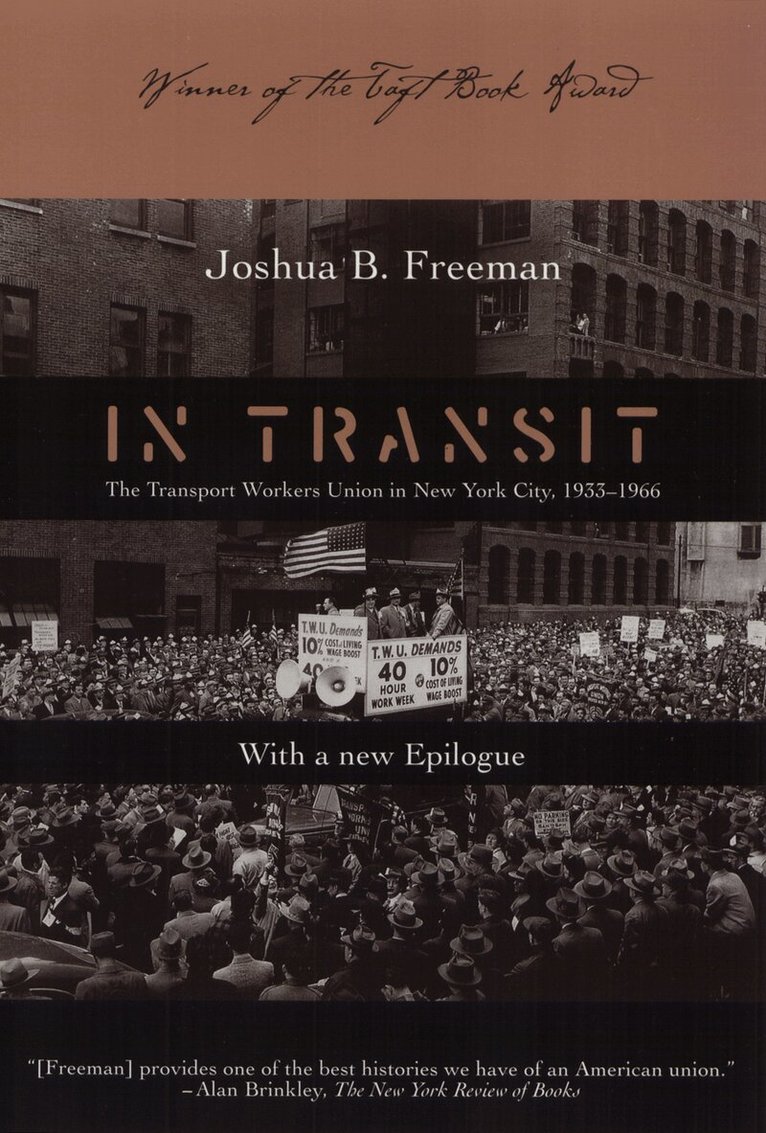
This history of New York transit workers from the Great Depression to the monumental 1966 transit strike shows how, through collective action, the men and women who operated the world's largest transit system brought about a virtual revolution in their daily lives. Joshua Freeman's detailed descriptions of both transit work and transit workers, and his full account of the formation and development of the Transport Workers Union provide new insight into the nature of modern industrial unionism. Freeman pays particular attention to the role of Communists and veterans of the Irish Republican Army-including TWU president Michael J. Quill-in organizing and leading the union, as well as to the Catholic labor activists who were the principal union dissidents. Freeman also explores the intense political struggles over the New York transit system. He links the TWU's pioneering role in public sector unionism to worker militancy and the union's deep involvement in New York politics. His portrait of Fiorello La Guardia's determined opposition to the TWU belies La Guardia's pro-labor reputation.By combining social and political history with the study of collective bargaining, In Transit makes a major contribution to the history of American labor, radicalism, and urban politics. Now with a new epilogue that frames the history of the union in the context of labor's revival and recent changes in TWU's leadership, In Transit is an intimate portrait of the politics of mass transit and public sector unionism, and one of the most detailed reconstructions to date of the social processes of industrial unionism. This book will appeal to anyone interested in New York City's subways, politics, history, and labor.
284 kr
Skickas inom 11-20 vardagar
"I didn't want to remain a hick from the mountains...In my cultural naivete I saw McDonald's as a place somehow where modern culture capital could be dispensed. Keeping these memories in mind as years later I monitored scores of conversations about the Golden Arches in the late 1990's, it became apparent that McDonald's is still considered a marker of a modern identity." So begins a complicated journey into the power of one of the most recognizable signs of American capitalism: The Golden Arches. The Sign of the Burger examines how McDonald's captures our imagination: as a shorthand for explaining the power of American culture; as a symbol of the strength of consumerism; as a bellwether for the condition of labor in a globalized economy; and often, for better or worse, a powerful educational tool that often defines the nature of culture for hundreds of millions the world over. While many books have offered simple complaints of the power of McDonald's, Joe Kincheloe explores the real ways McDonald's affects us. We see him as a young boy in Appalachia, watching the Golden Arches going up as the-hopeful-arrival of the modern into his rural world.And we travel with him around the world to see how this approach of the modern affects other people, either through excitement or through attempts at resisting McDonald's power, often in unfortunate ways. Through it all, Kincheloe makes clear, with lucidity and depth, the fact that McDonald's growth will in many ways determine both the nature of accepting and protesting its ever-expanding presence in our global world. postamble();
348 kr
Skickas inom 7-10 vardagar
An important history of the way class formed in the US, The Rule of Racialization offers a rich new look at the invention of whiteness and how the inextricable links between race and class were formed in the seventeenth century and consolidated by custom, social relations, and eventually naturalized by the structures that organize our lives and our work. Arguing that, unlike in Europe, where class formed around the nation-state, race deeply informed how class is defined in this country and, conversely, our unique relationship to class in this country helped in some ways to invent race as a distinction in social relations. Martinot begins tracing this development in the slave plantations in 1600s colonial life. He examines how the social structures encoded there lead to a concrete development of racialization. He then takes us up to the present day, where forms of those structures still inhabit our public and economic institutions.Throughout, he engages historical and contemporary thinkers on the nature of race in the US, creating a book that at once synthesizes significant critiques of race while at the same time offers a completely original conception of how race and class have operated in American life throughout the centuries. A uniquely compelling book, The Rule of Racialization offers a rich contribution to the study of class, labor, and American social relations. Author note: Steve Martinot is Instructor at the Center for Interdisciplinary Programs at San Francisco State University. He has edited two previous books, and translated Racism by Albert Memmi.
318 kr
Skickas inom 7-10 vardagar
While trillions of dollars came and went in the stock market boom of the 1990s, the image of "every man and woman a CEO" may turn out to be the era's lasting legacy. Business news, once reserved to specialized papers or sections of the larger news of the day, came to the forefront in cable television and in cultural images of how ordinary people, through the internet and other avenues could not only master their financial life, but move money and equity around with the ease of a financial titan. Financialization of Daily Life looks at how this transformation occurred, and how it is just now becoming a significant, and troubling, aspect of our political and cultural life. Randy Martin takes us through all of the aspects of our "financialization." He examines how the shift in economic life arose not only from changes in culture, but also from new policy priorities that emphasize controlling inflation over promoting growth. He offers a close reading of self-help literature that teaches parents how to rear financially literate children and to instruct adults in the fundamentals of fiscal management.He examines just what a society that treats financial investment as a national past time really looks like, and how that society is transforming the world. In a country rocked by scandals in accounting and banking, the identification ordinary citizens make with, and the risk with which they engage in, the stock market calls into question the very basis of our economic system. Randy Martin spells out in clear terms the implications our financial doings--and undoing--have for the way we organize our lives, and, especially, our money. Author note: Randy Martin is Professor of Art and Public Policy and Associate Dean of Faculty and Interdisciplinary Programs at New York University. He is the author and editor of seven books, including, most recently, On Your Marx: Rethinking Socialism and the Left.
807 kr
Skickas inom 7-10 vardagar
Maintains that poverty has become, to the peril of us all, an ordinary part of life
912 kr
Skickas inom 7-10 vardagar
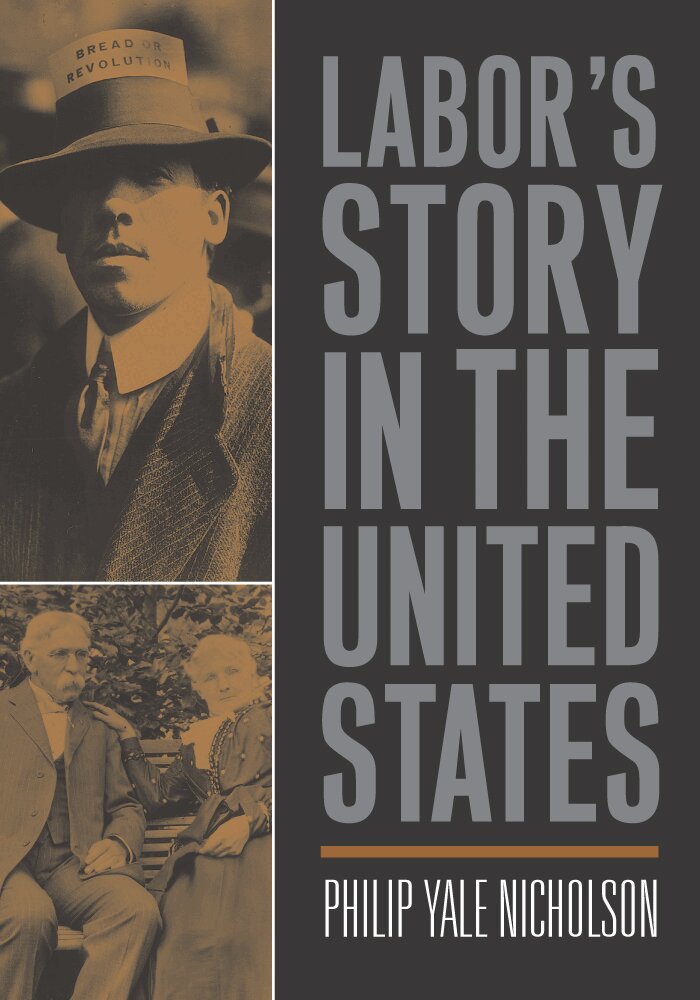
In this, the first broad historical overview of labor in the United States in twenty years, Philip Nicholson examines anew the questions, the villains, the heroes, and the issues of work in America. Unlike recent books that have covered labor in the twentieth century, Labor's Story in the United States looks at the broad landscape of labor since before the Revolution. In clear, unpretentious language, Philip Yale Nicholson considers American labor history from the perspective of institutions and people: the rise of unions, the struggles over slavery, wages, and child labor, public and private responses to union organizing. Throughout, the book focuses on the integral relationship between the strength of labor and the growth of democracy, painting a vivid picture of the strength of labor movements and how they helped make the United States what it is today. Labor's Story in the United States will become an indispensable source for scholars and students.
300 kr
Skickas inom 7-10 vardagar
In Out of the Jungle, historian Thaddeus Russell gives us a detailed, crisply written, and fascinating account of Jimmy Hoffa's life and times, much of it previously untold. Russell argues that Hoffa was compelled by a variety of social forces to place the economic interests of his union members over broad ideological concerns. The most important of those forces was the demonstrated desire of ordinary Teamsters to improve their material lives. \u0022What do you hire us for,\u0022 he famously asked a meeting of truck drivers, \u0022if not to sell your labor at the highest buck we can get?\u0022 He responded to the rank-and-file members' demands as did none of his contemporaries in the labor movement, seeking financial gain with the mercilessness that made him renowned and feared. This new paperback edition will be most cherished by students of labor history and American studies.
344 kr
Skickas inom 11-20 vardagar
America searched for an answer to \u0022The Labor Question\u0022 during the Progressive Era in an effort to avoid the unrest and violence that flared so often in the late nineteenth and early twentieth century. In the ladies' garment industry, a unique experiment in industrial democracy brought together labor, management, and the public. As Richard Greenwald explains, it was an attempt to \u0022square free market capitalism with ideals of democracy to provide a fair and just workplace.\u0022 Led by Louis Brandeis, this group negotiated the \u0022Protocols of Peace.\u0022 But in the midst of this experiment, 146 mostly young, immigrant women died in the Triangle Factory Fire of 1911. As a result of the fire, a second, interrelated experiment, New York's Factory Investigating Commission (FIC)-led by Robert Wagner and Al Smith-created one of the largest reform successes of the period. The Triangle Fire, the Protocols of Peace, and Industrial Democracy in Progressive Era New York uses these linked episodes to show the increasing interdependence of labor, industry, and the state.Greenwald explains how the Protocols and the FIC best illustrate the transformation of industrial democracy and the struggle for political and economic justice.
331 kr
Skickas inom 7-10 vardagar
Labor's War at Home examines a critical period in American politics and labor history, beginning with the outbreak of war in Europe in 1939 through the wave of major industrial strikes that followed the war and accompanied the reconversion to a peacetime economy. Nelson Lichtenstein is concerned both with the internal organizations and social dynamics of the labor movement-especially the Congress of Industrial Organizations-and with the relationship between the CIO, as well as other bodies of organized labor, and the Roosevelt administration. He argues that tensions within the labor movement and within the ranks of American business profoundly affected government policy during the war and the nature of organized labor's political relations with Roosevelt and the Democratic Party. Moreover, the political arrangements worked out during the war established the foundations of social stability and labor politics that came to characterize the postwar world.
466 kr
Skickas inom 7-10 vardagar
In this, the first broad historical overview of labor in the United States in twenty years, Philip Nicholson examines anew the questions, the villains, the heroes, and the issues of work in America. Unlike recent books that have covered labor in the twentieth century, Labor's Story in the United States looks at the broad landscape of labor since before the Revolution. In clear, unpretentious language, Philip Yale Nicholson considers American labor history from the perspective of institutions and people: the rise of unions, the struggles over slavery, wages, and child labor, public and private responses to union organizing. Throughout, the book focuses on the integral relationship between the strength of labor and the growth of democracy, painting a vivid picture of the strength of labor movements and how they helped make the United States what it is today. Labor's Story in the United States will become an indispensable source for scholars and students.
309 kr
Skickas inom 11-20 vardagar
The movement for a shorter workweek that once defined the labor movement in the United States was largely displaced by the new corporatist structure of organized labor in the post-New Deal era. Labor's Time examines the changes that occurred within organized labor and traces their influence on the decline of the shorter hours movement. Focusing on the internal union politics of the influential United Automobile Workers and Local 600, its chapter at Henry Ford's massive River Rouge factory, Jonathan Cutler demonstrates how an all-but-forgotten interracial movement for a shorter workweek during the 1950s and 1960s became a casualty of an increasingly top-heavy union bureaucracy that lost touch with the desires, fears, and aspirations of rank and file workers and dug its own grave in the process. Jonathan Cutler examines the political context in which the shorter hours movement emerged within Local 600 in the 1940s, then chronicles the attempts by Walter Reuther, the head of the UAW, to suppress it. Cutler also reviews the role the Communist Party played in the controversy.Finally, he documents the UAW response to rank and file pressure for a shorter workweek, and how the local's own organizational flaws allowed Reuther and the national union to wrest control from the dissidents. Fresh and boldly written, Labor's Time recreates a moment when unions-as a movement, not as an amalgam of leaders-could have transformed the landscape of work in the United States.
269 kr
Skickas inom 7-10 vardagar
Maintains that poverty has become, to the peril of us all, an ordinary part of life