Landmark Video Games - Böcker
Visar alla böcker i serien Landmark Video Games. Handla med fri frakt och snabb leverans.
8 produkter
8 produkter
314 kr
Skickas inom 7-10 vardagar
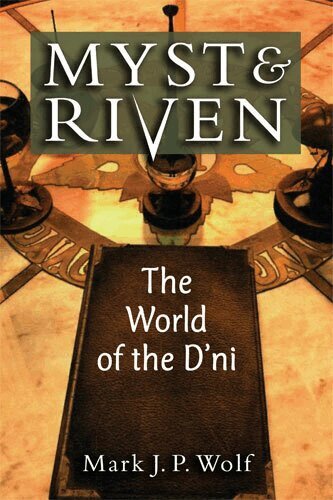
“Myst and Riven is well-written, interesting, on-topic, insightful, and a real pleasure to read.”—Edward Castronova, Indiana UniversityVideo games have become a major cultural force, and within their history, Myst and its sequel Riven stand out as influential examples. Myst and Riven: The World of the D’ni is a close analysis of two of the most popular and significant video games in the history of the genre, investigating in detail their design, their functionality, and the gameplay experience they provide players. While scholarly close analysis has been applied to films for some time now, it has only rarely been applied at this level to video games. Mark J. P. Wolf uses elements such as graphics and sound, the games’ mood and atmosphere and how they are generated, the geography and design of the digital worlds, and the narrative structures of the games to examine their appeal to both critical and general audiences, their legacy, and what made them great.Myst and Riven is the inaugural book in the Landmark Video Games series, edited by Mark J. P. Wolf and Bernard Perron, which is the first series to examine individual video games of historical significance.
319 kr
Skickas inom 7-10 vardagar
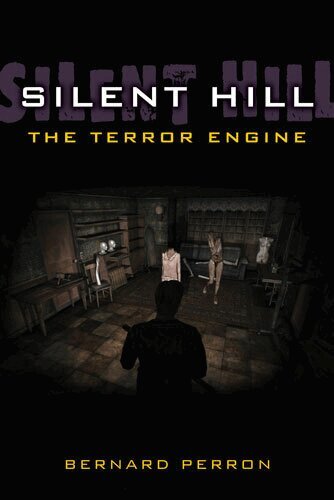
Silent Hill: The Terror Engine, the second of the two inaugural studies in the Landmark Video Games series from series editors Mark J. P. Wolf and Bernard Perron, is both a close analysis of the first three Silent Hill games and a general look at the whole series. Silent Hill, with its first title released in 1999, is one of the most influential of the horror video game series. Perron situates the games within the survival horror genre, both by looking at the history of the genre and by comparing Silent Hill with such important forerunners as Alone in the Dark and Resident Evil. Taking a transmedia approach and underlining the designer's cinematic and literary influences, he uses the narrative structure; the techniques of imagery, sound, and music employed; the game mechanics; and the fiction, artifact, and gameplay emotions elicited by the games to explore the specific fears survival horror games are designed to provoke and how the experience as a whole has made the Silent Hill series one of the major landmarks of video game history.
373 kr
Skickas inom 7-10 vardagar
In December 1993, gaming changed forever. id Software's seminal shooter DOOM was released, and it shook the foundations of the medium. Daniel Pinchbeck brings together the complete story of DOOM for the first time. This book takes a look at the early days of first-person gaming and the video game studio system. It discusses the prototypes and the groundbreaking technology that drove the game forward and offers a detailed analysis of gameplay and level design. Pinchbeck also examines DOOM's contributions to wider gaming culture, such as online multiplay and the modding community, and the first-person gaming genre, focusing on DOOM's status as a foundational title and the development of the genre since 1993. Pinchbeck draws extensively from primary data: from the game itself, from the massive fan culture surrounding the title, and from interviews with the developers who made it. This book is not only the definitive work on DOOM but a snapshot of a period of gaming history, a manifesto for a development ethos, and a celebration of game culture at its best.
362 kr
Skickas inom 7-10 vardagar
Atari’s 1981 arcade hit Tempest was a “tube shooter” built around glowing, vector-based geometric shapes. Among its many important contributions to both game and cultural history, Tempest was one of the first commercial titles to allow players to choose the game’s initial play difficulty (a system Atari dubbed “SkillStep”), a feature that has since became standard for games of all types. Tempest was also one of the most aesthetically impactful games of the twentieth century, lending its crisp, vector aesthetic to many subsequent movies, television shows, and video games. In this book, Ruggill and McAllister enumerate and analyze Tempest’s landmark qualities, exploring the game’s aesthetics, development context, and connections to and impact on video game history and culture. By describing the game in technical, historical, and ludic detail, they unpack the game’s latent and manifest audio-visual iconography and the ideological meanings this iconography evokes.
362 kr
Skickas inom 7-10 vardagar
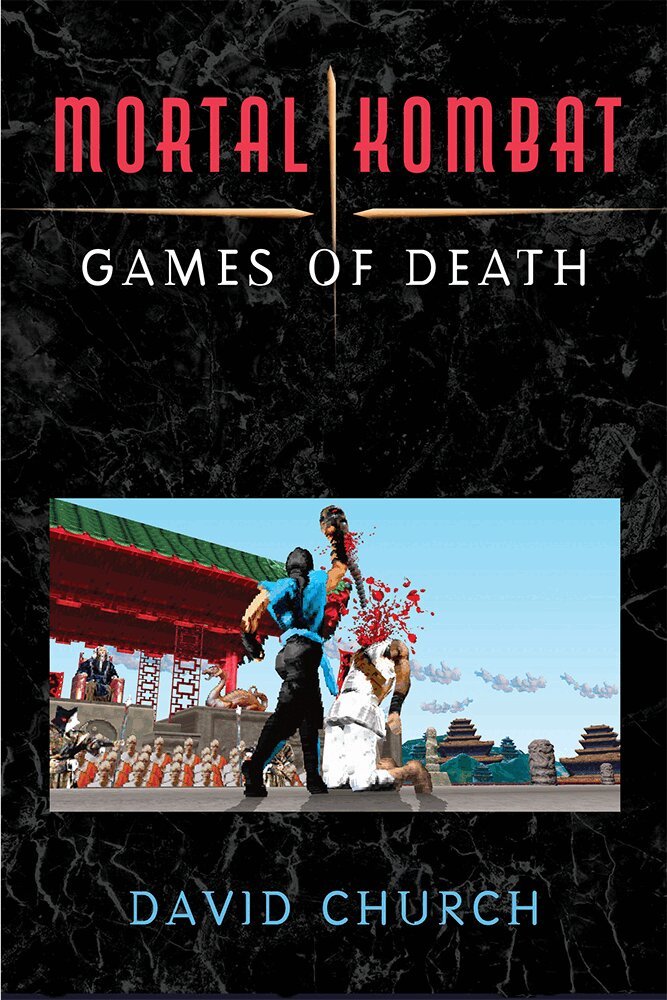
Upon its premiere in 1992, Midway’s Mortal Kombat spawned an enormously influential series of fighting games, notorious for their violent “fatality” moves performed by photorealistic characters. Targeted by lawmakers and moral reformers, the series directly inspired the creation of an industrywide rating system for video games and became a referendum on the wide popularity of 16-bit home consoles. Along the way, it became one of the world’s most iconic fighting games, and formed a transmedia franchise that continues to this day.This book traces Mortal Kombat’s history as an American product inspired by both Japanese video games and Chinese martial-arts cinema, its successes and struggles in adapting to new market trends, and the ongoing influence of its secret-strewn narrative world. After outlining the specific elements of gameplay that differentiated Mortal Kombat from its competitors in the coin-op market, David Church examines the various martial-arts films that inspired its Orientalist imagery, helping explain its stereotypical uses of race and gender. He also posits the games as a cultural landmark from a moment when public policy attempted to intervene in both the remediation of cinematic aesthetics within interactive digital games and in the transition of public gaming spaces into the domestic sphere. Finally, the book explores how the franchise attempted to conquer other forms of media in the 1990s, lost ground to a new generation of 3D games in the 2000s, and has successfully rebooted itself in the 2010s to reclaim its legacy.
362 kr
Skickas inom 7-10 vardagar
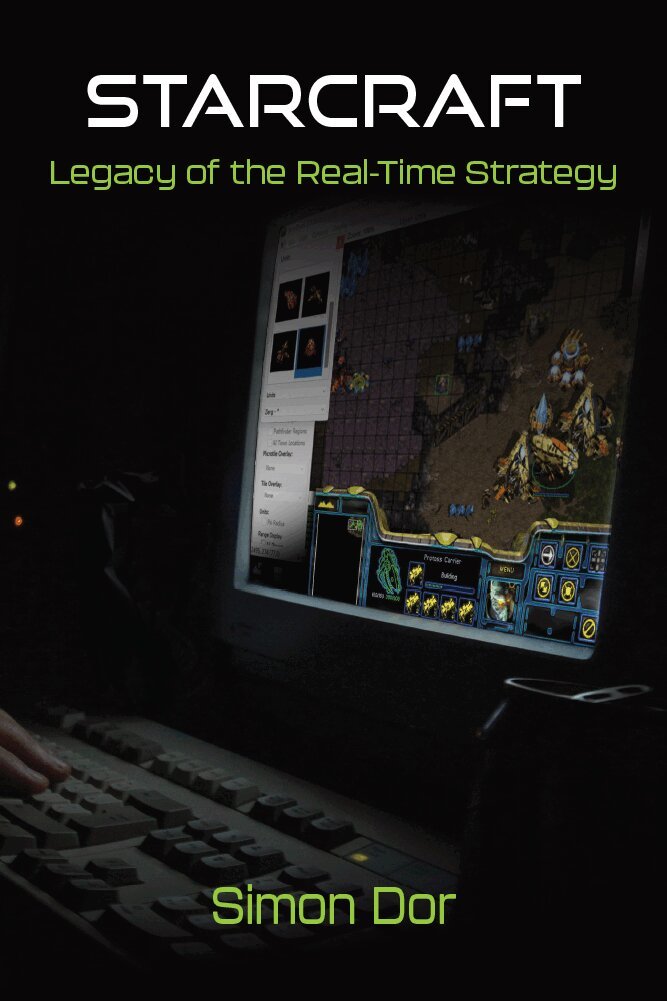
StarCraft (Blizzard Entertainment, 1998) is a real-time strategy video game, placing the player in command of three extraterrestrial races fighting against each other for strategic control of resources, terrain, and power. Simon Dor examines the game’s unanticipated effect by delving into the history of the game and the two core competencies it encouraged: decoding and foreseeing. Although StarCraft was not designed as an e-sport, its role in developing foreseeing skills helped give rise to one of the earliest e-sport communities in South Korea. Apart from the game’s clear landmark status, StarCraft offers a unique insight into changes in gaming culture and, more broadly, the marketability and profit of previously niche areas of interest. The book places StarCraft in the history of real-time strategy games in the 1990s—Dune II, Command & Conquer, Age of Empires—in terms of visual style, narrative tropes, and control. It shows how design decisions, technological infrastructures, and a strong contribution from its gaming community through Battle.net and its campaign editor were necessary conditions for the flexibility it needed to grow its success. In exploring the fanatic clusters of competitive players who formed the first tournaments and professionalized gaming, StarCraft shows that the game was key to the transition towards foreseeing play and essential to competitive gaming and e-sports.
868 kr
Skickas inom 7-10 vardagar
Atari’s 1981 arcade hit Tempest was a “tube shooter” built around glowing, vector-based geometric shapes. Among its many important contributions to both game and cultural history, Tempest was one of the first commercial titles to allow players to choose the game’s initial play difficulty (a system Atari dubbed “SkillStep”), a feature that has since became standard for games of all types. Tempest was also one of the most aesthetically impactful games of the twentieth century, lending its crisp, vector aesthetic to many subsequent movies, television shows, and video games. In this book, Ruggill and McAllister enumerate and analyze Tempest’s landmark qualities, exploring the game’s aesthetics, development context, and connections to and impact on video game history and culture. By describing the game in technical, historical, and ludic detail, they unpack the game’s latent and manifest audio-visual iconography and the ideological meanings this iconography evokes.
998 kr
Skickas inom 7-10 vardagar
Upon its premiere in 1992, Midway’s Mortal Kombat spawned an enormously influential series of fighting games, notorious for their violent “fatality” moves performed by photorealistic characters. Targeted by lawmakers and moral reformers, the series directly inspired the creation of an industrywide rating system for video games and became a referendum on the wide popularity of 16-bit home consoles. Along the way, it became one of the world’s most iconic fighting games, and formed a transmedia franchise that continues to this day.This book traces Mortal Kombat’s history as an American product inspired by both Japanese video games and Chinese martial-arts cinema, its successes and struggles in adapting to new market trends, and the ongoing influence of its secret-strewn narrative world. After outlining the specific elements of gameplay that differentiated Mortal Kombat from its competitors in the coin-op market, David Church examines the various martial-arts films that inspired its Orientalist imagery, helping explain its stereotypical uses of race and gender. He also posits the games as a cultural landmark from a moment when public policy attempted to intervene in both the remediation of cinematic aesthetics within interactive digital games and in the transition of public gaming spaces into the domestic sphere. Finally, the book explores how the franchise attempted to conquer other forms of media in the 1990s, lost ground to a new generation of 3D games in the 2000s, and has successfully rebooted itself in the 2010s to reclaim its legacy.