Law and the Postcolonial - Böcker
Visar alla böcker i serien Law and the Postcolonial. Handla med fri frakt och snabb leverans.
8 produkter
8 produkter
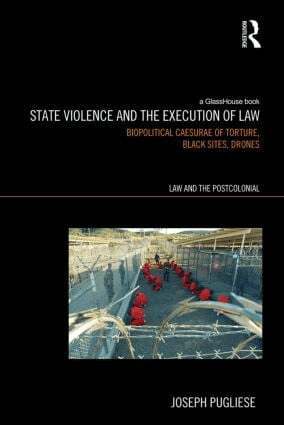
State Violence and the Execution of Law
Biopolitcal Caesurae of Torture, Black Sites, Drones
Inbunden, Engelska, 2013
1 998 kr
Skickas inom 10-15 vardagar
State Violence and the Execution of Law stages a provocative analysis of how the biopolitical divide between human and animal has played a fundamental role in enabling state violence, including torture, secret imprisonment and killing-at-a-distance via drones. Analyzing the complex ways in which the United States government deploys law in order to consolidate and further imperial relations of power, Pugliese tracks the networks that enable the diffusion and normalization of the state’s monopoly of violence both in the US and in an international context. He demonstrates how networks of state violence are embedded within key legal institutions, military apparatuses, civilian sites, corporations, carceral architectures, and advanced technologies. The author argues that the exercise of state violence, as unleashed by the war on terror, has enmeshed the subjects of the Global South within institutional and discursive structures that position them as non-human animals that can be tortured, killed and disappeared with impunity. Drawing on poststructuralist, critical race and whiteness, and critical legal theories, the book is transdisciplinary in its approach and value. It will be invaluable to university students and scholars in Critical Legal and Socio-Legal Studies, Cultural Studies, Race and Ethnicity Studies, International Politics, and Postcolonial Studies.
1 936 kr
Skickas inom 10-15 vardagar
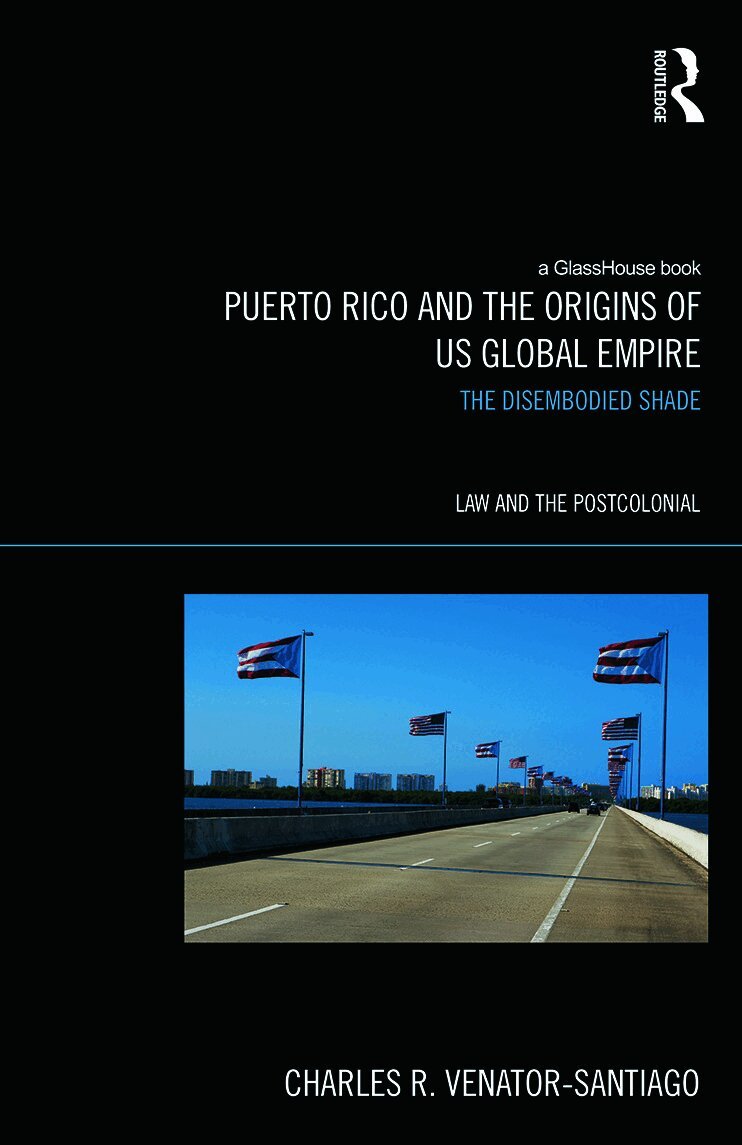
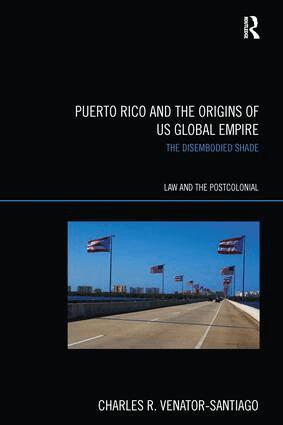
Drawing on a postcolonial legal history of the United States’ territorial expansionism, this book provides an analysis of the foundations of its global empire. Charles R. Venator-Santiago argues that the United States has developed three traditions of territorial expansionism with corresponding constitutional interpretations, namely colonialist, imperialist, and global expansionist. This book offers an alternative interpretation of the origins of US global expansion, suggesting it began with the tradition of territorial expansionism following the 1898 Spanish–American War to legitimate the annexation of Puerto Rico and other non-contiguous territories. The relating constitutional interpretation grew out of the 1901 Insular Cases in which the Supreme Court coined the notion of an unincorporated territory to describe the 1900 Foraker Act’s normalization of the prevailing military territorial policies. Since then the United States has invoked the ensuing precedents to legitimate a wide array of global policies, including the ‘war on terror’. Puerto Rico and the Origins of US Global Empire: The Disembodied Shade combines a unique study of Puerto Rican legal history with a new interpretation of contemporary US policy. As such, it provides a valuable resource for students and scholars of the legal and historical disciplines, especially those with a specific interest in American and postcolonial studies.
State Violence and the Execution of Law
Biopolitcal Caesurae of Torture, Black Sites, Drones
Häftad, Engelska, 2014
691 kr
Skickas inom 10-15 vardagar
State Violence and the Execution of Law examines how law plays a fundamental role in enabling state violence and, specifically, specifically, torture, secret imprisonment, and killing-at-a-distance. Analysing the complex ways in which the U.S. government deploys law in order to consolidate and further colonial and imperial relations of power, Joseph Pugliese tracks the networks that enable the diffusion and normalisation of the state’s monopoly of legitimate violence both in the U.S. and transnationally. He demonstrates how these networks of state violence are embedded within key legal institutions (US Department of Justice), military apparatuses (U.S. Defense Advanced Research Projects Agency), civic sites (McCarran airport, Las Vegas), corporations (Boeing), carceral architectures (CIA Salt Pit, Kabul, and Guantánamo), and advanced technologies (unmanned aerial combat vehicles). Law’s violence, it is maintained, is always preoccupied with the body: its torture, extortion or extermination. The exercise of state violence, it is argued, must be considered in situated locations that evidence the enmeshment of the body within geopolitical configurations of bio and necropower. For it is in these locations that law plays a foundational role in enabling and legitimising regimes of racialised violence. Drawing on poststructuralist, feminist, queer, critical legal, whiteness and anti-colonial theories, State Violence and Execution of Law brings into focus the contractual imbrication of the state with arms corporations and the contemporary military-industrial complex.
661 kr
Skickas inom 10-15 vardagar
This book considers the question of spatial justice after apartheid from several disciplinary perspectives – jurisprudence, law, literature, architecture, photography and psychoanalysis are just some of the disciplines engaged here. However, the main theoretical device on which the authors comment is the legacy of what in Carl Schmitt’s terms is nomos as the spatialised normativity of sociality. Each author considers within the practical and theoretical constraints of their topic, the question of what nomos in its modern configuration may or may not contribute to a thinking of spatial justice after apartheid.On the whole, the collection forces a confrontation between law’s spatiality in a “postcolonial” era, on the one hand, and the traumatic legacy of what Paul Gilroy has called the “colonial nomos”, on the other hand. In the course of this confrontation, critical questions of continuation, extension, disruption and rewriting are raised and confronted in novel and innovative ways that both challenge Schmitt’s account of nomos and affirm the centrality of the constitutive relation between law and space. The book promises to resituate the trajectory of nomos, while considering critical instances through which the spatial legacy of apartheid might at last be overcome.This interdisciplinary book will appeal to scholars of critical legal theory, political philosophy, aesthetics and architecture.
774 kr
Skickas inom 10-15 vardagar
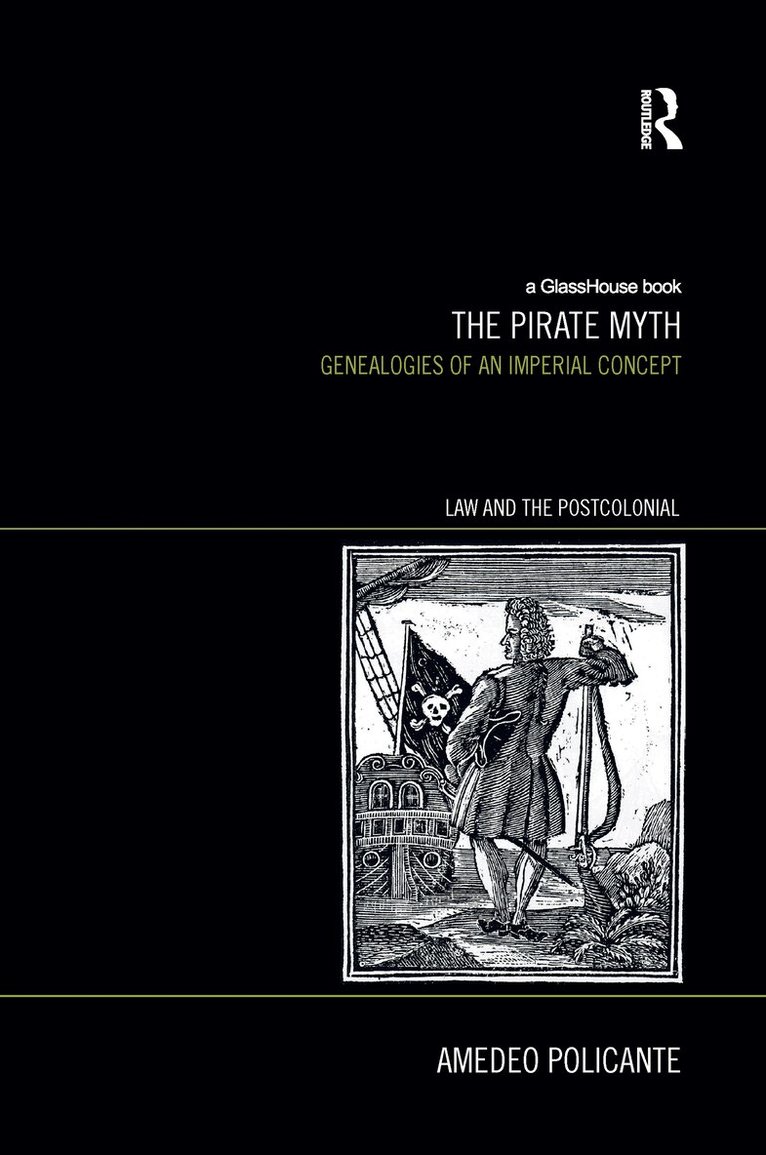
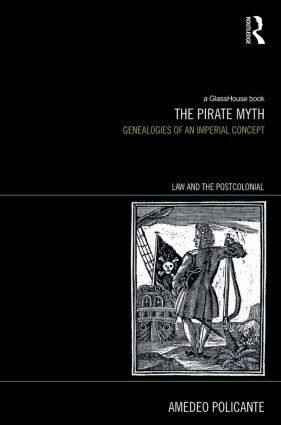
The image of the pirate is at once spectral and ubiquitous. It haunts the imagination of international legal scholars, diplomats and statesmen involved in the war on terror. It returns in the headlines of international newspapers as an untimely ‘security threat’. It materializes on the most provincial cinematic screen and the most acclaimed works of fiction. It casts its shadow over the liquid spatiality of the Net, where cyber-activists, file-sharers and a large part of the global youth are condemned as pirates, often embracing that definition with pride rather than resentment. Today, the pirate remains a powerful political icon, embodying at once the persistent nightmare of an anomic wilderness at the fringe of civilization, and the fantasy of a possible anarchic freedom beyond the rigid norms of the state and of the market. And yet, what are the origins of this persistent ‘pirate myth’ in the Western political imagination? Can we trace the historical trajectory that has charged this ambiguous figure with the emotional, political and imaginary tensions that continue to characterize it? What can we learn from the history of piracy and the ways in which it intertwines with the history of imperialism and international trade? Drawing on international law, political theory, and popular literature, The Pirate Myth offers an authoritative genealogy of this immortal political and cultural icon, showing that the history of piracy – the different ways in which pirates have been used, outlawed and suppressed by the major global powers, but also fantasized, imagined and romanticised by popular culture – can shed unexpected light on the different forms of violence that remain at the basis of our contemporary global order.
741 kr
Skickas inom 10-15 vardagar
Drawing on a postcolonial legal history of the United States’ territorial expansionism, this book provides an analysis of the foundations of its global empire. Charles R. Venator-Santiago argues that the United States has developed three traditions of territorial expansionism with corresponding constitutional interpretations, namely colonialist, imperialist, and global expansionist. This book offers an alternative interpretation of the origins of US global expansion, suggesting it began with the tradition of territorial expansionism following the 1898 Spanish–American War to legitimate the annexation of Puerto Rico and other non-contiguous territories. The relating constitutional interpretation grew out of the 1901 Insular Cases in which the Supreme Court coined the notion of an unincorporated territory to describe the 1900 Foraker Act’s normalization of the prevailing military territorial policies. Since then the United States has invoked the ensuing precedents to legitimate a wide array of global policies, including the ‘war on terror’. Puerto Rico and the Origins of US Global Empire: The Disembodied Shade combines a unique study of Puerto Rican legal history with a new interpretation of contemporary US policy. As such, it provides a valuable resource for students and scholars of the legal and historical disciplines, especially those with a specific interest in American and postcolonial studies.
2 420 kr
Skickas inom 10-15 vardagar
This book considers the question of spatial justice after apartheid from several disciplinary perspectives – jurisprudence, law, literature, architecture, photography and psychoanalysis are just some of the disciplines engaged here. However, the main theoretical device on which the authors comment is the legacy of what in Carl Schmitt’s terms is nomos as the spatialised normativity of sociality. Each author considers within the practical and theoretical constraints of their topic, the question of what nomos in its modern configuration may or may not contribute to a thinking of spatial justice after apartheid.On the whole, the collection forces a confrontation between law’s spatiality in a “postcolonial” era, on the one hand, and the traumatic legacy of what Paul Gilroy has called the “colonial nomos”, on the other hand. In the course of this confrontation, critical questions of continuation, extension, disruption and rewriting are raised and confronted in novel and innovative ways that both challenge Schmitt’s account of nomos and affirm the centrality of the constitutive relation between law and space. The book promises to resituate the trajectory of nomos, while considering critical instances through which the spatial legacy of apartheid might at last be overcome.This interdisciplinary book will appeal to scholars of critical legal theory, political philosophy, aesthetics and architecture.
2 376 kr
Skickas inom 10-15 vardagar
The image of the pirate is at once spectral and ubiquitous. It haunts the imagination of international legal scholars, diplomats and statesmen involved in the war on terror. It returns in the headlines of international newspapers as an untimely ‘security threat’. It materializes on the most provincial cinematic screen and the most acclaimed works of fiction. It casts its shadow over the liquid spatiality of the Net, where cyber-activists, file-sharers and a large part of the global youth are condemned as pirates, often embracing that definition with pride rather than resentment. Today, the pirate remains a powerful political icon, embodying at once the persistent nightmare of an anomic wilderness at the fringe of civilization, and the fantasy of a possible anarchic freedom beyond the rigid norms of the state and of the market. And yet, what are the origins of this persistent ‘pirate myth’ in the Western political imagination? Can we trace the historical trajectory that has charged this ambiguous figure with the emotional, political and imaginary tensions that continue to characterize it? What can we learn from the history of piracy and the ways in which it intertwines with the history of imperialism and international trade? Drawing on international law, political theory, and popular literature, The Pirate Myth offers an authoritative genealogy of this immortal political and cultural icon, showing that the history of piracy – the different ways in which pirates have been used, outlawed and suppressed by the major global powers, but also fantasized, imagined and romanticised by popular culture – can shed unexpected light on the different forms of violence that remain at the basis of our contemporary global order.