Jaco Barnard-Naude – författare
Visar alla böcker från författaren Jaco Barnard-Naude. Handla med fri frakt och snabb leverans.
14 produkter
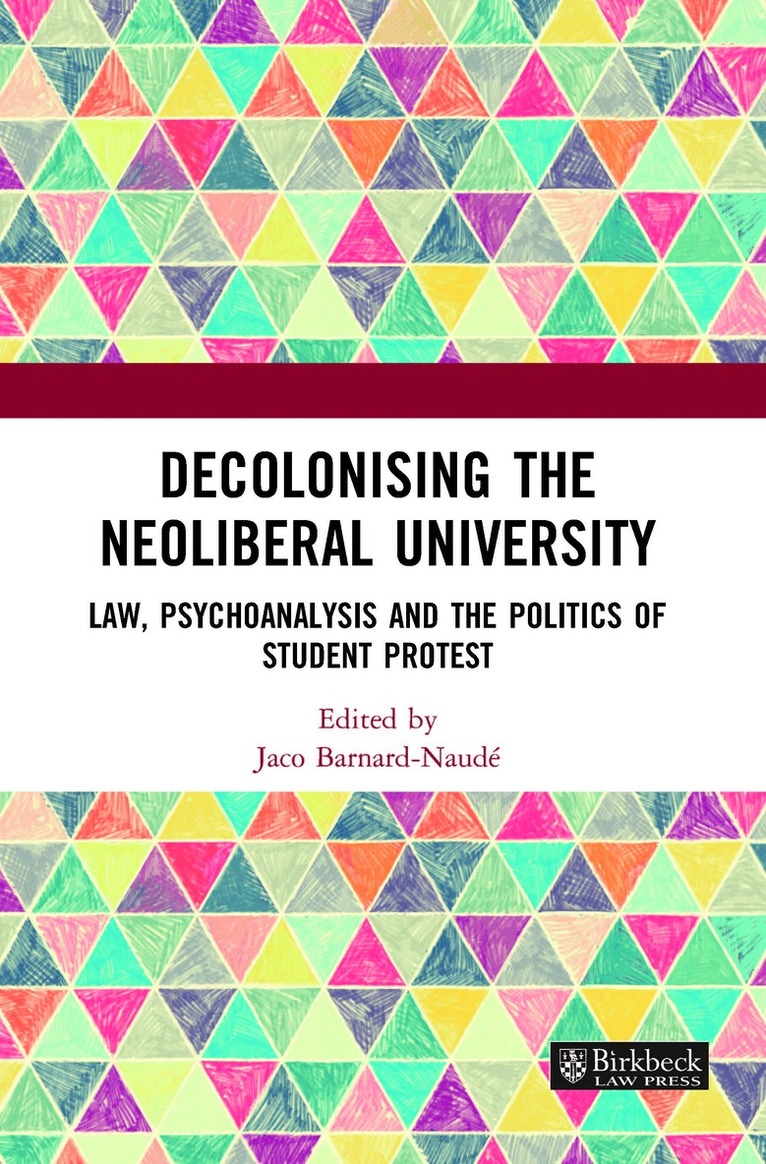
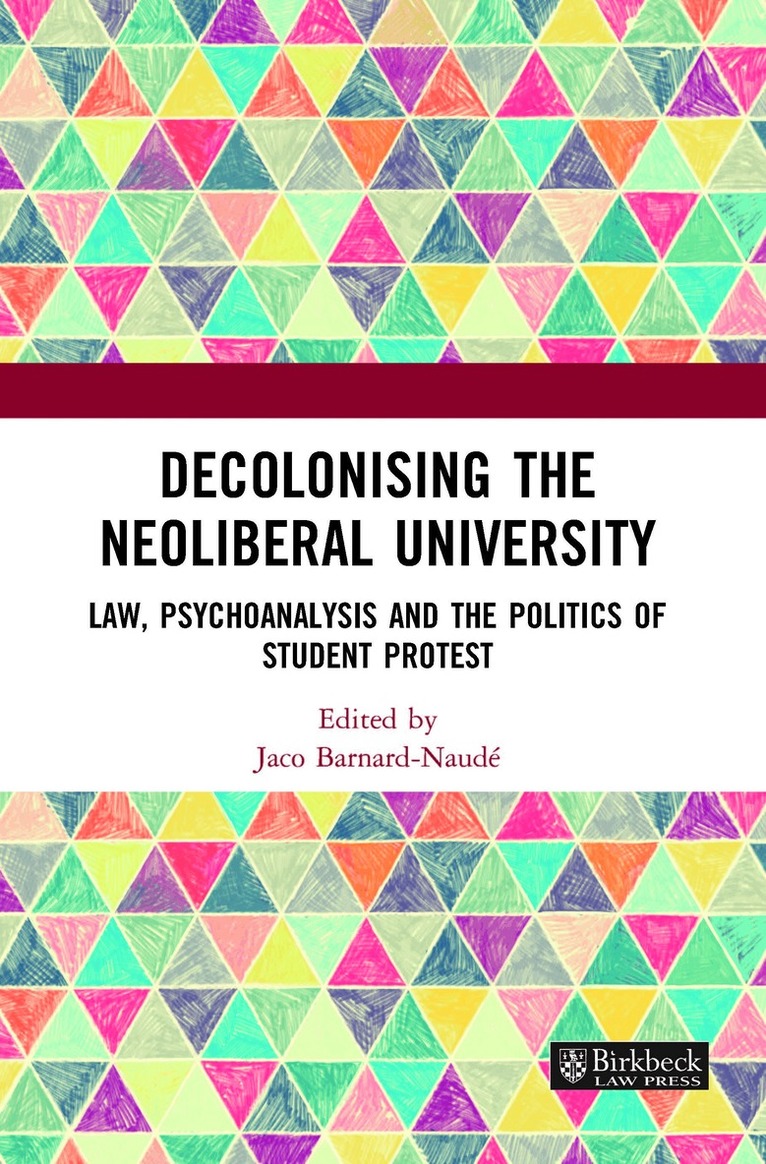
Decolonising the Neoliberal University
Law, Psychoanalysis and the Politics of Student Protest
Inbunden, 2021
2315 kr
Lägg i varukorg
Taking the postcolonial – or, more specifically, the post-apartheid – university as its focus, the book takes the violence and the trauma of the global neoliberal hegemony as its central point of reference.Following a primarily psychoanalytic line of enquiry, it engages a range of disciplines – …
Decolonising the Neoliberal University
Law, Psychoanalysis and the Politics of Student Protest
E-bok, 2021
733 kr
Lägg i varukorg
Taking the postcolonial – or, more specifically, the post-apartheid – university as its focus, the book takes the violence and the trauma of the global neoliberal hegemony as its central point of reference. Following a primarily psychoanalytic line of enquiry, it engages a range of disciplines – …
Decolonising the Neoliberal University
Law, Psychoanalysis and the Politics of Student Protest
E-bok, 2021
749 kr
Lägg i varukorg
Taking the postcolonial – or, more specifically, the post-apartheid – university as its focus, the book takes the violence and the trauma of the global neoliberal hegemony as its central point of reference. Following a primarily psychoanalytic line of enquiry, it engages a range of disciplines – …
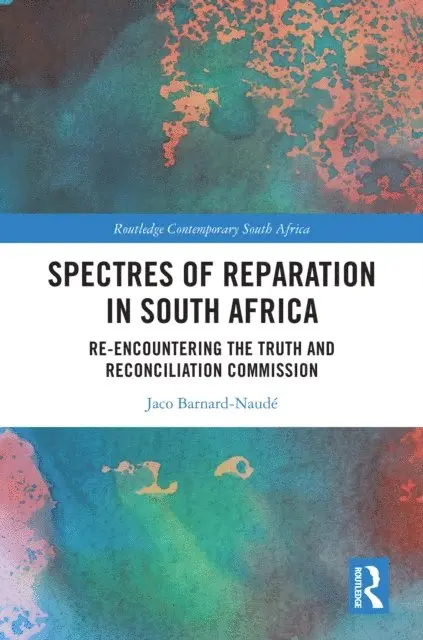
Spectres of Reparation in South Africa
Re-encountering the Truth and Reconciliation Commission
E-bok, 2023
768 kr
Lägg i varukorg
This book argues that South Africa is haunted by the spectre of reparation. The failure of the South African Truth and Reconciliation Commission to secure adequate reparation for the victims of colonisation and apartheid continues to drastically undermine the commission’s processes and legacy. …
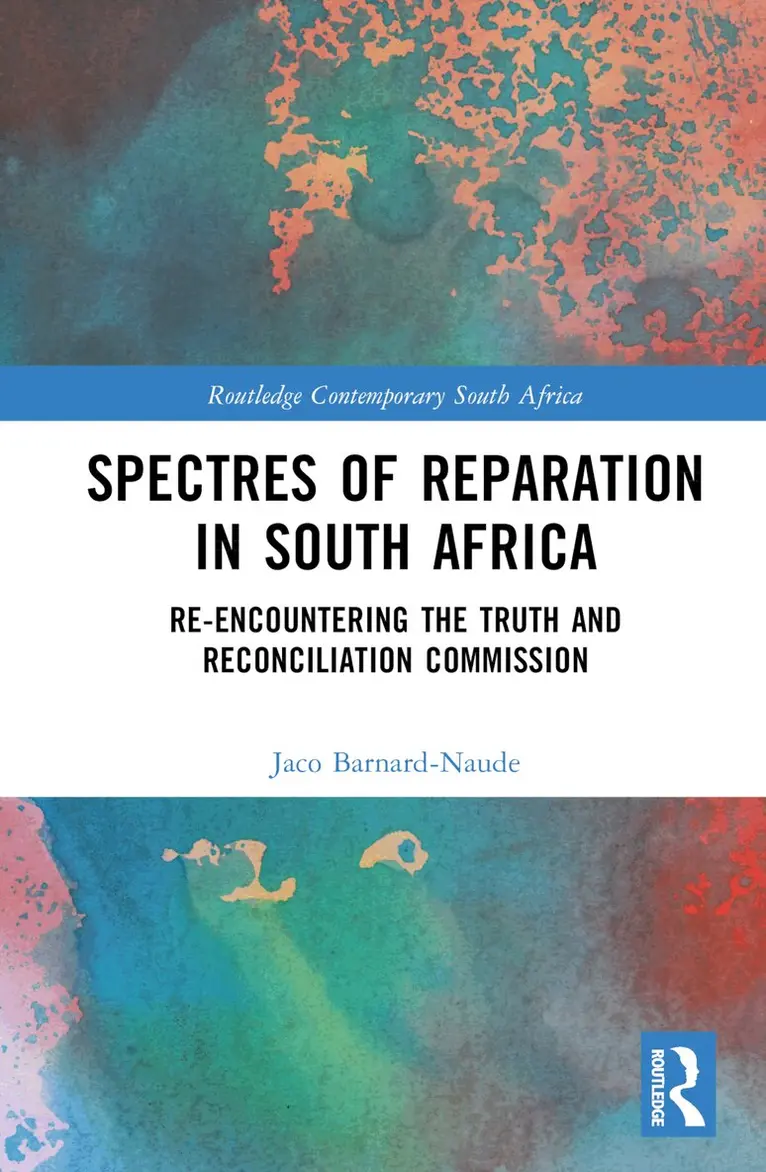
Spectres of Reparation in South Africa
Re-encountering the Truth and Reconciliation Commission
E-bok, 2023
768 kr
Lägg i varukorg
This book argues that South Africa is haunted by the spectre of reparation. The failure of the South African Truth and Reconciliation Commission to secure adequate reparation for the victims of colonisation and apartheid continues to drastically undermine the commission’s processes and legacy. …
Decolonising the Neoliberal University
Law, Psychoanalysis and the Politics of Student Protest
Häftad, 2023
638 kr
Lägg i varukorg
Taking the postcolonial – or, more specifically, the post-apartheid – university as its focus, the book takes the violence and the trauma of the global neoliberal hegemony as its central point of reference.Following a primarily psychoanalytic line of enquiry, it engages a range of disciplines – …
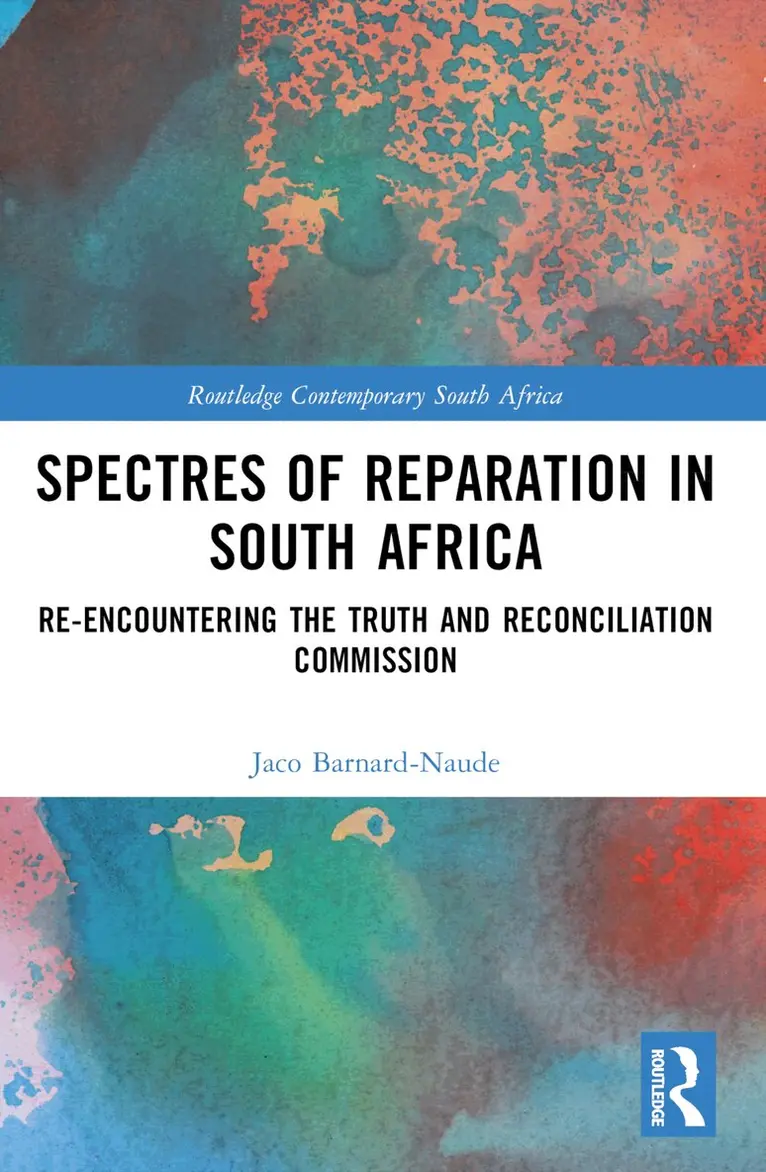
Spectres of Reparation in South Africa
Re-encountering the Truth and Reconciliation Commission
Inbunden, 2023
2591 kr
Lägg i varukorg
This book argues that South Africa is haunted by the spectre of reparation. The failure of the South African Truth and Reconciliation Commission to secure adequate reparation for the victims of colonisation and apartheid continues to drastically undermine the commission’s processes and …
Spectres of Reparation in South Africa
Re-encountering the Truth and Reconciliation Commission
Häftad, 2024
668 kr
Lägg i varukorg
This book argues that South Africa is haunted by the spectre of reparation. The failure of the South African Truth and Reconciliation Commission to secure adequate reparation for the victims of colonisation and apartheid continues to drastically undermine the commission’s processes and …
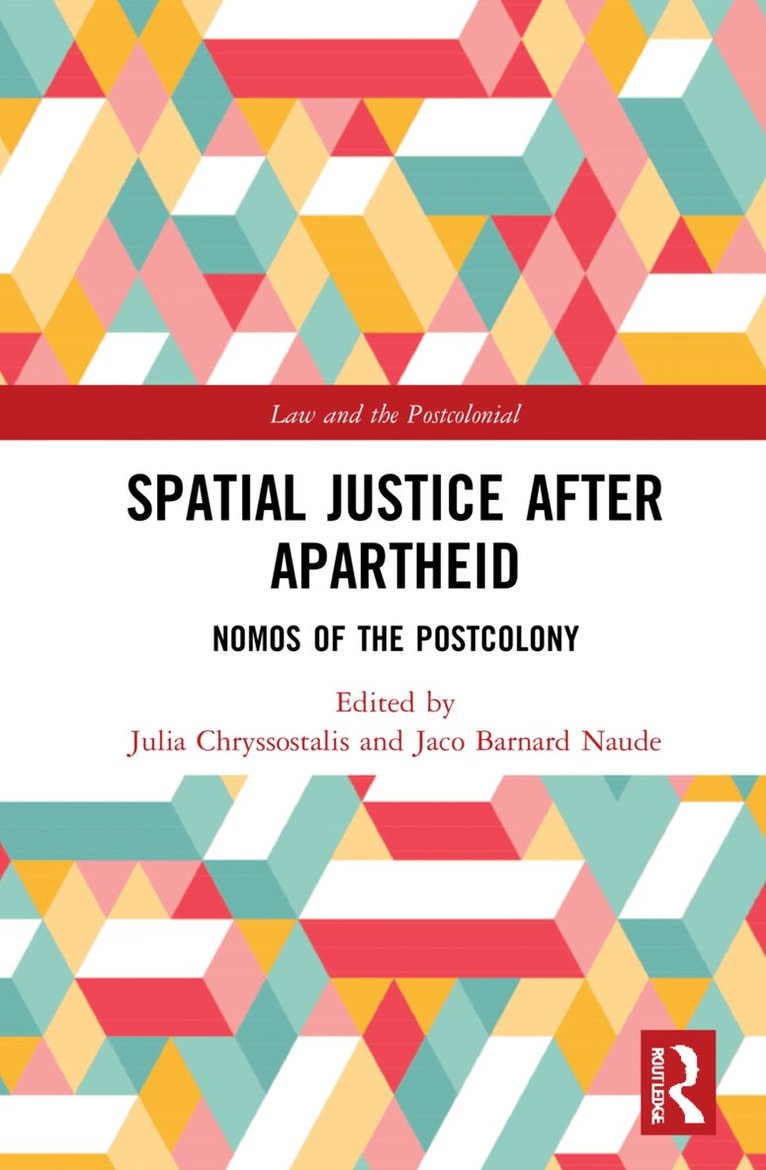
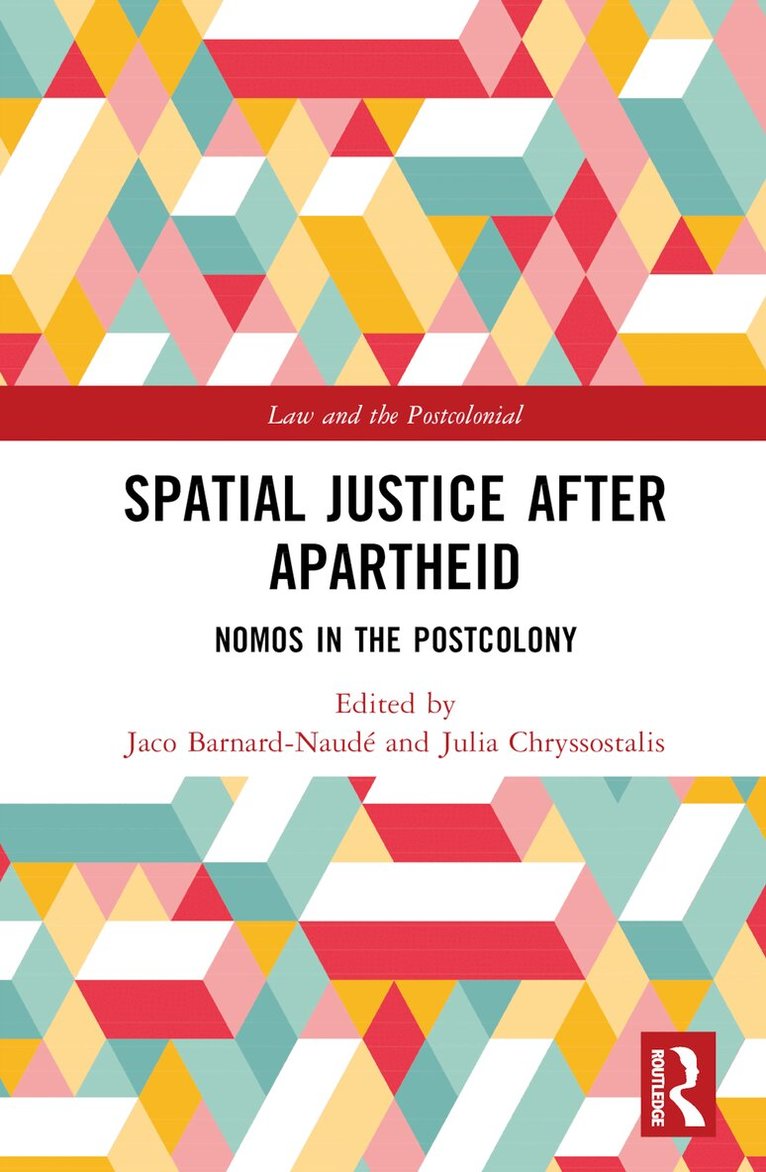
Spatial Justice After Apartheid
Nomos in the Postcolony
Av Jaco Barnard-Naudé, Julia Chryssostalis
Häftad, 2024
746 kr
Lägg i varukorg
This book considers the question of spatial justice after apartheid from several disciplinary perspectives – jurisprudence, law, literature, architecture, photography and psychoanalysis are just some of the disciplines engaged here. However, the main theoretical device on which the authors comment …
Spatial Justice After Apartheid
Nomos in the Postcolony
Av Jaco Barnard-Naudé, Julia Chryssostalis
Inbunden, 2022
2893 kr
Lägg i varukorg
This book considers the question of spatial justice after apartheid from several disciplinary perspectives – jurisprudence, law, literature, architecture, photography and psychoanalysis are just some of the disciplines engaged here. However, the main theoretical device on which the authors comment …
Spatial Justice After Apartheid
Nomos in the Postcolony
Av Julia Chryssostalis, Jaco Barnard-Naude
E-bok, 2022
701 kr
Lägg i varukorg
This book considers the question of spatial justice after apartheid from several disciplinary perspectives – jurisprudence, law, literature, architecture, photography and psychoanalysis are just some of the disciplines engaged here. However, the main theoretical device on which the authors comment …
Spatial Justice After Apartheid
Nomos in the Postcolony
Av Julia Chryssostalis, Jaco Barnard-Naude
E-bok, 2022
701 kr
Lägg i varukorg
This book considers the question of spatial justice after apartheid from several disciplinary perspectives – jurisprudence, law, literature, architecture, photography and psychoanalysis are just some of the disciplines engaged here. However, the main theoretical device on which the authors comment …
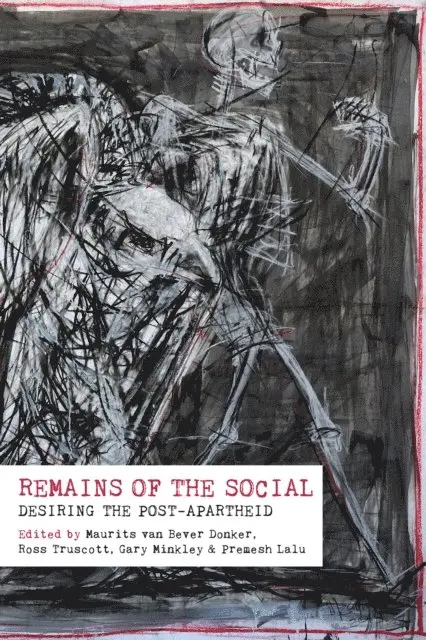
Remains of the Social
Desiring the post-apartheid
Av Helena Pohlandt-McCormick, Aidan Erasmus m. fl.
E-bok, 2017
397 kr
Lägg i varukorg
Remains of the Social is an interdisciplinary volume of essays that engages with what ‘the social’ might mean after apartheid; a condition referred to as ‘the post-apartheid social’. The volume grapples with apartheid as a global phenomenon that extends beyond the borders of South Africa between …
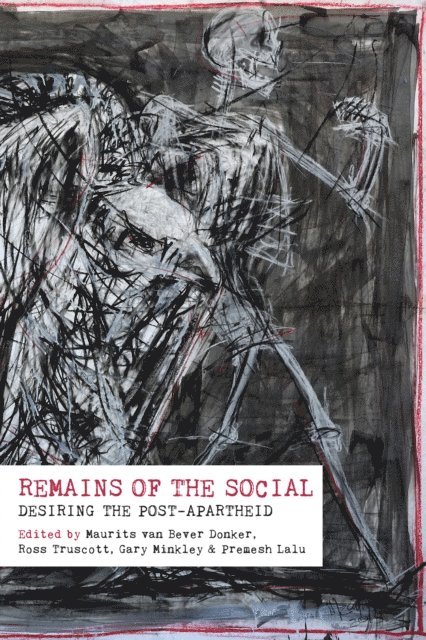
Remains of the Social
Desiring the post-apartheid
Av Helena Pohlandt-McCormick, Aidan Erasmus m. fl.
E-bok, 2017
410 kr
Lägg i varukorg
Remains of the Social is an interdisciplinary volume of essays that engages with what ‘the social’ might mean after apartheid; a condition referred to as ‘the post-apartheid social’. The volume grapples with apartheid as a global phenomenon that extends beyond the borders of South Africa between …