Law in Eastern Europe – serie
Visar alla böcker i serien Law in Eastern Europe. Handla med fri frakt och snabb leverans.
12 produkter
Counsel in the Caucasus: Professionalization and Law in Georgia
Inbunden, 2004
507 kr
Lägg i varukorg
Winner of the Hart/Socio-Legal Studies Association Book Prize for Early Career Academics, 2005.This book traces the development of the rule of law in Georgia since its independence and speculates on its future direction. It does so by focusing on changes in the legal profession after 1991. …
Private and Civil Law in the Russian Federation
Inbunden, 2009
3552 kr
Lägg i varukorg
The chapters in this volume are from two Leiden conferences. There, distinguished scholars and practitioners from Russia and the Far Abroad measured the winds of change in the field of private law in post-Soviet Russia: enormous differences from the Soviet period, crucial in supporting post-Soviet …
Russia and its Constitution
Promise and Political Reality
Av Robert Sharlet, Gordon Smith
Inbunden, 2007
3108 kr
Lägg i varukorg
The Constitution of the Russian Federation was ratified in 1993 amid great hopes and aspirations following the collapse of the USSR. The constitution proclaims the goal of establishing a “democratic, federal state” that functions according to rule of law and promises a broad array of social, …
Law in Medieval Russia
Inbunden, 2008
3976 kr
Lägg i varukorg
Much of what we know about the colourful Russian middle ages comes from legal sources: the treaties of Russian-Scandinavian warlords with the Byzantine emperors, the gradual penetration of Christianity and Byzantine institutions, the endless game of war and peace among the numerous regional …
Judiciary in Central and Eastern Europe
Mechanical Jurisprudence in Transformation?
Av Zdenek Kühn
Inbunden, 2011
2772 kr
Lägg i varukorg
One of the most widespread problems in post-Communist countries is the quality of the judiciary. The book argues that these problems are intimately linked to the legal culture of Communist law, that an understanding of post-Communist judges necessarily requires an understanding of their Communist …
Russian Electricity and Energy Investment Law
Inbunden, 2015
4439 kr
Lägg i varukorg
Electricity supply plays a strategic role for Russia’s economic development and for social peace. As a main consumer of natural gas, electricity is also of central importance for the efficient management of Russia’s energy resource basis. Today, however, the electricity sector is in an obsolete …
Russia and European Human-Rights Law
The Rise of the Civilizational Argument
Inbunden, 2014
2328 kr
Lägg i varukorg
In Russia and European Human-Rights Law: The Rise of the Civilizational Argument, Lauri Mälksoo and his co-authors critically examine Russia's experiences as part of the European human-rights protection system since its admittance to the Council of Europe in 1998. The authors combine legal and …
Legal Dimension in Cold-War Interactions
Some Notes from the Field
Inbunden, 2012
2592 kr
Lägg i varukorg
Given their relationship to political rhetoric, myths of the Cold War certainly matter today; the legal field is no exception. Although Cold-War studies remains a blooming field, its legal dimensions have not been sufficiently developed. Only recently have legal scholars begun to embark upon …
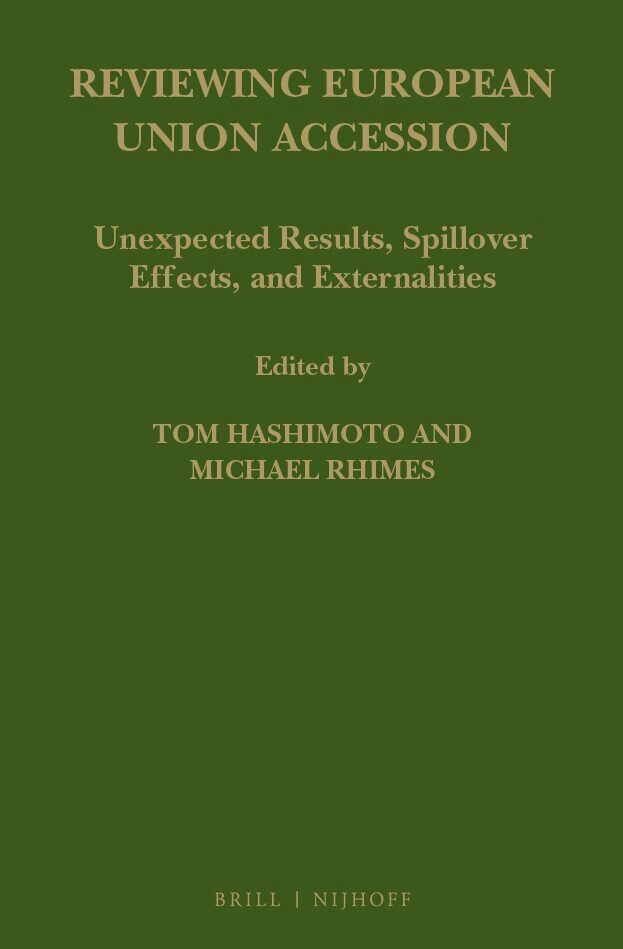
Reviewing European Union Accession
Unexpected Results, Spillover Effects, and Externalities
Av Tom Hashimoto, Michael Rhimes
Inbunden, 2017
3336 kr
Lägg i varukorg
The year 2017 has been an uneasy one for the EU, with so-called Brexit on the horizon and the rise of populist euroskepticism in a number of Member States. This year, with the tenth anniversary of the Romanian and Bulgarian accession to the Union, is a good year to pause and reflect over the life …
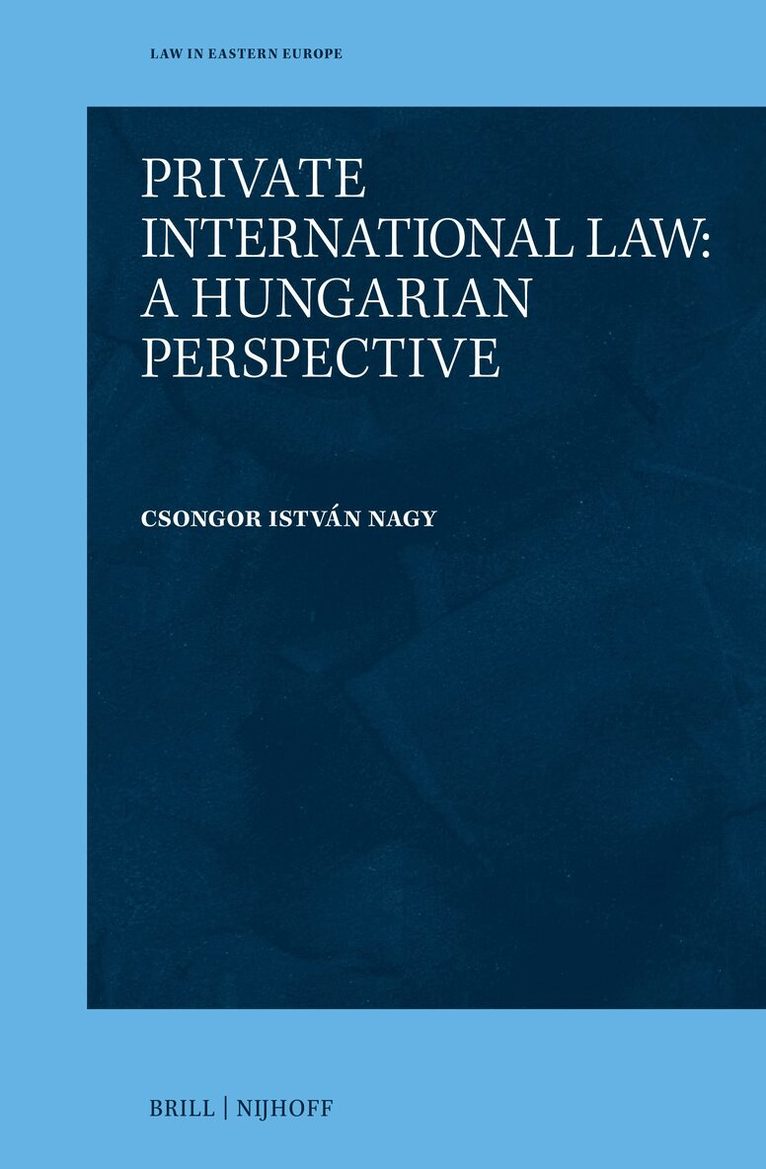
Private International Law: A Hungarian Perspective
Inbunden, 2024
2616 kr
Lägg i varukorg
This book provides a concise and analytical introduction to private international law in Hungary: international jurisdiction of courts, choice of law (applicable law) and the recognition and enforcement of foreign judicial decisions. It presents both Hungarian conflicts rules and their judicial …
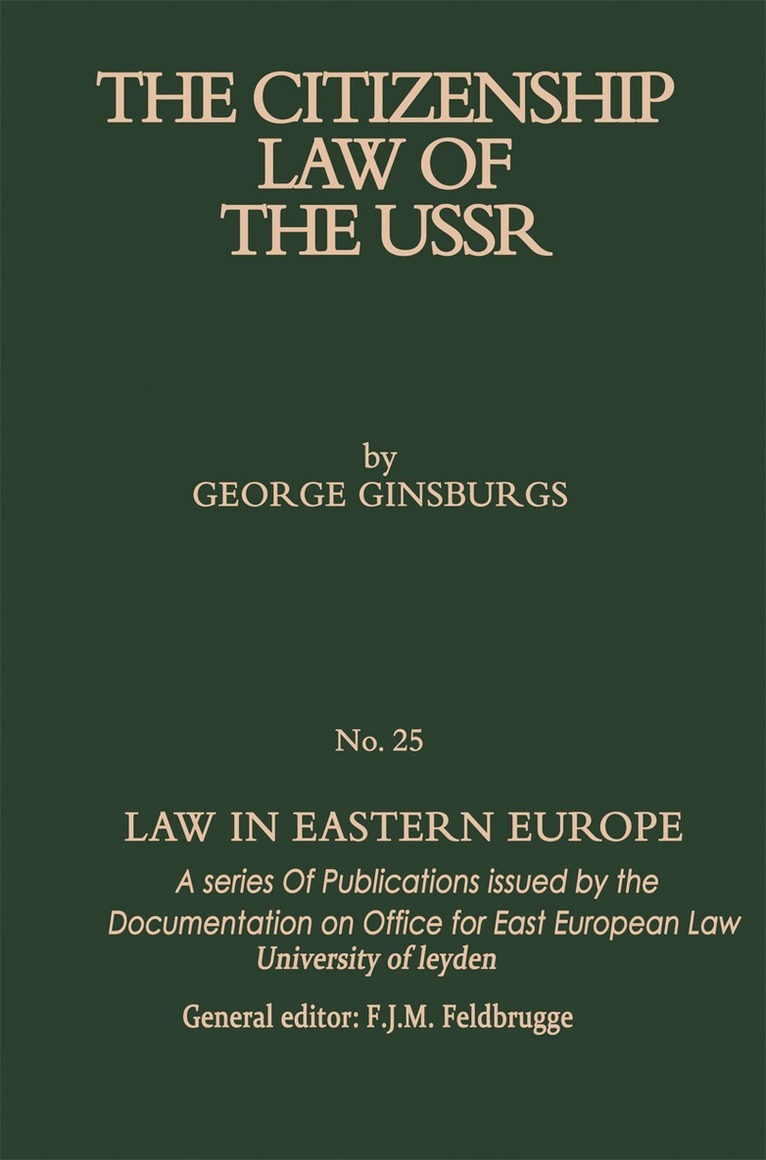
Citizenship Law of the USSR
Häftad, 2012
507 kr
Lägg i varukorg
In 1968, the predecessor of this volume was published as Number 15 of the Law in Eastern Europe series, under the title "Soviet Citizenship Law". The decision to put out a new version of that study was prompted by the enactment in 1978 of the CUTTent Law on the Citizenship of the USSR and the …