Legacy Editions - Böcker
Visar alla böcker i serien Legacy Editions. Handla med fri frakt och snabb leverans.
8 produkter
8 produkter
298 kr
Skickas inom 7-10 vardagar
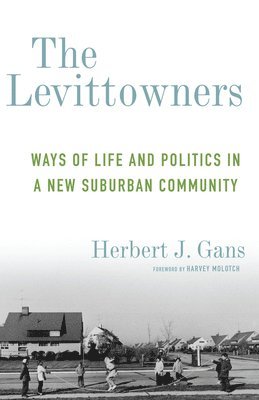
In 1955, Levitt and Sons purchased most of Willingboro Township, New Jersey and built 11,000 homes. This, their third Levittown, became the site of one of urban sociology's most famous community studies, Herbert J. Gans's The Levittowners. The product of two years of living in Levittown, the work chronicles the invention of a new community and its major institutions, the beginnings of social and political life, and the former city residents' adaptation to suburban living. Gans uses his research to reject the charge that suburbs are sterile and pathological. First published in 1967, The Levittowners is a classic of participant-observer ethnography that also paints a sensitive portrait of working-class and lower-middle-class life in America. This new edition features a foreword by Harvey Molotch that reflects on Gans's challenges to conventional wisdom.
1 140 kr
Skickas inom 7-10 vardagar
In the 1960s and 1970s, becoming a rock musician was fundamentally different than playing other kinds of music. It was a learned rather than a taught skill. In On Becoming a Rock Musician, sociologist H. Stith Bennett observes what makes someone a rock musician and what persuades others to take him seriously in this role. The book explores how bands form; the backstage and onstage reality of playing in a band; how bands promote themselves and interact with audiences and music professionals like DJs; and the role of performance.
290 kr
Skickas inom 7-10 vardagar
In the 1960s and 1970s, becoming a rock musician was fundamentally different than playing other kinds of music. It was a learned rather than a taught skill. In On Becoming a Rock Musician, sociologist H. Stith Bennett observes what makes someone a rock musician and what persuades others to take him seriously in this role. The book explores how bands form; the backstage and onstage reality of playing in a band; how bands promote themselves and interact with audiences and music professionals like DJs; and the role of performance.
875 kr
Tillfälligt slut
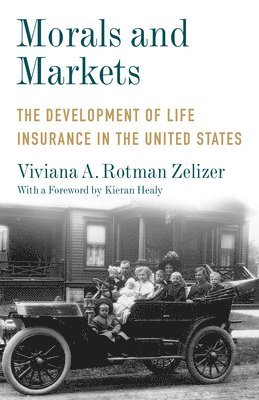
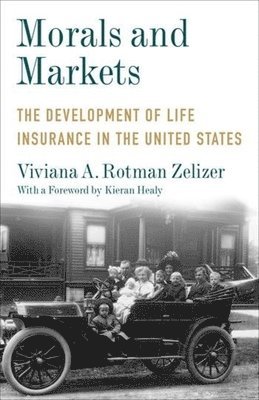
Life insurance-the promise of an insurer to pay a sum upon a person's death in exchange for a regular premium-is a bizarre enterprise. How can we monetize human life? Should we? What statistics do we use, what assumptions do we make, and what behavioral factors do we consider? First published in 1979, Morals and Markets Is a pathbreaking study exploring the development of life insurance in the United States. Viviana A. Rotman Zelizer combines economic history and a sociological perspective to advance a novel interpretation of the life insurance industry. The book pioneered a cultural approach to the analysis of morally controversial markets. Zelizer begins in the mid-nineteenth century with the rise of the life insurance industry, a contentious chapter in the history of American business. Life insurance was stigmatized at first, denounced in newspapers and condemned by religious leaders as an immoral and sacrilegious gamble on human life. Over time, the business became a widely praised arrangement to secure a family's future. How did life insurance overcome cultural barriers?As Zelizer shows, the evolution of the industry in the United States matched evolving attitudes toward death, money, family relations, property, and personal legacy.
266 kr
Skickas inom 7-10 vardagar
Life insurance-the promise of an insurer to pay a sum upon a person's death in exchange for a regular premium-is a bizarre enterprise. How can we monetize human life? Should we? What statistics do we use, what assumptions do we make, and what behavioral factors do we consider? First published in 1979, Morals and Markets Is a pathbreaking study exploring the development of life insurance in the United States. Viviana A. Rotman Zelizer combines economic history and a sociological perspective to advance a novel interpretation of the life insurance industry. The book pioneered a cultural approach to the analysis of morally controversial markets. Zelizer begins in the mid-nineteenth century with the rise of the life insurance industry, a contentious chapter in the history of American business. Life insurance was stigmatized at first, denounced in newspapers and condemned by religious leaders as an immoral and sacrilegious gamble on human life. Over time, the business became a widely praised arrangement to secure a family's future. How did life insurance overcome cultural barriers?As Zelizer shows, the evolution of the industry in the United States matched evolving attitudes toward death, money, family relations, property, and personal legacy.
1 076 kr
Skickas inom 7-10 vardagar
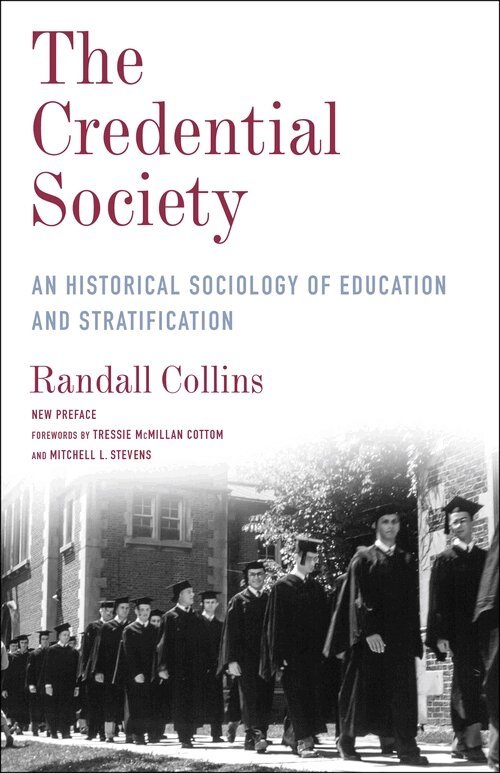
The Credential Society is a classic on the role of higher education in American society and an essential text for understanding the reproduction of inequality. Controversial at the time, Randall Collins’s claim that the expansion of American education has not increased social mobility, but rather created a cycle of credential inflation, has proven remarkably prescient.Collins shows how credential inflation stymies mass education’s promises of upward mobility. An unacknowledged spiral of the rising production of credentials and job requirements was brought about by the expansion of high school and then undergraduate education, with consequences including grade inflation, rising educational costs, and misleading job promises dangled by for-profit schools. Collins examines medicine, law, and engineering to show the ways in which credentialing closed these high-status professions to new arrivals. In an era marked by the devaluation of high school diplomas, outcry about the value of expensive undergraduate degrees, and the proliferation of new professional degrees like the MBA, The Credential Society has more than stood the test of time. In a new preface, Collins discusses recent developments, debunks claims that credentialization is driven by technological change, and points to alternative pathways for the future of education.
393 kr
Skickas inom 7-10 vardagar
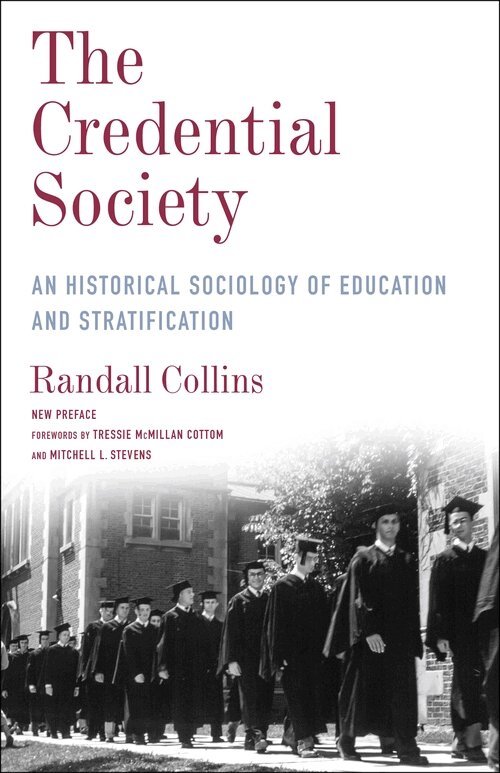
The Credential Society is a classic on the role of higher education in American society and an essential text for understanding the reproduction of inequality. Controversial at the time, Randall Collins’s claim that the expansion of American education has not increased social mobility, but rather created a cycle of credential inflation, has proven remarkably prescient.Collins shows how credential inflation stymies mass education’s promises of upward mobility. An unacknowledged spiral of the rising production of credentials and job requirements was brought about by the expansion of high school and then undergraduate education, with consequences including grade inflation, rising educational costs, and misleading job promises dangled by for-profit schools. Collins examines medicine, law, and engineering to show the ways in which credentialing closed these high-status professions to new arrivals. In an era marked by the devaluation of high school diplomas, outcry about the value of expensive undergraduate degrees, and the proliferation of new professional degrees like the MBA, The Credential Society has more than stood the test of time. In a new preface, Collins discusses recent developments, debunks claims that credentialization is driven by technological change, and points to alternative pathways for the future of education.
243 kr
Skickas inom 7-10 vardagar
The People’s Choice is a landmark psychological and statistical study of American voters during the 1940 and 1944 presidential elections, originally published in 1948. Amid a burgeoning interest in statistics and population sampling, it constituted the first systematic effort to trace voters’ behavior across the duration of a presidential campaign and to follow up on this data years later.During the 1940 campaign, Paul F. Lazarsfeld, Bernard Berelson, and Hazel Gaudet tracked a sample population of six hundred people from Erie County, Ohio, interviewing them monthly in the seven months leading up to Election Day. Their subsequent study in 1944 expanded the sample to include a nationwide cross-section of two thousand voters. Contrary to the fears of the time, Lazarsfeld, Berelson, and Gaudet found that media such as newspapers, radio, and campaign advertising did not have a profound influence on individual voting habits. Instead, interpersonal interactions and word of mouth were more significant for most voters. They argued that mass media reached a small but crucial subset of people, who then passed information on to less avid media consumers.The study paired the same interviewers and interviewees over time, leading to remarkable extended conversations that feature more casual and exploratory discussions than were typical of social-scientific research. Quoted verbatim, they offer additional insight into the American electorate. A groundbreaking work of empirical political science, The People’s Choice remains of great importance in an era of anxiety about the influence of media on voting behavior.