Lerna - Böcker
Visar alla böcker i serien Lerna. Handla med fri frakt och snabb leverans.
9 produkter
9 produkter
1 080 kr
Skickas inom 5-8 vardagar
Produced at a time when faunal studies were still uncommon on most excavations, this book may seem methodologically rather out of date now. However, the descriptive sections provide surprising insights into the lives of the inhabitants of Bronze Age Lerna, perched on the edge of the Gulf of Argos. The author suggests, for example, that most dogs on the site were eaten, that pigs were the earliest domesticate, and that the horse arrived in the settlement in the Middle Helladic period. Fragments of tuna and Great Blue Shark suggest deep sea fishing, while remains of bear, badger, otter, marten and lynx suggest a surrounding environment rich in animal life. The author's detection of a proliferation in bird species (from marsh and sea birds in the Early Bronze Age, to additional dry country birds like rock partridge, chicken, bustard, pigeon, raven, and crow in the Middle Bronze Age) is of even wider significance, suggesting possible climate change.
1 080 kr
Skickas inom 5-8 vardagar
The second volume of the publication of the excavations at Lerna (published jointly with the Smithsonian Institute) deals with the human bones that were found and gives a physical anthropological study of them. Skeletons from Neolithic to Roman times are described and measured in detail, studied against the ecological, historical, and cultural background of the area, and interpreted in terms of (1) demography, (2) health and disease status, (3) body build and posture, (4) microevolution, (5) genetic relationships or connections with other populations. Although the author had for many years been studying the physical anthropology of the bones from many areas of Greece, Lerna was the first site that offered him a sufficient number of sufficiently well-preserved skeletons over so long a range of time as to allow a type of study long recognized as desirable. The significance of this study for early periods of archaeology is as great as the soundness of method and clarity of presentation.
1 503 kr
Skickas inom 11-20 vardagar
The author presents the Early Helladic III pottery from Lerna in all its aspects, cataloguing, describing, and classifying over 1,400 vessels. The classification systems are based on detailed analyses of vessel shapes and ornamentation, supported by shape and pattern charts and numerous tables and illustrations. The concluding chapter compares the Lernaean pottery sequences to contemporary developments in central and southern Greece and examines the lineage of Early Helladic III pottery, which differs so profoundly from the pottery of the preceding period. Physico-chemical analyses of ceramic material are presented in an appendix.
2 145 kr
Skickas inom 5-8 vardagar
Beneath the famous remains of the House of the Tiles and the other Bronze Age remains found at Lerna, a large amount of Neolithic pottery was found during 1950s excavations by the American School of Classical Studies. Although the mixing of material makes it impossible to establish an independent ceramic sequence for the site, the author is able to differentiate Early and Middle Neolithic types using her knowledge of material from the well-stratified Franchthi Cave, across the Argolic Gulf. By placing the ceramic material in archaeological context, the author makes a number of important new claims about Lerna's earliest history. While the date of the first settlement is still unclear, the Middle Neolithic was clearly a time of intensive occupation at Lerna, when the digging of at least one long ditch across the site suggests some internal planning. Sherds of the first Late Neolithic phase are totally absent, suggesting that Lerna had been abandoned by the end of Middle Neolithic but substantial quantities of Final Neolithic pottery, found largely in pits and two graves, suggest ritual reuse in this period. A final chapter (in both English and Modern Greek) summarizes the results of the study, including the changing patterns of burial practices over the course of the Neolithic. (A CD-ROM with 86 color images of the pottery is included.)
2 145 kr
Skickas inom 5-8 vardagar
In 1995 Jeremy B. Rutter presented the pottery of the Fourth Settlement at Lerna in Lerna III: The Pottery of Lerna IV. The present volume is the companion to the Rutter volume, outlining the architectural sequence of the EH III period at the site with descriptions of the major building types and other features, such as hearths, ovens, and bothroi. Careful examination of the individual buildings and their contents constitutes the core of the text. The changing settlement patterns of the site through time are considered, and sources of influences are suggested.
2 145 kr
Skickas inom 5-8 vardagar
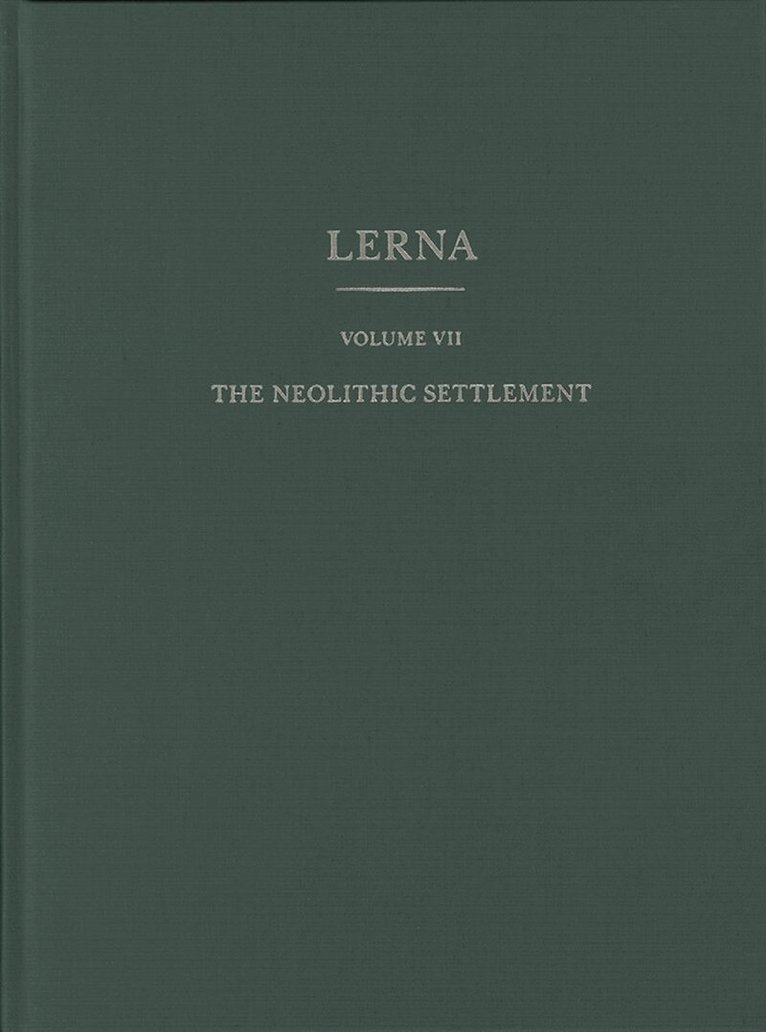
This volume complements Lerna V: The Neolithic Pottery of Lerna, by K. D. Vitelli, and completes the primary publication of the results of the Neolithic remains retrieved during the excavations conducted by the American School of Classical Studies at Athens from 1952 through 1958 at Lerna in the Argolid. It presents the buildings and other features of the Neolithic settlement with listings of related pottery, minor objects, lithics, fauna, and a catalogue of the minor objects. The study reveals a small agricultural community of Middle Neolithic date with houses of mud brick on stone foundations and various storage and thermal installations with a few burials scattered among them. A small Final Neolithic presence is documented by two graves and a group of "ash pits" of uncertain use. A catalogue of the minor objects includes mostly utilitarian objects of typical forms in stone, bone, and terracotta, and a few objects of decorative (e.g., ear studs) and symbolic significance (terracotta "tangas" and figurines). Appendixes include lists of walls and pottery lots, the inventory/lot numbers of the lithics published elsewhere by J. Kozlowski et al. (1996), and a summary of the fauna by D. S. Reese that clarifies and amplifies the earlier faunal study by N.-G. Gejvall (Lerna I).
2 145 kr
Skickas inom 5-8 vardagar
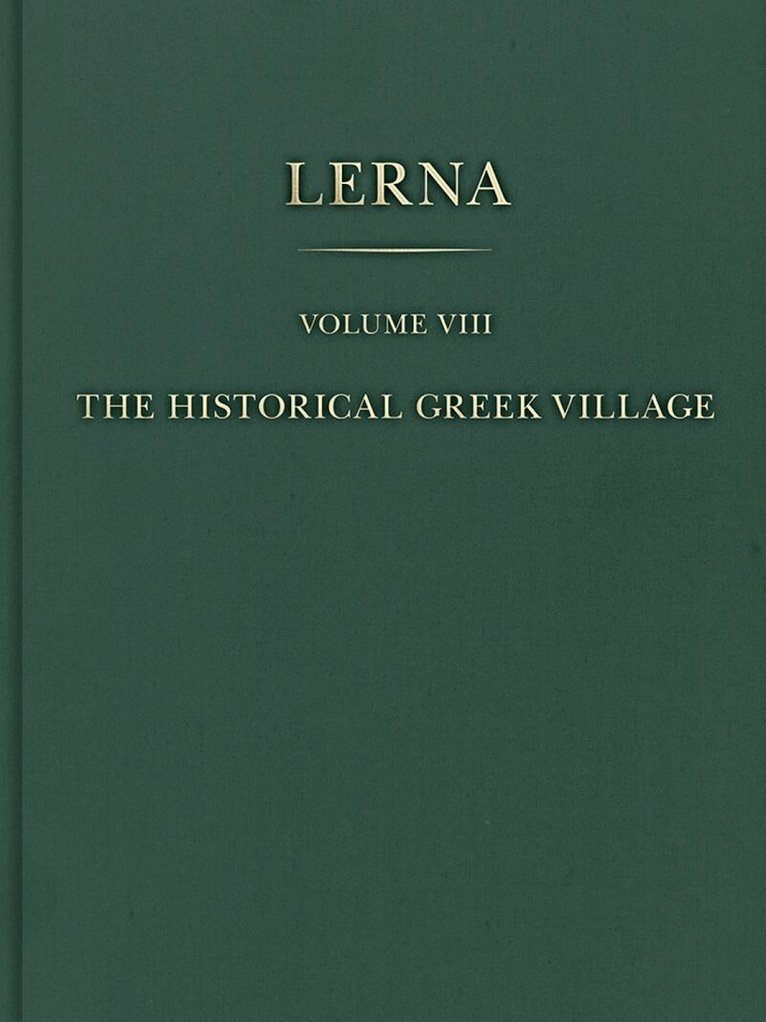
This volume presents the Protogeometric through Hellenistic material (ca. 970-175 B.C.) from ASCSA excavations conducted in the 1950s at Lerna in the Argolid, one of the most important prehistoric sites in Greece. The material derives from two main sources: burials from a Geometric cemetery near the settlement and Late Archaic, Classical, and Hellenistic wells from the mound proper. Although the material consists primarily of pottery and other ceramic finds, it also includes human remains, animal bones and shells, coins, inscriptions, and bronze and stone objects. Heather Graybehl provides a petrographic analysis, Mark L. Lawall discusses the transport amphoras and import patterns, David S. Reese presents the faunal material, and David Scahill presents and catalogues two Doric capitals. This study not only gives scholars greater insight into ceramic developments in the Argolid, it brings much-needed focus to the material culture of a historic settlement not known for strategic trading, politics, or military prowess. Lerna VIII will greatly facilitate comparative studies with other modestly sized communities in ancient Greece.
2 145 kr
Skickas inom 5-8 vardagar
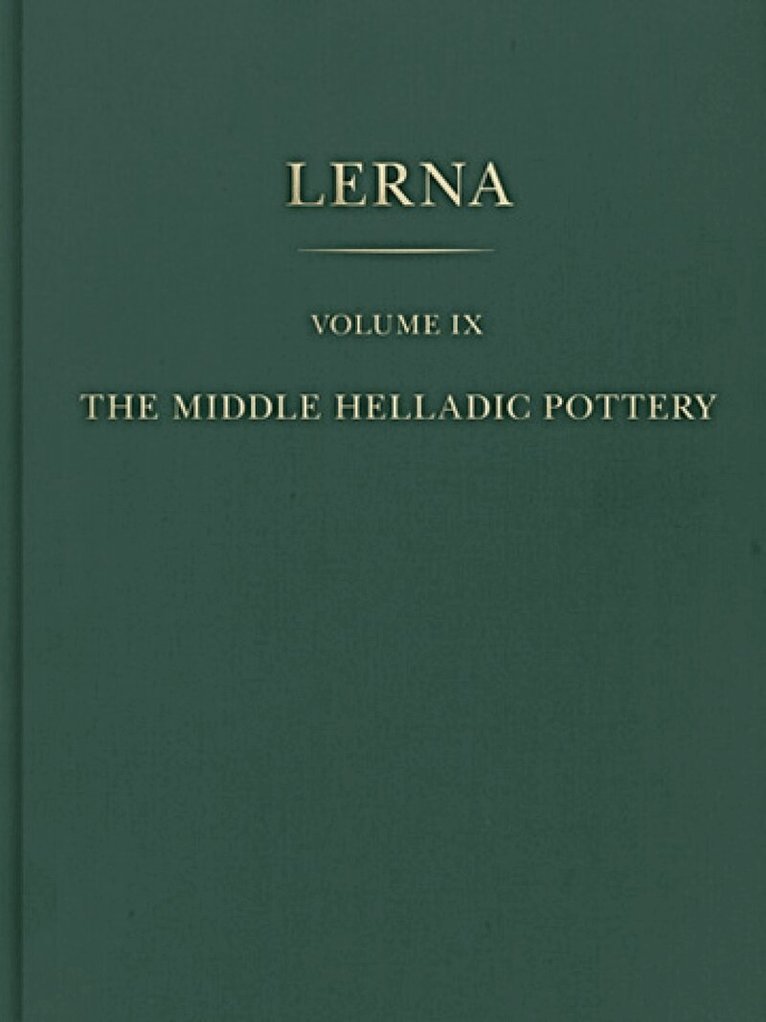
Lerna, volume 9Located on the shore of the Gulf of Argos, Lerna is one of the most important prehistoric sites in Greece, having been occupied with few interruptions over a period of some 5,000 years, from the 6th to the 1st millennium B.C. Following excavations under the direction of Professor J. Caskey from 1952 to 1958, the well-preserved, deeply stratified record resulted in Lerna becoming the undisputed "typesite" and master sequence for the Early and Middle Bronze Ages on the southern Greek mainland. However, the Middle Bronze Age settlement and material have never been comprehensively published. This work presents a catalogue of the Middle Helladic ceramic material and an analysis of the material in terms of shape, decoration, and fabric with the objective of elucidating the changing patterns of ceramic production and consumption at a key mainland site. Published as a set of two books: Part 1 Text, Part 2 Catalogue
2 145 kr
Skickas inom 5-8 vardagar
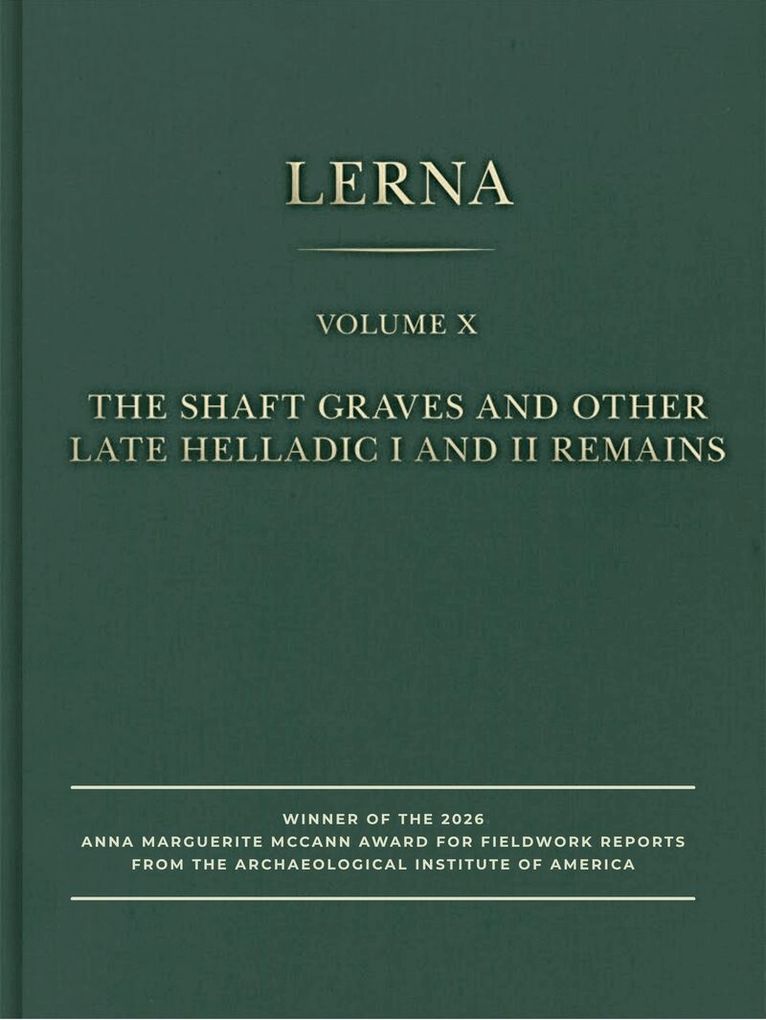
Lerna, volume 102026 recipient of the Anna Marguerite McCann Award for Fieldwork Reports from the Archaeological Institute of AmericaThis volume presents funerary and domestic remains from the Late Helladic (LH) period at the settlement of Lerna, an important prehistoric site on the Gulf of Argos excavated by the ASCSA in the 1950s.Most of the material derives from the fill of two disturbed shaft graves from the later half of the LH I period, whose large ceramic and faunal assemblages are complemented by finds from an additional nine graves and domestic remains. Stratigraphic analysis of the shaft graves and surrounding remains contextualize the ceramics and miscellaneous objects recorded in the accompanying catalogues. Analysis of the pottery establishes a clear subdivision of LH I table ware into two phases and suggests a close relationship between kin groups at Lerna and at Kolonna on Aigina.Contributions by Sturt Manning on radiocarbon dating of the shaft grave fills, Ian Whitbread and Hans Mommsen on petrographic and chemical analysis of the pottery, and David S. Reese on the faunal remains shed further light on this important material. The combined evidence suggests that Lerna was continually settled throughout the LH I period, with decline in the early LH IIA period and abandonment in the LH IIB period.While publication of intact monumental tombs often focuses on the elite occupants and their precious grave goods, the value of the Lerna shaft graves lies in what they reveal about the hundreds of living participants in the funerary rituals.