Library of Alabama Classics - Böcker
Visar alla böcker i serien Library of Alabama Classics. Handla med fri frakt och snabb leverans.
18 produkter
18 produkter
478 kr
Skickas inom 7-10 vardagar
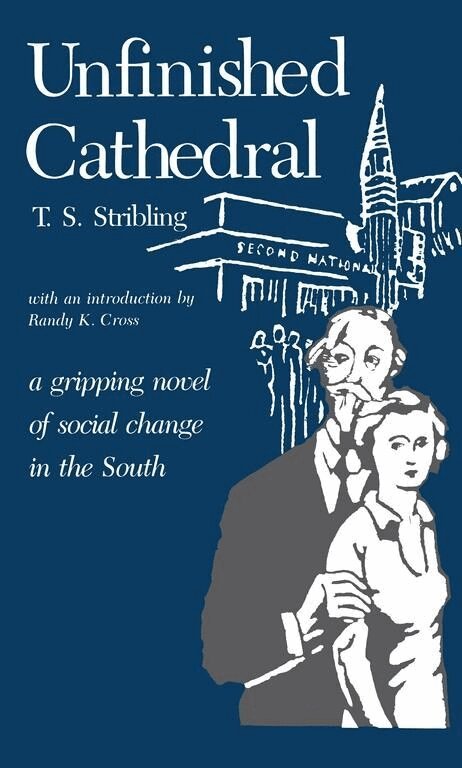
Unfinished Cathedral is the third volume of T.S. Stribling’s Southern trilogy and was originally published in 1934. The trilogy, Stribling’s greatest literary achievement, is set in and around Florence, Alabama, and spans six decades of social, economic, and political change from the Civil War and Reconstruction to the 1920s. In each of the novels Stribling brings together the various social classes of the period, revealing their interdependency. The Forge is the story of the South during the period of the Civil War and Reconstruction, while The Store chronicles the changing social and economic landscape of the post-Reconstruction period and the rise to power of the mercantile class in the reconstructed South. In Unfinished Cathedral, Stribling continues the story of the dramatic transformation in the social structure of the South. The 1920s saw the control of society shift from the wealthy landowners and merchants to the rising middle class. This period also saw significant changes in the status of Southern women and blacks, and economically, a surge of prosperity was evident that was brought on by the land boom and the resulting influx of Northern dollars. The University of Alabama Press reissued the first two novels in T.S. Stribling’s trilogy, The Forge and The Store, in 1985.
357 kr
Skickas inom 7-10 vardagar
211 kr
Skickas inom 7-10 vardagar
385 kr
Skickas inom 7-10 vardagar
428 kr
Skickas inom 7-10 vardagar
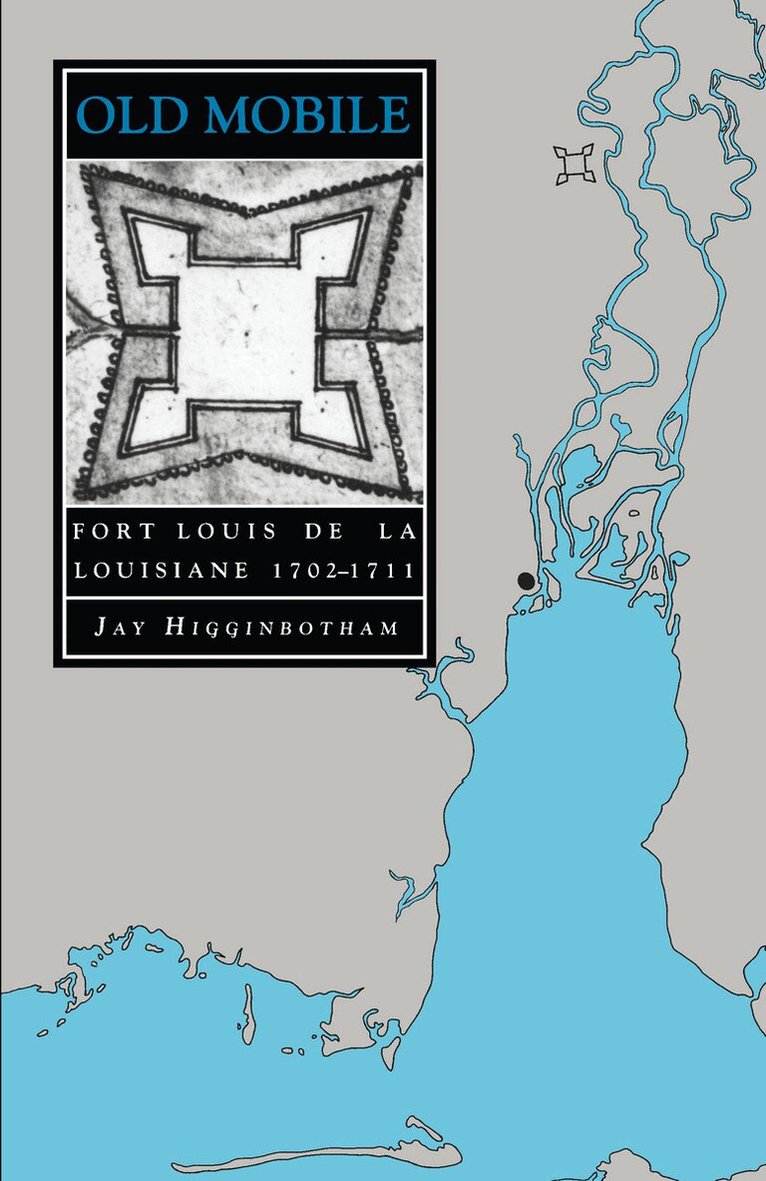
Offers to American historiography a microcosmic view of an early French colonial settlement in the United States, recreating the lives of the fort occupants in minute detail. Higginbotham has made extensive use of Spanish archives in the research of early American history.
296 kr
Skickas inom 7-10 vardagar
St. Elmo was the most famed and beloved novel by Augusta Jane Evans, a June 2015 inductee into the Alabama Writers Hall of Fame. First published in 1866, Evans’s rich tale of the relationship between the dashing and worldly St. Elmo and Edna Earl, an exemplar of virtuous Southern womanhood, sold over a million copies in four months and became one of the nineteenth century’s most influential novels.This edition includes an introduction by Evans scholar Diane Roberts about the enduring relevance and legacy of St. Elmo as a work of literature as well as a reflection of gender roles and the seismic societal changes taking place in the United States in the aftermath of the Civil War.
385 kr
Skickas inom 7-10 vardagar
416 kr
Skickas inom 7-10 vardagar
482 kr
Skickas inom 7-10 vardagar
Examines the social and economic aspects of slavery in Alabama. After a discussion of slavery under the imperial rulers of the colonial and territorial periods, Sellers focuses on the transplantation of the slavery system from the Atlantic seaboard states to Alabama.
417 kr
Skickas inom 7-10 vardagar
Written by a scholar who lived and worked in both the South and the North of the US during and after the time of Jim Crow laws, this study on higher education for African-Americans in Alabama is derived from his 1937 prize-winning dissertation.
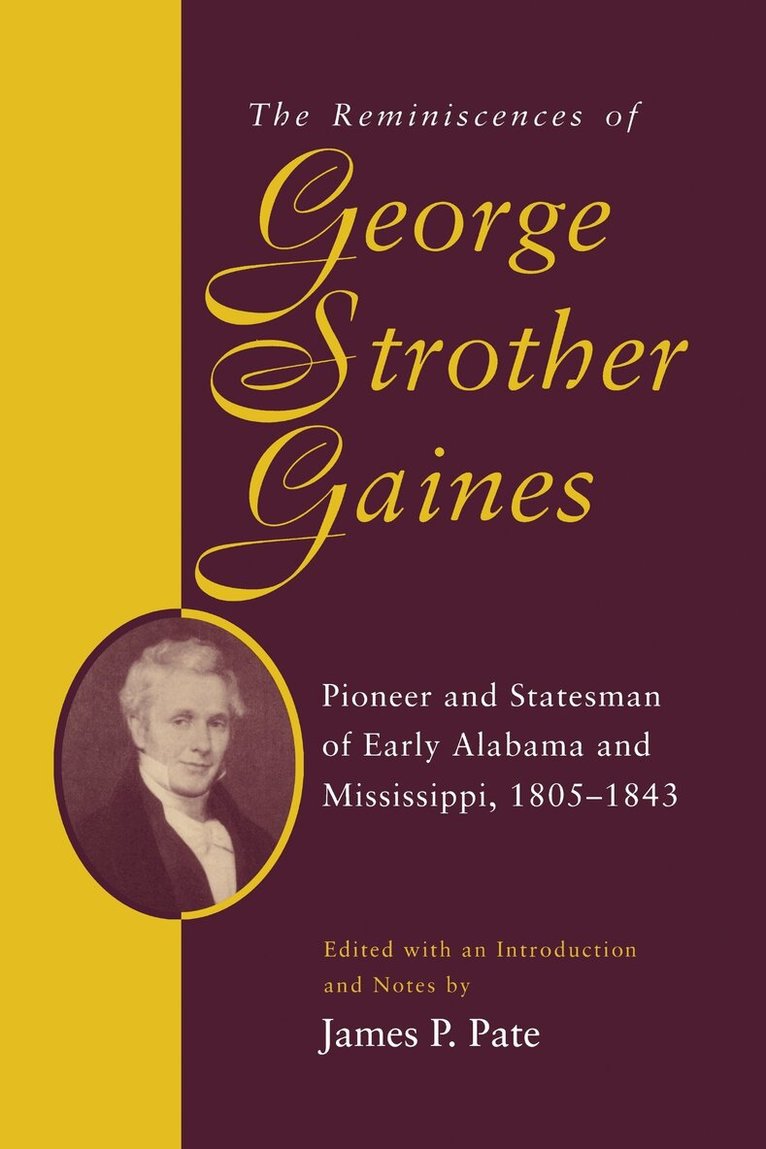
Reminiscences of George Strother Gaines
Pioneer and Statesman of Early Alabama and Mississippi, 1805-43
Häftad, Engelska, 2014
385 kr
Skickas inom 7-10 vardagar
This annotated edition of George Strother Gaines' ""Reminiscences"" provides a glimpse into the early history of the Mississippi-Alabama Territory and antebellum Alabama.
428 kr
Skickas inom 7-10 vardagar
Confederate proclamation of nationhood was backed by an energetic and reasonably well equipped land defense. Not so for its coastal and sea defenses; much of its hope of tipping the balance in its contention with the Union rested on international support, trade, and naval defense. In search of a naval arm to counter Northern superiority on the seas, the South turned to foreign sources for a seaborne arm. Confederate agents in England cagily used scarce gold, promises of cotton, and British sympathy to obtain the devastating naval weapons of speedy and deadly raiders. Foremost among these was the Alabama, a screw steamer with full sail power, launched in May 1862. In only twenty-two months of action, this ship engaged nearly 300 vessels and destroyed 55 Northern merchant ships worth millions of dollars.
460 kr
Skickas inom 3-6 vardagar
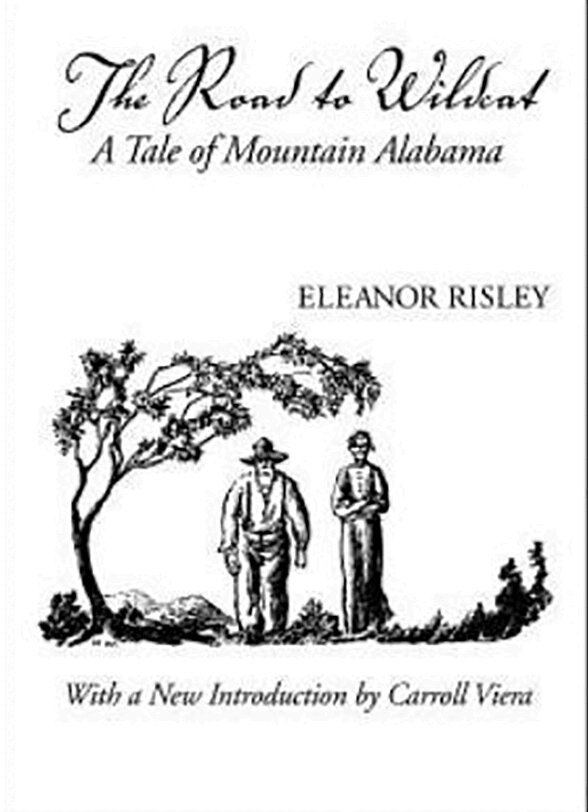
The Road to Wildcat recounts the travels in North Alabama in the mid-1920s of Eleanor Risley (suffering from diabetes), her asthmatic husband, Pierre, their dog, John, and a Chinese wheelbarrow named Sisyphus that held their travel goods. Advised to make the walking tour for improvement of their health, the group left Fairhope in south Alabama and walked hundreds of miles in the southern Appalachians for months, sleeping out under the stars at night, or in a canvas tent or an abandoned building, cooking their fresh-caught foods over campfires, and accepting the generosity and advice of the mountain people they met, some of them moonshiners and outlaws. During their sojourn across the rural wilderness, they enjoyed fiddlin' dances in rickety halls, joined Sacred Harp singers, learned about the grapevine telegraph, saw the dreadful effects of inbreeding, and attended ""Snake Night"" at Posey Holler (a religious revival that included snake handling). Published in segments in the Atlantic Monthly in 1928 and 1929 and then reorganized into book form, the travelogue is a colorful record of the culture, customs, and dialect of the southern mountaineers of that era.
328 kr
Skickas inom 5-8 vardagar
During the decades of Bourbon ascendancy after 1874, Alabama institutions - like those in other southern states - were dominated by whites. Former slave and sharecropper Jack Turner refused to accept a society so structured. Highly intelligent, physically imposing, and an orator of persuasive talents, Turner was fearless before whites and emerged as a leader of his race. He helped to forge a political alliance between blacks and whites that defeated and humiliated the Bourbons in Choctaw County, the heart of the Black Belt, in the election of 1882. That summer, after a series of bogus charges and arrests, Turner was accused of planning to lead his private army of blacks in a general slaughter of the county whites. Justice was forgotten in the resultant fear and hysteria.
273 kr
Skickas inom 7-10 vardagar
539 kr
Skickas inom 7-10 vardagar
296 kr
Skickas inom 7-10 vardagar
William March's debut novel, Company K, introduced him to the reading public as a gifted writer of modern fiction. Of that World War I classic, Graham Greene wrote: ""It is the only war book I have read which has found a new form to fit the novelty of the protest. The prose is bare, lucid, without literary echoes."" After Company K, March brought his same unerring style to a cycle of novels and short stories–his ""Pearl County"" series–inspired in part by his childhood in the vicinity of Mobile, Alabama. The University of Alabama Press is pleased to be bringing these three novels back into print.In The Tallons, the second novel in the ""Pearl County"" series, March tells the story of two farm boys, Andrew and Jim Tallon. Their placid and predictable life is upended by a girl from Georgia, Myrtle Bickerstaff. The conflict which engulfs these three arises from a series of carefully chosen and extraordinarily telling incidents to a dramatic climax which will be remembered long after the book is set aside. March framed the novel as ""a study in paranoia"" and to the end of his life considered it one of his strongest works.
296 kr
Skickas inom 7-10 vardagar
William March's debut novel, Company K, introduced him to the reading public as a gifted writer of modern fiction. Of that World War I classic, Graham Greene wrote: “It is the only war book I have read which has found a new form to fit the novelty of the protest. The prose is bare, lucid, without literary echoes.” After Company K, March brought his same unerring style to a cycle of novels and short stories—his “Pearl County” series—inspired in part by his childhood in the vicinity of Mobile, Alabama.Come in at the Door is the first in March’s “Pearl County” collection, and it tells the story of Chester, a boy who lives with his withholding, widowed father, and Mitty, who keeps house and serves as a surrogate wife to Chester’s father and a mother to Chester. One morning before dawn, Mitty takes Chester to the Athlestan courthouse to watch the hanging of a man who’d killed “a grotesque, dwarflike creature” he thought had “laid a conjure” on him. Throughout Chester’s rambunctious young manhood, the gruesome memory hovers just below the surface of his mind, recalled in detail only at his father’s death, when the book sweeps forward to its shattering denouement. A classic of Southern Gothic that illuminates family, class, race, and gender, Come in at the Door marks the homecoming of a Southern storyteller at the peak of his craft.