Literary Agenda - Böcker
Visar alla böcker i serien Literary Agenda. Handla med fri frakt och snabb leverans.
3 produkter
3 produkter
320 kr
Skickas inom 5-8 vardagar
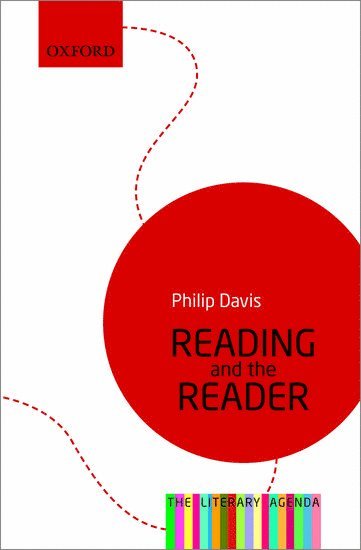
The Literary Agenda is a series of short polemical monographs about the importance of literature and of reading in the wider world and about the state of literary education inside schools and universities. The category of 'the literary' has always been contentious. What is clear, however, is how increasingly it is dismissed or is unrecognised as a way of thinking or an arena for thought. It is sceptically challenged from within, for example, by the sometimes rival claims of cultural history, contextualized explanation, or media studies. It is shaken from without by even greater pressures: by economic exigency and the severe social attitudes that can follow from it; by technological change that may leave the traditional forms of serious human communication looking merely antiquated. For just these reasons this is the right time for renewal, to start reinvigorated work into the meaning and value of literary reading.Reading and the Reader offers a defence of reading serious literature, where reading offers a place for inner contemplation, emotion, imagination, and thought-experiment through the energising booster-rocket of literature. It is argued that literature creates a holding-ground in which a dense sense of experience is registered. Such a place is vital to human well-being in the following respects: in sustaining the ability to use and not just suffer one's experience; to be able to think one's thoughts, even those that are customarily unadmitted or felt as anomalous or unworthy; to find room for a realm of speculation in between religions and secularization, in between literature and life. Reading and the Reader, one of the first volumes in the Literary Agenda series, exists to defend the value of reading, to narrow the gaps between the way writers and readers think, to bring literary thinking into the ordinary thinking of the world - especially at a time when the arts and humanities are under some threat. Literature is useful in terms of deep human needs. It offers a form of time-travel - across ages, countries, different minds - that provides alternatives to any conventional worldview.
361 kr
Skickas inom 7-10 vardagar
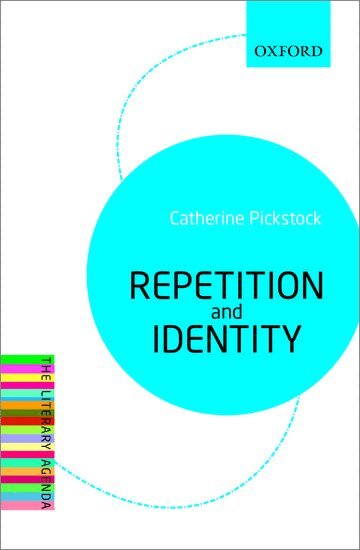
The Literary Agenda is a series of short polemical monographs about the importance of literature and of reading in the wider world and about the state of literary education inside schools and universities. The category of 'the literary' has always been contentious. What is clear, however, is how increasingly it is dismissed or is unrecognised as a way of thinking or an arena for thought. It is sceptically challenged from within, for example, by the sometimes rival claims of cultural history, contextualized explanation, or media studies. It is shaken from without by even greater pressures: by economic exigency and the severe social attitudes that can follow from it; by technological change that may leave the traditional forms of serious human communication looking merely antiquated. For just these reasons this is the right time for renewal, to start reinvigorated work into the meaning and value of literary reading.Repetition and Identity offers a theory of the existing thing as such. A thing only has identity and consistency when it has already been repeated, but repetition summons difference and the shadow invocation of a connecting sign. In contrast to the perspectives of Post-structuralism, Catherine Pickstock proposes that signs are part of reality, and that they truthfully express the real. She also proposes that non-identical repetition involves analogy, rather than the Post-structuralist combination of univocity and equivocity, or of rationalism with scepticism. This proposal, which is happy for reality to make sense, involves, however, a subjective decision which is to be poetically performed. A wager is laid upon the possibility of a consistency which sustains the subject, in continuity with the elusive consistency of nature. This wager is played out in terms of a performative argument concerning the existential stances open to human beings. It is concluded that the individual sustains this quest within the context of an inter-subjective search for an historical consistency of culture. But can ethical consistency, and the harmonisation of this with an aesthetic surplus of an 'elsewhere', invoked by the sign, be achieved without a religious gesture? And can this gesture avoid a tragic tension between ethical commitment and religious renunciation? Pickstock suggests a Kierkegaardian re-reading of the Patristic categories of 'recapitulation' and 'reconstitution' can reconcile this tension. The quest for the identity and consistency of the thing leads us from the subject through fiction and history and to sacred history, to shape an ontology which is also a literary theory and a literary artefaction.
331 kr
Skickas inom 7-10 vardagar
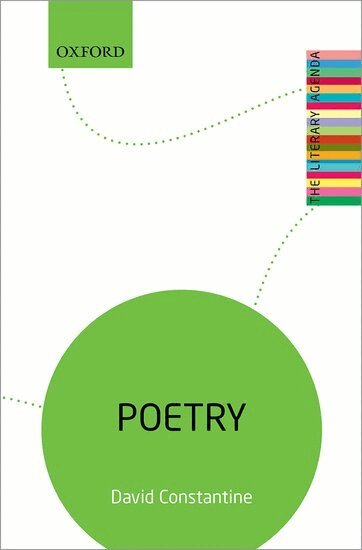
The Literary Agenda is a series of short polemical monographs about the importance of literature and of reading in the wider world and about the state of literary education inside schools and universities. The category of 'the literary' has always been contentious. What is clear, however, is how increasingly it is dismissed or is unrecognised as a way of thinking or an arena for thought. It is sceptically challenged from within, for example, by the sometimes rival claims of cultural history, contextualized explanation, or media studies. It is shaken from without by even greater pressures: by economic exigency and the severe social attitudes that can follow from it; by technological change that may leave the traditional forms of serious human communication looking merely antiquated. For just these reasons this is the right time for renewal, to start reinvigorated work into the meaning and value of literary reading.In this fascinating addition to the Literary Agenda series, David Constantine argues that poetry matters. It matters for individuals and for the society they are members of. He asserts that poetry is not for the few but for the many, and belongs and can only thrive among them, speaks of and to their concerns. Poetry considers both the writing and the reading of poetry, which Constantine views as kindred activities. He examines what goes into the writing of a poem and considers what good there is in reading it. Constantine also considers translation, arguing that great benefit comes to the native language from dealings with the foreign; also, that all reading is a form of translation - of texts into the lives we lead. Altogether, Poetry is an attempt, with many quotations, to show how poetry works, what its responsibilities are, and how it may help us in our real circumstances now.