Locomotive Portfolio - Böcker
Visar alla böcker i serien Locomotive Portfolio. Handla med fri frakt och snabb leverans.
18 produkter
18 produkter
328 kr
Skickas
This book is a comprehensive history of all twenty-six classes of four coupled tank engines commissioned by the Great Western Railway or built at their Wolverhampton and Swindon Works, from the Broad Gauge 2-4-0 and 4-4-0 tanks of the 1840s and 1850s to the well known Collett 0-4-2 branch line engines of classes 48XX (later renumbered 14XX) and 58XX of the 1930s. As well as the Broad Gauge engines, the strange looking Covertibles' of William Dean, a number of experimental one-off' designs, the numerous Wolverhampton 0-4-2Ts of the 517' class and the Swindon built 2-4-0 Metro Tanks' are described with - where known - their allocation and operation. The book includes twenty weight diagrams and nearly 300 photographs, over 50 in colour. The four-coupled tank engines absorbed by the Great Western from other companies at or before 1923 will be featured in a separate volume to follow.
328 kr
Skickas
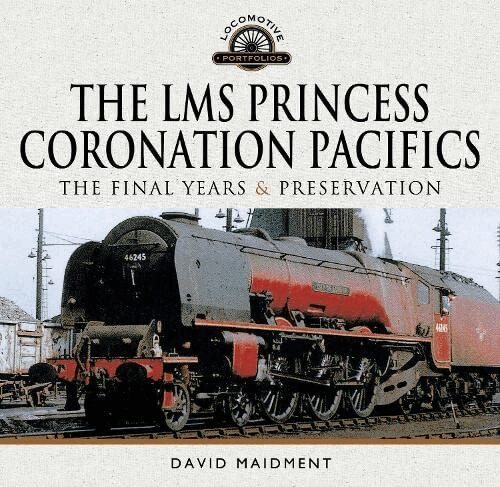
This book follows on from the author's book on the Princess Coronation pacific locomotives from their construction in 1937 to their operation in 1956\. It picks up from the story in 1957 with their operation and performance on the Caledonian', Royal Scot' and Midday Scot' accelerated services of the late 1950s, their continuing heavy work as dieselisation of the West Coast mainline is implemented and the sudden withdrawal of the remaining examples at the end of the 1964 summer timetable. Included are the author's personal experiences and photographs and the descriptions by three Crewe men who fired these engines on the heavy overnight Crewe - Perth sleeper services in the late 1950s, two of whom, Les Jackson and Bill Andrew, drove 6229 and 6233 in the preservation era. As well as their stories of their experiences in BR days, they describe runs with the preserved locomotives and have included photographs from their personal collections. Crewe Works fitter, Keith Collier includes his experiences of their maintenance and the author in conclusion compares them with the finest steam locomotives of France, Germany and the USA.
349 kr
Skickas
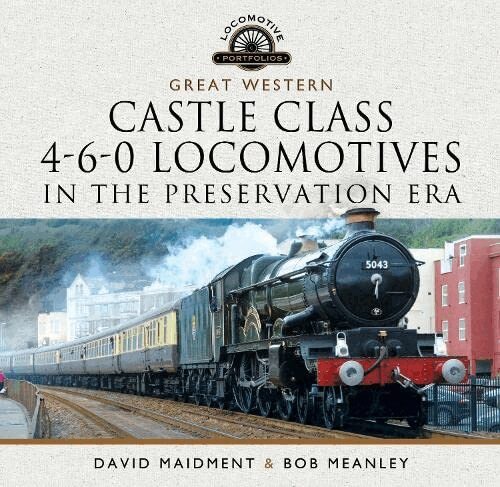
This third volume in the series on the Great Western Castle class locomotives focuses on the eight that have been preserved and goes into depth on the reconstruction of three of them, the two Tyseley ones, 5043 and 7029 described by Bob Meanley and Didcot's 4079 recounted by David Maidment from the records of the Great Western Society, including the full story of 4079's prolonged stay in Western Australia, its return to the UK and subsequent restoration. The history of all eight is covered and copiously illustrated, including over 100 colour photographs, with many during the restoration work by Bob Meanley and in operation by David Maidment. The book includes records of their operation and performance since restoration when some of the most remarkable performances of these locomotives were achieved.
274 kr
Skickas
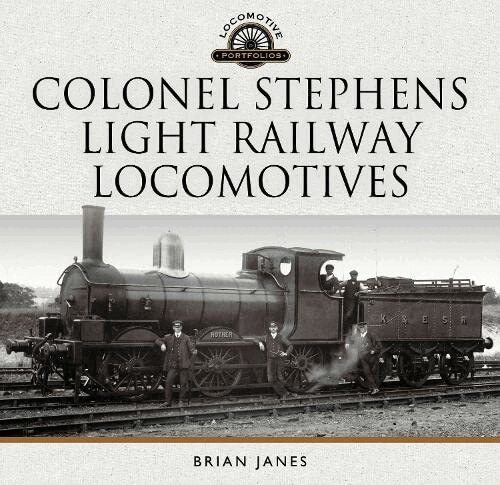
Holman Fred Stephens (1868-1931) set himself up in the 1890s as an engineer and manager of the complete light railway as evolved by Victorian theorists to serve rural districts as yet bereft of the benefit of cheaper transport. To them, a light railway was not an assemblage of second-hand mainline equipment of dubious merit but of fit for purpose, new material. This ideal theory did not survive the near universal inability to raise sufficient capital to build and equip a light railway that would give a reasonable profit. Recourse was therefore made to the second-hand market.Stephens became a master at the art of building and running railways with the minimum of capital. The history of the mechanical performance of his railways was also nearly always handicapped with inadequate engineering facilities. This left staff struggling, often surprisingly successfully, with a menagerie of locomotive types.Limited standardisation was practised but most often expediency ruled. This gave rise to a glorious kaleidoscope of locomotives the history of each of which is outlined This variety was further coloured by Stephens generally regarding a locomotive name as far more important than its number.
368 kr
Skickas
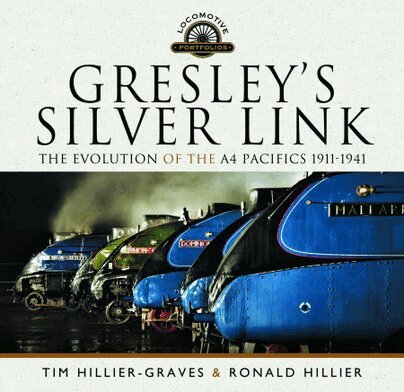
Gresley's A4 Pacifics are arguably the most famous locomotives ever built, a status cemented by Mallard's record breaking run on the 3rd July 38. And yet only a year later the glamorous streaks' seemed likely to be cast into obscurity by the coming of another world war. So, for only four exhilarating years they were allowed to flourish as their creator had intended and in that time captured the imagination of railwaymen and public alike.With the help of previously unpublished material the author analyses the complex evolution of the A4s - a project that began in 1911 when Gresley was appointed as Locomotive Superintendent of the Great Northern Railway. It is a story with many strands to consider - war, peace and war again, engineering and art, politics and business, recession and social change, the growth of the media and consumerism, the struggle for professional reputations and a growing, deeply damaging international rivalry. All these elements are captured in the story of the A4s in the heady days before conflict ended their brief golden age and Gresley's life came to an end.
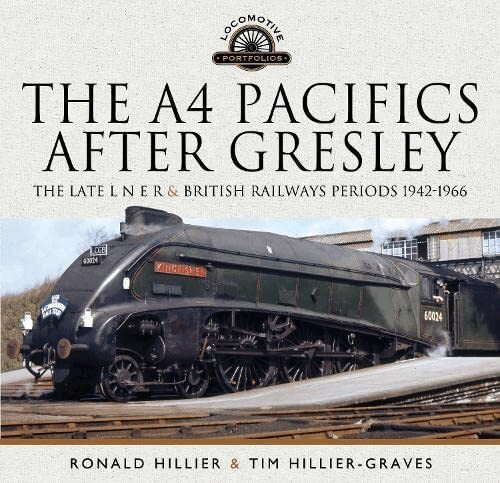
A4 Pacifics After Gresley
The Late L N E R and British Railways Periods, 1942-1966
Inbunden, Engelska, 2023
381 kr
Skickas
In their book Gresley's Silver Link' the authors analysed the evolution of the A4s Gresley's and their service up to Gresley's death in 1941\. This book takes this compelling story from the early years of the war up to their demise in the 1960sAfter four years of service pulling the LNER's most prestigious trains the A4s took on a more utilitarian role and for six years worked hard to support Britain's war effort. From this they emerged bowed, but unbeaten, although in an extremely jaded condition. Once restored they took up where they had left off in 1939 and did exceptional service for the rest of their days.With the help of previously unpublished material the authors analyse the second phase of the A4s careers, first as LNER engines, then, from 1948, under British Railways management. Without a diesel or electric fleet of engines to replace them they entered a second golden age of fast running in the 50s. Then in the Swinging Sixties' they faced, as some thought, a premature end as part of a much delayed modernisation programme. Until withdrawn from service they continued to astound their footplate crew and performed exceptionally well, even when maintenance standards had slipped and their condition had deteriorated. They were thoroughbreds and have become a fitting memorial to the master engineers who produced and sustained them for 30 years or more.
381 kr
Skickas
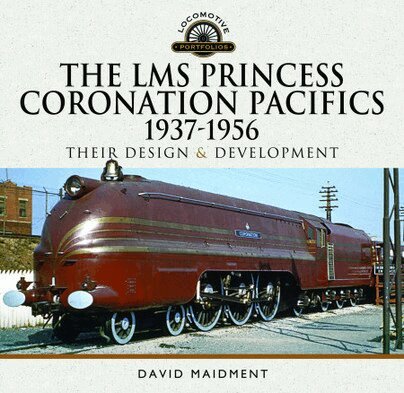
This book covers the design, construction, operation and performance of Sir William Stanier's masterpiece, the Princess Coronation pacific locomotives, better known as the Duchesses'. Included are pen portraits of the LMS engineers, a chapter on the express locomotives of the early LMS period that preceded their introduction and the internal rivalries and politics that Stanier was brought in to resolve. Chapters and photographs cover the streamline era, the war years and aftermath, the early years of nationalisation including the 1948 locomotive exchanges and the recovery of performance in the mid-1950s. The author includes some of his own experiences and photographs. The book includes 200 photographs including a few in colour from the LMS era, and an appendix with weight diagrams, and statistics of the locomotive construction and withdrawal, names, liveries, allocations and mileages.
434 kr
Skickas
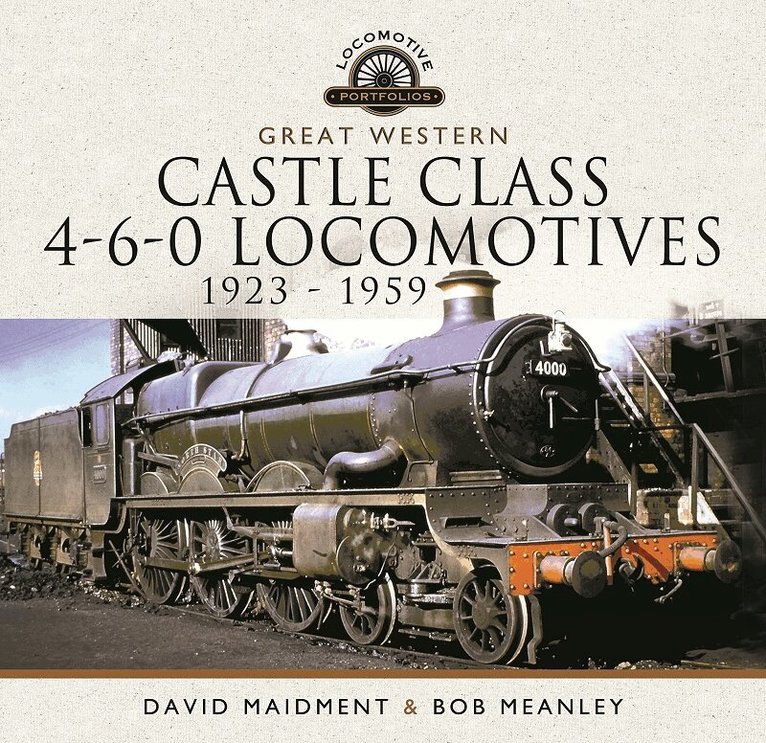
The Great Western Castles were one of the most successful locomotive designs of the twentieth century in terms of both performance and efficiency. Designed by Charles Collett in 1923, based on the 1907 Churchward Star' class, 155 were constructed almost continuously, apart from the war years, between 1923 and 1950, in addition to fifteen rebuilt Stars' and one rebuilt from the Great Bear pacific. Many were modernised with increased superheat and double-chimneys in the late 1950s and the class continued to be the mainstay of all Western Region express passenger services to the West Country, South Wales, Gloucestershire, Herefordshire and the West Midlands until replaced by the WR diesel hydraulic fleet in the early 1960s. This book covers their design in a chapter written by Bob Meanley, who masterminded the restoration at Tyseley Works of the Castles Earl of Mount Edgcumbe and Clun Castle, and their history, operation and performance from the high speed of the 1930s through to their rejuvenation in the 1950s, leaving experience of their last years and preservation to another volume. David Maidment had close experience of the class when working at Old Oak Common between 1957 and 1962 and includes his personal experiences there and on the road from his first encounter with one as a six-year old boy. The book includes 350 photographs, some 40 in colour, and 23 detailed Swindon technical drawings.
328 kr
Skickas
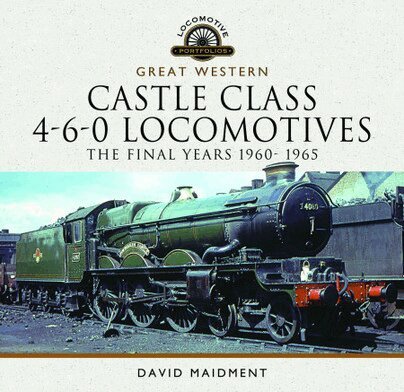
The author's second volume about the Great Western's classic express locomotives covers their final six years in British Railways service. In 1960 the Castles, many now modernised with double chimneys and 4-row superheaters, were still in charge of most of the Western Region's expresses, but by the summer of 1963 their regular express work was limited to the London - Worcester route. Their declining numbers in the last couple of years covered special summer and relief trains, parcels and freight work, deputising for failed or unavailable diesels and a flurry of excursions and railtours where their prowess could still be demonstrated. The author worked and lived alongside them in these years and the book includes much of his own personal experience on the footplate, on their trains and on shed. The book recaps briefly their first 25 years and covers their history, operation and performance in their final years and is copiously illustrated including over 100 colour photographs.
434 kr
Skickas
The story of Gresley and his locomotives is a well-trodden path. But our view of his achievements is a blinkered one because it fails to recognise all the other people who played a part in his work. As the leading American aviation engineer Paul S Baker wrote in 1945 the day of one-man engineering is long gone. You might as well print the organisation table of the engineering department when trying to assign credit for a particular design'.To Gresley must go great credit for many of the LNER's achievements, but those around him have faded into obscurity and are now largely forgotten even though their contributions were immense. To redress this balance, the author has explored the lives of Gresley and his team and sought to uncover a more expansive picture of these events. This in no way diminishes Gresley's accomplishments, which are immense by any standards, but builds a more authentic view of a dynamic period in railway history.The book draws upon many sources of information, some of it previously unpublished. This has helped present a fascinating picture of all that happened and all that was achieved, often in the most difficult of circumstances, by a very gifted team of engineers and their exceptional leader.
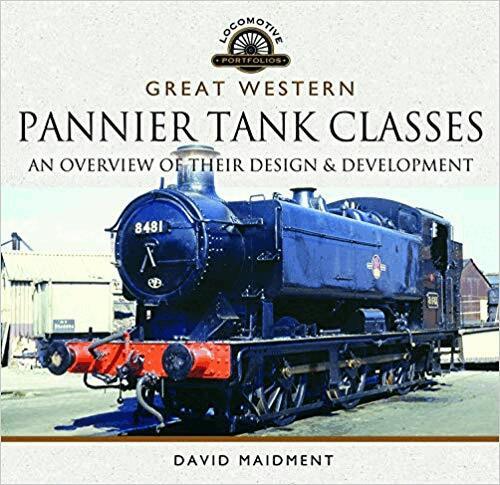
Great Western, Pannier Tank Classes
An Overview of Their Design and Development
Inbunden, Engelska, 2019
409 kr
Skickas
This is the tenth book by David Maidment in the ‘Locomotive Portfolio’ series and covers the large number of designs from 1860 onwards of 0-6-0 saddle tanks built for both the Great Western Railway and the independent railway companies in South Wales, most of which were converted to pannier tanks in the Churchward and Collett eras as they were reboilered with raised Belpaire fireboxes between the early 1900s and the late 1920s. As well as the Armstrong and Dean engines, the book goes on to describe the design, construction and operation of the largest class of steam engines built in the UK in the last century – Collett’s familiar 57XX class, examples of which were still being built after nationalisation. Collett also designed pannier tank engines for branch passenger and freight work – the 54,64 & 74XX series, and Hawksworth continued the GW tradition with a tapered boiler version, the 94XX, after the Second World War as well as the light 16XX and the outside cylinder Walschaerts valve geared 15XX. This is a very comprehensive book covering so many classes, valuable for the modeller, and has over 400 photographs, and a full colour section.
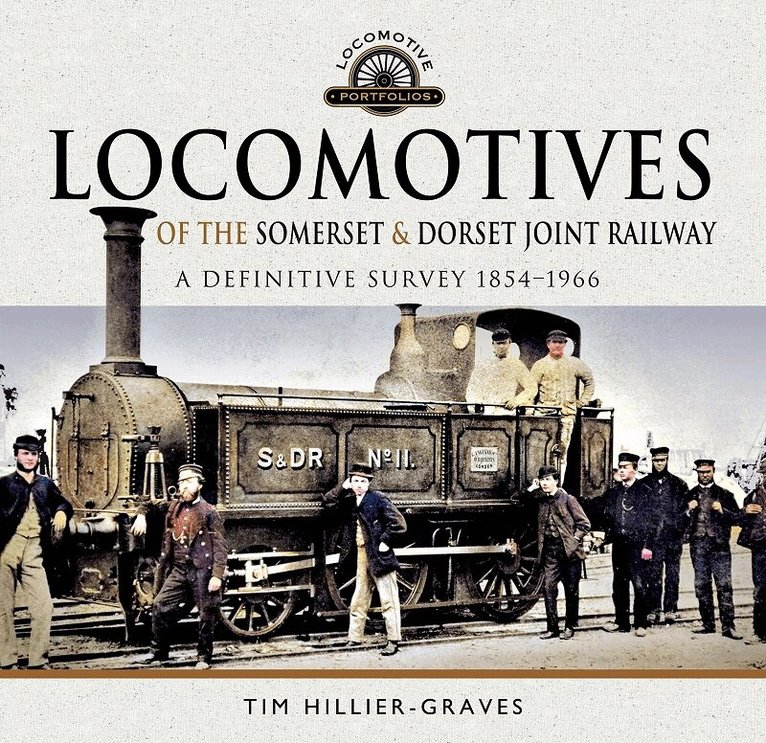
Locomotives of the Somerset & Dorset Joint Railway
A Definitive Survey, 1854-1966
Inbunden, Engelska, 2021
381 kr
Skickas
Although closed to traffic in 1966, with most of its infrastructure swiftly destroyed by British Railways, this unique railway line still lives in the minds of many, some too young to remember it in its heyday.For more then a hundred years it courted disaster and could on a number of occasions have succumbed to overpowering financial pressures, but it survived with the help of partnerships with larger, more secure companies, namely the Midland Railway and the London & South Western Railway. Later on, after the grouping in 1923, the line came under the control of the L M S and the Southern Railway.It was unfortunate that the line suffered in later years, from inter regional rivalry between the Western and Southern Regions of British Railways, which led to its eventual closure.The variety of companies involved in its running meant that during its lifetime the small pool of locomotives needed to service the line was supplemented by the best each partner could offer.So from the beginning to the end there were a myriad number of types of locomotive running over the Mendips providing a lively variety of motive power.This heavily illustrated book traces this unique and fascinating history and brings to life this singular, much missed and loved railway.
328 kr
Skickas
Oliver Bulleid's locomotives guides the reader in the quest to understand what motivated Mr Bulleid in his work as a senior engineer and manager, and tries, with as little bias as is reasonable, to make sense of some of the more controversial aspects of his activities. For example, why did OVB not pursue the ideal of a 2-8-2 for the Southern Railway? How did the 'Leader' project go so much out of control? What role did Bulleid play in the massive dieselisation programme in Ireland when he was CME there? How did the 0-6-6-0T turf-burning steam locomotive fit in with Ireland's traction policy, or did it? And why did ninety of his steam locomotives and ninety-four of 'his' diesels have to be rebuilt to make them either more economical or more reliable?These are fundamental questions to which the book provides the reader with answers based on the author's experiences or on those of people who knew Bulleid. OVB's undoubted successes are illustrated in words and photographs, too, to provide a hopefully balanced picture of one of Britain's more exciting railway engineers.
328 kr
Skickas
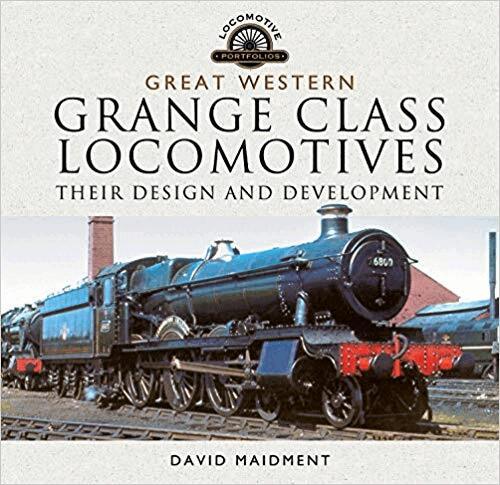
Churchward proposed a 5ft 8in wheeled 4-6-0 for mixed traffic duties in 1901 and it was seriously considered in 1905, but it took until 1936 before his successor, Charles Collett, realised the plan by persuading the GWR Board to replace many of the 43XX moguls with modern standard mixed traffic engines that bore a remarkable likeness to the Churchward proposal. David Maidment has written another in his series of Locomotive Portfolios' for Pen & Sword to coincide with the construction of a new Grange' at Llangollen from GW standard parts to fill the gap left by the total withdrawal and scrapping of one of that railway's most popular classes - to their crews at the very least. As well as covering the type's design and construction, the author deals comprehensively with the allocation and operation of the eighty locomotives and in particular has researched their performance and illustrated it with many examples of recorded logs from the 1930s as well as in more recent times. As in previous volumes, the author has added his own personal experiences with the engines and has sourced more than 250 photos, over 40 of which are in colour.
307 kr
Skickas
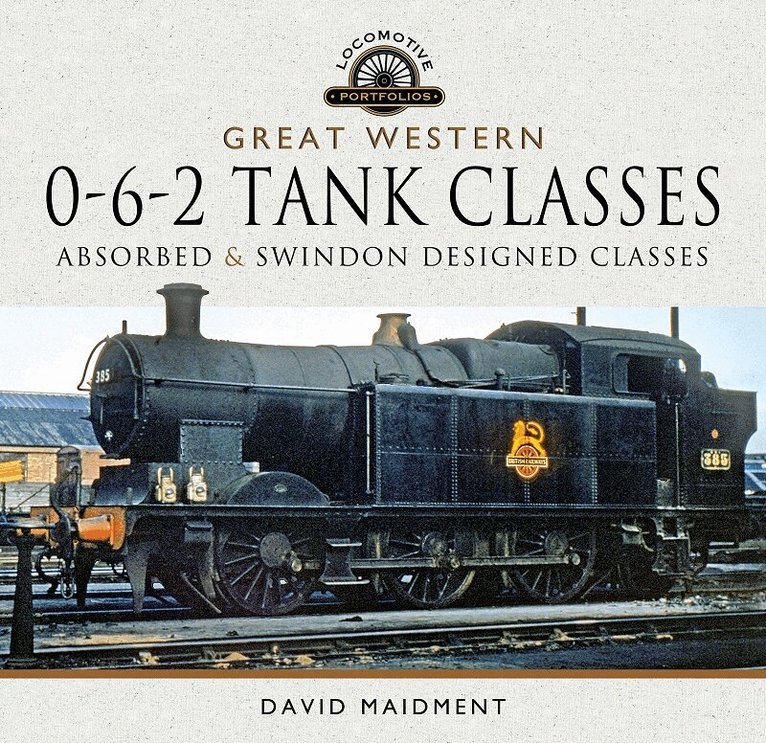
After tackling the GW pannier tanks in his Locomotive Portfolios' for Pen & Sword, author David Maidment seeks out descriptions and photographs of the GW 0-6-2 tank engines, the majority of which were built by the Rhymney, Taff Vale, Barry and other Welsh railways from the last decade or so of the nineteenth century onwards. The engines of eight different companies, absorbed by the GWR in 1922, are described and illustrated, and the way in which many were modernised and rebuilt at Swindon or Caerphilly Works in the 1920s. Charles Collett was, however, faced with a motive power crisis in the mining valleys at the Grouping, as many of the companies had economised on essential maintenance as the GW's take-over drew near, and he had to hurriedly design a standard 0-6-2T to complement and bolster their work as the powerful GW 2-8-0Ts were too heavy and wide for many of the Cardiff valleys. These engines, the 56XX & 66XX classes, became part of the South Wales scene between 1925 and 1964, mainly running the coal traffic between pits and docks, although they dominated Cardiff Valley passenger services until the influx of BR 3MT 2-6-2Ts and GW 41XX 2-6-2Ts in 1954/5\. The book has nearly 40,000 words of text and around 300 black & white photographs.
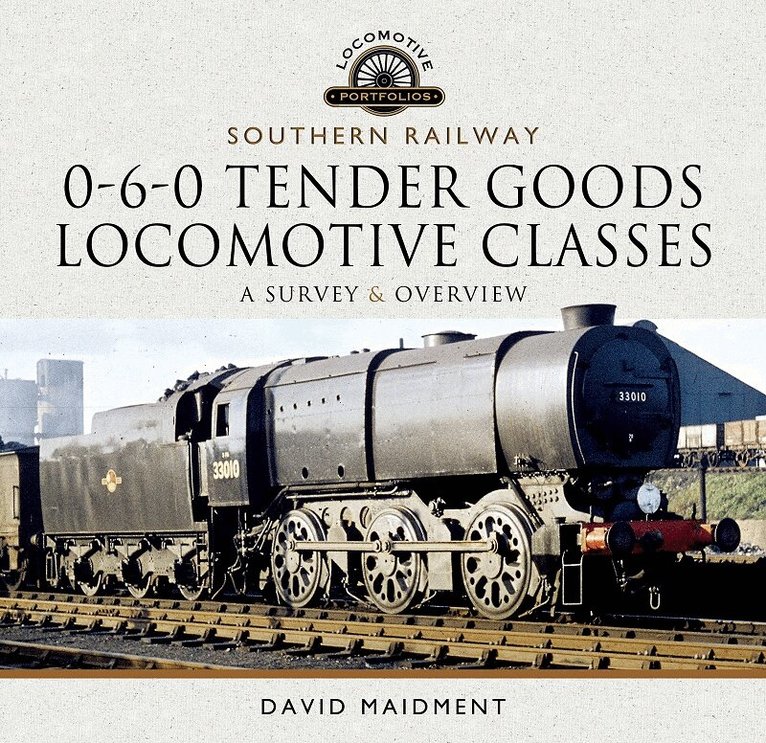
Southern Railway, 0-6-0 Tender Goods Locomotive Classes
A Survey and Overview
Inbunden, Engelska, 2021
328 kr
Skickas
This is a book that looks at the 0-6-0 tender goods locomotives of the Southern Railway, from the steam locomotive classes taken over at the railway grouping in 1923, through to the two classes introduced during Southern Railway days, that of the Q and Q1 classes.The Southern Railway had a rich and varied number of 0-6-0 tender goods classes, originating from all three former main line pre grouping companies, many of them lasted until the late 1950s and early 1960s.Many of the older Victorian and Edwardian classes of locomotive taken over in 1923, did not last very long with the new company, but are covered here for historical and modelling interest.
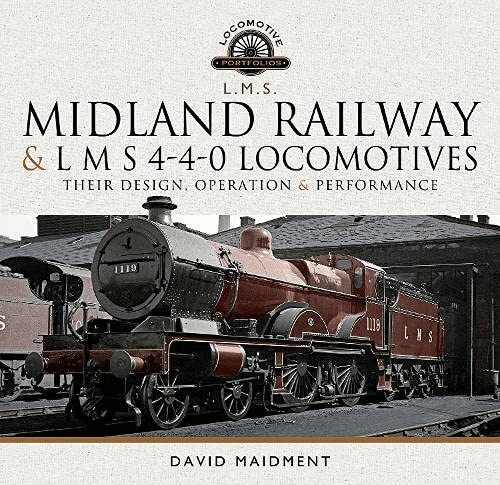
Midland Railway and L M S 4-4-0 Locomotives
Their Design, Operation and Performance
Inbunden, Engelska, 2021
381 kr
Skickas
David Maidment has unravelled the complex history of the Johnson, Deeley and Fowler 4-4-0 locomotives of the Midland Railway and its LMS successor, covering their design, construction, operation and performance in this book with over 400 black and white photographs. It recounts their working on the Midland main lines from St Pancras to Derby, Manchester, Leeds and Carlisle, the latter via the celebrated Settle & Carlisle line, and the later work of the Fowler LMS engines on the West Coast main line. The book also describes the history of the Midland 4-4-0s built for the Somerset & Dorset and Midland & Great Northern Railways. The book covers the period from the first Midland 4-4-0 built in 1876 to the last LMS 2P withdrawn in 1962 and includes performance logs, weight diagrams and dimensions and statistical details of each locomotive.
381 kr
Skickas
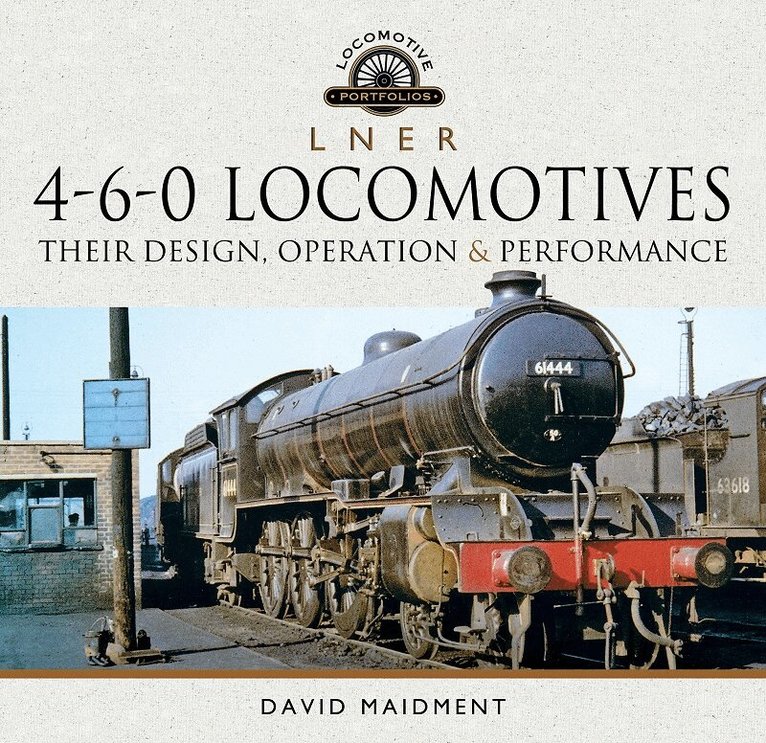
L N E R 4-6-0 Tender Mixed Traffic Locomotives covers the design, construction, operation and performance of all 4-6-0 locomotives that ran on the London & North Eastern Railway between 1923 and 1947 and the LNER designed engines that ran on BR's Eastern Region until the end of BR steam in 1968\. This includes the former Great Central 4-6-0s of classes B1 - B9 (the B1 and B2 later reclassified B18 & B19); the North Eastern Railway B13 - B16s; the Great Eastern B12s; and the LNER B17s, the Thompson B1s and rebuilds (B2 and B3/3). The book has over 60,000 words and 400 black and white and coloured photographs, many previously unpublished from the archives of the Manchester Locomotive Society at Stockport. It will be of particular interest to railway modellers and enthusiasts of locomotive running and performance as well as those seeking more general locomotive history. The book is designed and written in the same style as David Maidment's previous Locomotive Portfolio books on engines of the Great Western and Southern Railways, and includes where possible his own experiences, seeing and travelling behind engines of these classes in the 1950s and early 1960s, especially the B1s, B12s and B17 'Sandringhams'.