McGill-Queen's French Atlantic Worlds Series – serie
Visar alla böcker i serien McGill-Queen's French Atlantic Worlds Series. Handla med fri frakt och snabb leverans.
9 produkter
9 produkter
Del 5 - McGill-Queen's French Atlantic Worlds Series
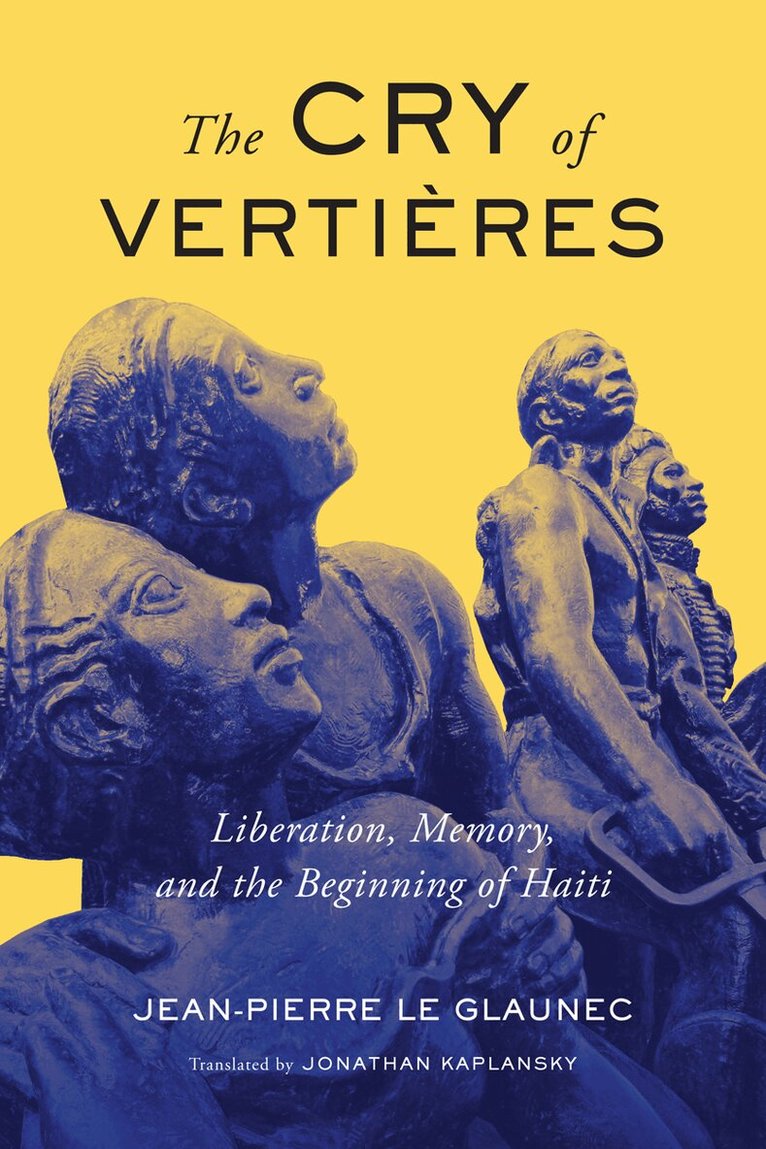
Cry of Vertières
Liberation, Memory, and the Beginning of Haiti
Inbunden, Engelska, 2020
442 kr
Skickas inom 7-10 vardagar
This book tells the story of the Battle of Vertières, fought in 1803 between indigenous Haitian forces under the leadership of Jean-Jacques Dessalines and a French expeditionary army commanded by Napoleon. The battle marked the culmination of a thirteen-year revolutionary struggle to end slavery and the dawn of an independent Haiti. Yet despite its pivotal importance to the history of Haiti, France, and the Americas, the Battle of Vertières has been struck from the record. The Cry of Vertières is the first book-length study of the battle, drawing from an array of sources including military correspondence, Haitian literature, art, and popular music. The event itself is recounted in vivid detail: it is a dramatic story of a volunteer army of former slaves, seeking the promises of freedom and citizenship held out by the revolution, defeating a colonial power determined to re-enslave them. The book also examines why the history of the battle has been suppressed in France - an act of erasure of a humiliating defeat - and why it remains fragile even in Haiti. Jean-Pierre Le Glaunec explains that today Vertières is both a key lieu de mémoire that embodies reconciliation, pride, and strength for the Haitian people, and a figure of speech exploited by politicians to reinforce their power. Describing a decisive yet largely forgotten moment in the revolutionary history of the Americas, The Cry of Vertières makes an essential contribution to the complex subjects of race, memory, colonialism, and cultural nationalism in present-day France and Haiti.
Del 6 - McGill-Queen's French Atlantic Worlds Series
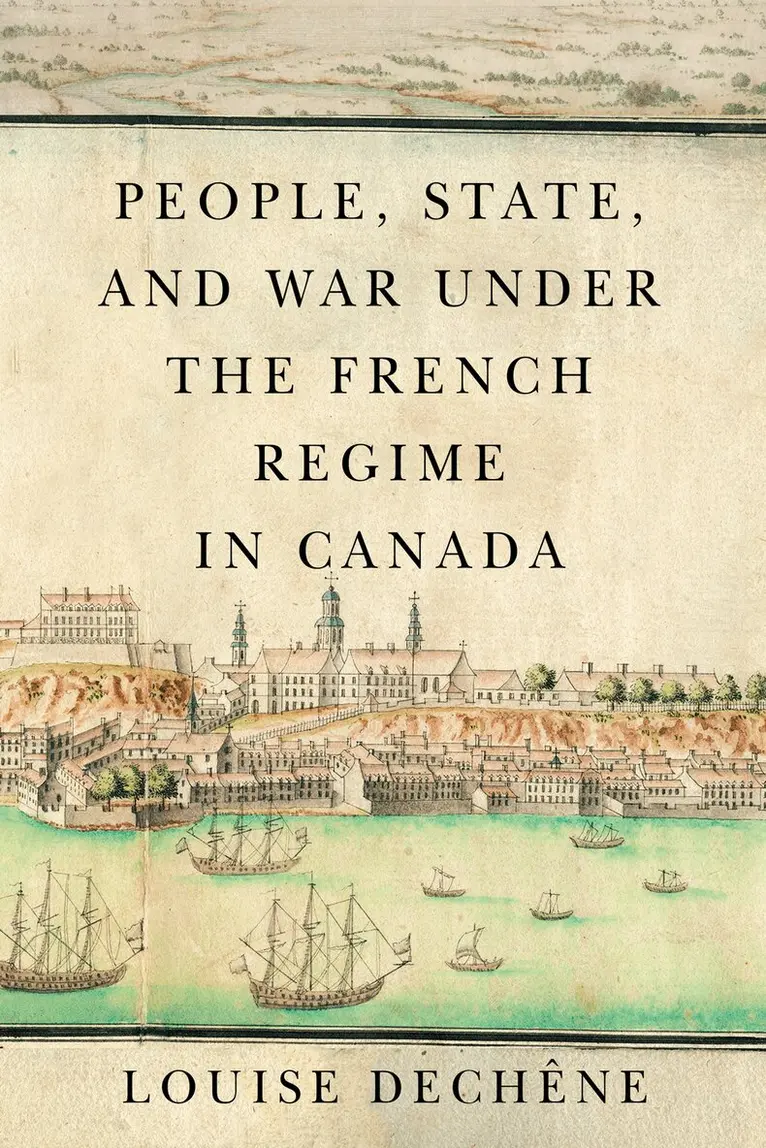
People, State, and War under the French Regime in Canada
Inbunden, Engelska, 2021
1 745 kr
Skickas inom 7-10 vardagar
Covering a period that runs from the founding of the colony in the early seventeenth century to the conquest of 1760, People, State, and War under the French Regime in Canada is a study of colonial warriors and warfare that examines the exercise of state military power and its effects on ordinary people.Overturning the tendency to glorify the military feats of New France and exploding the rosy myth of a tax-free colonial population, Louise Dechêne challenges the stereotype of the fighting prowess and military enthusiasm of the colony’s inhabitants. She reveals the profound incidence of social divides, the hardship war created for those expected to serve, and the state’s demands on the civilian population in the form of forced labour, requisitions, and billeting of soldiers. Originally published posthumously in French, People, State, and War under the French Regime in Canada is the culmination of a lifetime of research and unparalleled knowledge of the archival record, including official correspondence, memoirs, military campaign journals, taxation records, and local parish records. Dechêne reconstructs the variegated composition and conditions of military forces in New France, which included militia, colonial volunteers, and regular troops, as well as Indigenous allies. The study offers an informed and ambitious comparison between France and other French colonies and shows that the mobilization of an unpaid, compulsory militia in New France greatly exceeded requirements in other parts of the French domain.With empathy, sensitivity to the social dimensions of life, and a piercing insight into the operations of power, Dechêne portrays the colonial condition with its rightful dose of danger and ambiguity. Her work underlines the severe toll that warfare takes on the individual and on society and the persistent deprivation, disorder, fear, and death that come with conflict.
Del 6 - McGill-Queen's French Atlantic Worlds Series
People, State, and War under the French Regime in Canada
Häftad, Engelska, 2021
489 kr
Skickas inom 10-15 vardagar
Covering a period that runs from the founding of the colony in the early seventeenth century to the conquest of 1760, People, State, and War under the French Regime in Canada is a study of colonial warriors and warfare that examines the exercise of state military power and its effects on ordinary people.Overturning the tendency to glorify the military feats of New France and exploding the rosy myth of a tax-free colonial population, Louise Dechêne challenges the stereotype of the fighting prowess and military enthusiasm of the colony’s inhabitants. She reveals the profound incidence of social divides, the hardship war created for those expected to serve, and the state’s demands on the civilian population in the form of forced labour, requisitions, and billeting of soldiers. Originally published posthumously in French, People, State, and War under the French Regime in Canada is the culmination of a lifetime of research and unparalleled knowledge of the archival record, including official correspondence, memoirs, military campaign journals, taxation records, and local parish records. Dechêne reconstructs the variegated composition and conditions of military forces in New France, which included militia, colonial volunteers, and regular troops, as well as Indigenous allies. The study offers an informed and ambitious comparison between France and other French colonies and shows that the mobilization of an unpaid, compulsory militia in New France greatly exceeded requirements in other parts of the French domain.With empathy, sensitivity to the social dimensions of life, and a piercing insight into the operations of power, Dechêne portrays the colonial condition with its rightful dose of danger and ambiguity. Her work underlines the severe toll that warfare takes on the individual and on society and the persistent deprivation, disorder, fear, and death that come with conflict.
Del 7 - McGill-Queen's French Atlantic Worlds Series
Disputing New France
Companies, Law, and Sovereignty in the French Atlantic, 1598-1663
Inbunden, Engelska, 2022
1 419 kr
Skickas inom 7-10 vardagar
From the early sixteenth century, thousands of fishermen-traders from Basque, Breton, and Norman ports crossed the Atlantic each year to engage in fishing, whaling, and fur trading, which they regarded as their customary right. In the seventeenth century these rights were challenged as France sought to establish an imperial presence in North America, granting trading privileges to certain individuals and companies to enforce its territorial and maritime claims. Bitter conflicts ensued, precipitating more than two dozen lawsuits in French courts over powers and privileges in New France.In Disputing New France Helen Dewar demonstrates that empire formation in New France and state formation in France were mutually constitutive. Through its exploration of legal suits among privileged trading companies, independent traders, viceroys, and missionaries, this book foregrounds the integral role of French courts in the historical construction of authority in New France and the fluid nature of legal, political, and commercial authority in France itself. State and empire formation converged in the struggle over sea power: control over New France was a means to consolidate maritime authority at home and supervise major Atlantic trade routes. The colony also became part of international experimentations with the chartered company, an innovative Dutch and English instrument adapted by the French to realize particular strategic, political, and maritime objectives.Tracing the developing tools of governance, privilege granting, and capital formation in New France, Disputing New France offers a novel conception of empire – one that is messy and contingent, responding to pressures from within and without, and deeply rooted in metropolitan affairs.
Del 7 - McGill-Queen's French Atlantic Worlds Series
Disputing New France
Companies, Law, and Sovereignty in the French Atlantic, 1598-1663
Häftad, Engelska, 2022
434 kr
Skickas inom 10-15 vardagar
From the early sixteenth century, thousands of fishermen-traders from Basque, Breton, and Norman ports crossed the Atlantic each year to engage in fishing, whaling, and fur trading, which they regarded as their customary right. In the seventeenth century these rights were challenged as France sought to establish an imperial presence in North America, granting trading privileges to certain individuals and companies to enforce its territorial and maritime claims. Bitter conflicts ensued, precipitating more than two dozen lawsuits in French courts over powers and privileges in New France.In Disputing New France Helen Dewar demonstrates that empire formation in New France and state formation in France were mutually constitutive. Through its exploration of legal suits among privileged trading companies, independent traders, viceroys, and missionaries, this book foregrounds the integral role of French courts in the historical construction of authority in New France and the fluid nature of legal, political, and commercial authority in France itself. State and empire formation converged in the struggle over sea power: control over New France was a means to consolidate maritime authority at home and supervise major Atlantic trade routes. The colony also became part of international experimentations with the chartered company, an innovative Dutch and English instrument adapted by the French to realize particular strategic, political, and maritime objectives.Tracing the developing tools of governance, privilege granting, and capital formation in New France, Disputing New France offers a novel conception of empire – one that is messy and contingent, responding to pressures from within and without, and deeply rooted in metropolitan affairs.
Del 8 - McGill-Queen's French Atlantic Worlds Series
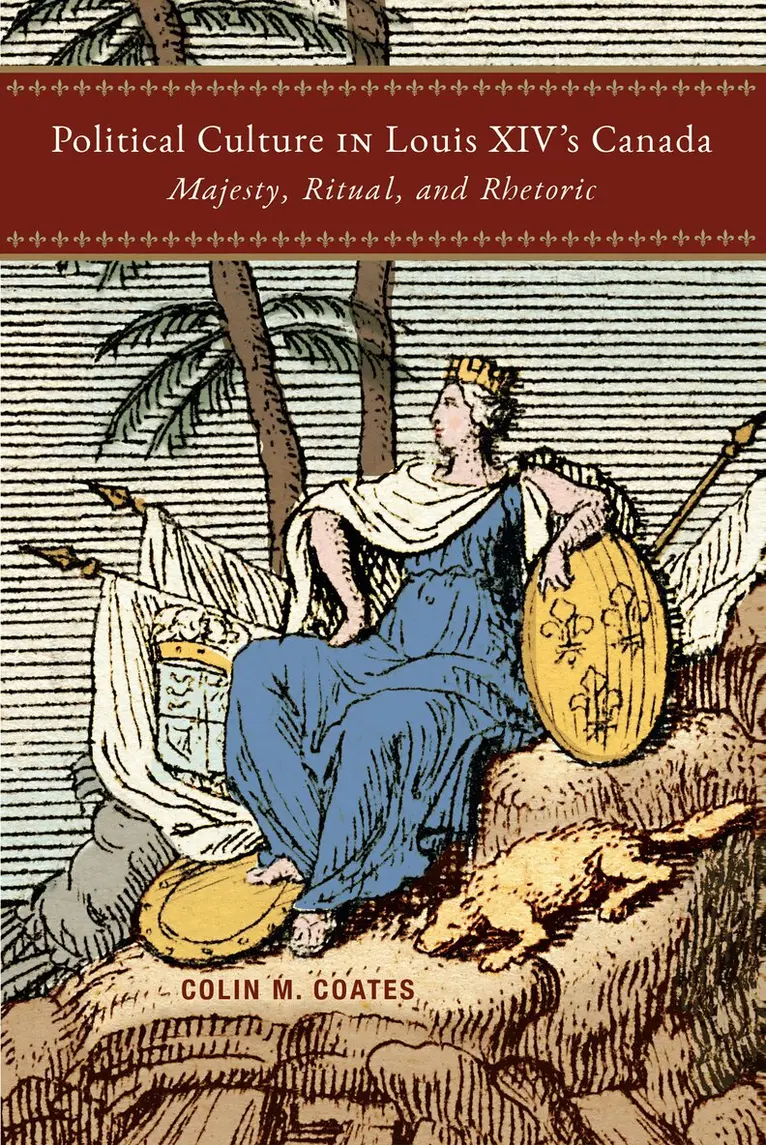
Political Culture in Louis XIV’s Canada
Majesty, Ritual, and Rhetoric
Inbunden, Engelska, 2024
1 202 kr
Skickas inom 7-10 vardagar
In Louis XIV’s New France, colonial authorities attempted to reproduce French regal authority in novel ways, often by performing typical metropolitan political rituals. When these practices were transposed into the St Lawrence Valley settlements, where a small French population lived alongside a substantial Indigenous presence, they took on new meanings.The colony of Canada replicated many features of the developing French absolutist state. Yet while the king likely knew more about his colony than he did about most parts of metropolitan France, this transatlantic setting imposed new constraints on absolutist authority, from the challenges of distance to an Indigenous population that largely lived outside European norms. Political Culture in Louis XIV’s Canada examines royal power as it was represented in ritual (ceremonial entrances, Te Deums, processions), in rhetoric (political disputes over cabals and factions), and in objects (portraits, royal busts, currency, buildings, maps, and censuses). Colin Coates describes the successes and failures the French authorities experienced in exporting their political practices. He reveals how those authorities’ understandings of Indigenous political culture shaped ideas of the proper relation between rulers and the ruled.This book traces the establishment of a colonial political culture that continued to shape the lives of the French in Canada long after the Sun King’s death in 1715.
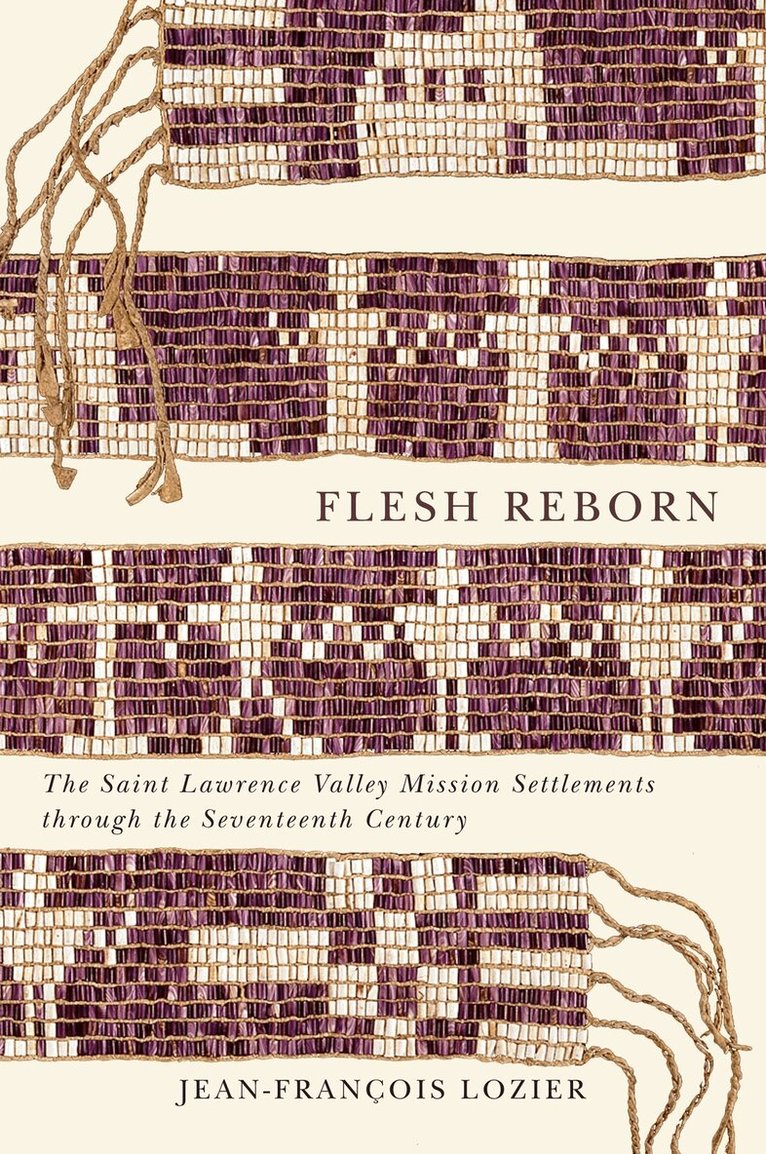
Flesh Reborn
The Saint Lawrence Valley Mission Settlements Through the Seventeenth Century
Häftad, Engelska, 2018
475 kr
Skickas inom 10-15 vardagar
The Saint Lawrence valley, connecting the Great Lakes to the Atlantic, was a crucible of community in the seventeenth century. While the details of how this region emerged as the heartland of French colonial society have been thoroughly outlined by historians, much remains unknown or misunderstood about how it also witnessed the formation of a string of distinct Indigenous communities, several of which persist to this day. Drawing on a range of ethnohistorical sources, Flesh Reborn reconstructs the early history of seventeenth-century mission settlements and of their Algonquin, Innu, Wendat, Iroquois, and Wabanaki founders. Far from straightforward byproducts of colonialist ambitions, these communities arose out of an entanglement of armed conflict, diplomacy, migration, subsistence patterns, religion, kinship, leadership, community-building, and identity formation. The violence and trauma of war, even as it tore populations apart and from their ancestral lands, brought together a great human diversity. By foregrounding Indigenous mission settlements of the Saint Lawrence valley, Flesh Reborn challenges conventional histories of New France and early Canada. It is a comprehensive examination of the foundation of these communities and reveals the fundamental ways they, in turn, shaped the course of war and peace in the region.
434 kr
Skickas inom 10-15 vardagar
Subsistence crops – the grains and other food items necessary to a people's survival – were a central preoccupation of the early modern state. In New France, the principal crop in question was wheat, and its production, consumption, exchange, and regulation were matters to which the government devoted sustained attention. Power and Subsistence examines the official measures taken to regulate the grain economy in New France, the frequency and nature of state interventions in the system, and the responses these actions provoked. Drawing on social and political perspectives and methodologies, this book brings rural and agricultural history into conversation with colonial political economy. Louise Dechêne shows that unlike in early eighteenth-century France, where the marketplace dominated and trade was transparent, the grain economy in New France was hypercentralized and government measures were increasingly harsh. Attentive to the conflicts arising between producers, merchants, consumers, and colonial administrators over the allocation of the harvest, Dechêne offers a revealing perspective on the operation of political power in a colonial setting. Lively, elegant, and wry, Power and Subsistence provides insight into the last era of French rule in North America – and, in part, how that era came to an end.
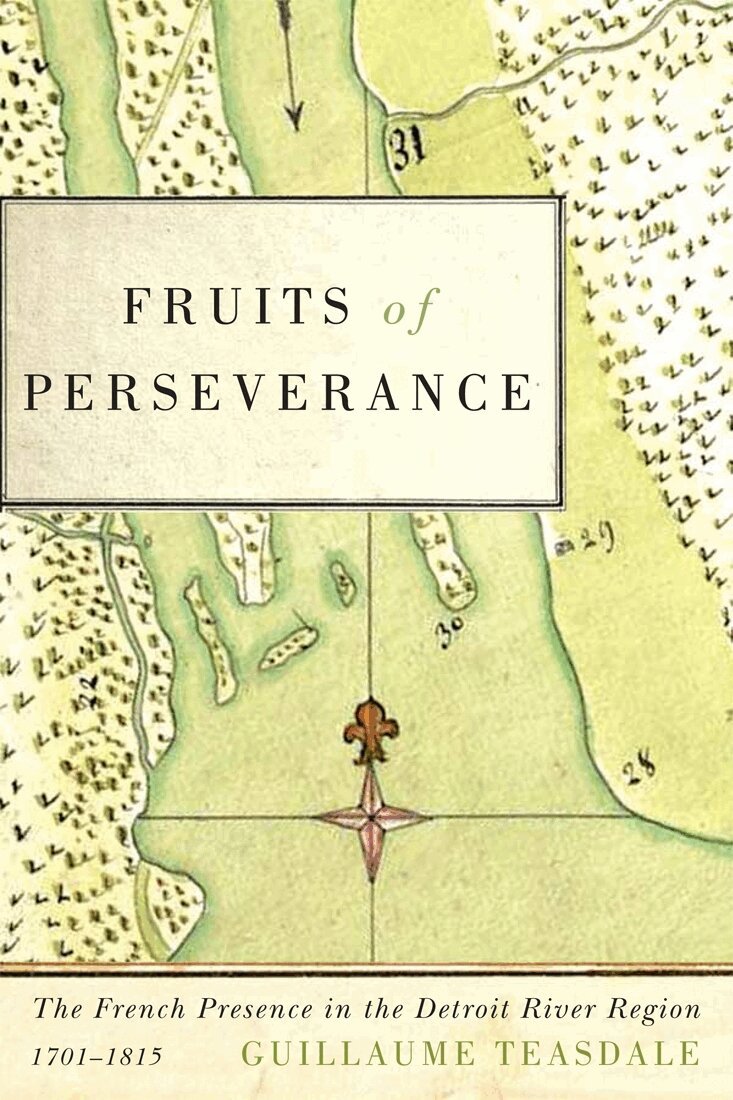
Fruits of Perseverance
The French Presence in the Detroit River Region, 1701-1815
Häftad, Engelska, 2019
379 kr
Skickas inom 10-15 vardagar
Founded by French military entrepreneur Antoine Laumet de Lamothe Cadillac in 1701, colonial Detroit was occupied by thousands of French settlers who established deep roots on both sides of the river. The city's unmistakable French past, however, has been long neglected in the historiography of New France and French North America. Exploring the French colonial presence in Detroit, from its establishment to its dissolution in the early nineteenth century, Fruits of Perseverance explains how a society similar to the rural settlements of the Saint Lawrence valley developed in an isolated place and how it survived well beyond the fall of New France. As Guillaume Teasdale describes, between the 1730s and 1750s, French authorities played a significant role in promoting land occupation along the Detroit River by encouraging settlers to plant orchards and build farms and windmills. After New France's defeat in 1763, these settlers found themselves living under the British flag in an Aboriginal world shortly before the newly independent United States began its expansion west. Fruits of Perseverance offers a window into the development of a French community in the borderlands of New France, whose heritage is still celebrated today by tens of thousands of residents of southwest Ontario and southeast Michigan.