Michigan Abstracts of Chinese and Japanese Works on Chinese History – serie
Visar alla böcker i serien Michigan Abstracts of Chinese and Japanese Works on Chinese History. Handla med fri frakt och snabb leverans.
5 produkter
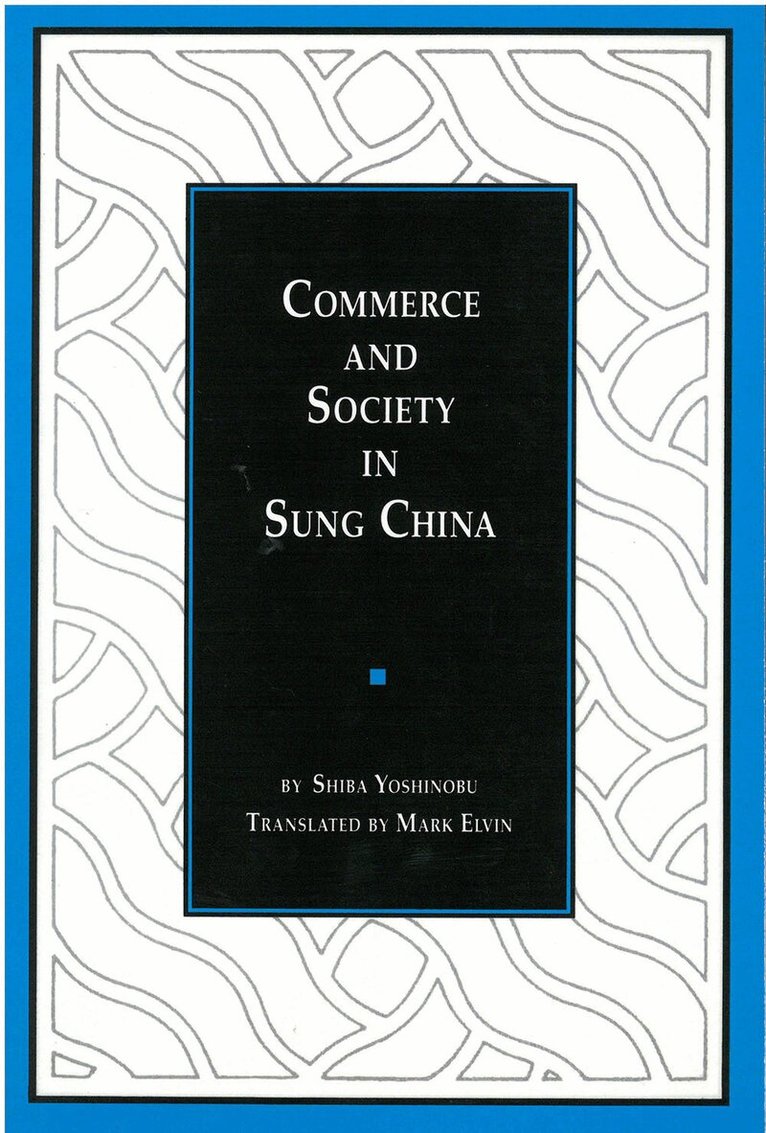
Commerce and Society in Sung China
Häftad, 1969
270 kr
Lägg i varukorg
The full dimensions of the medieval Chinese economic revolution are still almost unknown to economic historians in the Western world, and the manifold problems that it raises for accepted theories of economic development have hardly begun to be systematically considered. Japanese scholars have been …
Transport in Transition
The Evolution of Traditional Shipping in China
Häftad, 1972
208 kr
Lägg i varukorg
Water transport is a major feature of the traditional Chinese economy because of its magnitude and comparative efficiency. Yet this feature has all too often been ignored by scholars, with the notable exception of Japanese scholars. We cannot hope to gain any real conception of how the Chinese …
Japanese Perspectives on China’s Early Modernization
The Self-Strengthening Movement, 1860–1895
Av K. Kim, Kwan Ho Kim
Häftad, 1974
208 kr
Tillfälligt slut
The present broad survey has two principal objectives. First, it seeks to introduce as comprehensively as practicable the works of Japanese historians on the self-strengthening movement up to the end of 1971. Second, it is intended as a case study that illustrates the changing attitudes among …
Silk Industry in Ch'ing China
Av Min-hsiung Shih, E-tu Zen Sun
Häftad, 1976
208 kr
Tillfälligt slut
In this book Shih deals with a subject that has seldom been accorded the attention it deserves in modern historical literature: the silk industry in traditional and modern China. He has focused on the Ch’ing period and the early twentieth century for a detailed study of this important facet of the …
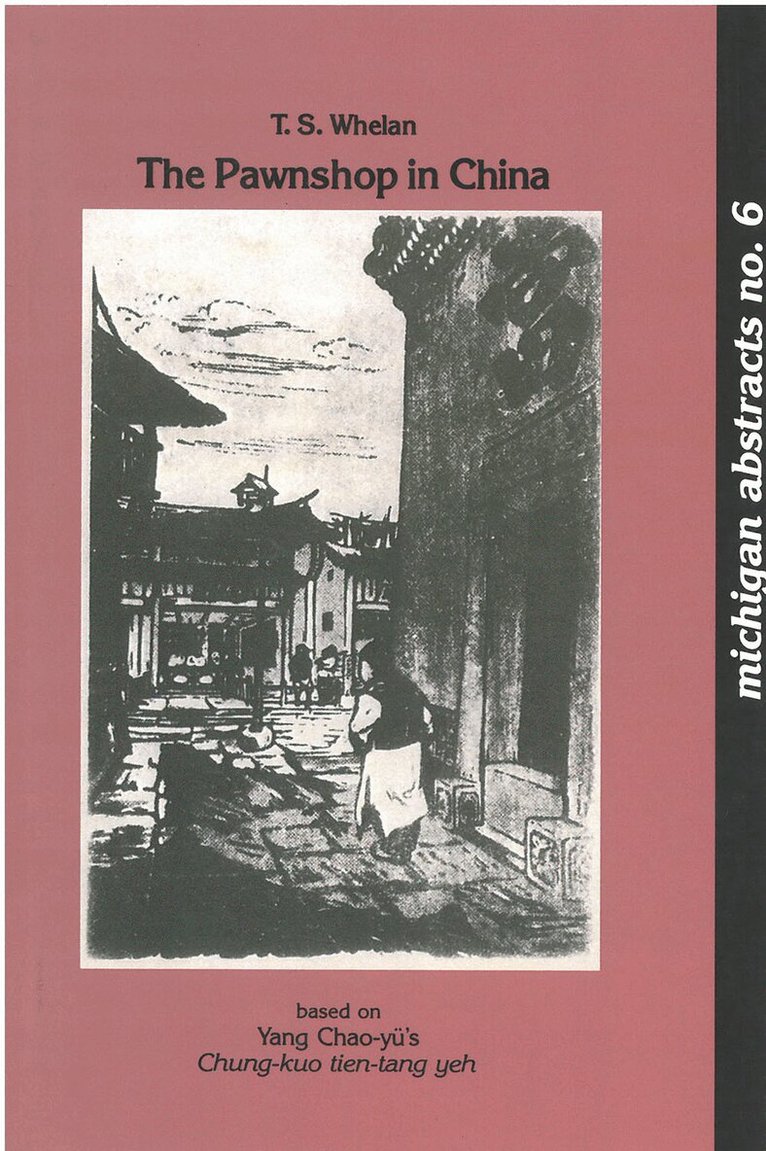
Pawnshop in China
Häftad, 1979
208 kr
Tillfälligt slut
The Ch’ing dynasty witnessed a phenomenal rise in the number of pawnshops in China. By the early nineteenth century there were almost 25,000 of them, and pawnbroking yielded a higher rate of return on investment than did land. The Ch’ing also saw this industry in decline, its exponential growth a …