Mind and American Literature - Böcker
Visar alla böcker i serien Mind and American Literature. Handla med fri frakt och snabb leverans.
4 produkter
4 produkter
Del 3 - Mind and American Literature
Imagination and Idealism in John Updike's Fiction
Inbunden, Engelska, 2017
778 kr
Skickas inom 7-10 vardagar
Concentrating on the role of the imagination in Updike's works, this book shows him to be an original and powerful thinker and not the callow sensationalist that he is sometimes accused of being.This book looks past the frequently discussed autobiographical nature of John Updike's fiction to consider the role in Updike's work of the most powerful and peculiar human faculty: the imagination. Michial Farmer argues that, while the imagination is for Updike a means of human survival and a necessary component of human flourishing, it also has a destructive, darker side, in which it shades into something like philosophical idealism. Here the mind constructs the world around it and then, unhelpfully, imposes this created world between itself and the "real world." In other words, Updike is not himself an idealist but sees idealism as a persistent temptation for the artistic imagination. Farmer builds his argument on the metaphysics of Jean-Paul Sartre, an existentialist thinker who has been largely neglected in discussions of Updike's aesthetics. The book demonstrates the degree to which Updike was an original and powerful thinker and not the callow sensationalist that he is sometimes accused of being.Michial Farmer is Assistant Professor of English at Crown College, Saint Bonifacius, Minnesota.
Del 2 - Mind and American Literature
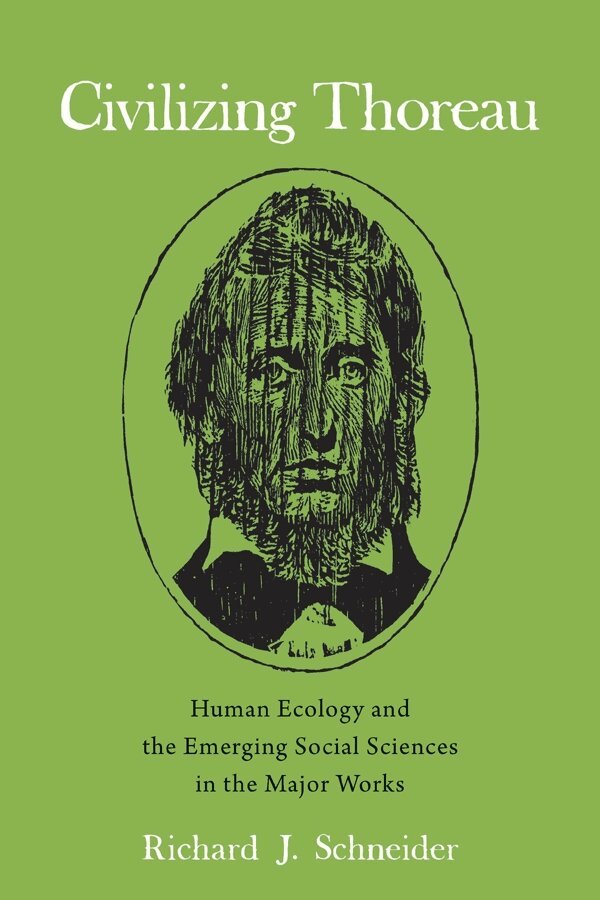
Civilizing Thoreau
Human Ecology and the Emerging Social Sciences in the Major Works
Inbunden, Engelska, 2016
1 214 kr
Skickas inom 10-15 vardagar
Proposes an interdisciplinary solution to the "Thoreau problem" through the connection between his ecological study of nature and his intense interest in the emerging social sciences.Recent book-length studies of Thoreau have focused either on his place in the history of the natural sciences or have applied political principles to his works. None, however, has fully addressed what ecocritic Rebecca Solnit calls "the Thoreau problem," the compartmentalizing of Thoreau's mind into either that of a hermit of nature or that of a champion of social reform. This book proposes an interdisciplinary solution to this problem through the connection between Thoreau's ecological study of nature and his intense interest in the emerging social sciences, especially the history of civilization and ethnology.The book first establishes Thoreau's "human ecology," the relation between the natural sciences and the social sciences in his thinking, exploring how his reading in contemporary books about the history of humanity and racial science shaped his thinking and connecting these emerging anthropological texts to his late nature writings. It then discusses these connections in his major works, including Walden and his "reform papers" such as "Civil Disobedience," the travel narrative A Week on the Concord and Merrimack Rivers, The Maine Woods, and Cape Cod. The concluding chapter focuses on Thoreau's attitude toward Manifest Destiny, arguing, against conventional views, that considering both his life and his writing, especially the essay "Walking," we must conclude that he both accepted and endorsed Manifest Destiny as an inevitable result of cultural succession.Richard J. Schneider is Professor Emeritus from Wartburg College. He has authored a monograph and many articles as well as edited three collections on Thoreau.
Del 1 - Mind and American Literature
American Pragmatism and Poetic Practice
Crosscurrents from Emerson to Susan Howe
Häftad, Engelska, 2017
363 kr
Skickas inom 10-15 vardagar
Innovative study that sees much of twentieth-century American poetry as enacting, in language, pragmatic philosophy.Wittgenstein wrote that "philosophy ought really to be written only as a form of poetry." American poetry has long engaged questions about subject and object, self and environment, reality and imagination, real and ideal that have dominated the Western philosophical tradition since the Enlightenment. Kristen Case's book argues that American poets from Emerson to Susan Howe have responded to the central problems of Western philosophy by performing, in language, the continually shifting relation between mind and world. Pragmatism, recognizing the futility of philosophy's attempt to fix the mind/world relation, announces the insights that these poets enact.Pursuing the flightsof pragmatist thinking into poetry and poetics, Case traces an epistemology that emerges from American writing, including that of Emerson, Marianne Moore, William James, and Charles Olson. Here mind and world are understood as inseparable, and the human being is regarded as, in Thoreau's terms, "part and parcel of Nature." Case presents a new picture of twentieth-century American poetry that disrupts our sense of the schools and lineages of modern and postmodern poetics, arguing that literary history is most accurately figured as a living field rather than a line. This book will be of particular interest to scholars and students of pragmatism, transcendentalism, and twentieth-century American poetry.Kristen Case is Assistant Professor of English at the University of Maine at Farmington.
Del 4 - Mind and American Literature
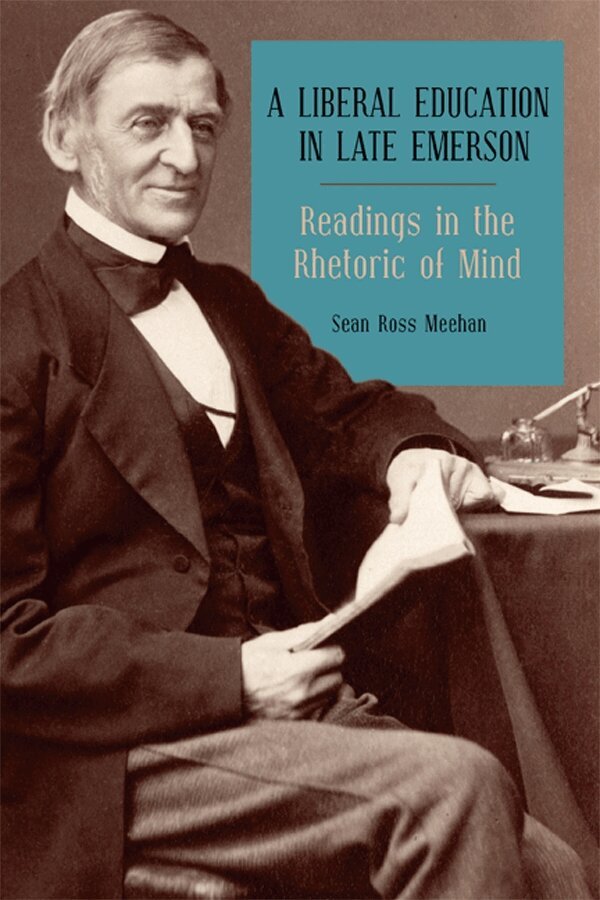
Liberal Education in Late Emerson
Readings in the Rhetoric of Mind
Inbunden, Engelska, 2019
1 026 kr
Skickas inom 10-15 vardagar
Counters the view of the late Emerson's decline by rethinking his engagement with liberal education and his intellectual relation to Whitman, William James, Charles Eliot, and Du Bois.Recent scholarship has inspired growing interest in the later work of Ralph Waldo Emerson (1803-1882) and a recognition that the conventional view of an aging Emerson, distant from public matters and limited by declining mental powers, needs rethinking. Sean Meehan's book reclaims three important but critically neglected aspects of the late Emerson's "mind": first, his engagement with rhetoric, conceived as the organizing power of mind and, unconventionally, characterized by the trope "metonymy"; second, his public engagement with the ideals of liberal education and debates in higher education reform early in the period (1860-1910) that saw the emergence of the modern university; and third, his intellectual relation to significant figures from this age of educational transformation: Walt Whitman, William James, Harvard president Charles W. Eliot, and W. E. B. Du Bois, Harvard's first African American PhD. Meehan argues that the late Emerson educates through the "rhetorical liberal arts," and he thereby rethinks Emerson's influence as rhetorical lessons in the traditional pedagogy and classical curriculum of the liberal arts college. Emerson's rhetoric of mind informs and complicates these lessons since the classical ideal of a general education in the common bonds of knowledge counters the emerging American university and its specialization of thought within isolated departments.