Mining and Society Series – serie
Visar alla böcker i serien Mining and Society Series. Handla med fri frakt och snabb leverans.
9 produkter
9 produkter
320 kr
Skickas inom 5-8 vardagar
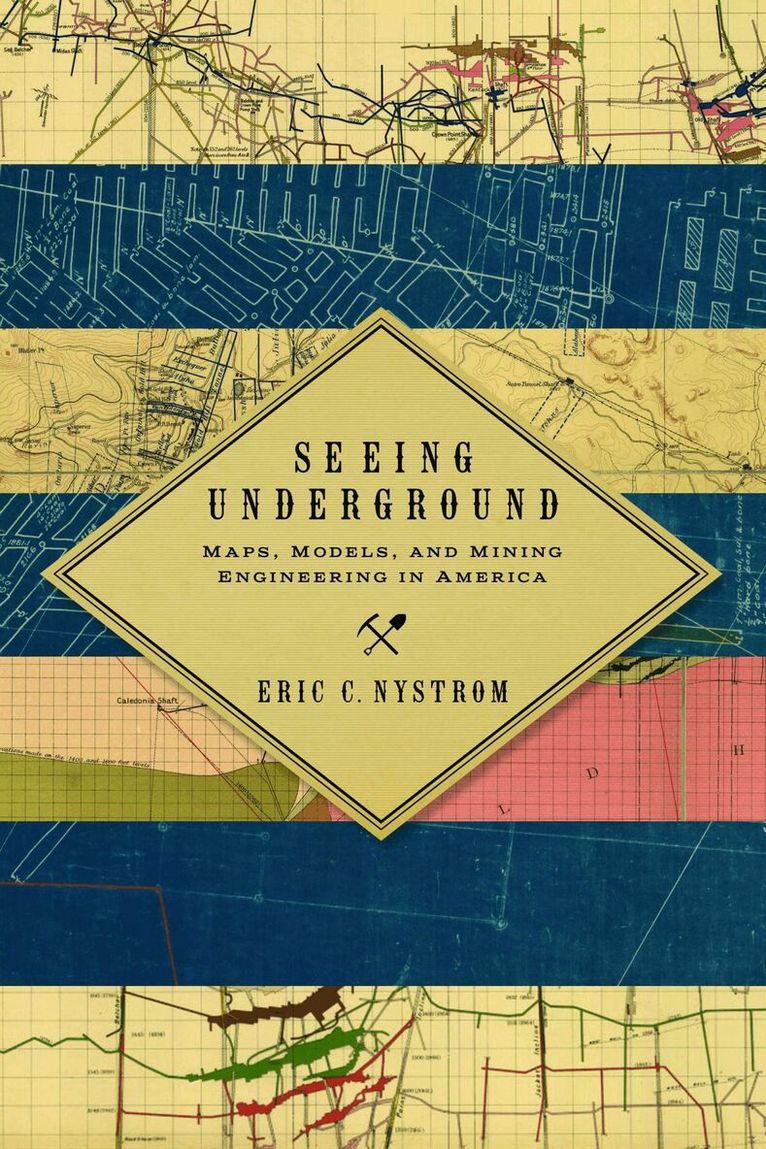
The digging of mineral wealth from the ground dates to prehistoric times, and Europeans pursued mining in the Americas from the earliest colonial days. Prior to the Civil War, very little mining went deep enough to require maps. However, the major finds of the mid-nineteenth century, such as the Comstock Lode, were vastly larger and deeper than any previous finds in America. Nystrom argues that, as industrial mining came of age in the United States, the development of maps and models gave power to a new visual culture. These maps and models became necessary tools in creating and controlling the mines’ pitch-dark, three-dimensional space. Nystrom demonstrates that these neglected artifacts of the nineteenth and early twentieth centuries have much to teach us today.
443 kr
Skickas inom 5-8 vardagar
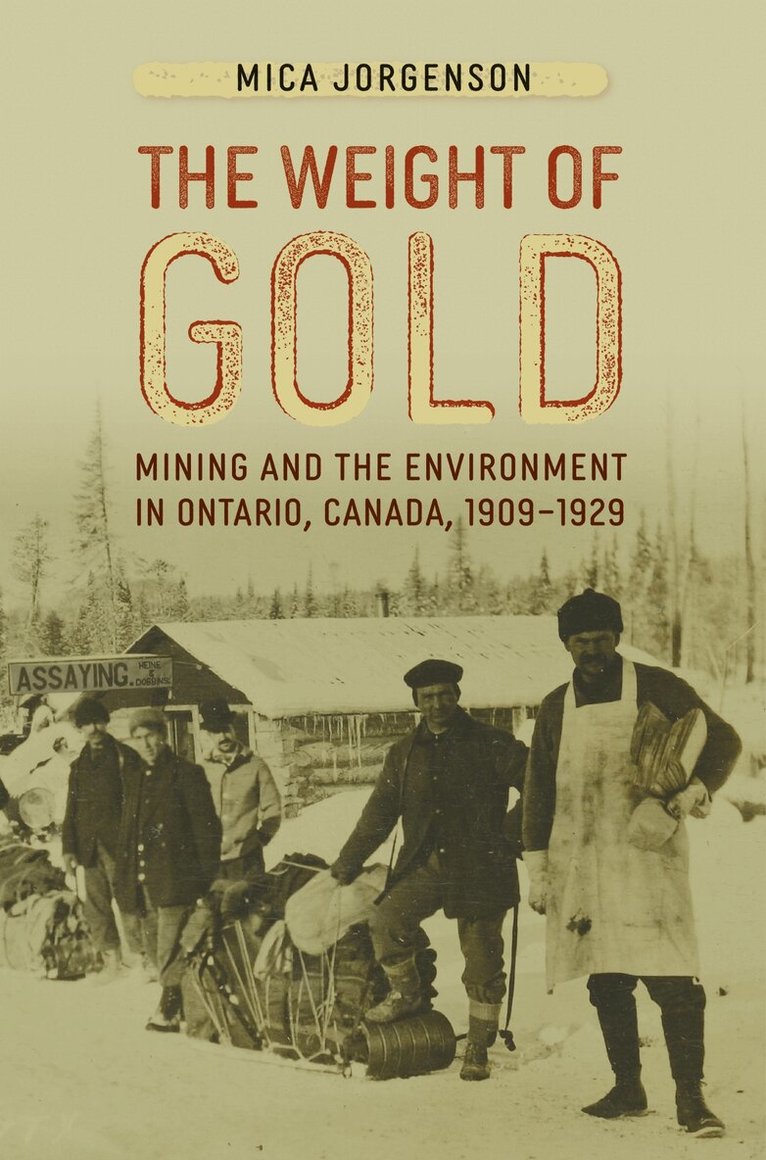
Mining in North America has long been criticized for its impact on the natural environment. Mica Jorgenson's The Weight of Gold explores the history of Ontario, Canada's rise to prominence in the gold mining industry, while detailing a series of environmental crises related to extraction activities. In Ontario in 1909, the discovery of exceptionally rich hard rock gold deposits in the Abitibi region in the north precipitated industrial development modeled on precedents in Australia, South Africa, and the United States. By the late 1920s, Ontario's mines had reached their maturity, and in 1928, Minister of Mines Charles McRae called Canada "the mineral treasure house to [the] world."Mining companies increasingly depended upon their ability to redistribute the burdens of mining onto surrounding communities—a strategy they continue to use today—both at home and abroad. Jorgenson connects Canadian gold mining to its international context, revealing that Ontario's gold mines informed extractive knowledge which would go on to shape Canada's mining industry over the next century.
497 kr
Skickas inom 5-8 vardagar
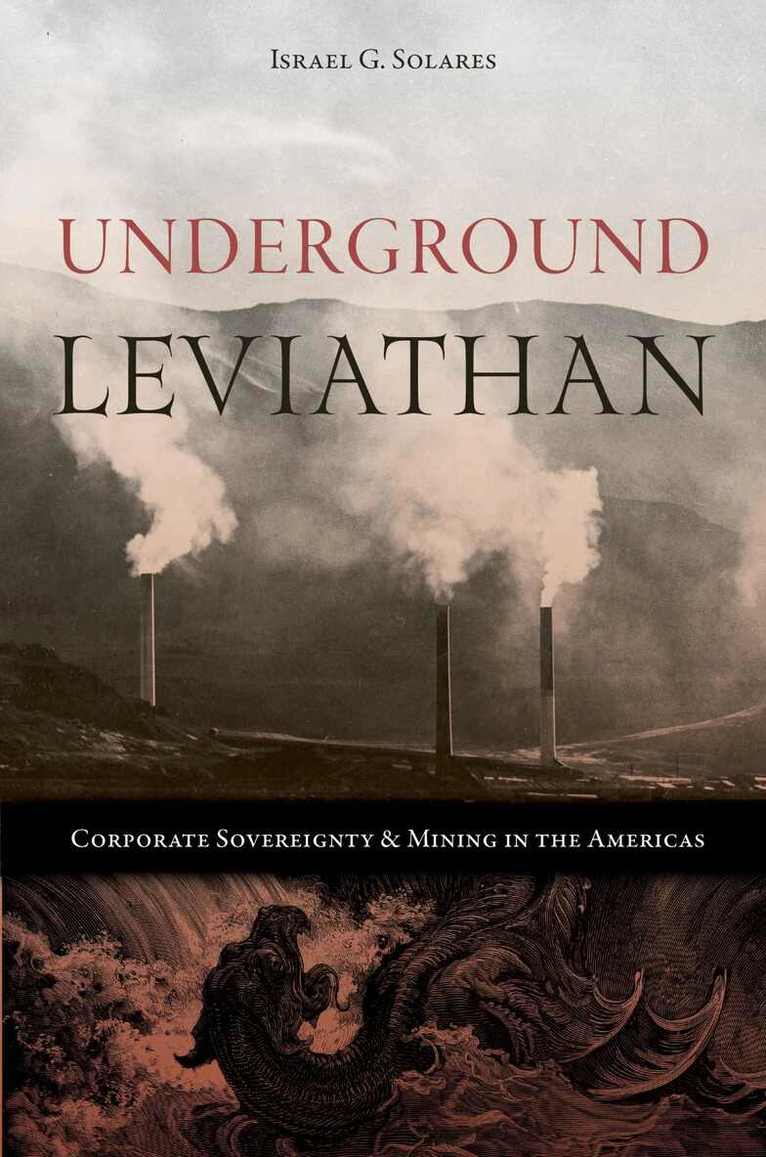
Underground Leviathan explores the emergence, dynamics, and lasting impacts of a mining firm, the United States Company. Through its exercise of sovereign power across the borders of North America in the early twentieth century, the transnational US Company shaped the business, environmental, political, and scientific landscape. Between its initial incorporation in Maine in 1906 and its final demise in the 1980s, the mining company held properties in Utah, Colorado, California, Nevada, Alaska, Mexico, and Canada. The firm was a prototypical management-ruled corporation, which strategically planned and manipulated the technological, production, economic, urban, environmental, political, and cultural activities wherever it operated, all while shaping social actors internationally, including managers, engineers, workers, neighbors, and farmers.Author Israel G. Solares examines how the twentieth century multinational firm established and articulated multinational corporate sovereignty in ways that reflect other multinational titans, like the East Asian Trade companies, and presages the digital giants and space corporations of the twenty-first century. Bridging the domineering practices used during the colonization of Southern Asia with the futuristic colonies on the Moon, Underground Leviathan documents the cost of a corporation's unyielding desire to consume the secrets at the center of the Earth.
Smoke and Tailings
An Environmental History of Butte and Anaconda, Montana, 1880-1930
Inbunden, Engelska, 2025
770 kr
Skickas inom 5-8 vardagar
Smoke and Tailings explores the environmental history of copper-smelting industry in Butte and Anaconda, Montana. Situating within the emerging "Envirotech" field, Smoke and Tailings blends environmental history and the history of technology. Author and historian Fredric L. Quivik integrates these disciplines with political, legal, and business history to provide a comprehensive analysis of the industry's environmental legacy. Butte's history, a long-standing subject of historical inquiry, gains new depth as Quivik examines the technological developments pioneered by local mining companies. He challenges the simplistic narrative of a powerful corporation imposing its will on helpless agricultural communities. Local communities mounted strong opposition to the industry's polluting methods; Quivik acknowledges this dynamic while also revealing efforts by the Anaconda Copper Mining Company to address environmental issues. The company developed and implemented technical solutions to minimize resource waste and mitigate damage, driven by both economic interests and litigation pressures. While these advancements lessened some of the environmental harm, they were insufficient to prevent long-term consequences. The operations in Butte and Anaconda ultimately created the largest Superfund complex in the United States, requiring billions of dollars in remediation. Quivik's nuanced approach opens the "black box" of technology, showing how innovations both alleviated and exacerbated the environmental challenges of mining, milling, and smelting. In addition to contributing to the rich literature on smelter smoke, this book breaks new ground by examining the underexplored environmental impacts of tailings, offering a fresh perspective on the intersection of industry, technology, and environmental change. The cultural landscapes of Butte and Anaconda retain many features of the region's history of both environmental degradation and remediation. Smoke and Tailings is an essential addition to the study of Butte's industrial and ecological history.
375 kr
Skickas inom 5-8 vardagar
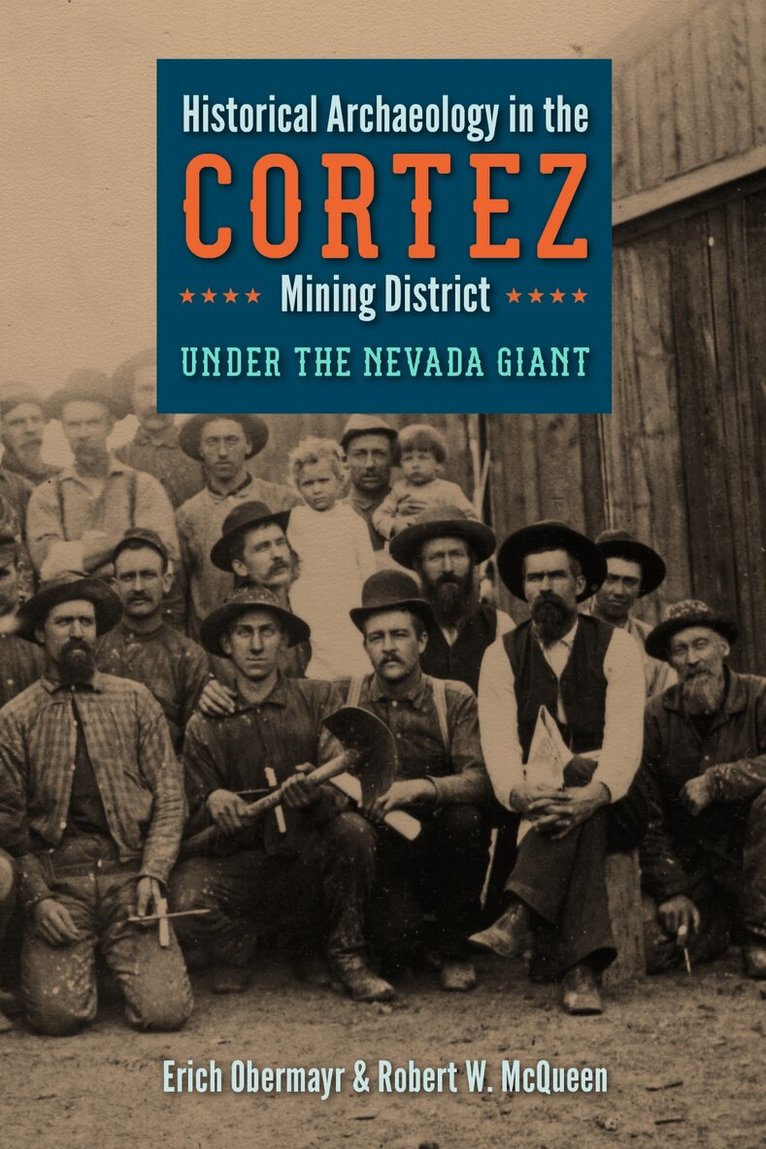
The Cortez Hills Expansion Project archaeological excavations uncovered a wealth of information about the Cortez Mining District, from its beginning in 1863 to the government-mandated end to the mining of precious metals in the district during World War II. Obermayr and McQueen use archaeological data as a foundation to tell the story of life in one of Nevada's most intriguing, long-lived mining districts. Archaeologists excavate and analyze many thousands of artifacts, uncovering the homes and workplaces—and even trash dumps—of prospectors and miners, mill workers, charcoal burners, brickmakers, blacksmiths, teamsters, and families. They present an archaeological view of everyday life: how Cortez was populated by a variety of ethnic groups, how they lived, what products they bought or consumed, what their social status was, and how, even in this remote location, they created their own version of lives exemplifying the era's Victorian ideals. Readers interested in the archaeology of the West, mining history, and the history of Nevada will find this book fascinating.
674 kr
Kommande
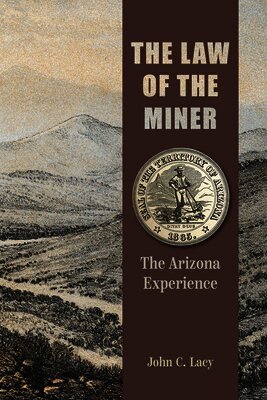
The first adventurers into the New World faced a fundamental legal challenge: how to secure rights to any mineral claims they discovered. Early conquistadors worked under charters that required them to return a portion of their findings to the Spanish crown, but those without such charters had no formal protection—and the crown was slow to clarify individual rights. This uncertainty only grew as miners pushed into the lands that would become the Western United States.When gold was discovered in California, miners suddenly found themselves operating without any governing laws during the period between the end of the war with Mexico and the establishment of formal U.S. jurisdiction. In response, and without official sanction, they formed self-governing "mining districts," best understood as mutual protection societies. These districts marked the first organized attempt to define boundaries and create rules for establishing and maintaining mining claims. As the early rushes in California and Nevada subsided, miners carried these practices with them into Arizona and other western territories.In Arizona, no comprehensive collection of these early regulations has ever existed. The Law of the Miner addresses this gap by tracing the development of mineral law in early Arizona and presenting the full text of every mining district regulation that could be found. This work serves both the mining industry and historians seeking to identify the individuals involved in creating the districts and to understand these districts' historical boundaries.
Commonwealth of Empire
A History of the Burma Corporation and the Bawdwin Mining Complex in British Colonial Burma
Inbunden, Engelska, 2026
849 kr
Kommande
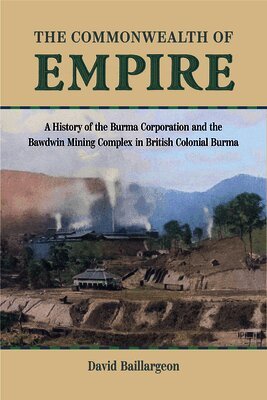
The Commonwealth of Empire explores the overlooked history of the Bawdwin mining complex in Burma's Northern Shan States, focusing on its development during the British colonial period. Drawing on global and imperial history, author David Baillargeon showcases how industrial-scale mining transformed Bawdwin into a hub of commerce and migration, especially under the Burma Corporation in the early twentieth century. By the 1920s, Bawdwin had become one of the largest industrial sites in the world, staffed by a multinational workforce from South, Southeast, and East Asia, and managed by foreign engineers from the United States and Australia. Known as the "Commonwealth of Namtu" for its diverse workforce, the site exemplifies how colonial and corporate interests overlapped, and how such commercial spaces were shaped, contested, and reimagined locally. In telling the stories of the diverse agents and workers who developed the site and made it their home, The Commonwealth of Empire uncovers how and why a space like Bawdwin has been forgotten over time, interrogating its marginalization in national and regional histories and linking such forgetting to the nature of Britain's colonial project.Baillargeon argues that recovering such forgotten histories requires moving beyond nation-based frameworks and embracing methods that illuminate the global forces behind colonial enterprises. In doing so, the book offers opportunities to decolonize histories and spaces of occupation that fit uneasily into existing frameworks of empire and nation.
Mining the Borderlands
Industry, Capital, and the Emergence of Engineers in the Southwest Territories, 1855-1910
Inbunden, Engelska, 2018
497 kr
Skickas inom 5-8 vardagar
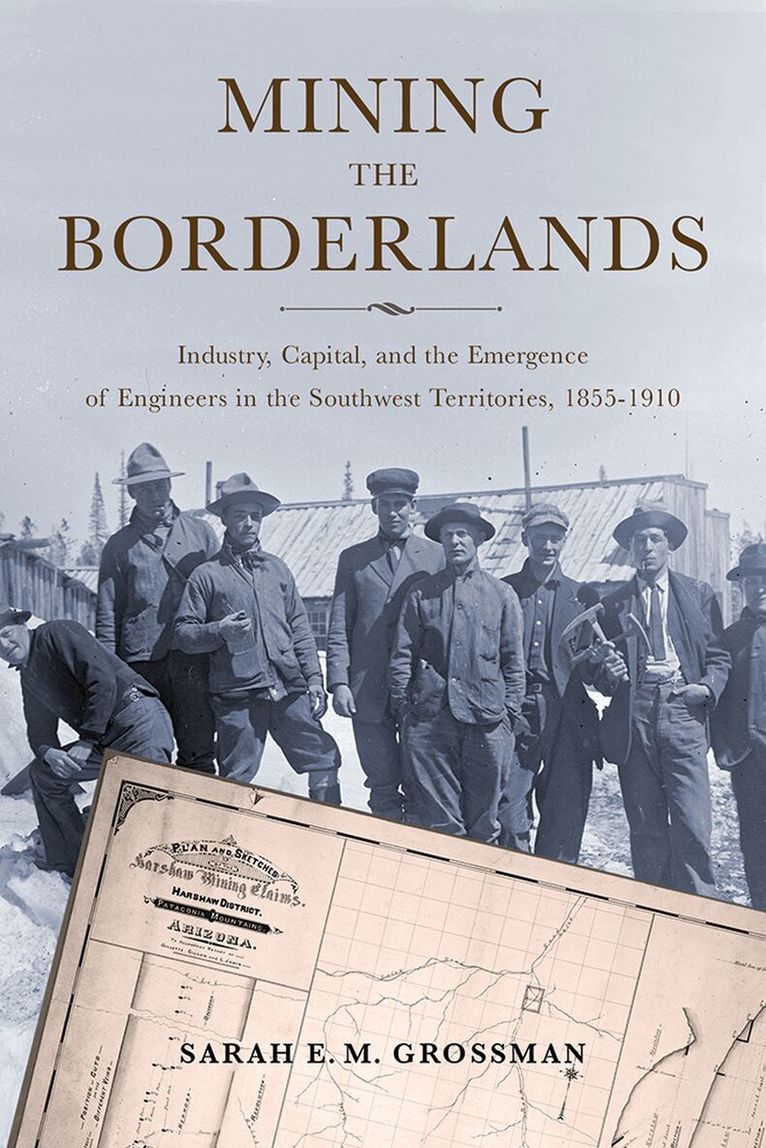
At the turn of the twentieth century, the US-Mexico border was home to some of the largest and most technologically advanced industrial copper mines. This despite being geographically, culturally, and financially far removed from traditional urban centers of power. Mining the Borderlands argues that this was only possible because of the emergence of mining engineers—a distinct technocratic class of professionals who connected capital, labor, and expertise.Mining engineers moved easily between remote mining camps and the upscale parlors of East Coast investors. Working as labor managers and technical experts, they were involved in the daily negotiations that brought private US capital to the southwestern border. The success of the massive capital-intensive mining ventures in the region depended on their ability to construct varied networks and serve as intermediaries to groups that rarely coincided. This didn’t just lead to bigger and more efficient mines, but served as part of the ongoing project of American territorial and economic expansion, explaining how American economic hegemony was established in a border region peripheral to the federal governments of both Washington, DC, and Mexico City.
321 kr
Skickas inom 5-8 vardagar
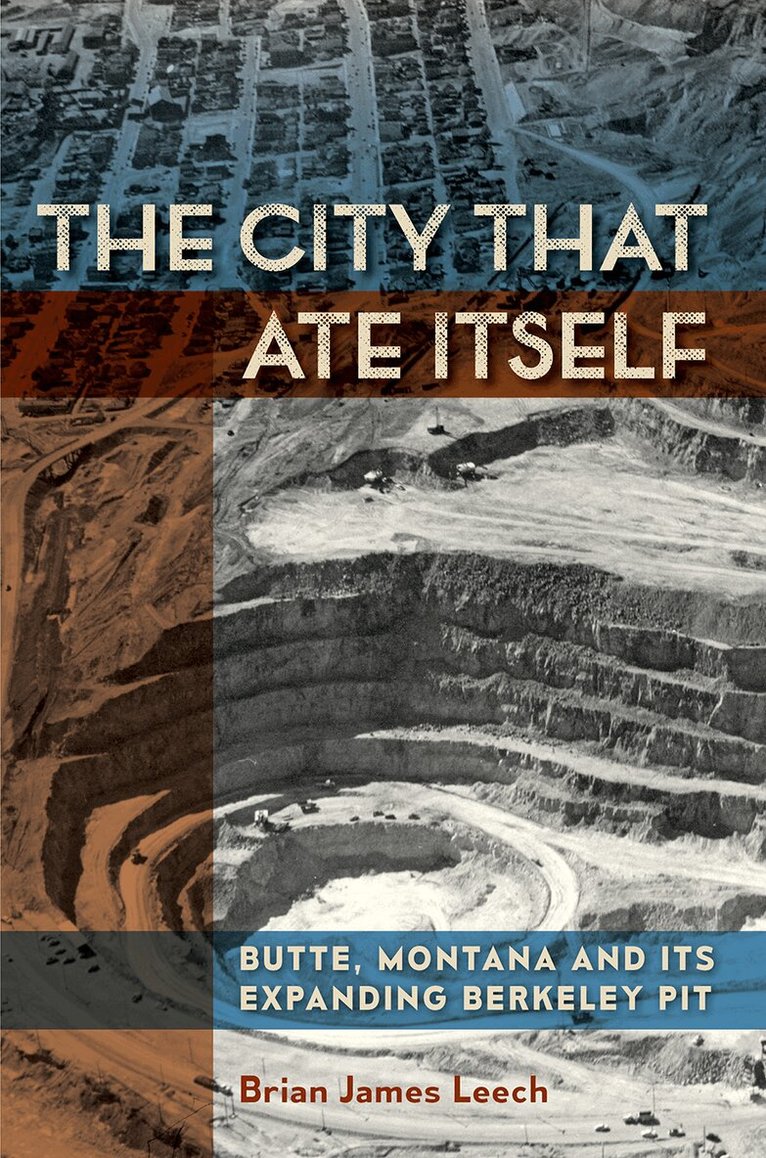
Brian James Leech provides a social and environmental history of Butte, Montana's Berkeley Pit, an open-pit mine which operated from 1955 to 1982. Using oral history interviews and archival finds, The City That Ate Itself explores the lived experience of open-pit copper mining at Butte's infamous Berkeley Pit. Because an open-pit mine has to expand outward in order for workers to extract ore, its effects dramatically changed the lives of workers and residents. Although the Berkeley Pit gave consumers easier access to copper, its impact on workers and community members was more mixed, if not detrimental. The pit's creeping boundaries became even more of a problem. As open-pit mining nibbled away at ethnic communities, neighbors faced new industrial hazards, widespread relocation, and disrupted social ties. Residents variously responded to the pit with celebration, protest, negotiation, and resignation. Even after its closure, the pit still looms over Butte. Now a large toxic lake at the center of a federal environmental cleanup, the Berkeley Pit continues to affect Butte's search for a postindustrial future.