• Fri frakt över 249 kr
  • •
  • Snabba leveranser
  • •
  • Billiga böcker
Kundservice

Du är på sajten för privatpersoner.

Företag, bibliotek eller offentlig verksamhet?

Du handlar på classic.bokus.com, där alla dina funktioner finns intakta.
Till classic.bokus.com
Bokus logotyp. Gå till startsidan.
  • Erbjudanden
  • Nyheter
  • Student
  • Topplistor
  • Barn & ungdom
  • Bokus Play
  • E-böcker
  • Pocketböcker
  • Spel & pussel

10% rabatt på allt med kod: NYSTART10 →

Sidfot

Mina sidor

    Hjälp

    • Kundservice
    • Vanliga frågor och svar
    • Frakt och leverans
    • Retur vid ångerrätt
    • Reklamera vara
    • Betalning
    • Köpvillkor
    • Allmänna villkor
    • Information om webbplatsens tillgänglighet

    Om Bokus

    • Om oss
    • Pressrum
    • För studenter
    • För företag
    • För bibliotek och offentlig verksamhet
    • För leverantörer
    • Hållbarhet

    Populärt

    • Aktuella erbjudanden
    • Presentkort
    • Studentlitteratur
    • Nya böcker
    • Topplistor
    • Signerade böcker
    • Engelska böcker

    Inspiration

    • Boktips
    • BookTok
    • Populära bokserier
    • Barnbokskaraktärer
    • Populära författare
    Logotyp för Bokus
    Följ oss på Facebook (extern länk)Följ oss på Instagram (extern länk)Följ oss på YouTube (extern länk)Följ oss på TikTok (extern länk)
    bokus @ CookiesAnpassa cookiesIntegritetspolicyKöpvillkor
    Till Citymail hemsida (extern länk)Till Budbee hemsida (extern länk)Till Postnord hemsida (extern länk)Till Schenker hemsida (extern länk)Till Early Bird hemsida (extern länk)Till Walleys hemsida (extern länk)
    1. Historia och arkeologi
    2. Historia
    3. Historia: särskilda händelser och ämnen
    4. Socialhistoria och kulturhistoria

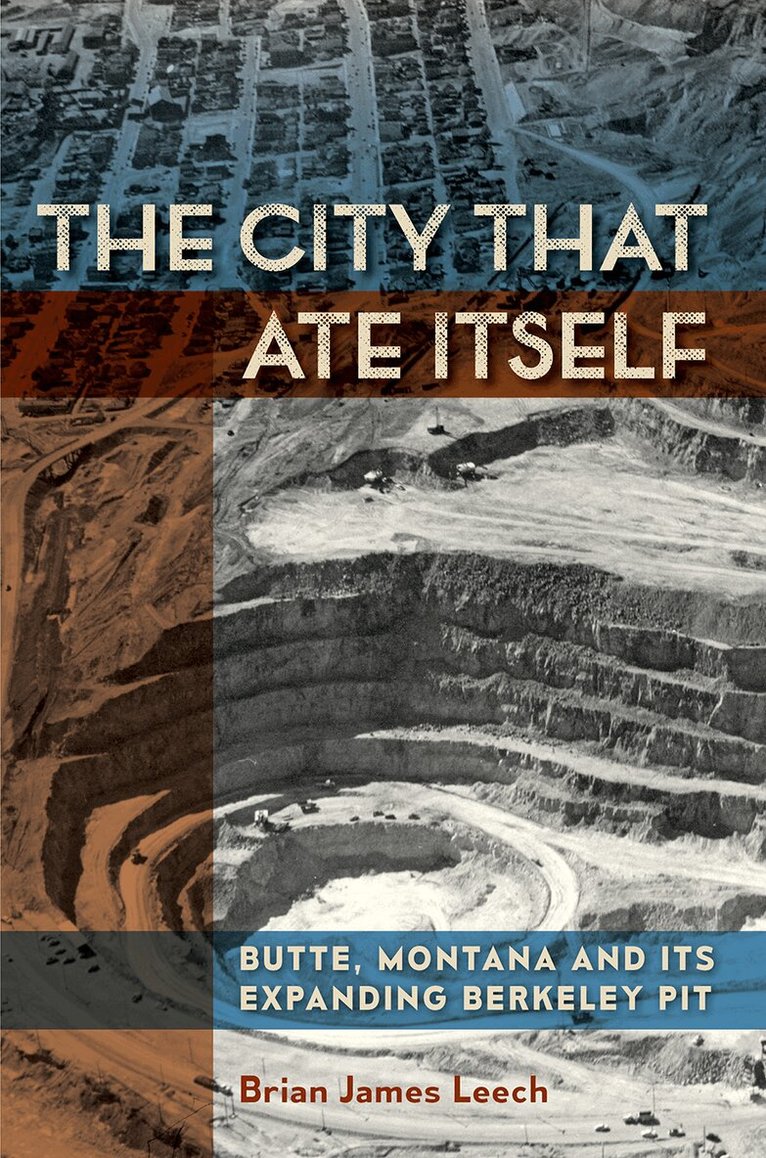
    City That Ate Itself

    Butte, Montana and Its Expanding Berkeley Pit

    AvBrian James Leech

    Häftad, Engelska, 2019

    Del i serien Mining and Society Series

    331 kr

    Beställningsvara. Skickas inom 5-8 vardagar. Fri frakt över 249 kr.

    Beskrivning

    Brian James Leech provides a social and environmental history of Butte, Montana's Berkeley Pit, an open-pit mine which operated from 1955 to 1982. Using oral history interviews and archival finds, The City That Ate Itself explores the lived experience of open-pit copper mining at Butte's infamous Berkeley Pit. Because an open-pit mine has to expand outward in order for workers to extract ore, its effects dramatically changed the lives of workers and residents. Although the Berkeley Pit gave consumers easier access to copper, its impact on workers and community members was more mixed, if not detrimental. The pit's creeping boundaries became even more of a problem. As open-pit mining nibbled away at ethnic communities, neighbors faced new industrial hazards, widespread relocation, and disrupted social ties. Residents variously responded to the pit with celebration, protest, negotiation, and resignation. Even after its closure, the pit still looms over Butte. Now a large toxic lake at the center of a federal environmental cleanup, the Berkeley Pit continues to affect Butte's search for a postindustrial future.

    Produktinformation

    • Utgivningsdatum:2019-01-31
    • Mått:152 x 228 x 25 mm
    • Vikt:595 g
    • Format:Häftad
    • Språk:Engelska
    • Serie:Mining and Society Series
    • Antal sidor:376
    • Förlag:University of Nevada Press
    • ISBN:9781948908290

    Utforska kategorier

    • Socialhistoria och kulturhistoria inom Historia och arkeologi
    • Övrig teknik och tillämpad vetenskap inom Naturvetenskap och teknik
    • Allmän historia och världshistoria inom Historia och arkeologi

    Mer om författaren

    Brian James Leech is a Montana native and an assistant professor of history at Augustana College in Rock Island, Illinois. He currently serves as Secretary of the Mining History Association.

    Recensioner i media

    The City That Ate Itself brings together environmental history, labor history, social history, and history of technology in an entirely novel and highly compelling way. Many historians have taken on one or more of these topics in analyzing the history of Butte, yet none has brought them together as skillfully as Leech does here. Moreover, Leech's focus on the postwar period is still fairly rare in the literature and highly valuable. The scholarship here is superb. Leech has immersed himself in both the primary and secondary material, and almost every page bristles with footnotes derived from entirely original archival research."" - Timothy J. LeCain""The City that Ate Itself: A Social and Environmental History of Butte, Montana and Its Expanding Berkeley Pit is an in-depth history of Butte, Montana, that focuses on its infamous open-pit copper mine, the Berkeley Pit. Overall, the book's scholarship is impeccable. Leech makes a persuasive case that Butte's modern history has been dominated by the switch to open pit mining and the growing Berkeley Pit. While Butte has received a good deal of attention from social historians and historians of western mining, Leech's focus on the modern open pit era of mining is genuinely new. Leech's manuscript also makes outstanding use of oral history interviews as a source base. He has clearly devoted an enormous of amount of time and effort to research so many oral histories, even conducting many of them himself. The oral histories allow him to bring a fresh perspective to the social and cultural dimensions of open pit mining and community change. Other books in this field have emphasized technological changes or policy shifts, but the oral histories allow Leech to really get at the lived experience of those individuals in Butte who lived beside the growing Berkeley Pit."" - Jeffrey T. Manuel""The City That Ate Itself is an important contribution to the historical scholarship on resource extraction and industrial communities in North America, a literature that has grown significantly in size and sophistication in the past twenty years or so. Well written and well illustrated, the book makes novel links between the urban social history of the city (and experiences of its residents) and the 'envirotechnical' landscapes of large-scale mineral production. In doing so, this study generates insights relevant to the environmental history and historical geography of mines and their cities well beyond Butte."" - H-NET Reviews