Minoritarian Aesthetics - Böcker
Visar alla böcker i serien Minoritarian Aesthetics. Handla med fri frakt och snabb leverans.
12 produkter
12 produkter
980 kr
Skickas inom 10-15 vardagar
Winner of the 2023 National Book Critics Circle Award for CriticismWinner of the 2023 ASAP Book Prize, given by the Association for the Study of the Arts of the Present Explores expressionlessness, inscrutability, and emotional withholding in Black cultural productionArguing that inexpression is a gesture that acquires distinctive meanings in concert with blackness, Deadpan tracks instances and meanings of deadpan—a vaudeville term meaning "dead face"—across literature, theater, visual and performance art, and the performance of self in everyday life.Tina Post reveals that the performance of purposeful withholding is a critical tool in the work of black culture makers, intervening in the persistent framing of African American aesthetics as colorful, loud, humorous, and excessive. Beginning with the expressionless faces of mid-twentieth-century documentary photography and proceeding to early twenty-first-century drama, this project examines performances of blackness's deadpan aesthetic within and beyond black embodiments, including Young Jean Lee's The Shipment and Branden Jacobs-Jenkins's Neighbors, as well as Buster Keaton's signature character and Steve McQueen's restitution of the former's legacy within the continuum of Black cultural production. Through this varied archive, Post reveals how deadpan aesthetics function in and between opacity and fugitivity, minimalism and saturation, excess and insensibility.
331 kr
Skickas inom 7-10 vardagar
Winner of the 2023 National Book Critics Circle Award for CriticismWinner of the 2023 ASAP Book Prize, given by the Association for the Study of the Arts of the Present Explores expressionlessness, inscrutability, and emotional withholding in Black cultural productionArguing that inexpression is a gesture that acquires distinctive meanings in concert with blackness, Deadpan tracks instances and meanings of deadpan—a vaudeville term meaning "dead face"—across literature, theater, visual and performance art, and the performance of self in everyday life.Tina Post reveals that the performance of purposeful withholding is a critical tool in the work of black culture makers, intervening in the persistent framing of African American aesthetics as colorful, loud, humorous, and excessive. Beginning with the expressionless faces of mid-twentieth-century documentary photography and proceeding to early twenty-first-century drama, this project examines performances of blackness's deadpan aesthetic within and beyond black embodiments, including Young Jean Lee's The Shipment and Branden Jacobs-Jenkins's Neighbors, as well as Buster Keaton's signature character and Steve McQueen's restitution of the former's legacy within the continuum of Black cultural production. Through this varied archive, Post reveals how deadpan aesthetics function in and between opacity and fugitivity, minimalism and saturation, excess and insensibility.
1 095 kr
Skickas inom 10-15 vardagar
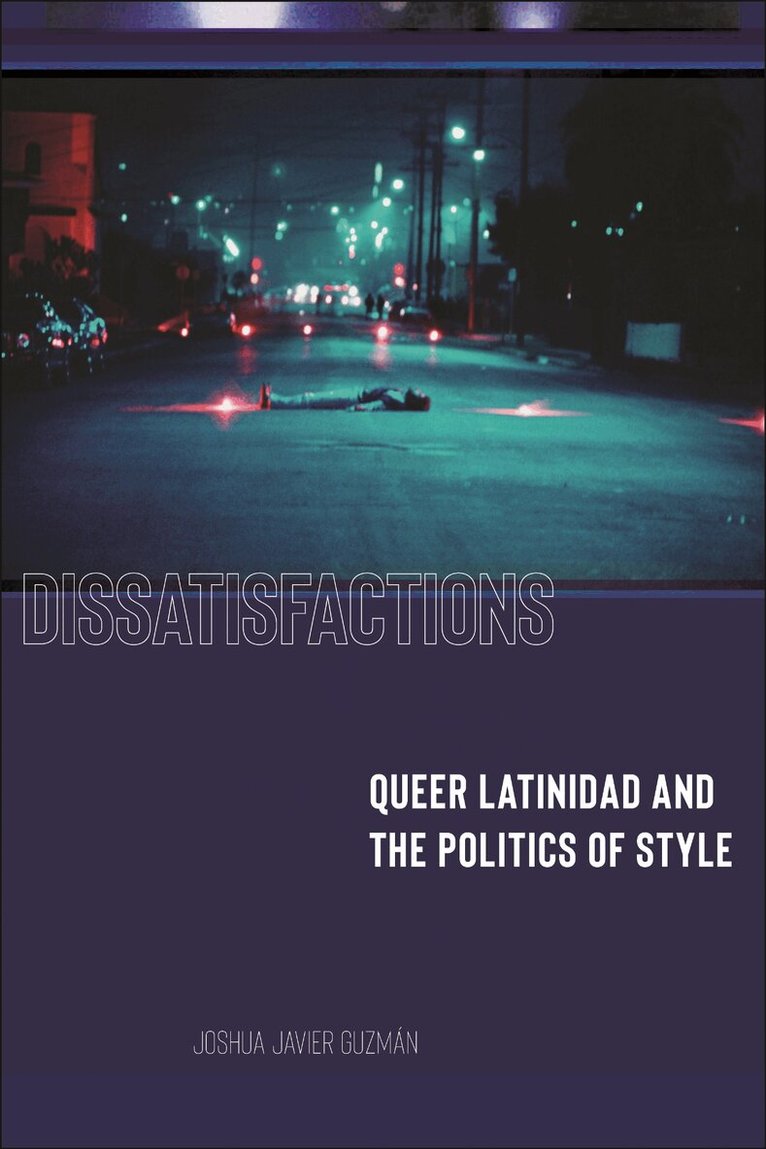
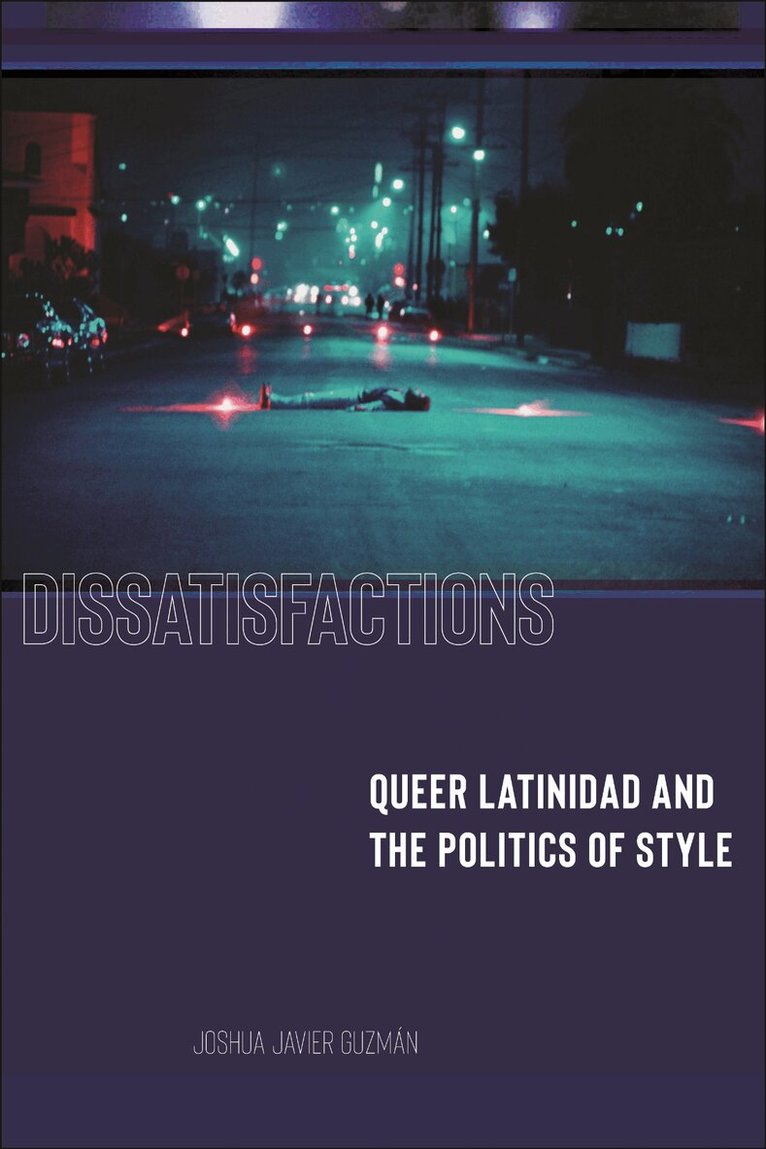
How the queer Chicano punks of post-1960s Los Angeles developed a unique politics of styleIn this groundbreaking work, Joshua Javier Guzmán explores the queer punk and Chicano/Latino avant-garde art scenes in post-1968 Los Angeles from the rise of Ronald Reagan to the height of the AIDS epidemic. He demonstrates how style–as a cultural form and sensibility–becomes essential to Latino politics at the moment the utopian impulses of the 1960s begin to fade.Guzmán uncovers how queer Latinos in Los Angeles used performance, underground media, experimental art, and literature to interrogate the limits of Chicano nationalism and the burgeoning politics of gay liberation. These subcultural forms give rise to a theory of what he calls "stylized discontent," expressed as nausea, lo-fi, ambivalence, and malaise. Each chapter of the book is framed by a specific stylized discontent, demonstrating how they were repurposed by queer punk Latinos as responses to the AIDS crisis and the rise of neoliberalisms.Dissatisfactions highlights the middle ranges of political agency strategically utilized by queer racialized historical actors to underscore how negative feelings become instrumental to social change. Revealing new forms of activism and art that continue to structure the way we understand systemic violence and survival, Dissatisfactions insists on the significance of both the politics of style and the different styles politics may take.
355 kr
Skickas inom 7-10 vardagar
How the queer Chicano punks of post-1960s Los Angeles developed a unique politics of styleIn this groundbreaking work, Joshua Javier Guzmán explores the queer punk and Chicano/Latino avant-garde art scenes in post-1968 Los Angeles from the rise of Ronald Reagan to the height of the AIDS epidemic. He demonstrates how style–as a cultural form and sensibility–becomes essential to Latino politics at the moment the utopian impulses of the 1960s begin to fade.Guzmán uncovers how queer Latinos in Los Angeles used performance, underground media, experimental art, and literature to interrogate the limits of Chicano nationalism and the burgeoning politics of gay liberation. These subcultural forms give rise to a theory of what he calls "stylized discontent," expressed as nausea, lo-fi, ambivalence, and malaise. Each chapter of the book is framed by a specific stylized discontent, demonstrating how they were repurposed by queer punk Latinos as responses to the AIDS crisis and the rise of neoliberalisms.Dissatisfactions highlights the middle ranges of political agency strategically utilized by queer racialized historical actors to underscore how negative feelings become instrumental to social change. Revealing new forms of activism and art that continue to structure the way we understand systemic violence and survival, Dissatisfactions insists on the significance of both the politics of style and the different styles politics may take.
1 095 kr
Skickas inom 10-15 vardagar
How minoritarian artists grapple with both personal and collective griefTears for Tears documents moments of tension, negotiation, transformation, and incommensurability between singular loss and mass death through the work of contemporary minoritarian artists. These artists interrogate the cultural, social, and political enmeshment of death by questioning the interior and exterior conditions of loss Charting communal, singular, ongoing, and impending loss due to state-sanctioned violence, colonial racial capitalism, natural disaster, and social and personal circumstances, Sandra Ruiz underscores the affective entanglements across death that reshape the topography of grief into portals of possibility.Drawing from original interviews, familial artifacts, images, and personal archival notes of artists—much of which have never been written about before—the project centers the minoritarian artist as living with and against death in everyday life and art practice. In doing so, the manuscript stages an archival and ideological intervention into the life of grief for minoritarian subjects and artists.Moving across performance and video art, sculpture, dance, music, theatre, and poetry, Ruiz highlights the relationship between everyday life and staged events as a critical lens to rethink structures of colonial and imperial spatial temporalities of grief. Offering invaluable insights into the production of these works and performances, Ruiz reveals how these artists move across social, corporeal, and psychic constructions of sorrow in their art practices—often working from parental loss into the domain of communal death—and see grieving, however painful, as an act of empowerment, transformation, growth, and communal building.
355 kr
Skickas
How minoritarian artists grapple with both personal and collective griefTears for Tears documents moments of tension, negotiation, transformation, and incommensurability between singular loss and mass death through the work of contemporary minoritarian artists. These artists interrogate the cultural, social, and political enmeshment of death by questioning the interior and exterior conditions of loss Charting communal, singular, ongoing, and impending loss due to state-sanctioned violence, colonial racial capitalism, natural disaster, and social and personal circumstances, Sandra Ruiz underscores the affective entanglements across death that reshape the topography of grief into portals of possibility.Drawing from original interviews, familial artifacts, images, and personal archival notes of artists—much of which have never been written about before—the project centers the minoritarian artist as living with and against death in everyday life and art practice. In doing so, the manuscript stages an archival and ideological intervention into the life of grief for minoritarian subjects and artists.Moving across performance and video art, sculpture, dance, music, theatre, and poetry, Ruiz highlights the relationship between everyday life and staged events as a critical lens to rethink structures of colonial and imperial spatial temporalities of grief. Offering invaluable insights into the production of these works and performances, Ruiz reveals how these artists move across social, corporeal, and psychic constructions of sorrow in their art practices—often working from parental loss into the domain of communal death—and see grieving, however painful, as an act of empowerment, transformation, growth, and communal building.
1 095 kr
Skickas inom 10-15 vardagar
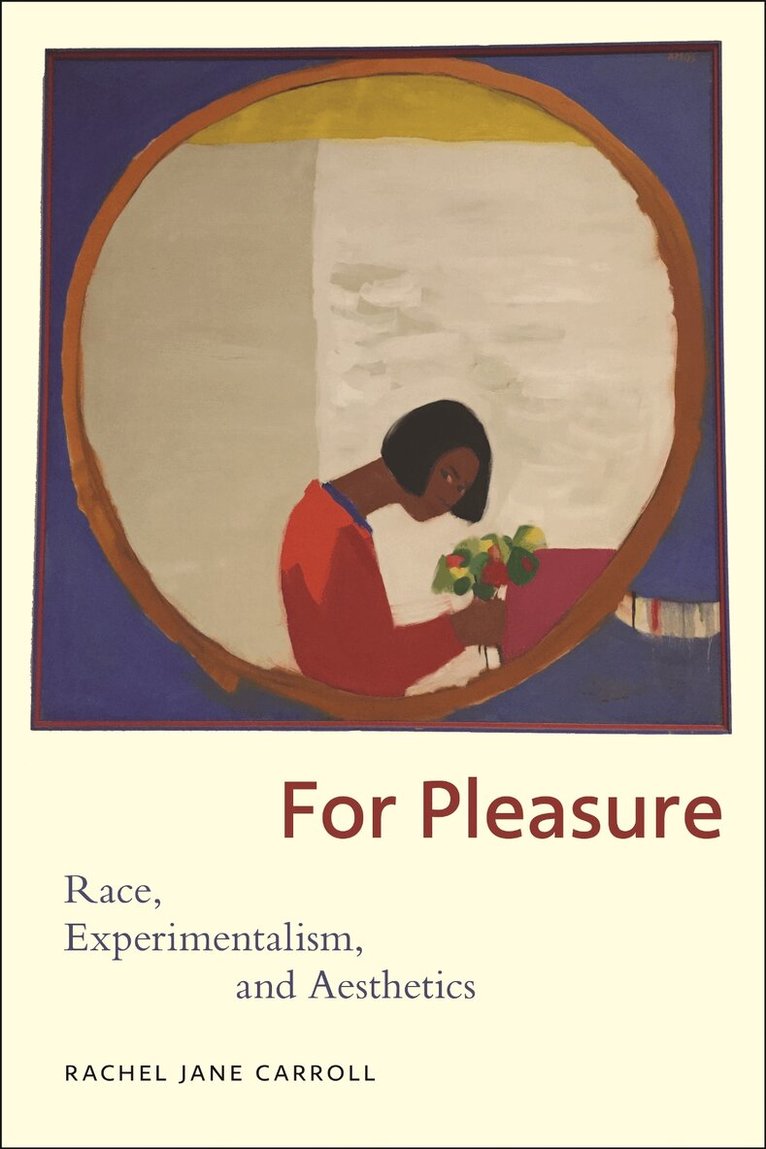
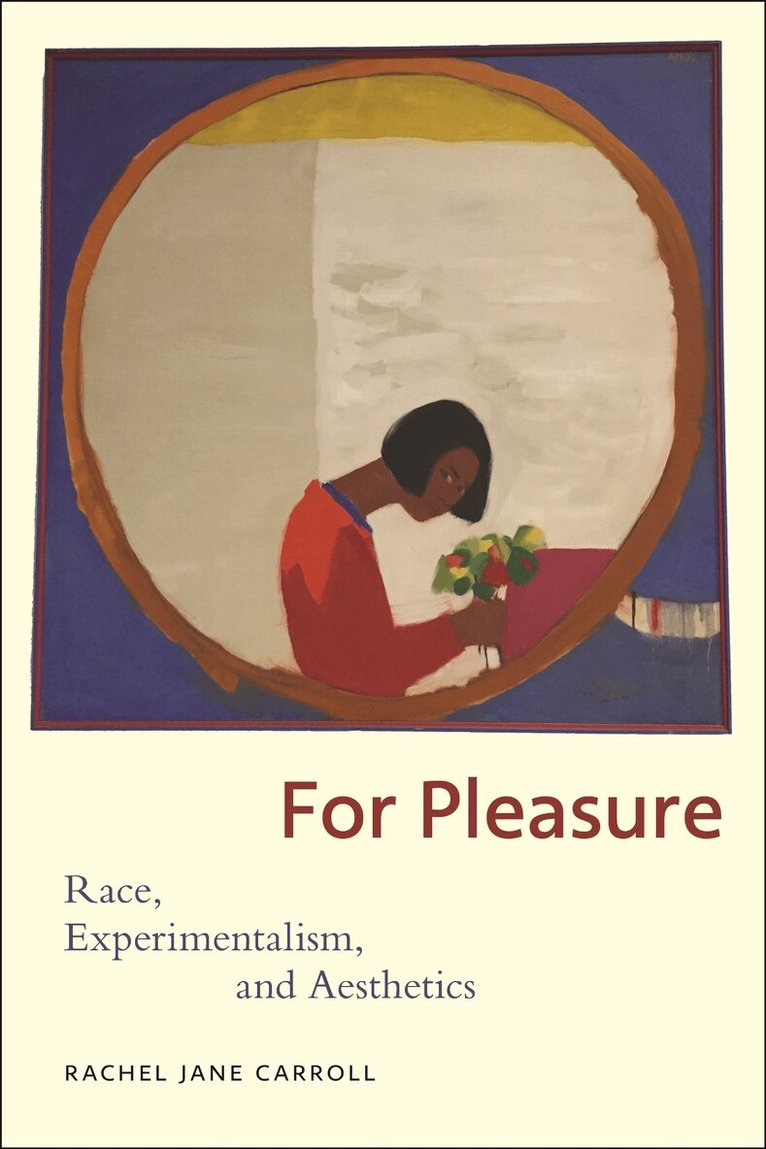
Shortlisted, 2024 MLA Prize Prize for a First Book, given by the Modern Language Association Argues that aesthetic pleasure plays a key role in both racial practices and struggles against racistdominationFor Pleasure proposes that experimental aesthetics shaped race in the twentieth-century United Statesby creating transformative scenes of pleasure. Rachel Jane Carroll explains how aesthetic pleasure isfundamental to the production and circulation of racial meaning in the United States through a study ofexperimental work by authors and artists of color.For Pleasure offers methods for reading experimental literature and art produced by racially minoritizedauthors and artists working in and around the US, including Isaac Julien, Nella Larsen, Yoko Ono, JackWhitten, Byron Kim, Glenn Ligon, Zora Neale Hurston, Theresa Hak Kyung Cha, and Cici Wu. Along theway, we learn what a racist joke has to do with the history of monochrome painting, if beauty has a partto play in social change, and whether whimsy should be taken seriously as a political affect. Carrolldraws attention to key connections between aesthetic pleasure and experimentation through theirshared capacity for world-building. Neither aesthetic pleasure nor experimental forms are liberatory inand of themselves; however, both can interrupt, defamiliarize, and rearrange our habits of aestheticjudgment.
370 kr
Skickas inom 7-10 vardagar
Shortlisted, 2024 MLA Prize Prize for a First Book, given by the Modern Language Association Argues that aesthetic pleasure plays a key role in both racial practices and struggles against racistdominationFor Pleasure proposes that experimental aesthetics shaped race in the twentieth-century United Statesby creating transformative scenes of pleasure. Rachel Jane Carroll explains how aesthetic pleasure isfundamental to the production and circulation of racial meaning in the United States through a study ofexperimental work by authors and artists of color.For Pleasure offers methods for reading experimental literature and art produced by racially minoritizedauthors and artists working in and around the US, including Isaac Julien, Nella Larsen, Yoko Ono, JackWhitten, Byron Kim, Glenn Ligon, Zora Neale Hurston, Theresa Hak Kyung Cha, and Cici Wu. Along theway, we learn what a racist joke has to do with the history of monochrome painting, if beauty has a partto play in social change, and whether whimsy should be taken seriously as a political affect. Carrolldraws attention to key connections between aesthetic pleasure and experimentation through theirshared capacity for world-building. Neither aesthetic pleasure nor experimental forms are liberatory inand of themselves; however, both can interrupt, defamiliarize, and rearrange our habits of aestheticjudgment.
Undesirability and Her Sisters
Black Women's Visual Work and the Ethics of Representation
Inbunden, Engelska, 2025
980 kr
Skickas inom 10-15 vardagar
How Black women's visual work functions in an era of new racial and gender meaningIn the wake of contemporary art's post-Black turn and the mainstreaming of intersectionality, Undesirability and Her Sisters charts a new genealogy of Black women's art that exposes the unfinished project of racial and gender empowerment in the twenty-first century. Tiffany Barber argues that Black women's social positions at the intersection of race, gender, sexuality, and class are inherently queer, thus spurring unexpected aesthetic strategies that throw into high relief the ethical terrain of what it means to be Black and a woman now.Undesirability and Her Sisters collates what Barber terms "undesirable" representations of Black female bodies in recent American sculpture, collage, photography, and dance-based performance art by Kara Walker, Wangechi Mutu, Xaviera Simmons, and Narcissister. These works not only engage the visual senses but also incorporate olfactory, haptic, and sonic experiences that challenge traditional interpretations of Blackness and womanhood in art history, Black Studies, feminist and gender studies, dance and performance studies, and queer studies. Instead of transcendental beauty, wholeness, and individual and collective becoming, the perverse Black female figures profiled here eschew sublimation and synthesis as necessary responses to racial and gender subjugation in the past, present, and future.Through its unique, groundbreaking analysis, this book contributes to the ongoing discussions on the ethics of representation—the capacity to speak and act for oneself, to have significance and impact, and ultimately, to reject acknowledgment.
Undesirability and Her Sisters
Black Women's Visual Work and the Ethics of Representation
Häftad, Engelska, 2025
318 kr
Skickas inom 7-10 vardagar
How Black women's visual work functions in an era of new racial and gender meaningIn the wake of contemporary art's post-Black turn and the mainstreaming of intersectionality, Undesirability and Her Sisters charts a new genealogy of Black women's art that exposes the unfinished project of racial and gender empowerment in the twenty-first century. Tiffany Barber argues that Black women's social positions at the intersection of race, gender, sexuality, and class are inherently queer, thus spurring unexpected aesthetic strategies that throw into high relief the ethical terrain of what it means to be Black and a woman now.Undesirability and Her Sisters collates what Barber terms "undesirable" representations of Black female bodies in recent American sculpture, collage, photography, and dance-based performance art by Kara Walker, Wangechi Mutu, Xaviera Simmons, and Narcissister. These works not only engage the visual senses but also incorporate olfactory, haptic, and sonic experiences that challenge traditional interpretations of Blackness and womanhood in art history, Black Studies, feminist and gender studies, dance and performance studies, and queer studies. Instead of transcendental beauty, wholeness, and individual and collective becoming, the perverse Black female figures profiled here eschew sublimation and synthesis as necessary responses to racial and gender subjugation in the past, present, and future.Through its unique, groundbreaking analysis, this book contributes to the ongoing discussions on the ethics of representation—the capacity to speak and act for oneself, to have significance and impact, and ultimately, to reject acknowledgment.
1 110 kr
Kommande
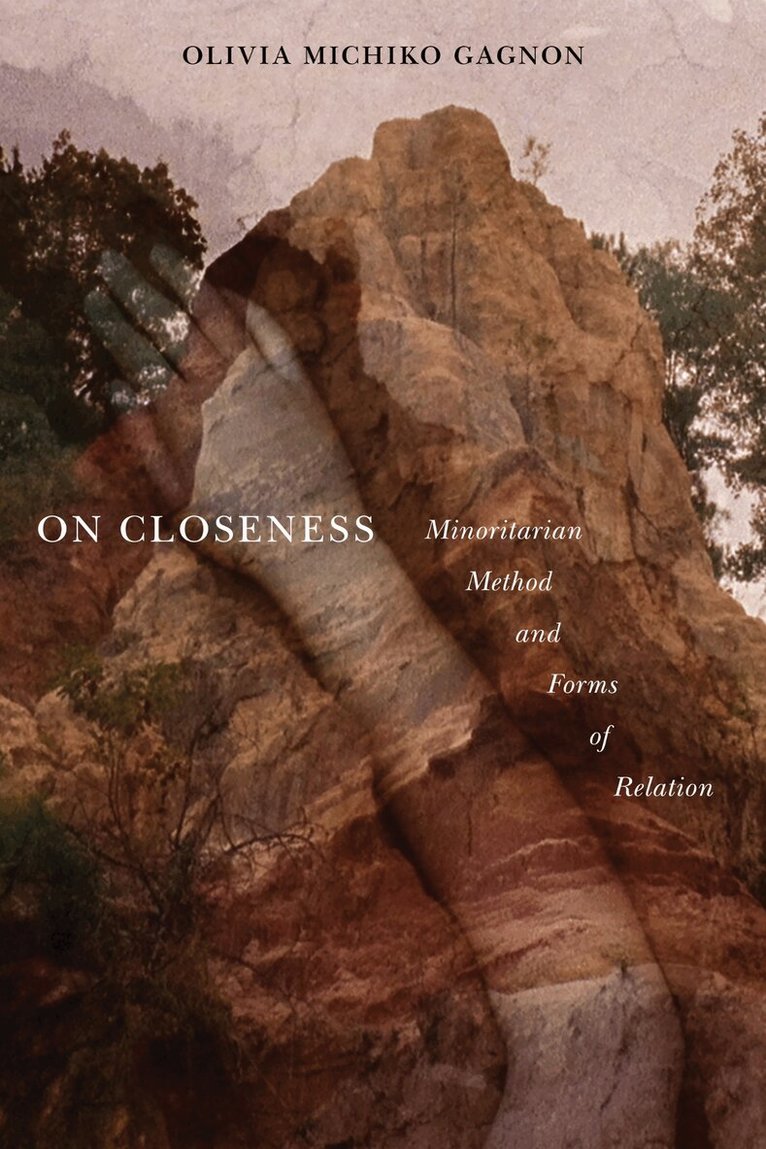
Explores closeness as a minoritarian method in contemporary art and performance.On Closeness explores closeness as a transformative, if sometimes fraught, mode of engagement across aesthetic, social, and scholarly realms. Olivia Michiko Gagnon theorizes closeness as a minoritarian method that refuses knowledge grounded in possession or mastery in favor of relational ethics defined by vulnerability, partiality, and unknowing. Insisting upon the political urgencies of remaining in close proximity across difference, these forms of relation—with history and archives, artworks and others – privilege embodied and sensuous ways of knowing and remembering that salve historical violence. Analyzing contemporary artworks and performances by Tanya Tagaq, asinnajaq, Cheryl Sim, Elizabeth M. Webb, Pia Arke, and Monika Kin Gagnon – her mother and an influential cultural critic and scholar – Gagnon engages entangled histories of colonialism, slavery, migration, and diaspora. Grounded in performance studies and in dialogue with gender and sexuality studies, critical Indigenous studies, Black studies, American studies, critical mixed-race studies, Asian-Canadian studies, and film and media studies, On Closeness stages an anti-racist, decolonial, and feminist intervention. Adopting closeness as her own method, Gagnon shows how the concept opens up new possibilities for relation across difference, historical sense-making, and knowledge production within and beyond the university.
305 kr
Kommande
Explores closeness as a minoritarian method in contemporary art and performance.On Closeness explores closeness as a transformative, if sometimes fraught, mode of engagement across aesthetic, social, and scholarly realms. Olivia Michiko Gagnon theorizes closeness as a minoritarian method that refuses knowledge grounded in possession or mastery in favor of relational ethics defined by vulnerability, partiality, and unknowing. Insisting upon the political urgencies of remaining in close proximity across difference, these forms of relation—with history and archives, artworks and others – privilege embodied and sensuous ways of knowing and remembering that salve historical violence. Analyzing contemporary artworks and performances by Tanya Tagaq, asinnajaq, Cheryl Sim, Elizabeth M. Webb, Pia Arke, and Monika Kin Gagnon – her mother and an influential cultural critic and scholar – Gagnon engages entangled histories of colonialism, slavery, migration, and diaspora. Grounded in performance studies and in dialogue with gender and sexuality studies, critical Indigenous studies, Black studies, American studies, critical mixed-race studies, Asian-Canadian studies, and film and media studies, On Closeness stages an anti-racist, decolonial, and feminist intervention. Adopting closeness as her own method, Gagnon shows how the concept opens up new possibilities for relation across difference, historical sense-making, and knowledge production within and beyond the university.