Modern Architecture and Cultural Identity - Böcker
Visar alla böcker i serien Modern Architecture and Cultural Identity. Handla med fri frakt och snabb leverans.
3 produkter
3 produkter
1 621 kr
Skickas inom 7-10 vardagar
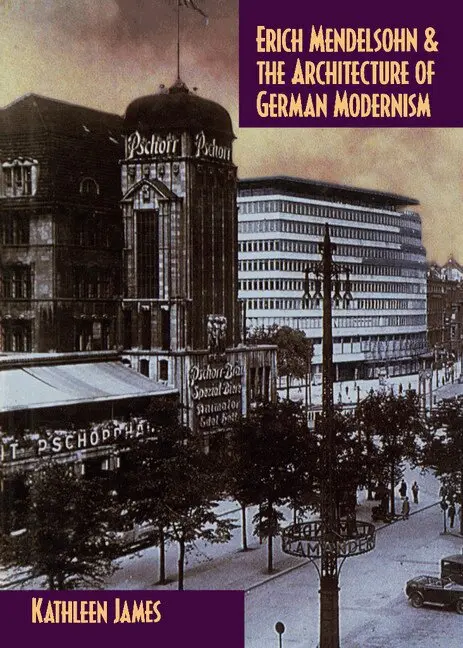
Erich Mendelsohn's buildings, erected throughout Germany between 1920 and 1932, epitomised architectural modernity for his countrymen. This study examines his department stores, office buildings, and cinemas, counterparts to the famous housing projects built during the same years in Frankfurt and Berlin. Demonstrating the degree to which their dynamic presence stemmed from Mendelsohn's attention to their consumer-oriented functions, James shows Mendelsohn to be more than an Expressionist, as he is usually characterised. James recounts how his architecture closely reflects the controversies over modernity, including relativity, consumerism, and urban planning, that raged during the years of the Weimar Republic. She also illustrates how much Mendelsohn's thriving practice depended on the patronage of fellow German Jews, many of whom shared his commitment to creating alternatives to the nationalistic historicism of the late Wilhelmine period.
539 kr
Skickas inom 7-10 vardagar
Before the Bauhaus re-evaluates the political, architectural, and artistic cultures of pre-World War I Germany. As contradictory and conflict-ridden as the German Second Reich itself, the world of architects, craftsmen and applied-arts 'artists' were not immune to the expansionist, imperialist, and capitalist struggles that transformed Germany in the quarter-century leading up to the First World War. In this study, John Maciuika brings together architectural and design history, political history, social and cultural geography. He substantially revises our understanding of the roots of the Bauhaus and, by extension, the historical roots of twentieth-century German architecture and design. His book sheds new light on hotly contested debates pertaining to the history of Germany in the pre-World War I era, notably the issues surrounding 'modernity' and 'anti-modernity' in Wilhelmine Germany, the character and effectiveness of the government administration, and the role played by the nation's most important architects, members of the rising bourgeois class, in challenging the traditional aristocracy at the top of the new German economic and social order.
1 404 kr
Skickas inom 7-10 vardagar
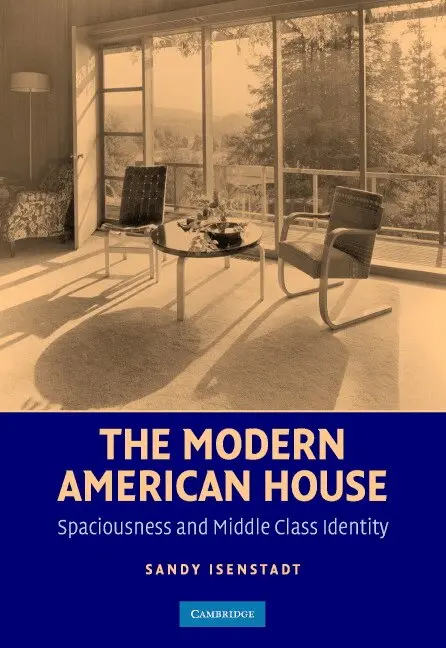
Sandy Isenstadt examines how architects, interior designers, and landscape designers worked to enhance spatial perception in middle class houses visually. The desire for spaciousness reached its highest pitch where it was most lacking, in the small, single-family houses that came to be the cornerstone of middle class life in the nineteenth century. In direct conflict with actual dimensions, spaciousness was linked to a tension unique to the middle class - between spatial aspirations and financial limitations. Although rarely addressed in a sustained fashion by theorists, practitioners, or the inhabitants of houses themselves, Isenstadt argues that spaciousness was central to the development of modern American domestic architecture, with explicit strategies for perceiving space being pivotal to modern house design. Through professional endorsement, concern for visual space found its way into discussion of real estate and law.