Modern Jewish Philosophy and Religion: Translations and Critical Studies – serie
Visar alla böcker i serien Modern Jewish Philosophy and Religion: Translations and Critical Studies. Handla med fri frakt och snabb leverans.
3 produkter
3 produkter
462 kr
Skickas inom 10-15 vardagar
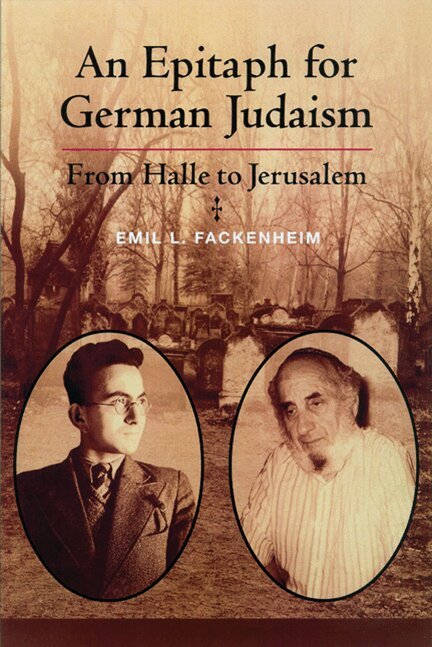
Emil Fackenheim's life work was to call upon the world at large - and on philosophers, Christians, Jews, and Germans in particular - to confront the Holocaust as an unprecedented assault on the Jewish people, Judaism, and all humanity. In this memoir, to which he was making final revisions at the time of his death, Fackenheim looks back on his life, at the profound and painful circumstances that shaped him as a philosopher and a committed Jewish thinker. Interned for three months in the Sachsenhausen concentration camp after Kristallnacht, Fackenheim was released and escaped to Scotland and then to Canada, where he lived in a refugee internment camp before eventually becoming a congregational rabbi and then, for thirty-five years, a professor of philosophy. He recalls here what it meant to be a German Jew in North America, the desperate need to respond to the crisis in Europe and to cope with its overwhelming implications for Jewish identity and community. His second great turning point came in 1967, as he saw Jews threatened with another Holocaust, this time in Israel. This crisis led him on a pilgrimage to Jerusalem and ultimately back to Germany, where he continued to grapple with the question, How can the Jewish faith - and the Christian faith - exist after the Holocaust?
194 kr
Skickas inom 10-15 vardagar
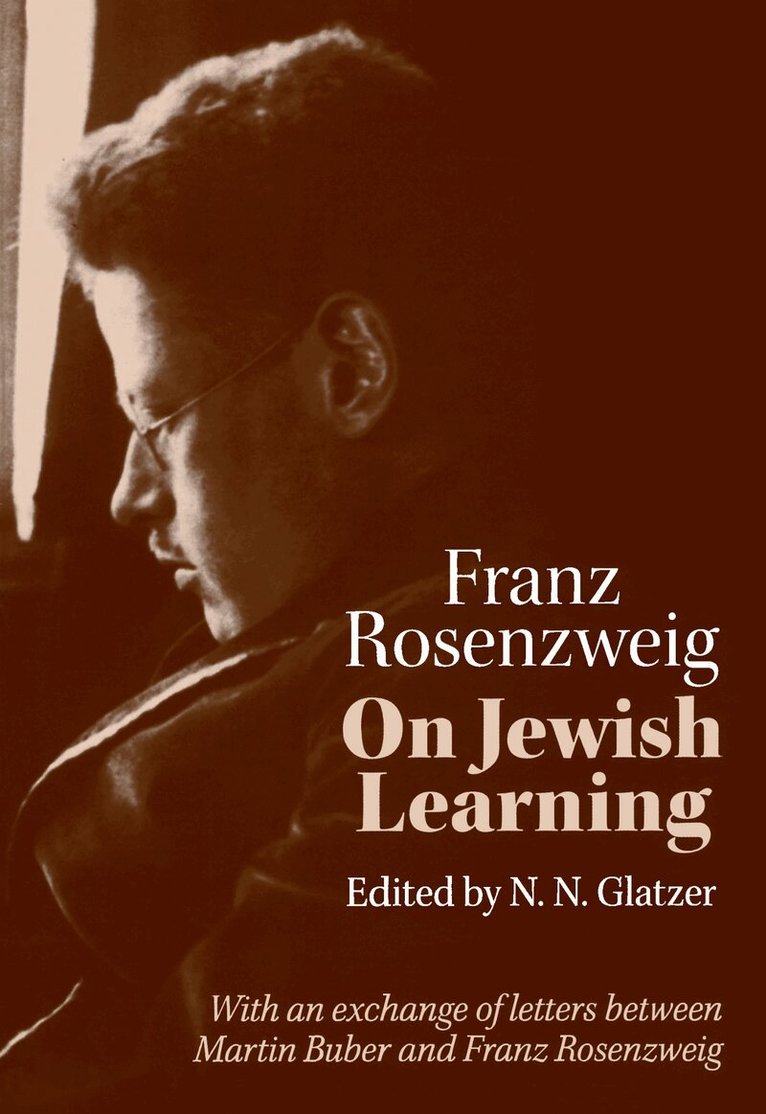
Franz Rosenzweig is one of the greatest contributors to Jewish philosophy in the twentieth century and is, with Martin Buber and Abraham Heschel, one of the Jewish thinkers most widely read by Christians. On Jewish Learning collects essays, speeches, and letters that express Rosenzweig’s desire to reconnect the profound truths of Judaism with the lives of ordinary people. An assimilated Jew and scholar of German philosophy, Rosenzweig was on the point of conversion to Christianity when the experience of a Yom Kippur service in 1913 brought him back to Judaism, and he began to study with philosopher Hermann Cohen. Seeking how to be an observant Jew in the modern world, Rosenzweig refused to characterize the traditions of Jewish law as mere rituals, customs, and folkways. His aim for himself and for others was to find Judaism by living it, and to live it by knowing it more deeply.The Wisconsin edition is not for sale in the British Commonwealth, the Republic of Ireland, or South Africa.
Hasidism on the Margin
Reconciliation, Antinomianism, and Messianism in Izbica and Radzin Hasidism
Häftad, Engelska, 2005
314 kr
Skickas inom 10-15 vardagar
Shaul Magid explores one of the most provocative and radical traditions of Hasidic thought, the school of Izbica and Radzin, that Rabbi Gershon Henokh founded in nineteenth-century Poland. Magid traces the intellectual history of this strand of Judaism into the present. He puts the Hasidism of Izbica-Radzin in context and provides a model for inquiry into other forms of Hasidism.