MRP S22 - Böcker
Visar alla böcker i serien MRP S22. Handla med fri frakt och snabb leverans.
10 produkter
10 produkter
266 kr
Skickas
The first-ever English translation reveals the inner voice of a brilliant Bolshevik journalist and politicianThrough this dramatic history by Stefan Heym, we become intimate with the story of the maverick and internationalist Karl Radek, known as the editor of the newspaper of record throughout the Soviet era, Isvestia. Beginning as Lenin's companion at the dawning of the October Revolution, Radek later became Stalin's favorite intellectual - only to find himself entangled in the great purges of the late 1930s and scripting his own trial. In this, his last historical novel, Heym reveals Radek as a brilliant Bolshevik journalist and politician who found himself at every turn of the wheel of fate.A central figure of the communist world, Radek was such a controversial and perennially ambiguous personality that even his historical biography seems a work of fiction. With his thick glasses and most non-Aryan appearance, marked by what some might have seen as distinctively Jewish argumentative skills and humor, Radek's enormous talent as a writer, political acumen, and continuous curiosity carried him through event after event. In the struggles of the revolutionary movement Radek changed sides several times and came into conflict with Stalin, was exiled to Siberia, capitulated and resumed his editorial duties at Isvestia - only to get caught up in the purge trials and sentenced to prison, where he died.As Heym sculpts credible conversations with Lenin, Luxemburg, Liebknecht, Trotsky, Stalin, and many others (all seen from Radek's perspective) we come to know Radek as a man haunted by the fear that the insurgency will cease to move forward, living his life as a frenzied chase in pursuit of the continuation of the revolution, until the very end. Originally published in Munich in 1995, this first-ever English translation of Radek fashions the inner voice of a unique figure in the global revolutionary wave of the first half of the twentieth century.
1 175 kr
Skickas inom 5-8 vardagar
The first-ever English translation reveals the inner voice of a brilliant Bolshevik journalist and politicianThrough this dramatic history by Stefan Heym, we become intimate with the story of the maverick and internationalist Karl Radek, known as the editor of the newspaper of record throughout the Soviet era, Isvestia. Beginning as Lenin's companion at the dawning of the October Revolution, Radek later became Stalin’s favorite intellectual – only to find himself entangled in the great purges of the late 1930s and scripting his own trial. In this, his last historical novel, Heym reveals Radek as a brilliant Bolshevik journalist and politician who found himself at every turn of the wheel of fate.A central figure of the communist world, Radek was such a controversial and perennially ambiguous personality that even his historical biography seems a work of fiction. With his thick glasses and most non-Aryan appearance, marked by what some might have seen as distinctively Jewish argumentative skills and humor, Radek’s enormous talent as a writer, political acumen, and continuous curiosity carried him through event after event. In the struggles of the revolutionary movement Radek changed sides several times and came into conflict with Stalin, was exiled to Siberia, capitulated and resumed his editorial duties at Isvestia – only to get caught up in the purge trials and sentenced to prison, where he died.As Heym sculpts credible conversations with Lenin, Luxemburg, Liebknecht, Trotsky, Stalin, and many others (all seen from Radek’s perspective) we come to know Radek as a man haunted by the fear that the insurgency will cease to move forward, living his life as a frenzied chase in pursuit of the continuation of the revolution, until the very end. Originally published in Munich in 1995, this first-ever English translation of Radek fashions the inner voice of a unique figure in the global revolutionary wave of the first half of the twentieth century.
173 kr
Skickas
1 119 kr
Skickas inom 5-8 vardagar
187 kr
Skickas
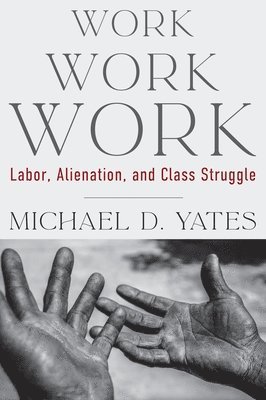
Explains the reality of labor markets and the nature and necessity of class struggleFor most economists, labor is simply a commodity, bought and sold in markets like any other – and what happens after that is not their concern. Individual prospective workers offer their services to individual employers, each acting solely out of self-interest and facing each other as equals. The forces of demand and supply operate so that there is neither a shortage nor a surplus of labor, and, in theory, workers and bosses achieve their respective ends. Michael D. Yates, in Work Work Work: Labor, Alienation, and Class Struggle, offers a vastly different take on the nature of the labor market.This book reveals the raw truth: The labor market is in fact a mere veil over the exploitation of workers. Peek behind it, and we clearly see the extraction, by a small but powerful class of productive property-owning capitalists, of a surplus from a much larger and propertyless class of wage laborers. Work Work Work offers us a glimpse into the mechanisms critical to this subterfuge: In every workplace, capital implements a comprehensive set of control mechanisms to constrain those who toil from defending themselves against exploitation. These include everything from the herding of workers into factories to the extreme forms of surveillance utilized by today’s “captains of industry” like the Waltons family (of the Walmart empire) and Jeff Bezos.In these strikingly lucid and passionately written chapters, Yates explains the reality of labor markets, the nature of work in capitalist societies, and the nature and necessity of class struggle, which alone can bring exploitation – and the system of control that makes it possible – to a final end.
1 052 kr
Skickas inom 5-8 vardagar
Explains the reality of labor markets and the nature and necessity of class struggleFor most economists, labor is simply a commodity, bought and sold in markets like any other – and what happens after that is not their concern. Individual prospective workers offer their services to individual employers, each acting solely out of self-interest and facing each other as equals. The forces of demand and supply operate so that there is neither a shortage nor a surplus of labor, and, in theory, workers and bosses achieve their respective ends. Michael D. Yates, in Work Work Work: Labor, Alienation, and Class Struggle, offers a vastly different take on the nature of the labor market.This book reveals the raw truth: The labor market is in fact a mere veil over the exploitation of workers. Peek behind it, and we clearly see the extraction, by a small but powerful class of productive property-owning capitalists, of a surplus from a much larger and propertyless class of wage laborers. Work Work Work offers us a glimpse into the mechanisms critical to this subterfuge: In every workplace, capital implements a comprehensive set of control mechanisms to constrain those who toil from defending themselves against exploitation. These include everything from the herding of workers into factories to the extreme forms of surveillance utilized by today’s “captains of industry” like the Waltons family (of the Walmart empire) and Jeff Bezos.In these strikingly lucid and passionately written chapters, Yates explains the reality of labor markets, the nature of work in capitalist societies, and the nature and necessity of class struggle, which alone can bring exploitation – and the system of control that makes it possible – to a final end.
180 kr
Tillfälligt slut
An intimate glimpse into the mind of a revolutionary of the civil rights movementAnne Braden was raised to be a southern belle. Instead she became a revolutionary who helped to shape the self-understanding of the entire civil rights movement. From her earliest days as a trade unionist in the radical wing of the Congress of Industrial Organizations, she had been one of a small handful of white Southerners willing to take a stand against Jim Crow in the 1950s. As a journalist throughout the 1960s, she offered a penetrating, historically-grounded analysis of events which was widely read by civil rights activists. She was an informal advisor to Rev. Dr. Martin Luther King, Jr.; a close associate of key leaders such as Ella Baker, Rev. Fred Shuttlesworth, and Myles Horton; and a mentor to countless young revolutionaries until her death in 2006.At a time when the North American ruling class went to great lengths to prevent any semblance of continuity between movements, Braden forged direct links between the radical left of the 1930s and 40s, and that of the 1960s. Beginning with her trial for sedition in 1954, she endured constant attacks at the hands of the U.S. government, largely due to her association with Communism. And yet, as deeply as she influenced the development of the early civil rights movement, the scale of Braden's contributions and insights have either been redacted to meet the needs of the official version of civil rights movement history, or been made palatable to the very same power structure she spent her entire life working to overturn. Anne Braden Speaks corrects this distorted narrative. Finally, and for the first time, we have full access to a representative collection of Braden’s writings, speeches, and letters, and the full spectrum of their subject matter: from the relationship between race and capitalism, to the role of the South in American society, to the function of anti-communism.
1 084 kr
Skickas inom 5-8 vardagar
An intimate glimpse into the mind of a revolutionary of the civil rights movementAnne Braden was raised to be a southern belle. Instead she became a revolutionary who helped to shape the self-understanding of the entire civil rights movement. From her earliest days as a trade unionist in the radical wing of the Congress of Industrial Organizations, she had been one of a small handful of white Southerners willing to take a stand against Jim Crow in the 1950s. As a journalist throughout the 1960s, she offered a penetrating, historically-grounded analysis of events which was widely read by civil rights activists. She was an informal advisor to Rev. Dr. Martin Luther King, Jr.; a close associate of key leaders such as Ella Baker, Rev. Fred Shuttlesworth, and Myles Horton; and a mentor to countless young revolutionaries until her death in 2006.At a time when the North American ruling class went to great lengths to prevent any semblance of continuity between movements, Braden forged direct links between the radical left of the 1930s and 40s, and that of the 1960s. Beginning with her trial for sedition in 1954, she endured constant attacks at the hands of the U.S. government, largely due to her association with Communism. And yet, as deeply as she influenced the development of the early civil rights movement, the scale of Braden's contributions and insights have either been redacted to meet the needs of the official version of civil rights movement history, or been made palatable to the very same power structure she spent her entire life working to overturn. Anne Braden Speaks corrects this distorted narrative. Finally, and for the first time, we have full access to a representative collection of Braden’s writings, speeches, and letters, and the full spectrum of their subject matter: from the relationship between race and capitalism, to the role of the South in American society, to the function of anti-communism.
298 kr
Skickas
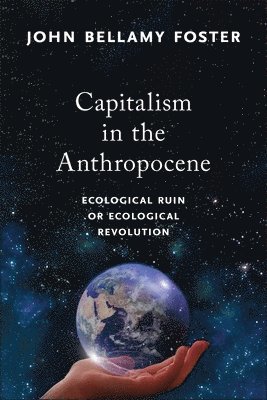
Explores capitalism’s role in creating the current state of climate emergencyOver the last 11,700 years, during which human civilization developed, the earth has existed within what geologists refer to as the Holocene Epoch. Now science is telling us that the Holocene Epoch in the geological time scale ended, replaced by a new more dangerous Anthropocene Epoch, which began around 1950. The Anthropocene Epoch is characterized by an “anthropogenic rift” in the biological cycles of the Earth System, marking a changed reality in which human activities are now the main geological force impacting the earth as a whole, generating at the same time an existential crisis for the world’s population.What caused this massive shift in the history of the earth? In this comprehensive study, John Bellamy Foster tells us that a globalized system of capital accumulation has induced humanity to foul its own nest. The result is a planetary emergency that threatens all present and future generations, throwing into question the continuation of civilization and ultimately the very survival of humanity itself. Only by addressing the social aspects of the current planetary emergency, exploring the theoretical, historical, and practical dimensions of the capitalism’s alteration of the planetary environment, is it possible to develop the ecological and social resources for a new journey of hope.
1 099 kr
Skickas inom 5-8 vardagar
Explores capitalism’s role in creating the current state of climate emergencyOver the last 11,700 years, during which human civilization developed, the earth has existed within what geologists refer to as the Holocene Epoch. Now science is telling us that the Holocene Epoch in the geological time scale ended, replaced by a new more dangerous Anthropocene Epoch, which began around 1950. The Anthropocene Epoch is characterized by an “anthropogenic rift” in the biological cycles of the Earth System, marking a changed reality in which human activities are now the main geological force impacting the earth as a whole, generating at the same time an existential crisis for the world’s population.What caused this massive shift in the history of the earth? In this comprehensive study, John Bellamy Foster tells us that a globalized system of capital accumulation has induced humanity to foul its own nest. The result is a planetary emergency that threatens all present and future generations, throwing into question the continuation of civilization and ultimately the very survival of humanity itself. Only by addressing the social aspects of the current planetary emergency, exploring the theoretical, historical, and practical dimensions of the capitalism’s alteration of the planetary environment, is it possible to develop the ecological and social resources for a new journey of hope.