John Bellamy Foster – författare
Visar alla böcker från författaren John Bellamy Foster. Handla med fri frakt och snabb leverans.
42 produkter
Albert Einstein’s "Why Socialism?"
The Enduring Relevance of His Classic Essay
Av Albert Einstein, John Bellamy Foster
Inbunden, 2025
234 kr
Lägg i varukorg
A contemporary look at Albert Einstein's classic call for socialismFirst published more than seventy-five years ago in the inaugural issue of Monthly Review: An Independent Socialist Magazine, Albert Einstein’s "Why Socialism?" is an unheralded classic. Written during the McCarthyite witch-hunt in …
Grand Theft Capital
What Workers Should Know about the Affordability Crisis
Av Fred Magdoff, John Bellamy Foster
Häftad, 2026
227 kr
Lägg i varukorg
As a casestudy in what awaits the United States and other countries, Digitalization inIndia is a warning and wake up call for democracies everywhere.
Dialectics of Ecology
Socalism and Nature
Häftad, 2024
252 kr
Lägg i varukorg
Explores ecological socialism's potential against capitalist environmental degradation Today the fate of the earth as a home for humanity is in question—and yet, contends John Bellamy Foster, the reunification of humanity and the earth remains possible if we are prepared to make revolutionary …
Breaking the Bonds of Fate
Epicurus and Marx
Inbunden, 2025
288 kr
Lägg i varukorg
Theimmanent dialectic of the ancient Greek materialist philosopher, Epicurus(341-270 BCE), helped inspire Karl Marx, and formed the subject of hisdoctoral dissertation. Marx’s detailed study of Epicurus led him to develophis own materialist dialectic in distinction to the idealist philosophy …
Ecological Rift
Capitalism's War on the Earth
Av John Bellamy Foster, Brett Clark m. fl.
Häftad, 2010
459 kr
Lägg i varukorg
Humanity in the twenty-first century is facing what might be described as its ultimate environmental catastrophe: the destruction of the climate that has nurtured human civilization and with it the basis of life on earth as we know it. All ecosystems on the planet are now in decline. Enormous rifts …
Marx And The Earth
An Anti-Critique
Av Paul Burkett, John Bellamy Foster
Häftad, 2017
363 kr
Lägg i varukorg
Over a decade ago Foster and Burkett introduced a revolutionary understanding of the ecological foundations of Marx's thought, demonstrating that Marx's concepts of the universal metabolism of nature, social metabolism, and metabolic rift prefigured much of modern systems ecology. In this volume, …
Marxâ (Tm)S Ecology
Materialism and Nature
Häftad, 2000
252 kr
Lägg i varukorg
Progress requires the conquest of nature. Or does it? This new account overturns conventional interpretations of Marx and in the process outlines a more rational approach to the current environmental crisis.Marx, it is often assumed, cared only about industrial growth and the development of …
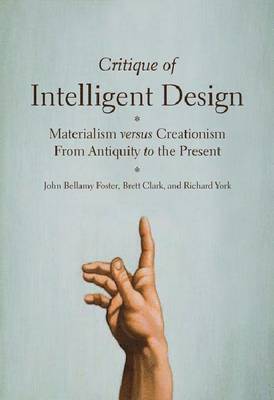
Critique of Intelligent Design
Materialism Versus Creationism from Antiquity to the Present
Av John Bellamy Foster, Brett W. Clark m. fl.
Inbunden, 2008
1127 kr
Lägg i varukorg
A critique of religious dogma historically provides the basis for rational inquiry into the physical and social world. "Critique of Intelligent Design" is a key to understanding the forces of irrationalism that seek to undermine the natural and social sciences. This book illuminates the historical …
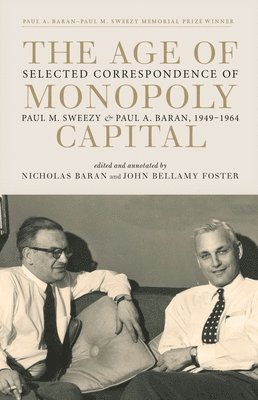
Age of Monopoly Capital
Selected Correspondence of Paul M. Sweezy and Paul A. Baran, 1949-1964
Av Paul M Sweezy, Paul A Baran m. fl.
Inbunden, 2017
794 kr
Lägg i varukorg
Beyond Leviathan
Critique of the State
Av István Mészáros, John Bellamy Foster
Häftad, 2022
313 kr
Lägg i varukorg
A field-defining masterwork, this posthumous publication maps the evolution of the idea of the state from ancient Greece to today István Mészáros was one of the greatest political theorists of the twentieth century. Left unfinished at the time of his death, Beyond Leviathan is written on the …
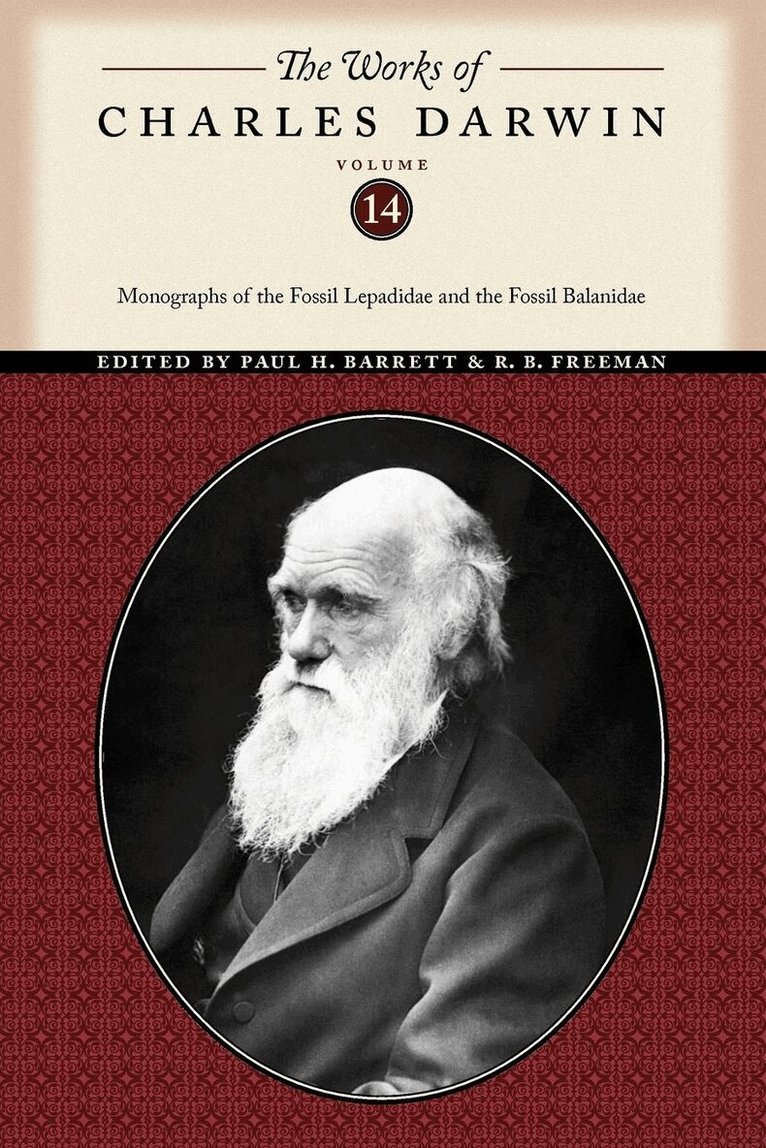
Works of Charles Darwin, Volume 14
Monographs of the Fossil Lepadidae and the Fossil Balanidae
Av Charles Darwin, John Bellamy Foster
Häftad, 2010
429 kr
Lägg i varukorg
Charles Robert Darwin (1809–1882) has been widely recognized since his own time as one of the most influential writers in the history of Western thought. His books were widely read by specialists and the general public, and his influence had been extended by almost continuous public debate over the …
In Defense of History: Marxism and the Postmodern Agenda
Av Ellen Meiksins Wood, John Bellamy Foster
Häftad, 1997
5,0 utav 5 stjärnor. Totalt antal röster: (1)
360 kr
Lägg i varukorg
In Defense of History: Marxism and the Postmodern Agenda
Av Ellen Meiksins Wood, John Bellamy Foster
Inbunden
1415 kr
Lägg i varukorg
Hungry for Profit
The Agribusiness Threat to Farmers, Food, and the Environment
Av Fred Magdoff, John Bellamy Foster m. fl.
Inbunden, 2000
1230 kr
Lägg i varukorg
Hungry for Profit
The Agribusiness Threat to Farmers, Food, and the Environment.
Av Fred Magdoff, John Bellamy Foster m. fl.
Häftad, 2000
324 kr
Lägg i varukorg
Pox Americana
Exposing the American Empire
Av John Bellamy Foster, Robert D McChesney
Inbunden, 2004
1183 kr
Lägg i varukorg
Critique of Intelligent Design
Materialism Versus Creationism from Antiquity to the Present
Av John Bellamy Foster, Brett W. Clark m. fl.
Häftad, 2008
313 kr
Lägg i varukorg
A critique of religious dogma historically provides the basis for rational inquiry into the physical and social world. "Critique of Intelligent Design" is a key to understanding the forces of irrationalism that seek to undermine the natural and social sciences. This book illuminates the historical …
Great Financial Crisis
Causes and Consequences
Av John Bellamy Foster, Fred Magdoff
Häftad, 2009
5,0 utav 5 stjärnor. Totalt antal röster: (1)
272 kr
Lägg i varukorg
What Every Environmentalist Needs to Know About Capitalism
Av John Bellamy Foster, Fred Magdoff
Häftad, 2011
5,0 utav 5 stjärnor. Totalt antal röster: (2)
166 kr
Lägg i varukorg
Endless Crisis
How Monopoly-finance Capital Produces Stagnation and Upheaval from the USA to China
Av John Bellamy Foster, Robert W. McChesney
Häftad, 2012
4,5 utav 5 stjärnor. Totalt antal röster: (2)
333 kr
Lägg i varukorg
Theory of Monopoly Capitalism
An Elaboration of Marxian Political Economy
Häftad, 2014
227 kr
Lägg i varukorg
In 1966, Paul Baran and Paul Sweezy published Monopoly Capital, a monumental work of economic theory and social criticism that sought to reveal the basic nature of the capitalism of their time. Their theory, and its continuing elaboration by Sweezy, Harry Magdoff, and others in Monthly Review …
Trump in the White House
Tragedy and Farce
Häftad, 2017
213 kr
Lägg i varukorg
Remember that metaphor about the frog that slowly cooks to death in the pot of increasingly warm water? Leftists have used it for years to describe how people can accept dwindling health care, fading job opportunities, eroding racial and gender equality'as long as the loss occurs gradually. Now, …
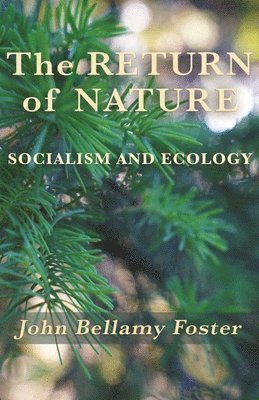
Return of Nature
Socialism and Ecology
Inbunden, 2020
504 kr
Lägg i varukorg
A fascinating reinterpretation of the radical and socialist origins of ecologyTwenty years ago, John Bellamy Foster's Marx's Ecology: Materialism and Nature introduced a new understanding of Karl Marx's revolutionary ecological materialism. More than simply a study of Marx, it commenced an …
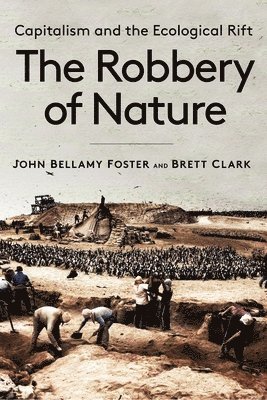
Robbery of Nature
Capitalism and the Ecological Rift
Av John Bellamy Foster, Brett Clark
Häftad, 2020
409 kr
Lägg i varukorg
Bridges the gap between social and environmental critiques of capitalismIn the nineteenth century, Karl Marx, inspired by the German chemist Justus von Liebig, argued that capitalism's relation to its natural environment was that of a robbery system, leading to an irreparable rift in the metabolism …