Inbunden, Engelska, 2025
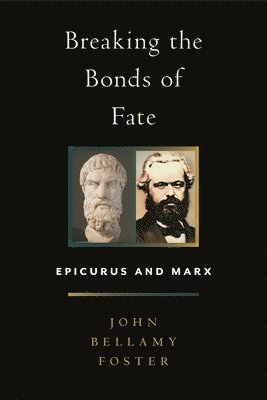
Breaking the Bonds of Fate
276 kr
Skickas onsdag 21/10. Fri frakt över 249 kr.
Beskrivning
Theimmanent dialectic of the ancient Greek materialist philosopher, Epicurus(341-270 BCE), helped inspire Karl Marx, and formed the subject of hisdoctoral dissertation. Marx’s detailed study of Epicurus led him to develophis own materialist dialectic in distinction to the idealist philosophy ofG.W.F. Hegel. Until now, however, there has been no full scholarly treatmentof the relation of Epicurus to Marx, paying equal attention to both thinkersand examining the long-term impact of Epicureanism on Marxist thought. Breaking the Bonds of Fate: Epicurus and Marx fills this gap. Taking intoconsideration today’s revolution in the understanding of Epicurus—resultingfrom the recovery of fragments of his major work On Nature in the carbonizedpapyri that survived the burying in volcanic ash of the Roman townHerculaneum when Mt. Vesuvius erupted in 79 CE—it demonstrates that this newinterpretation corresponds closely to Marx’s nineteenth-century treatment ofEpicurus. The result is to fundamentally transform our contemporaryunderstanding of both Epicurus and Marx. The last (though logically the first) book to be written in a trilogythat also includes John Bellamy Foster’s Marx’s Ecology: Materialism andNature (2000) and his The Return of Nature: Socialism and Ecology (2020),Breaking the Bonds of Fate: Epicurus and Marx provides a detailed historicaland textual analysis grounding the argument of all three works. Not only doesthis clarify Marx’s relation to materialism and ecology, but also hisanalysis of the of freedom and necessity. Both Epicurus’ philosophy and thatof Marx are given new meaning in our time, highlighting questions ofsubstantive equality, dialectical naturalism, and sustainable community.
Produktinformation
- Utgivningsdatum: 2025-11-30
- Mått: 200 x 20 x 150 mm
- Vikt: 525 g
- Format: Inbunden
- Språk: Engelska
- Antal sidor: 336
- Förlag: Monthly Review Press,U.S.
- ISBN: 9781685901233
Utforska kategorier
Betyg & recensioner
0 recensioner
Inga recensioner tillgängliga.