New Russian Thought - Böcker
Visar alla böcker i serien New Russian Thought. Handla med fri frakt och snabb leverans.
7 produkter
7 produkter
244 kr
Skickas inom 7-10 vardagar
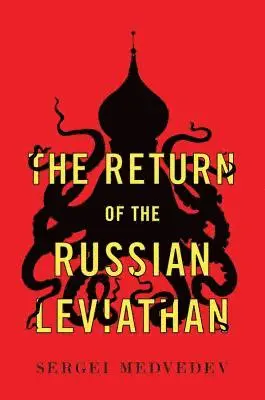
Winner of the 2020 Pushkin House Book PrizeRussia’s relationship with its neighbours and with the West has worsened dramatically in recent years. Under Vladimir Putin’s leadership, the country has annexed Crimea, begun a war in Eastern Ukraine, used chemical weapons on the streets of the UK and created an army of Internet trolls to meddle in the US presidential elections. How should we understand this apparent relapse into aggressive imperialism and militarism?In this book, Sergei Medvedev argues that this new wave of Russian nationalism is the result of mentalities that have long been embedded within the Russian psyche. Whereas in the West, the turbulent social changes of the 1960s and a rising awareness of the legacy of colonialism have modernized attitudes, Russia has been stymied by an enduring sense of superiority over its neighbours alongside a painful nostalgia for empire. It is this infantilized and irrational worldview that Putin and others have exploited, as seen most clearly in Russia’s recent foreign policy decisions, including the annexation of Crimea.This sharp and insightful book, full of irony and humour, shows how the archaic forces of imperial revanchism have been brought back to life, shaking Russian society and threatening the outside world. It will be of great interest to anyone trying to understand the forces shaping Russian politics and society today.Also available as an audiobook.
785 kr
Skickas inom 7-10 vardagar
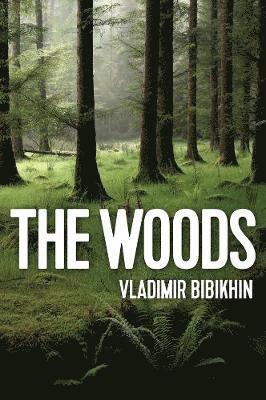
In our modern, urbanized societies, our engagement with the natural world often seems distant and superficial. Human life is now far removed from its prehistoric origins, when humans dwelt deep within the forests and depended on them for their survival.In this important book, Vladimir Bibikhin, one of Russia’s most influential twentieth-century philosophers, argues that, although most humans now live far from woods and forests, our existence remains profoundly linked to them. It was Aristotle who first appreciated their primal role, even deriving his notion of ‘matter’w from the Greek words for wood and forest. As timber, the woods may be seen as inanimate material, but at the same time they also constitute a living ecosystem and the source of energy and life. By opening up this duality, the woods are transformed from simple matter to a living environment, serving as a reminder that we belong to the world of biological life to a far greater extent than we usually think.The Woods will be of interest to students and scholars in philosophy and the humanities generally and to anyone concerned with the environment and our relationship to the natural world.
270 kr
Skickas inom 7-10 vardagar
In our modern, urbanized societies, our engagement with the natural world often seems distant and superficial. Human life is now far removed from its prehistoric origins, when humans dwelt deep within the forests and depended on them for their survival.In this important book, Vladimir Bibikhin, one of Russia’s most influential twentieth-century philosophers, argues that, although most humans now live far from woods and forests, our existence remains profoundly linked to them. It was Aristotle who first appreciated their primal role, even deriving his notion of ‘matter’w from the Greek words for wood and forest. As timber, the woods may be seen as inanimate material, but at the same time they also constitute a living ecosystem and the source of energy and life. By opening up this duality, the woods are transformed from simple matter to a living environment, serving as a reminder that we belong to the world of biological life to a far greater extent than we usually think.The Woods will be of interest to students and scholars in philosophy and the humanities generally and to anyone concerned with the environment and our relationship to the natural world.
176 kr
Skickas inom 7-10 vardagar
As one of the heroes of the 1917 February Revolution and then Prime Minister at the head of the Provisional Government, Alexander Kerensky was passionately, even fanatically, lauded as a leader during his brief political reign. Symbolic artefacts – sculptures, badges and medals - featuring his likeness abounded. Streets were renamed after him, his speeches were quoted on gravestones and literary odes dedicated to him proliferated in the major press. But, by October, Kerensky had been unceremoniously dethroned in the Bolshevik takeover and had fled to Paris and then to the US, where he would remain exiled and removed from his former glory until his death. The breakneck trajectory of his rise and fall and the intensity of his popularity were not merely a symptom of the chaos of those times but offer a window onto a much broader historical phenomenon which did not just begin with Lenin and Stalin – the cult of the leader. In this major new study of the Russian leadership cult, Boris Kolonitskii uses the figure of Kerensky to show how popular engagement with the idea of the leader became a key component of a cultural re-imagining of the political landscape after the fall of the monarchy. A parallel revolution was taking place on the level of creating a resonant political vocabulary where one had not existed before, and it was in the shared exercise of bestowing and dissolving authority that a politicised way of seeing began to emerge. Kolonitskii plots the unfurling of this symbolic revolution by examining the tapestry of images woven by Kerensky and those around him, and, in so doing, exposes his vital role in the development of nascent Soviet political culture. This highly original portrait of a revolutionary sheds new light on the cult of Kerensky that developed around this charismatic leader during the months following the overthrow of the tsar. It will be of value to students and scholars of Russian history and to those interested in political culture.
687 kr
Skickas inom 7-10 vardagar
Winner of the 2020 Pushkin House Book PrizeRussia’s relationship with its neighbours and with the West has worsened dramatically in recent years. Under Vladimir Putin’s leadership, the country has annexed Crimea, begun a war in Eastern Ukraine, used chemical weapons on the streets of the UK and created an army of Internet trolls to meddle in the US presidential elections. How should we understand this apparent relapse into aggressive imperialism and militarism?In this book, Sergei Medvedev argues that this new wave of Russian nationalism is the result of mentalities that have long been embedded within the Russian psyche. Whereas in the West, the turbulent social changes of the 1960s and a rising awareness of the legacy of colonialism have modernized attitudes, Russia has been stymied by an enduring sense of superiority over its neighbours alongside a painful nostalgia for empire. It is this infantilized and irrational worldview that Putin and others have exploited, as seen most clearly in Russia’s recent foreign policy decisions, including the annexation of Crimea.This sharp and insightful book, full of irony and humour, shows how the archaic forces of imperial revanchism have been brought back to life, shaking Russian society and threatening the outside world. It will be of great interest to anyone trying to understand the forces shaping Russian politics and society today.Also available as an audiobook.
Soviet Passport
The History, Nature and Uses of the Internal Passport in the USSR
Inbunden, Engelska, 2021
458 kr
Skickas inom 7-10 vardagar
In this remarkable book, Albert Baiburin provides the first in-depth study of the development and uses of the passport, or state identity card, in the former Soviet Union. First introduced in 1932, the Soviet passport took on an exceptional range of functions, extending not just to the regulation of movement and control of migrancy but also to the constitution of subjectivity and of social hierarchies based on place of residence, family background, and ethnic origin.While the basic role of the Soviet passport was to certify a person’s identity, it assumed a far greater significance in Soviet life. Without it, a person literally ‘disappeared’ from society. It was impossible to find employment or carry out everyday activities like picking up a parcel from the post office; a person could not marry or even officially die without a passport. It was absolutely essential on virtually every occasion when an individual had contact with officialdom because it was always necessary to prove that the individual was the person whom they claimed to be. And since the passport included an indication of the holder’s ethnic identity, individuals found themselves accorded a certain rank in a new hierarchy of nationalities where some ethnic categories were ‘normal’ and others were stigmatized. Passport systems were used by state officials for the deportation of entire population categories – the so-called ‘former people’, those from the pre-revolutionary elite, and the relations of ‘enemies of the people’. But at the same time, passport ownership became the signifier of an acceptable social existence, and the passport itself – the information it contained, the photographs and signatures – became part of the life experience and self-perception of those who possessed it.This meticulously researched and highly original book will be of great interest to students and scholars of Russia and the Soviet Union and to anyone interested in the shaping of identity in the modern world.
243 kr
Skickas inom 7-10 vardagar
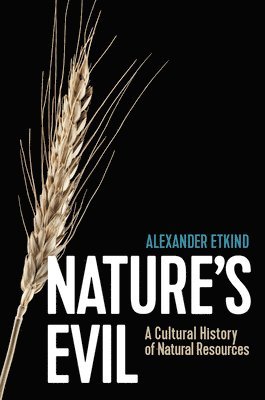
This bold and wide-ranging book views the history of humankind through the prism of natural resources – how we acquire them, use them, value them, trade them, exploit them. History needs a cast of characters and in this story the leading actors are peat and hemp, grain and iron, fur and oil, each with its own tale to tell. The uneven spread of available resources was the prime mover for trade, which in turn led to the accumulation of wealth, the growth of inequality and the proliferation of evil. Different sorts of raw material have different political implications and give rise to different social institutions. When a country switches its reliance from one commodity to another, this often leads to wars and revolutions. But none of these crises go to waste – they all lead to dramatic changes in the relations between matter, labour and the state. Our world is the result of a fragile pact between people and nature. As we stand on the verge of climate catastrophe, nature has joined us in our struggle to distinguish between good and evil. And since we have failed to change the world, now is the moment to understand how it works.