Notre Dame Studies in Law and Contemporary Issues - Böcker
Visar alla böcker i serien Notre Dame Studies in Law and Contemporary Issues. Handla med fri frakt och snabb leverans.
7 produkter
7 produkter
1 077 kr
Skickas inom 10-15 vardagar
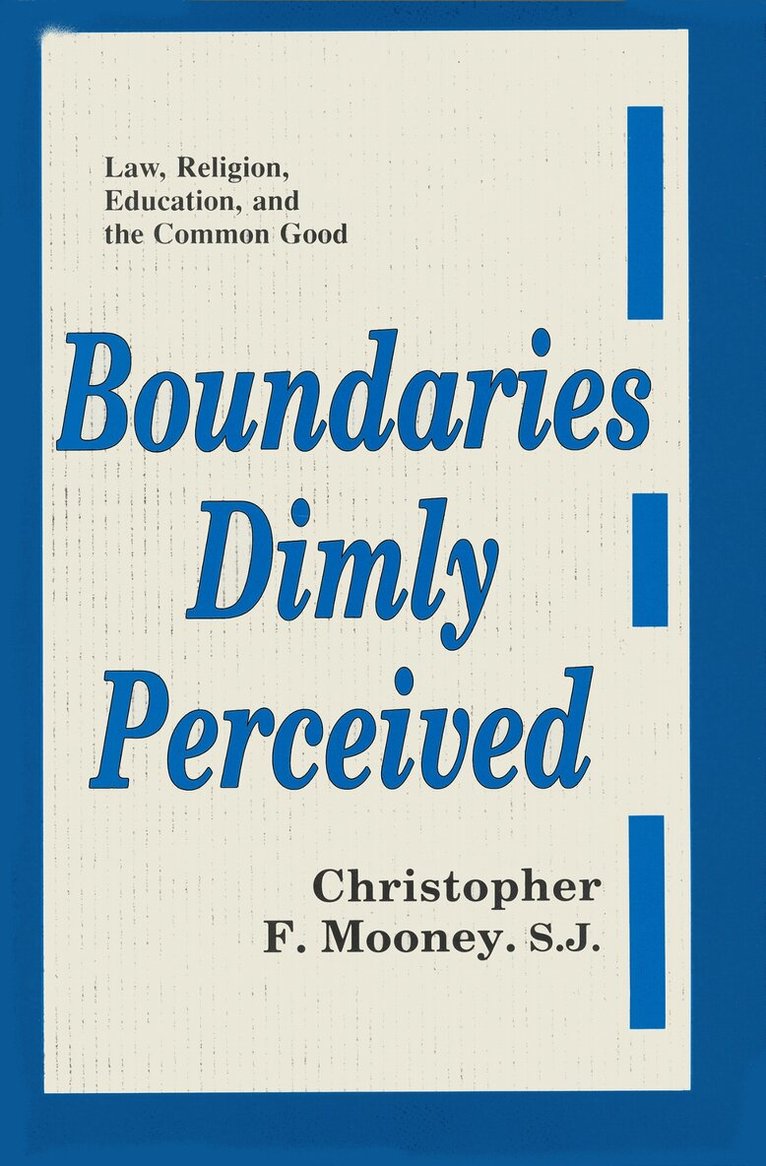
How do you construct and maintain a secular federal government in an essentially religious society? This question has been debated from our founding fathers to our court justices of today. This issue is discussed here as it relates to the law, religion, education and the common good.
1 077 kr
Skickas inom 10-15 vardagar
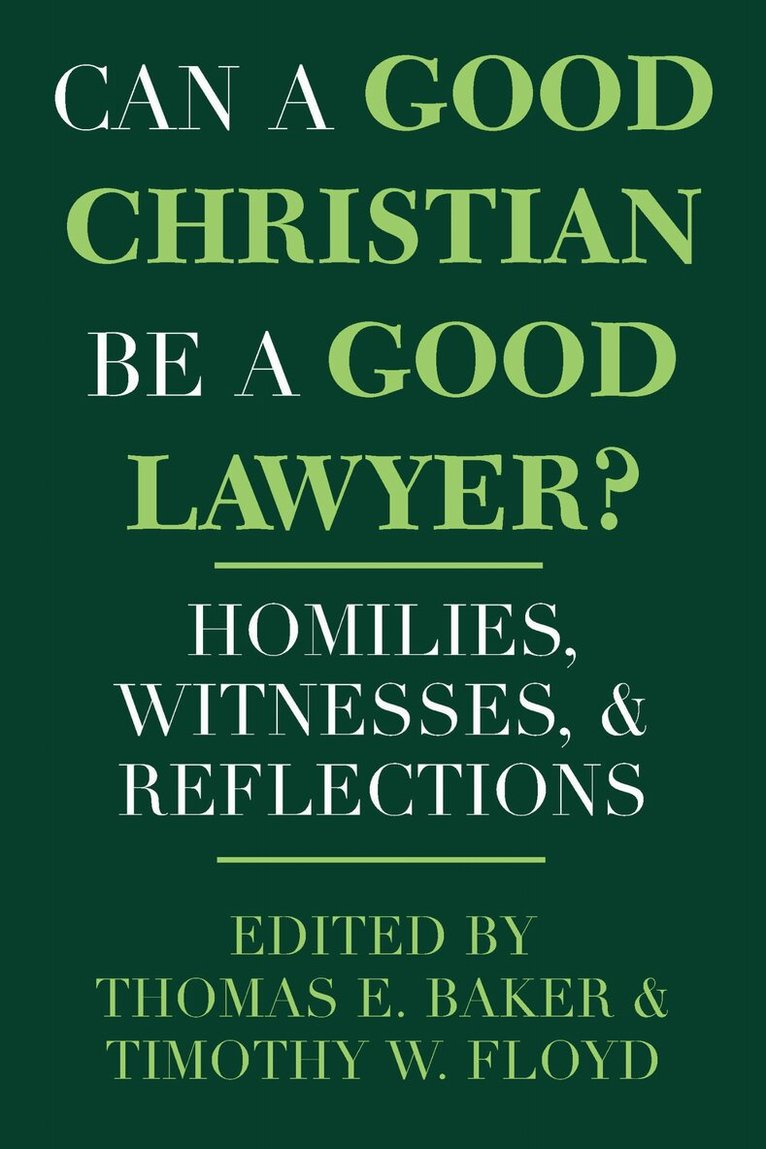
Law professors Thomas E. Baker and Timothy W. Floyd asked some of their legal colleagues to respond to this provocative question: "Can a good Christian be a good lawyer?" Here are twenty-one highly personal narratives that answer the question of how each writer tries, sometimes but not always successfully, to be both a good Christian and a good lawyer.How does a lawyer called to live the Gospel of Jesus Christ reconcile his or her faith with the secular calling to the legal profession? The editors did not set out to provide some kind of final resolution or unified consensus. Instead, they have compiled a remarkable collection of reflections by lawyers, judges, and academics who represent many different branches of Christianity.The reader is likely to find many role models to emulate and the inspiration to continue to fight the good fight in these accounts grounded in legal and Christian thought. Reading about these real-life ethical dilemmas, conflicting loyalties, and personal difficulties offers the reassurance that others have shared their ongoing struggle to rhyme their career with their faith. Although every lawyer will find Can a Good Christian Be a Good Lawyer? especially meaningful, these essays speak to all persons of faith who strive to practice their beliefs in their work.
301 kr
Skickas inom 10-15 vardagar
Law professors Thomas E. Baker and Timothy W. Floyd asked some of their legal colleagues to respond to this provocative question: "Can a good Christian be a good lawyer?" Here are twenty-one highly personal narratives that answer the question of how each writer tries, sometimes but not always successfully, to be both a good Christian and a good lawyer.How does a lawyer called to live the Gospel of Jesus Christ reconcile his or her faith with the secular calling to the legal profession? The editors did not set out to provide some kind of final resolution or unified consensus. Instead, they have compiled a remarkable collection of reflections by lawyers, judges, and academics who represent many different branches of Christianity.The reader is likely to find many role models to emulate and the inspiration to continue to fight the good fight in these accounts grounded in legal and Christian thought. Reading about these real-life ethical dilemmas, conflicting loyalties, and personal difficulties offers the reassurance that others have shared their ongoing struggle to rhyme their career with their faith. Although every lawyer will find Can a Good Christian Be a Good Lawyer? especially meaningful, these essays speak to all persons of faith who strive to practice their beliefs in their work.
1 077 kr
Skickas inom 10-15 vardagar
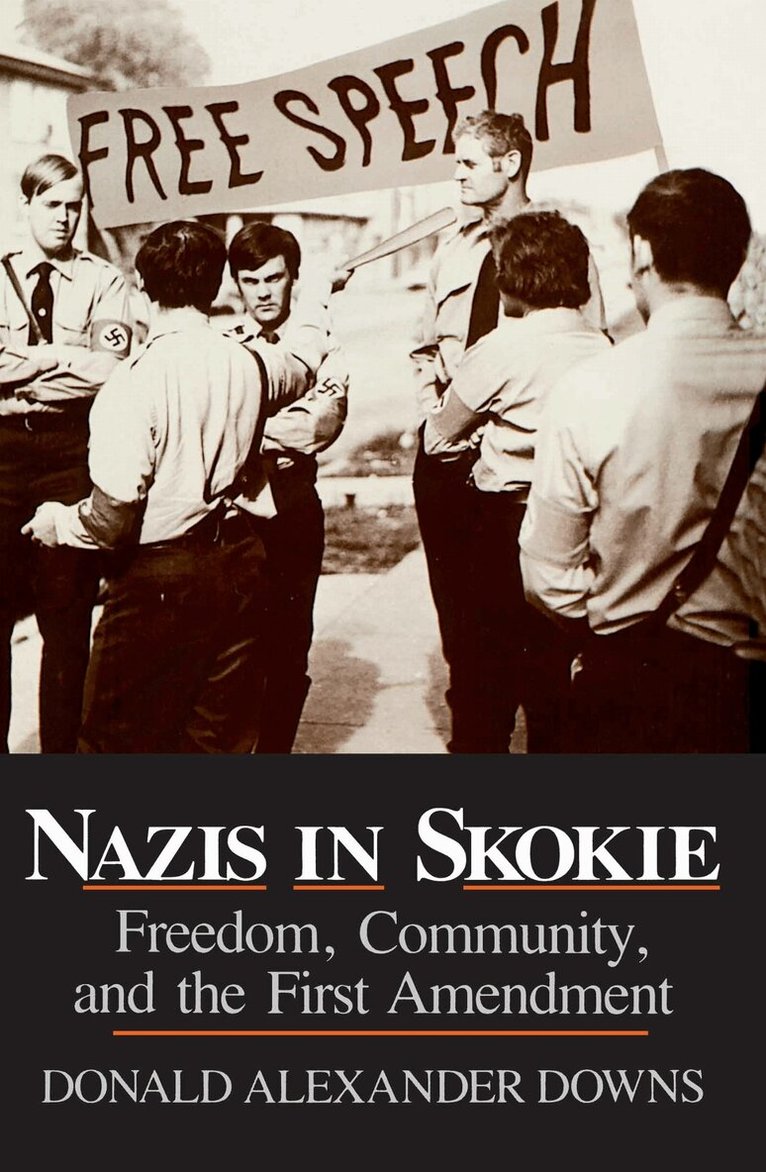
In 1977, a Chicago-based Nazi group announced its plans to demonstrate in Skokie, Illinois, the home of hundreds of Holocaust survivors. The shocked survivor community rose in protest and the issue went to court, with the ACLU defending the Nazis' right to free speech. The court ruled in the Nazis' favor. According to the "content neutrality doctrine" governing First Amendment jurisprudence, the Nazis' insults and villifications were "neutral"--not the issue, as far as the law was concerned. But to Downs, they are at issue. In Nazis in Skokie he challenges the doctrine of "content neutrality" and presents an argument for the minimal abridgment of free speech when that speech in intentionally harmful. Draawing on his interviews with participants in the conflict, Downs combines detailed social history with informed legal interpretation in a provocative examination of an abiding tension between individual freedom and community integrity, and between procedural and substantive justice.
301 kr
Skickas inom 10-15 vardagar
In 1977, a Chicago-based Nazi group announced its plans to demonstrate in Skokie, Illinois, the home of hundreds of Holocaust survivors. The shocked survivor community rose in protest and the issue went to court, with the ACLU defending the Nazis' right to free speech. The court ruled in the Nazis' favor. According to the "content neutrality doctrine" governing First Amendment jurisprudence, the Nazis' insults and villifications were "neutral"--not the issue, as far as the law was concerned. But to Downs, they are at issue. In Nazis in Skokie he challenges the doctrine of "content neutrality" and presents an argument for the minimal abridgment of free speech when that speech in intentionally harmful. Draawing on his interviews with participants in the conflict, Downs combines detailed social history with informed legal interpretation in a provocative examination of an abiding tension between individual freedom and community integrity, and between procedural and substantive justice.
1 344 kr
Skickas inom 10-15 vardagar
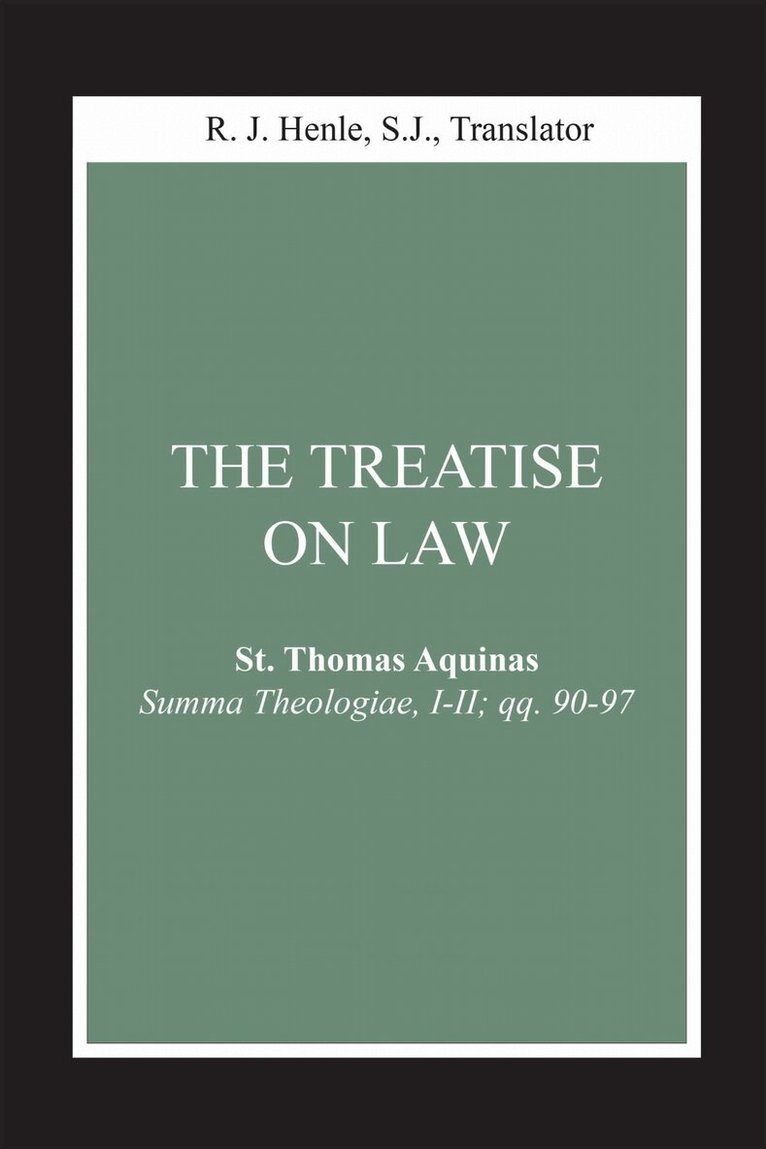
In this translation of Saint Thomas Aquinas's The Treatise on Law, R. J. Henle, S.J., a well-known authority on philosophy and jurisprudence, fluently and accurately presents the Latin and English translation of this important work. Henle provides the necessary background for an informed reading of the Treatise, as well as the only in-depth commentary available in English on this text. The first section of the book contains an introduction to St. Thomas's life, work, writings, and jurisprudence. Henle discusses the structure of St. Thomas's magnum opus, Summa Theologiae, from which The Treatise on Law is excerpted. A brief section is included on Scholastic philosophy and also on St. Thomas's approach to the study of law. Henle then examines Thomas's definition of a law and the general doctrinal background for the Treatise. Finally Henle explores St. Thomas's sources, including his use of auctoritates, or authoritative quotations drawn primarily from the Bible, Aristotle, St. Augustine, and St. Isidore of Seville. The second part of the book contains the Latin text of the Treatise presented unit by unit, each followed by the English translation and, when appropriate, by a comment. The Treatise on Law will be of interest to law students, lawyers, judges, and legal scholars. It will also appeal to those interested in St. Thomas's legal philosophy, such as political scientists, theoretical sociologists, and cultural historians. For philosophers, especially beginners in medieval philosophy, it serves as a good introduction to the thought of St. Thomas.
381 kr
Skickas inom 10-15 vardagar
In this translation of Saint Thomas Aquinas's The Treatise on Law, R. J. Henle, S.J., a well-known authority on philosophy and jurisprudence, fluently and accurately presents the Latin and English translation of this important work. Henle provides the necessary background for an informed reading of the Treatise, as well as the only in-depth commentary available in English on this text. The first section of the book contains an introduction to St. Thomas's life, work, writings, and jurisprudence. Henle discusses the structure of St. Thomas's magnum opus, Summa Theologiae, from which The Treatise on Law is excerpted. A brief section is included on Scholastic philosophy and also on St. Thomas's approach to the study of law. Henle then examines Thomas's definition of a law and the general doctrinal background for the Treatise. Finally Henle explores St. Thomas's sources, including his use of auctoritates, or authoritative quotations drawn primarily from the Bible, Aristotle, St. Augustine, and St. Isidore of Seville. The second part of the book contains the Latin text of the Treatise presented unit by unit, each followed by the English translation and, when appropriate, by a comment. The Treatise on Law will be of interest to law students, lawyers, judges, and legal scholars. It will also appeal to those interested in St. Thomas's legal philosophy, such as political scientists, theoretical sociologists, and cultural historians. For philosophers, especially beginners in medieval philosophy, it serves as a good introduction to the thought of St. Thomas.