

Occasional Papers of the Royal Anthropological Institute – serie
Visar alla böcker i serien Occasional Papers of the Royal Anthropological Institute. Handla med fri frakt och snabb leverans.
2 produkter
2 produkter
Del 45 - Occasional Papers of the Royal Anthropological Institute
Dunbar’s Number
Inbunden, Engelska, 2019
813 kr
Skickas inom 5-8 vardagar
Dunbar’s Number, as the limit on the size of both social groups and personal social networks, has achieved something close to iconic status and is one of the most influential concepts to have emerged out of anthropology in the last quarter century. It is widely cited throughout the social sciences,archaeology, psychology and network science,and its reverberations have been felt as far afield as the worlds of business organization and social-networking sites, whose design it has come to underpin.Named after its originator, Robin Dunbar, whose career has spanned biological anthropology, zoology and evolutionary psychology, it stands testament to the importance of an interdisciplinary approach to human behaviour. In this collectionDunbar joins authors from a wide range of disciplines to explore Dunbar’s Number’s conceptual origins, as well as the evidence supporting it, and to reflect on its wider implications in archaeology, social anthropology and medicine.
1 132 kr
Skickas inom 5-8 vardagar
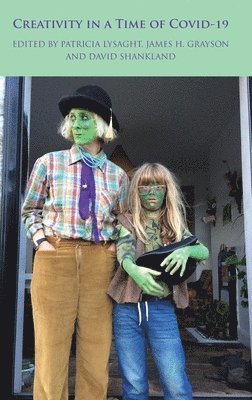
Creative responses to Covid 19 – no longer consumed by notions of divine retribution as in past plagues – constituted a broad cultural flowering, often within the digital world. This volume combines anthropology’s understanding of ritual and society with folklore’s appreciation of the marginal to explore the role of artistic practice in this period.The chapters consider many different examples of artistic resourcefulness in this time of adversity. Lockdown constraints provided opportunities to re-invent traditions, as in the alternative ‘non-fiestas’ of the Basque Country, in which women took up roles previously denied to them. On the pilgrim route of St James, decorating shrines allowed people a sense of normality and continuity at a time when churches had closed their doors. The shutting of venues led one group of Japanese classical musicians to new online ways of working, and a global following. Making a church tour in Buenas Aires virtual amplified an old legend that resonated with the media, highlighting the scandal of femicide during the pandemic.For individuals, online crafting might lend apt metaphors of mending, stabilizing and repair to daily lives; but, in the case of collage, absurdity and disjunction could also express uncomfortable new meanings. Forums of positive haiku blossomed; but satirical responses in the reworking of traditional Greek proverbs on Twitter, allowed participants to signal their distrust of politicians through creative uses of language. Anti-Vaxx and QAnon narratives, when viewed as folklore rather than disinformation foregrounding the fashioning of self and community within digital space. Children repurposed old games with ‘Coronavirus tag’, while locked-down artist-parents’ creative engagement with the world beyond their front door led to a national campaign for the rights of children to play on the street.Overall, there was a shift in artistic practice from inward activity to one undertaken in social solidarity. In many ways, this is the unifying theme of this startling period of recent history, as well as of this volume.