Organizational Change and Innovation - Böcker
Visar alla böcker i serien Organizational Change and Innovation. Handla med fri frakt och snabb leverans.
4 produkter
4 produkter
1 093 kr
Skickas inom 10-15 vardagar
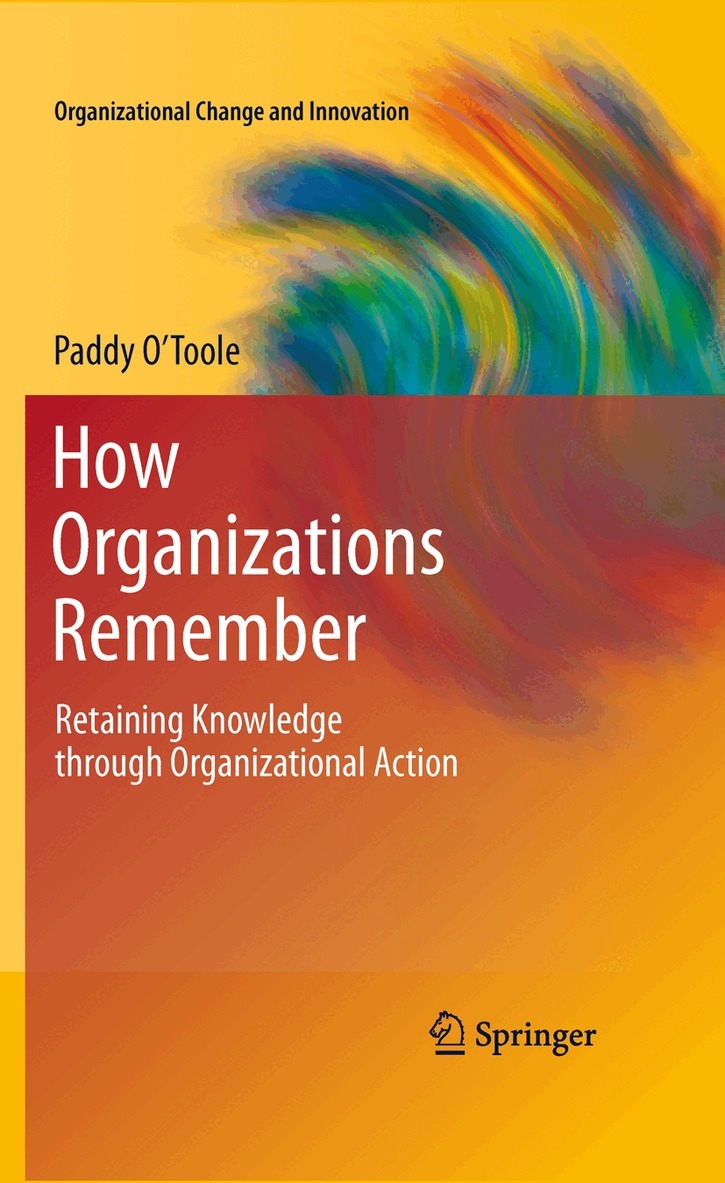
How an organization works is largely a function of what it knows—i.e., the collective knowledge about all aspects of the enterprise, from competitive intelligence to formal systems and policies to the ways in which individuals solve problems and share their expertise. Organizational knowledge is not to be found in manuals and web sites, but in the day-to-day interactions among employees, suppliers, customers, investors, and other stakeholders. How Organizations Remember is based on a 10-month study of a technology firm with locations in three countries (Australia, US, and Ireland); the company has undergone rapid growth and expansion, which have had a profound impact on power structures and organizational culture, and hence, on the ways in which knowledge is created and disseminated. The author discovered that what is remembered is diverse, and of differing value within and across the organization. How knowledge is remembered is equally diverse, and ranges from computer files to cartoons on the wall, from stories to the way objects are placed on a desk. Knowledge is influenced by external influences as well as internal influences; knowledge may become a competitive advantage, but may also contribute to inertia. The book combines theoretical perspectives and empirical findings to generate insights that contribute to both research and practice in organizational learning, innovation, culture, and behavior.
1 032 kr
Skickas inom 10-15 vardagar
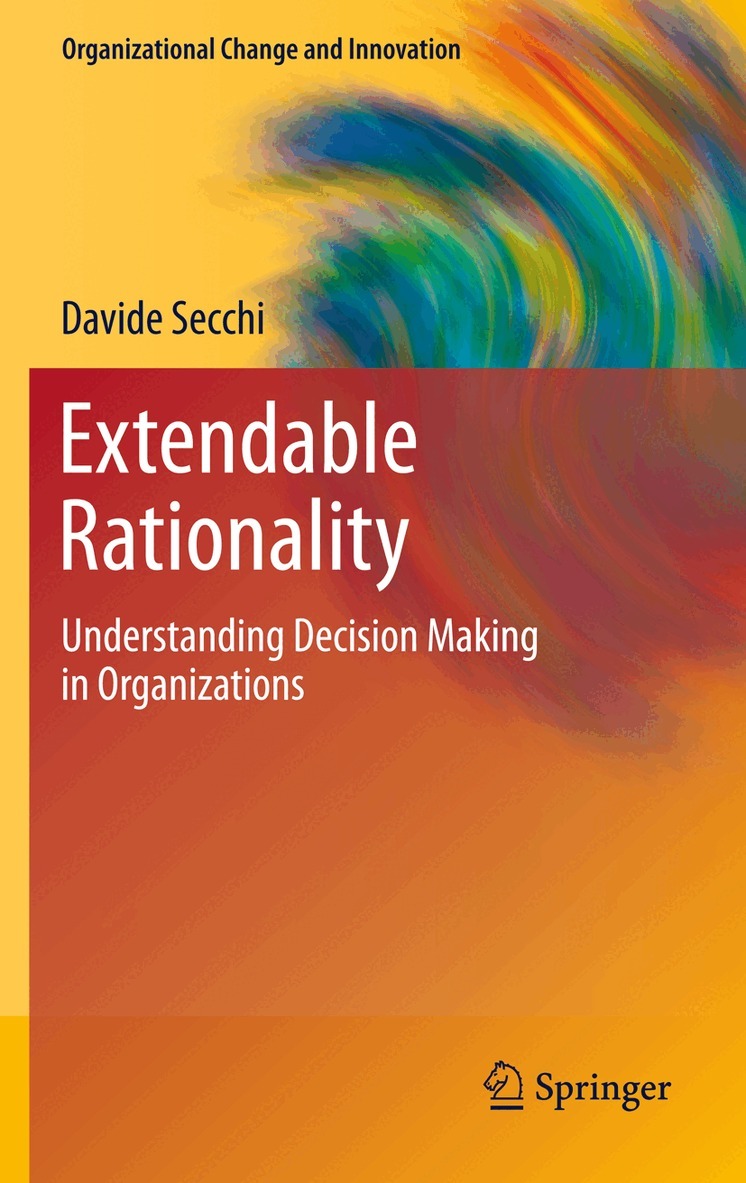
“How do people make decisions in organizations?” is the question at the core of this book. Do people act rationally? Under what conditions can information and knowledge be shared to improve decision making? Davide Secchi applies concepts and theories from cognitive science, organizational behavior, and social psychology to explore the dynamics of decision making. In particular, he integrates “bounded rationality” (people are only partly rational; they have (a) limited computational capabilities and (b) limited access to information) and “distributed cognition” (knowledge is not confined to an individual, but is distributed across the members of a group) to build upon the pioneering work of Herbert Simon (1916-2001) on rational decision making and contribute fresh insights.This book is divided into two parts. The first part (Chapters 2 to 5) explores how recent studies on biases, prospect theory, heuristics, and emotions provide the so-called “map” of bounded rationality. The second part (Chapter 6 to 8) presents the idea of extendable rationality. In this section, Secchi identifies the limitations of bounded rationality and focuses more heavily on socially-based decision processes and the role of “docility” in teaching, managing, and executing decisions in organizations. The practical implications extend broadly to issues relating to change and innovation, as organizations adapt to evolving market conditions, implementing new systems, and effectively managing limited resources. The final chapter outlines an agenda for future research to help understand the decision making characteristics and capabilities of an organization.
Del 1 - Organizational Change and Innovation
Extendable Rationality
Understanding Decision Making in Organizations
Häftad, Engelska, 2012
1 032 kr
Skickas inom 10-15 vardagar
“How do people make decisions in organizations?” is the question at the core of this book. Do people act rationally? Under what conditions can information and knowledge be shared to improve decision making? Davide Secchi applies concepts and theories from cognitive science, organizational behavior, and social psychology to explore the dynamics of decision making. In particular, he integrates “bounded rationality” (people are only partly rational; they have (a) limited computational capabilities and (b) limited access to information) and “distributed cognition” (knowledge is not confined to an individual, but is distributed across the members of a group) to build upon the pioneering work of Herbert Simon (1916-2001) on rational decision making and contribute fresh insights.This book is divided into two parts. The first part (Chapters 2 to 5) explores how recent studies on biases, prospect theory, heuristics, and emotions provide the so-called “map” of bounded rationality. The second part (Chapter 6 to 8) presents the idea of extendable rationality. In this section, Secchi identifies the limitations of bounded rationality and focuses more heavily on socially-based decision processes and the role of “docility” in teaching, managing, and executing decisions in organizations. The practical implications extend broadly to issues relating to change and innovation, as organizations adapt to evolving market conditions, implementing new systems, and effectively managing limited resources. The final chapter outlines an agenda for future research to help understand the decision making characteristics and capabilities of an organization.
Del 2 - Organizational Change and Innovation
How Organizations Remember
Retaining Knowledge through Organizational Action
Häftad, Engelska, 2012
1 093 kr
Skickas inom 10-15 vardagar
How an organization works is largely a function of what it knows—i.e., the collective knowledge about all aspects of the enterprise, from competitive intelligence to formal systems and policies to the ways in which individuals solve problems and share their expertise. Organizational knowledge is not to be found in manuals and web sites, but in the day-to-day interactions among employees, suppliers, customers, investors, and other stakeholders. How Organizations Remember is based on a 10-month study of a technology firm with locations in three countries (Australia, US, and Ireland); the company has undergone rapid growth and expansion, which have had a profound impact on power structures and organizational culture, and hence, on the ways in which knowledge is created and disseminated. The author discovered that what is remembered is diverse, and of differing value within and across the organization. How knowledge is remembered is equally diverse, and ranges from computer files to cartoons on the wall, from stories to the way objects are placed on a desk. Knowledge is influenced by external influences as well as internal influences; knowledge may become a competitive advantage, but may also contribute to inertia. The book combines theoretical perspectives and empirical findings to generate insights that contribute to both research and practice in organizational learning, innovation, culture, and behavior.