Our Compelling Interests - Böcker
Visar alla böcker i serien Our Compelling Interests. Handla med fri frakt och snabb leverans.
10 produkter
10 produkter
Our Compelling Interests
The Value of Diversity for Democracy and a Prosperous Society
Inbunden, Engelska, 2016
339 kr
Skickas inom 7-10 vardagar
It is clear that in our society today, issues of diversity and social connectedness remain deeply unresolved and can lead to crisis and instability. The major demographic changes taking place in America make discussions about such issues all the more imperative. Our Compelling Interests engages this conversation and demonstrates that diversity is an essential strength that gives nations a competitive edge. This inaugural volume of the Andrew W. Mellon Foundation's Our Compelling Interests series illustrates that a diverse population offers our communities a prescription for thriving now and in the future. This landmark essay collection begins with a powerful introduction situating the demographic transitions reshaping American life, and the contributors present a broad-ranging look at the value of diversity to democracy and civil society. They explore the paradoxes of diversity and inequality in the fifty years following the civil rights legislation of the 1960s, and they review the ideals that have governed our thinking about social cohesion--such as assimilation, integration, and multiculturalism--before delving into the new ideal of social connectedness.The book also examines the demographics of the American labor force and its implications for college enrollment, graduation, the ability to secure a job, business outcomes, and the economy. Contributors include Danielle Allen, Nancy Cantor, Anthony Carnevale, William Frey, Earl Lewis, Nicole Smith, Thomas Sugrue, and Marta Tienda. Commentary is provided by Kwame Anthony Appiah, Patricia Gurin, Ira Katznelson, and Marta Tienda. At a time when American society is swiftly being transformed, Our Compelling Interests sheds light on how our differences will only become more critical to our collective success.
363 kr
Skickas inom 7-10 vardagar
How businesses and other organizations can improve their performance by tapping the power of differences in how people think What if workforce diversity is more than simply the right thing to do in order to make society more integrated and just? What if diversity can also improve the bottom line of businesses and other organizations facing complex challenges in the knowledge economy? It can. And The Diversity Bonus shows how and why. Scott Page, a leading thinker, writer, and speaker whose ideas and advice are sought after by corporations, nonprofits, universities, and governments around the world, makes a clear and compellingly pragmatic case for diversity and inclusion. He presents overwhelming evidence that teams that include different kinds of thinkers outperform homogenous groups on complex tasks, producing what he calls "diversity bonuses." These bonuses include improved problem solving, increased innovation, and more accurate predictions--all of which lead to better performance and results.Page shows that various types of cognitive diversity--differences in how people perceive, encode, analyze, and organize the same information and experiences--are linked to better outcomes. He then describes how these cognitive differences are influenced by other kinds of diversity, including racial and gender differences--in other words, identity diversity. Identity diversity, therefore, can also produce bonuses. Drawing on research in economics, psychology, computer science, and many other fields, The Diversity Bonus also tells the stories of people and organizations that have tapped the power of diversity to solve complex problems. And the book includes a challenging response from Katherine Phillips of the Columbia Business School. The result changes the way we think about diversity in the workplace--and far beyond it.
Our Compelling Interests
The Value of Diversity for Democracy and a Prosperous Society
Häftad, Engelska, 2017
188 kr
Skickas inom 7-10 vardagar
It is clear that in our society today, issues of diversity and social connectedness remain deeply unresolved and can lead to crisis and instability. The major demographic changes taking place in America make discussions about such issues all the more imperative. Our Compelling Interests engages this conversation and demonstrates that diversity is an essential strength that gives nations a competitive edge. This inaugural volume of the Andrew W. Mellon Foundation's Our Compelling Interests series illustrates that a diverse population offers our communities a prescription for thriving now and in the future. This landmark essay collection begins with a powerful introduction situating the demographic transitions reshaping American life, and the contributors present a broad-ranging look at the value of diversity to democracy and civil society. They explore the paradoxes of diversity and inequality in the fifty years following the civil rights legislation of the 1960s, and they review the ideals that have governed our thinking about social cohesion--such as assimilation, integration, and multiculturalism--before delving into the new ideal of social connectedness.The book also examines the demographics of the American labor force and its implications for college enrollment, graduation, the ability to secure a job, business outcomes, and the economy. Contributors include Danielle Allen, Nancy Cantor, Anthony Carnevale, William Frey, Earl Lewis, Nicole Smith, Thomas Sugrue, and Marta Tienda. Commentary is provided by Kwame Anthony Appiah, Patricia Gurin, Ira Katznelson, and Marta Tienda. At a time when American society is swiftly being transformed, Our Compelling Interests sheds light on how our differences will only become more critical to our collective success.
228 kr
Skickas inom 7-10 vardagar
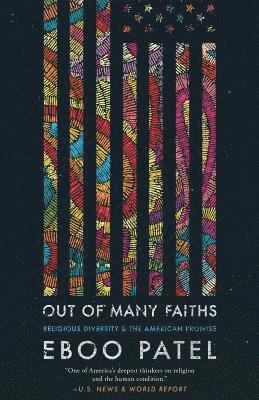
A timely defense of religious diversity and its centrality to American identityAmerica is the most religiously devout country in the Western world and the most religiously diverse nation on the planet. In today’s volatile climate of religious conflict, prejudice, and distrust, how do we affirm the principle that the American promise is deeply intertwined with how each of us engages with people of different faiths and beliefs? Eboo Patel, former faith adviser to Barack Obama and named one of America’s best leaders by U.S. News & World Report, provides answers to this timely and consequential question.In this inspiring and thought-provoking book, Patel draws on his personal experience as a Muslim in America to examine broader questions about the importance of religious diversity in the cultural, political, and economic life of the nation. He explores how religious language has given the United States some of its most enduring symbols and inspired many of its most vital civic institutions—and demonstrates how the genius of the American experiment lies in its empowerment of people of all creeds, ethnicities, and convictions.Will America’s identity as a Judeo-Christian nation shift as citizens of different backgrounds grow in numbers and influence? In what ways will minority religious communities themselves change as they take root in American soil? In addressing these and other questions, Patel shows how America’s promise is the guarantee of equal rights and dignity for all, and how that promise is the foundation of America’s unrivaled strength as a nation. The book also includes incisive commentaries by John Inazu, Robert Jones, and Laurie Patton on American civil religion, faith and law, and the increasing number of nonreligious Americans.
190 kr
Skickas inom 7-10 vardagar
How businesses and other organizations can improve their performance by tapping the power of differences in how people thinkWhat if workforce diversity is more than simply the right thing to do? What if it can also improve the bottom line? It can. The Diversity Bonus shows how and why. Scott Page, a leading thinker, writer, and speaker whose ideas and advice are sought after by corporations, nonprofits, universities, and governments, makes a clear and compelling practical case for diversity and inclusion. He presents overwhelming evidence that teams that include different kinds of thinkers outperform homogenous groups on complex tasks, producing what he calls “diversity bonuses.” These bonuses include improved problem solving, increased innovation, and more accurate predictions—all of which lead to better results. Drawing on research in economics, psychology, computer science, and many other fields, The Diversity Bonus also tells the stories of businesses and organizations that have tapped the power of diversity to solve complex problems. The result changes the way we think about diversity at work—and far beyond.
138 kr
Skickas
A timely defense of religious diversity and its centrality to American identityAmerica is the most religiously diverse nation on the planet. In today’s volatile climate of religious conflict and distrust, how do we affirm that the American promise is deeply intertwined with how each of us engages with people of different beliefs? Eboo Patel, former faith adviser to Barack Obama, provides answers to this timely question. In this thought-provoking book, Patel draws on his personal experience as a Muslim in America to examine the importance of religious diversity in the nation’s cultural, political, and economic life. He explores how religious language has given the United States some of its most enduring symbols and inspired its most vital civic institutions—and demonstrates how the genius of the American experiment lies in its empowerment of all people.
Walls around Opportunity
The Failure of Colorblind Policy for Higher Education
Inbunden, Engelska, 2022
276 kr
Skickas inom 7-10 vardagar
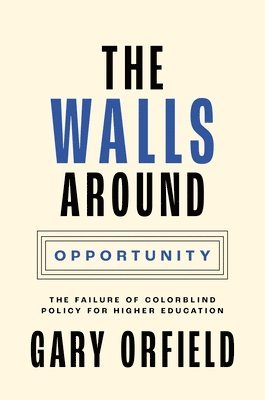
The case for race-conscious education policyIn our unequal society, families of color fully share the dream of college but their children often attend schools that do not prepare them, and the higher education system gives the best opportunities to the most privileged. Students of color hope for college but often face a dead end.For many young people, racial inequality puts them at a disadvantage from early childhood. The Walls around Opportunity argues that colorblind policies have made college inaccessible to a large share of students of color, and reveals how policies that acknowledge racial inequalities and set racial equality goals can succeed where colorblindness has failed.Gary Orfield paints a troubling portrait of American higher education, explaining how profound racial gaps imbedded in virtually every stage of our children’s lives pose a major threat to communities of color and the nation. He describes how the 1960s and early 1970s was the only period in history to witness sustained efforts at racial equity in higher education, and how the Reagan era ushered in today’s colorblind policies, which ignore the realities of color inequality. Orfield shows how this misguided policy has resegregated public schools, exacerbated inequalities in college preparation, denied needed financial aid to families, and led to huge price increases over decades that have seen little real gain in income for most Americans.Drawing on a wealth of new data and featuring commentaries by Stella Flores and James Anderson, this timely and urgent book shows how colorblind policies serve only to raise the walls of segregation higher, and proposes real solutions that can make higher education available to all.
198 kr
Skickas inom 7-10 vardagar
The case for race-conscious education policyIn our unequal society, families of color fully share the dream of college but their children often attend schools that do not prepare them, and the higher education system gives the best opportunities to the most privileged. Students of color hope for college but often face a dead end.For many young people, racial inequality puts them at a disadvantage from early childhood. The Walls around Opportunity argues that colorblind policies have made college inaccessible to a large share of students of color, and reveals how policies that acknowledge racial inequalities and set racial equality goals can succeed where colorblindness has failed.Gary Orfield paints a troubling portrait of American higher education, explaining how profound racial gaps imbedded in virtually every stage of our children’s lives pose a major threat to communities of color and the nation. He describes how the 1960s and early 1970s was the only period in history to witness sustained efforts at racial equity in higher education, and how the Reagan era ushered in today’s colorblind policies, which ignore the realities of color inequality. Orfield shows how this misguided policy has resegregated public schools, exacerbated inequalities in college preparation, denied needed financial aid to families, and led to huge price increases over decades that have seen little real gain in income for most Americans.Now with a new afterword that discusses the 2023 Supreme Court decision to outlaw affirmative action in college admissions, this timely and urgent book shows that the court’s colorblind ruling is unworkable in a society where every aspect of opportunity and preparation is linked to race, and reveals the gaps in the opportunity pipeline while exploring the best ways to address them in light of this decision.
253 kr
Skickas inom 7-10 vardagar
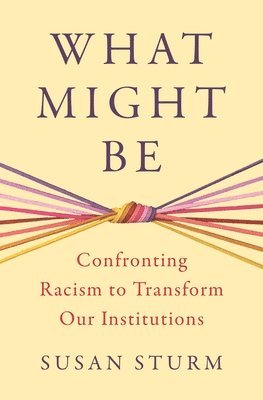
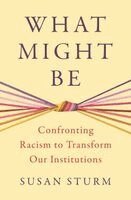
How to turn the paradoxes built into anti-racism work into drivers of learning and changeEven as anti-racism practices seemed to be gaining momentum, the nation shows signs of falling back into long-standing patterns of racial injustice and inequality. Leaders who introduce anti-racist approaches to their organizations often face backlash from white colleagues and skepticism from colleagues of color, leading to paralysis. In What Might Be, Susan Sturm explores how to navigate the contradictions built into our racialized history, relationships, and institutions. She offers strategies and stories for confronting racism within predominantly white institutions, describing how change agents can move beyond talk to build the architecture of full participation.Sturm argues that although we cannot avoid the contradictions built into efforts to confront racism, we can make them into engines of cross-racial reflection, bridge building, and institutional reimagination, rather than falling into a Groundhog Day–like trap of repeated failures. Drawing on her decades of experience researching and working with institutions to help them become more equitable and inclusive, Sturm identifies three persistent paradoxes inherent in anti-racism work. These are the paradox of racialized power, whereby anti-racism requires white people to lean into and yet step back from exercising power; the paradox of racial salience, which means that effective efforts must explicitly name and address race while also framing their goals in universal terms other than race; and the paradox of racialized institutions, which must drive anti-racism work while simultaneously being the target of it. Sturm shows how people and institutions can cultivate the capacity to straddle these contradictions, enabling those in different racial positions to discover their linked fate and become the catalysts for long-term change.The book includes thoughtful and critical responses from Goodwin Liu, Freeman Hrabowski, and Anurima Bhargava.
183 kr
Skickas inom 7-10 vardagar
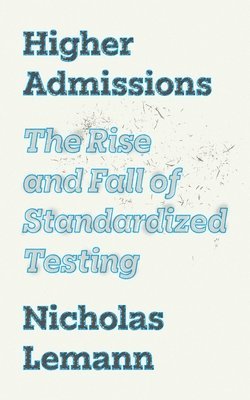
How to make American higher education fairerIn the 1930s, American colleges and universities began to screen applications using the SAT, a mass-administered, IQ-descended standardized test. The widespread adoption of the test accompanied the development of the world’s first mass higher education system—and served to promote the idea that the United States was becoming a “meritocracy” in which admission to selective higher education institutions would be granted to those who most deserved it. In Higher Admissions, Nicholas Lemann reflects on the state of America’s aspirational meritocracy and the enduring value and meaning of standardized testing.Lemann writes that the anticipation of the Supreme Court’s 2023 decision banning affirmative action, plus the Covid pandemic, led hundreds of universities to stop requiring standardized admissions tests; now many colleges and universities are reinstituting test requirements. The country is preoccupied with the admissions policies of the most selective universities, but Lemann redirects our attention to an alternate path that American higher education could have taken, and can still take—one that emphasizes selective admission less and a significant upgrade of the entire higher education system more. Lemann argues that to improve the state of higher education overall, we should focus not on the narrow chokepoint of admission to highly selective colleges, but on efforts to create as much meaningful opportunity for flourishing in our vast higher education system for as many people as possible. The book includes thoughtful and challenging responses from Marvin Krislov, Patricia Gándara, and Prudence Carter.